
Product Information
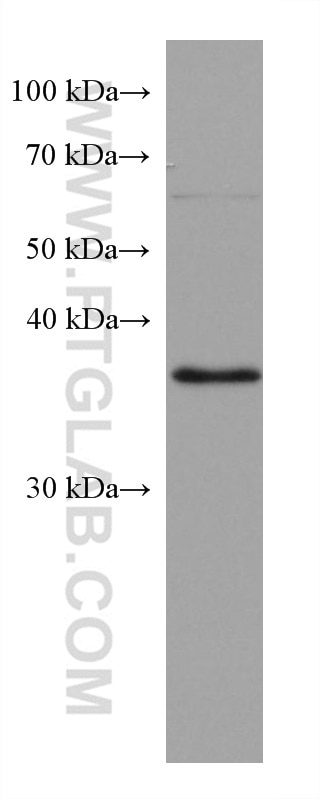
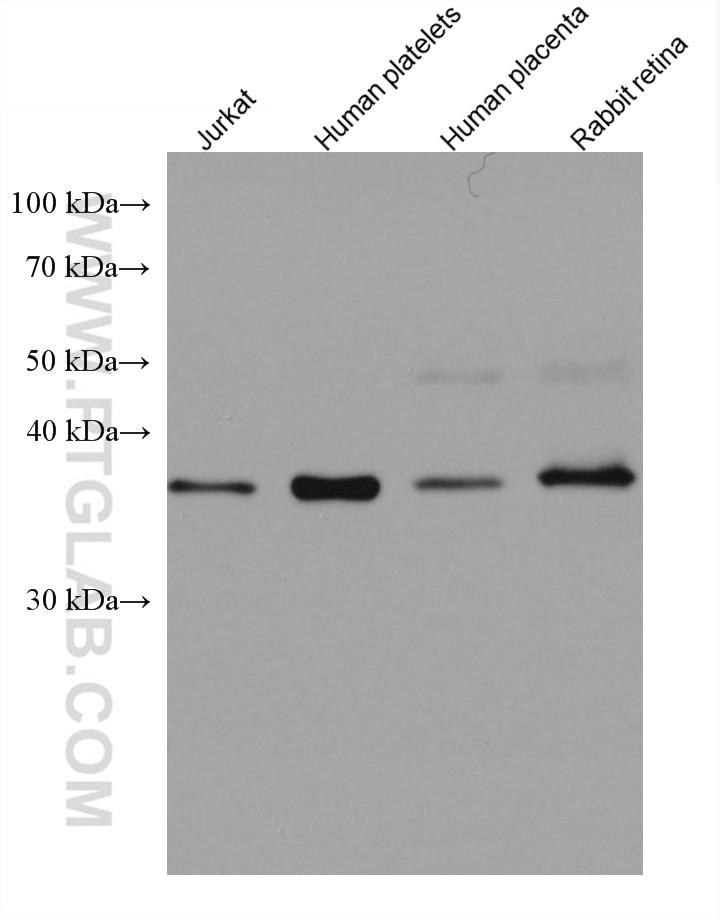
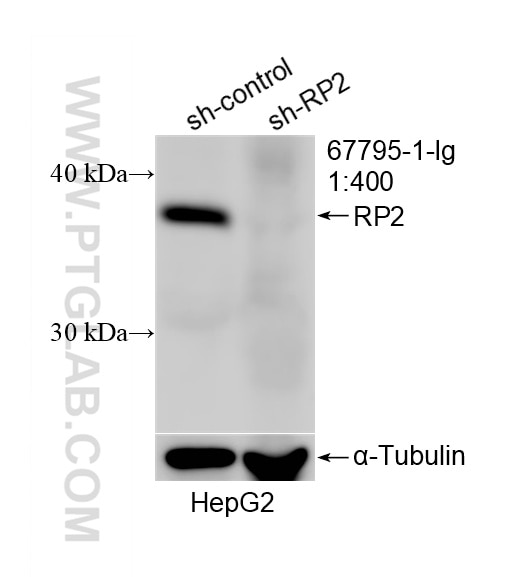
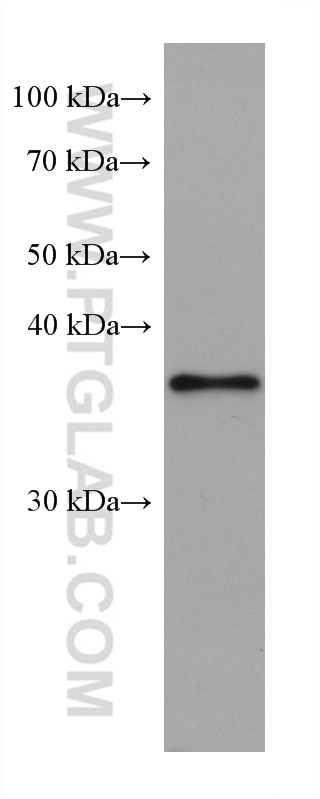
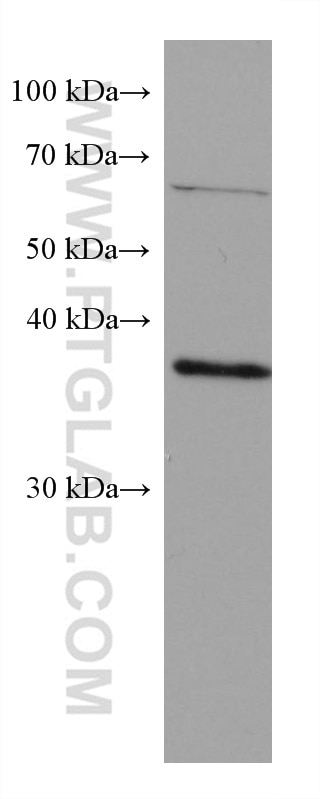
67795-1-PBS targets RP2 in WB, Indirect ELISA applications and shows reactivity with human, rabbit samples.
| Tested Reactivity | human, rabbit |
| Host / Isotype | Mouse / IgG1 |
| Class | Monoclonal |
| Type | Antibody |
| Immunogen |
CatNo: Ag5630 Product name: Recombinant human RP2 protein Source: e coli.-derived, PET28a Tag: 6*His Domain: 1-350 aa of BC043348 Sequence: MGCFFSKRRKADKESRPENEEERPKQYSWDQREKVDPKDYMFSGLKDETVGRLPGTVAGQQFLIQDCENCNIYIFDHSATVTIDDCTNCIIFLGPVKGSVFFRNCRDCKCTLACQQFRVRDCRKLEVFLCCATQPIIESSSNIKFGCFQWYYPELAFQFKDAGLSIFNNTWSNIHDFTPVSGELNWSLLPEDAVVQDYVPIPTTEELKAVRVSTEANRSIVPISRGQRQKSSDESCLVVLFAGDYTIANARKLIDEMVGKGFFLVQTKEVSMKAEDAQRVFREKAPDFLPLLNKGPVIALEFNGDGAVEVCQLIVNEIFNGTKMFVSESKETASGDVDSFYNFADIQMGI Predict reactive species |
| Full Name | retinitis pigmentosa 2 (X-linked recessive) |
| Calculated Molecular Weight | 350 aa, 40 kDa |
| Observed Molecular Weight | 37-40 kDa |
| GenBank Accession Number | BC043348 |
| Gene Symbol | RP2 |
| Gene ID (NCBI) | 6102 |
| RRID | AB_2918559 |
| Conjugate | Unconjugated |
| Form | Liquid |
| Purification Method | Protein G purification |
| UNIPROT ID | O75695 |
| Storage Buffer | PBS only, pH 7.3. |
| Storage Conditions | Store at -80°C. |
Background Information
Protein XRP2, more popularly known as RP2 (Retinitis Pigmentosa 2), is a protein that is essential for maintaining the structure of eye cells, and its defects are directly related to serious hereditary retinal degenerative diseases. RP2 is a cofactor that assists the assembly of tubulin complex, and plays a key role in the formation and function of intracellular microtubule network. It mainly plays a positioning and regulating role in cilia production and intracellular transport. Mutation of the gene encoding this protein will lead to X-linked retinitis pigmentosa (XLRP). This is a hereditary retinal degenerative disease, characterized by progressive vision loss, which usually begins with night blindness, then peripheral vision loss, and may eventually lead to blindness. The loss of RP2 protein function leads to the failure of photoreceptor cells (cone and rod cells) to maintain their normal microtubule structure, which leads to apoptosis.






