
Tested Applications
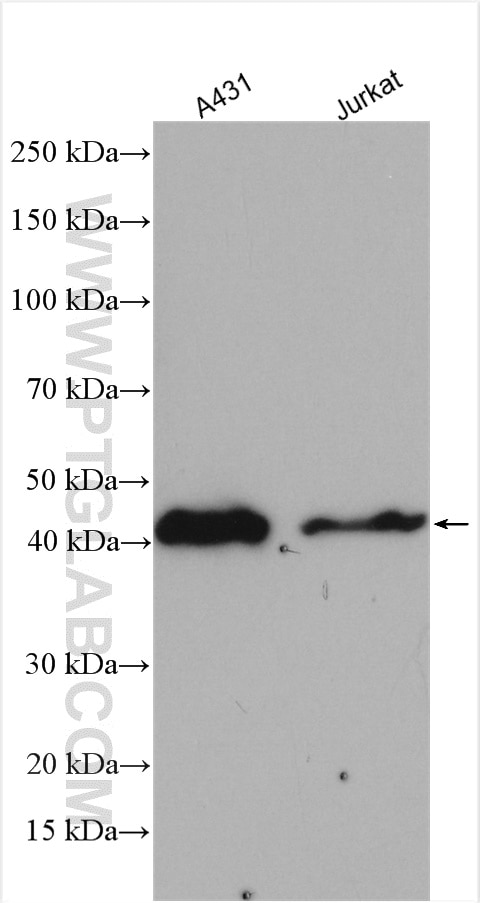
| Positive WB detected in | A431 cells, Jurkat cells |
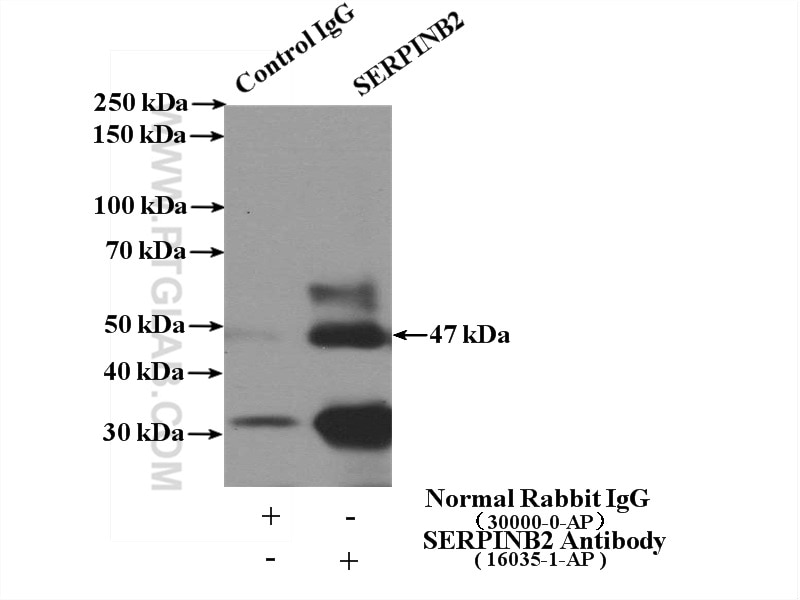
| Positive IP detected in | Jurkat cells |
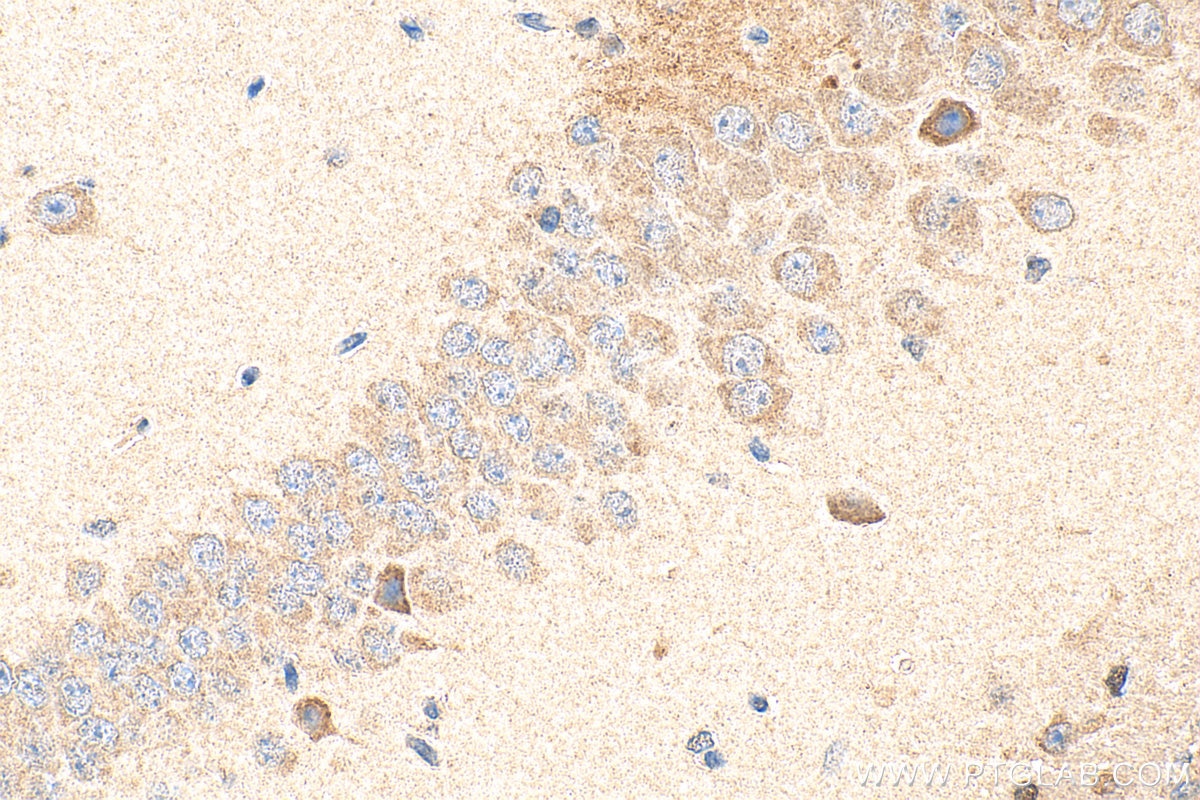
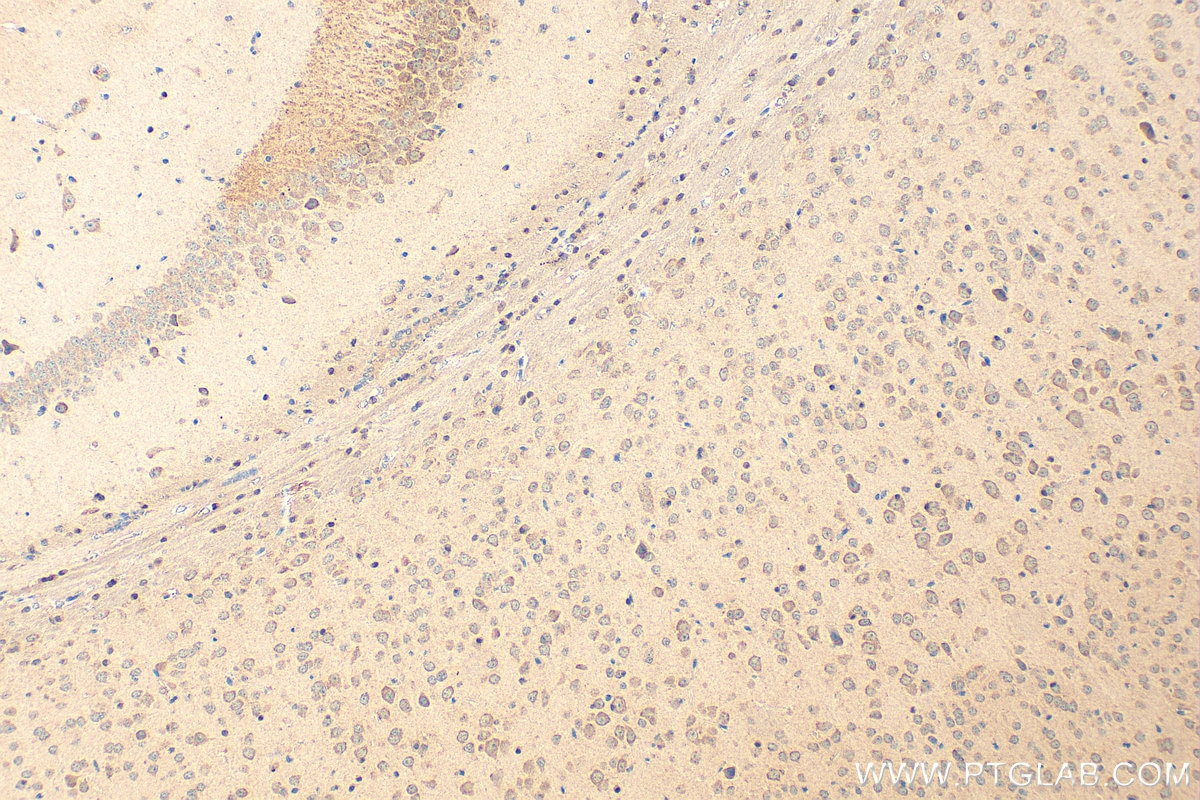
| Positive IHC detected in | mouse brain tissue Note: suggested antigen retrieval with TE buffer pH 9.0; (*) Alternatively, antigen retrieval may be performed with citrate buffer pH 6.0 |
Recommended dilution
| Application | Dilution |
|---|---|
| Western Blot (WB) | WB : 1:500-1:1000 |
| Immunoprecipitation (IP) | IP : 0.5-4.0 ug for 1.0-3.0 mg of total protein lysate |
| Immunohistochemistry (IHC) | IHC : 1:50-1:500 |
| It is recommended that this reagent should be titrated in each testing system to obtain optimal results. | |
| Sample-dependent, Check data in validation data gallery. | |
Published Applications
| WB | See 11 publications below |
| IHC | See 3 publications below |
Product Information
16035-1-AP targets SerpinB2/PAI-2 in WB, IHC, IP, ELISA applications and shows reactivity with human samples.
| Tested Reactivity | human |
| Cited Reactivity | human |
| Host / Isotype | Rabbit / IgG |
| Class | Polyclonal |
| Type | Antibody |
| Immunogen |
CatNo: Ag8906 Product name: Recombinant human SERPINB2 protein Source: e coli.-derived, PGEX-4T Tag: GST Domain: 1-415 aa of BC012609 Sequence: MEDLCVANTLFALNLFKHLAKASPTQNLFLSPWSISSTMAMVYMGSRGSTEDQMAKVLQFNEVGANAVTPMTPENFTSCGFMQQIQKGSYPDAILQAQAADKIHSSFRSLSSAINASTGNYLLESVNKLFGEKSASFREEYIRLCQKYYSSEPQAVDFLECAEEARKKIYSWVKTQTKGKIPNLLPEGSVDGDTRMVLVNAVYFKGKWKTPFEKKLNGLYPFRVNSAQRTPVQMMYLREKLNIGYIEDLKAQILELPYAGDVSMFLLLPDEIADVSTGLELLESEITYDKLNKWTSKDKMAEDEVEVYIPQFKLEEHYELRSILRSMGMEDAFNKGRANFSGMSERNDLFLSEVFHQAMVDVNEEGTEAAAGTGGVMTGRTGHGGPQFVADHPFLFLIMHKITNCILFFGRFSSP Predict reactive species |
| Full Name | serpin peptidase inhibitor, clade B (ovalbumin), member 2 |
| Calculated Molecular Weight | 415 aa, 47 kDa |
| Observed Molecular Weight | 45-47 kDa |
| GenBank Accession Number | BC012609 |
| Gene Symbol | SERPINB2 |
| Gene ID (NCBI) | 5055 |
| RRID | AB_2186180 |
| Conjugate | Unconjugated |
| Form | Liquid |
| Purification Method | Antigen affinity purification |
| UNIPROT ID | P05120 |
| Storage Buffer | PBS with 0.02% sodium azide and 50% glycerol, pH 7.3. |
| Storage Conditions | Store at -20°C. Stable for one year after shipment. Aliquoting is unnecessary for -20oC storage. 20ul sizes contain 0.1% BSA. |
Background Information
SerpinB2, a plasminogen activator inhibitor-2 (PAI-2), is a serine protease inhibitor of the serpin superfamily that inactivates tissue plasminogen activator (tPA) and urokinase plasminogen activator (uPA) (PMID: 7506655). SerpinB2 may have both pro-tumor and anti-tumor effects. High expression of tumor cell-associated SerpinB2 facilitates breast cancer cell survival and metastasis (PMID: 24581498; PMID: 28427146), while SerpinB2 expression by breast cancer cells significantly inhibits metastasis by inhibiting extracellular uPA (PMID: 24644264; PMID: 28346421).
Protocols
| Product Specific Protocols | |
|---|---|
| IHC protocol for SerpinB2/PAI-2 antibody 16035-1-AP | Download protocol |
| IP protocol for SerpinB2/PAI-2 antibody 16035-1-AP | Download protocol |
| WB protocol for SerpinB2/PAI-2 antibody 16035-1-AP | Download protocol |
| Standard Protocols | |
|---|---|
| Click here to view our Standard Protocols |
Publications
| Species | Application | Title |
|---|---|---|
Oncotarget Exposure to airborne PM2.5 suppresses microRNA expression and deregulates target oncogenes that cause neoplastic transformation in NIH3T3 cells. | ||
PLoS One Plasminogen Activator Inhibitor-2 Plays a Leading Prognostic Role among Protease Families in Non-Small Cell Lung Cancer. | ||
J Proteomics Proteomic profiling of human decidual immune proteins during Toxoplasma gondii infection. | ||
Mol Cancer circPSD3 is a promising inhibitor of uPA system to inhibit vascular invasion and metastasis in hepatocellular carcinoma | ||
Cancer Res A Genome-Wide Synthetic Lethal Screen Identifies Spermidine Synthase as a Target to Enhance Erdafitinib Efficacy in FGFR-Mutant Bladder Cancer | ||
PLoS One Evaluation and Characterization of Acute respiratory distress syndrome in tree shrews through TMT proteomic method |





