

Tested Applications
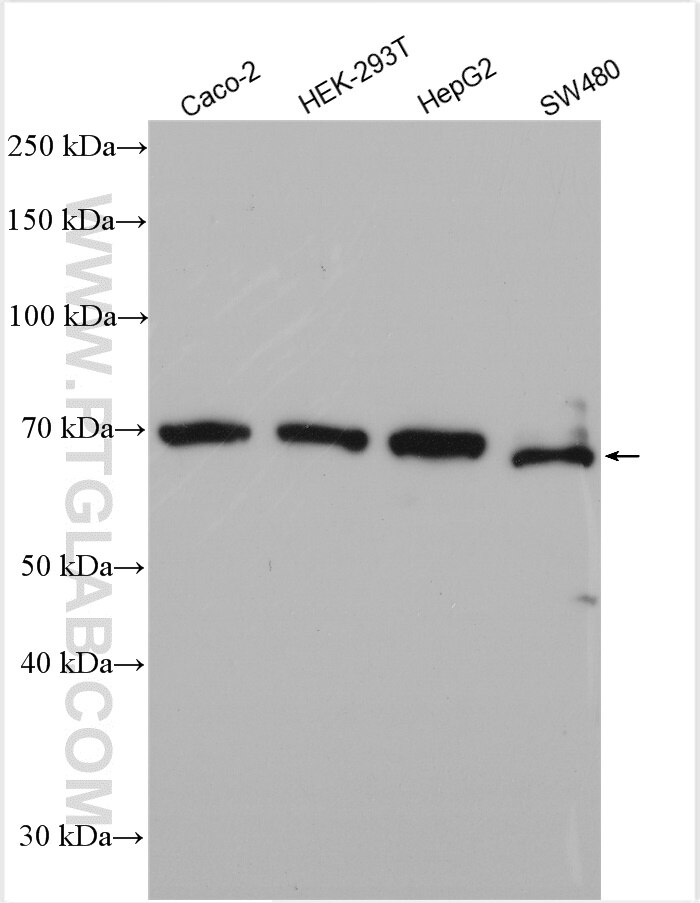
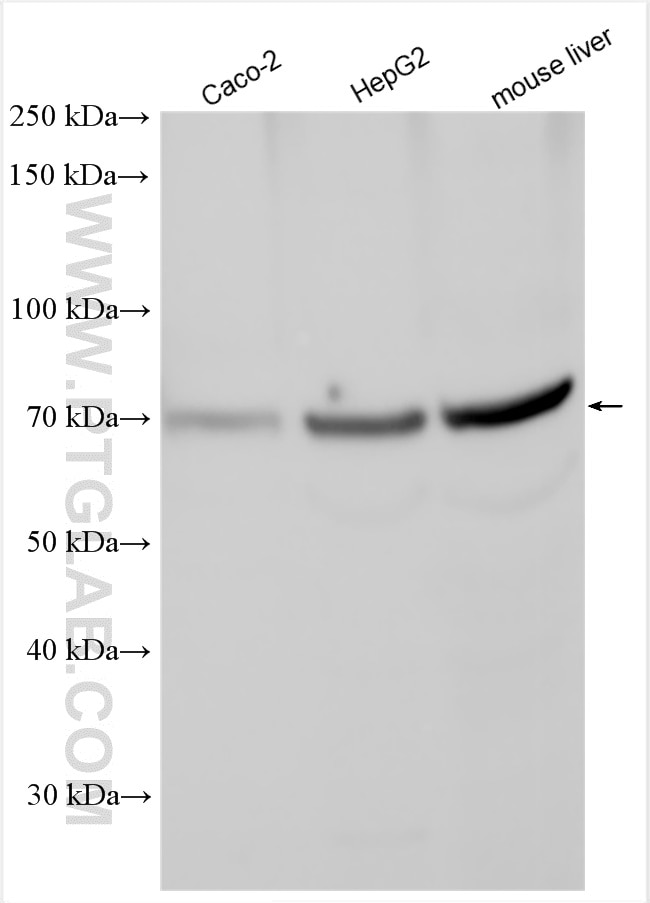
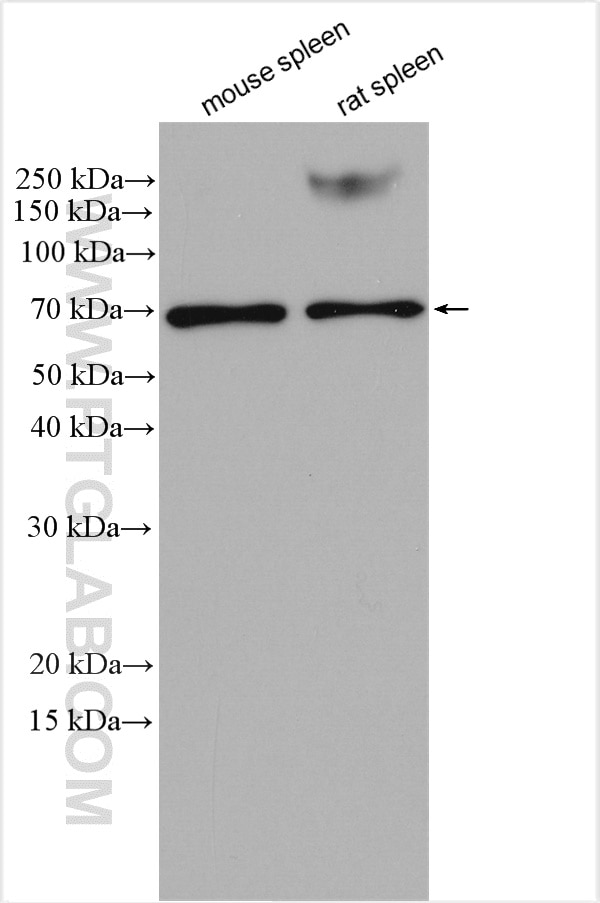
| Positive WB detected in | Caco-2 cells, mouse spleen tissue, HepG2 cells, mouse liver tissue, rat spleen, HEK-293T cells, SW480 cells |
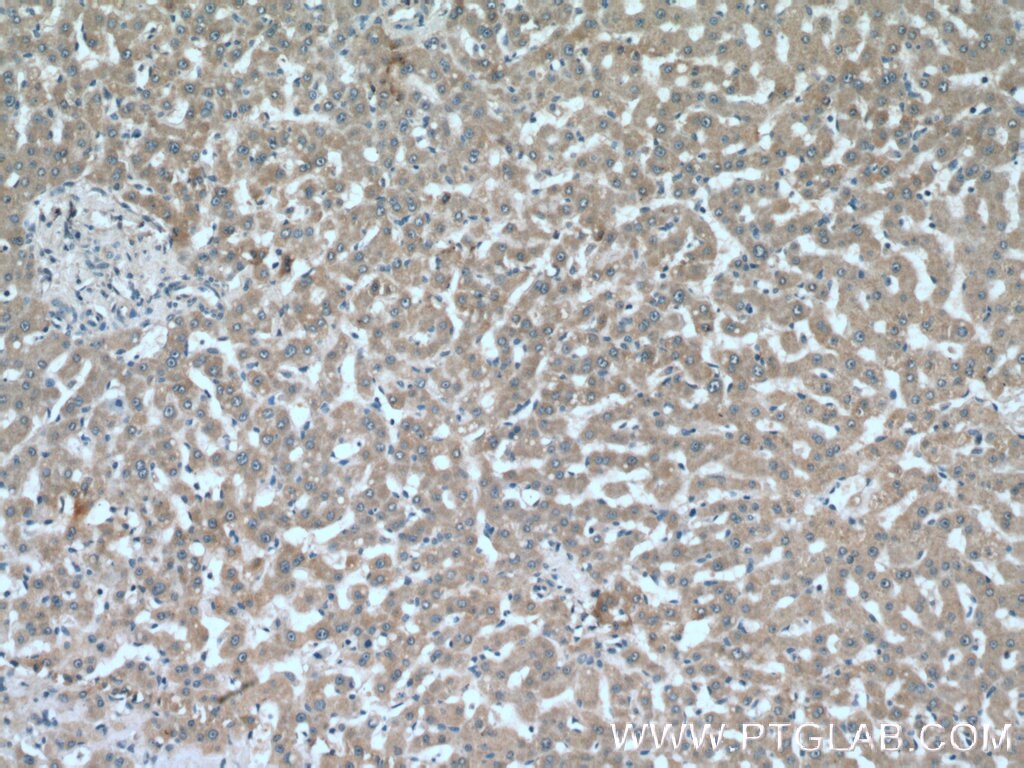
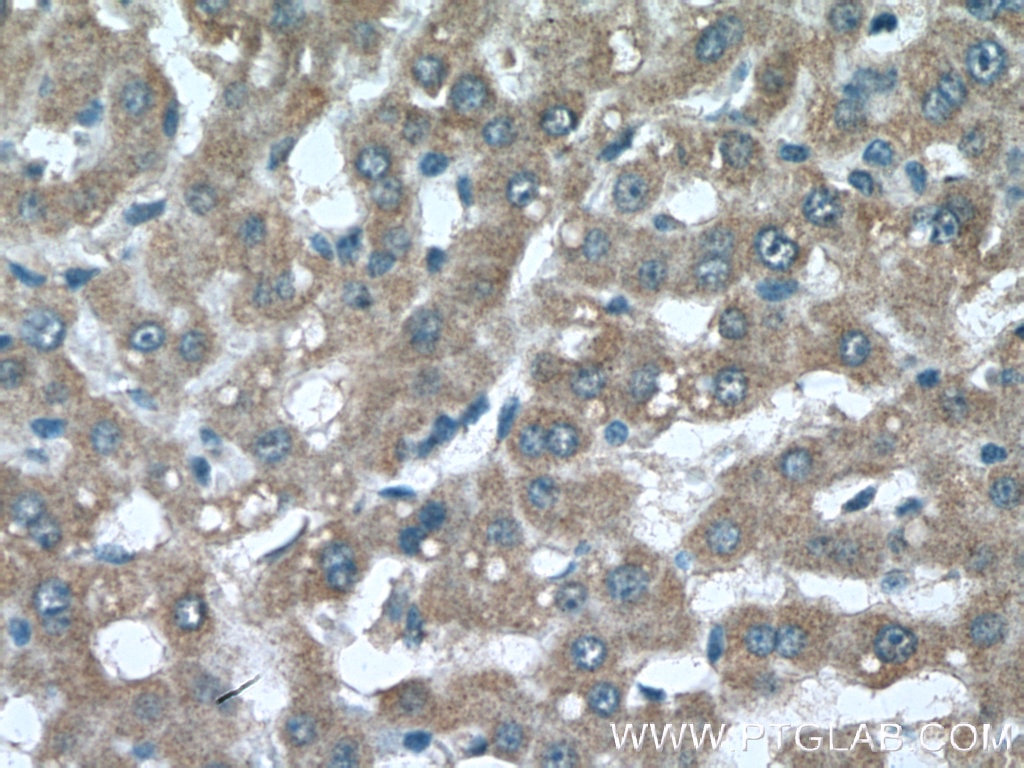
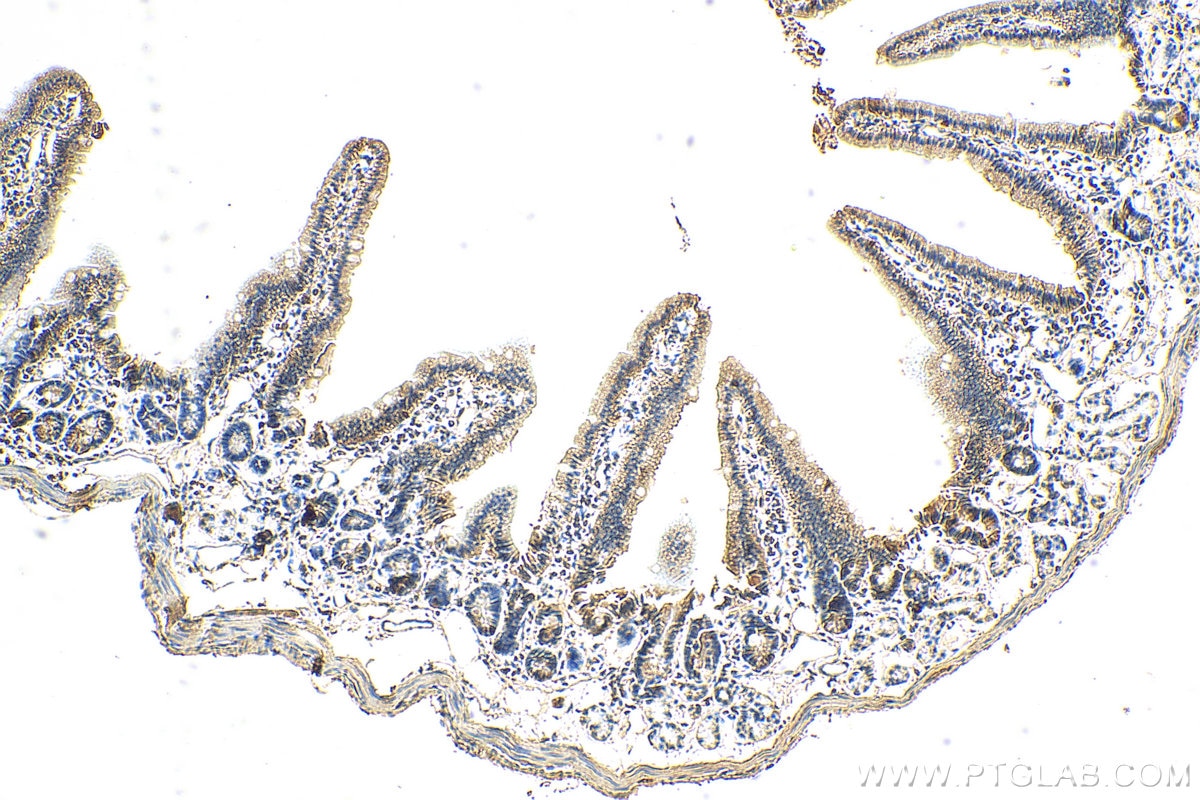
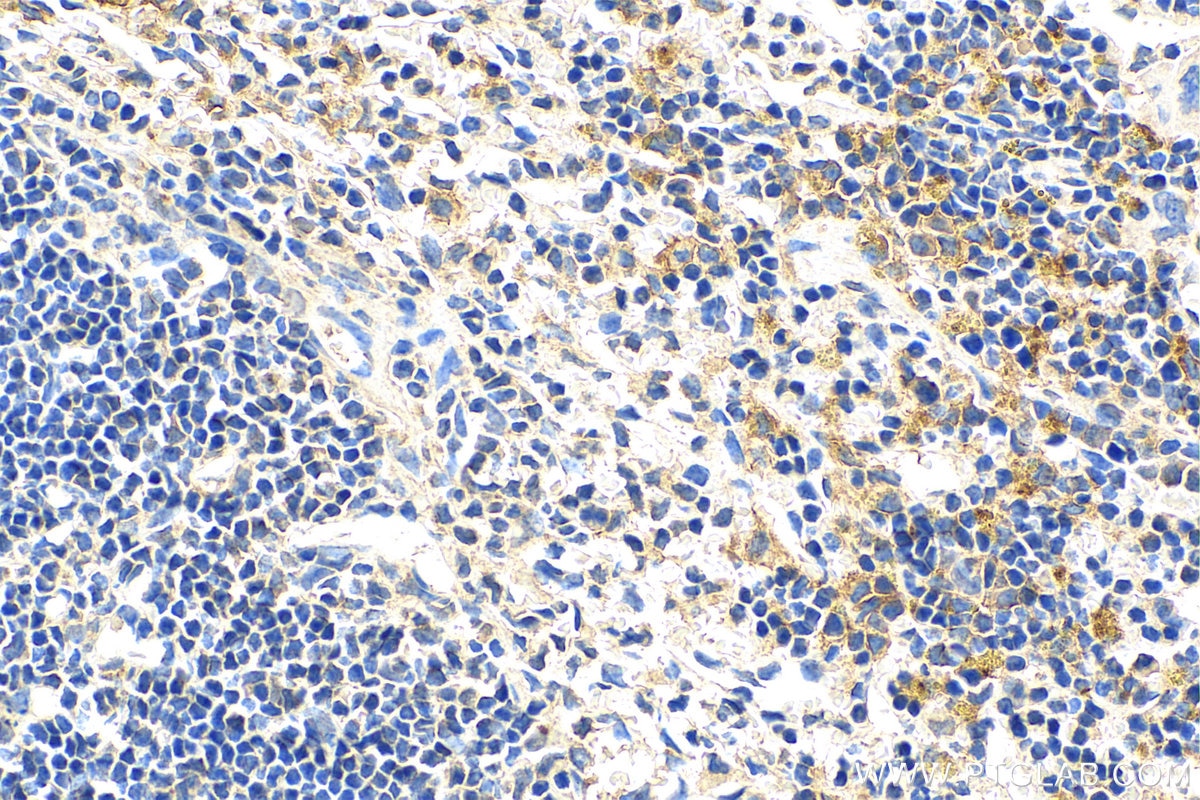
| Positive IHC detected in | human liver tissue, mouse spleen tissue Note: suggested antigen retrieval with TE buffer pH 9.0; (*) Alternatively, antigen retrieval may be performed with citrate buffer pH 6.0 |
Recommended dilution
| Application | Dilution |
|---|---|
| Western Blot (WB) | WB : 1:500-1:2000 |
| Immunohistochemistry (IHC) | IHC : 1:50-1:500 |
| It is recommended that this reagent should be titrated in each testing system to obtain optimal results. | |
| Sample-dependent, Check data in validation data gallery. | |
Product Information
26601-1-AP targets SLC40A1/FPN1 in WB, IHC, IF, IP, ELISA applications and shows reactivity with human, mouse, rat samples.
| Tested Reactivity | human, mouse, rat |
| Cited Reactivity | human, mouse, rat, pig, chicken, zebrafish, bovine, sheep |
| Host / Isotype | Rabbit / IgG |
| Class | Polyclonal |
| Type | Antibody |
| Immunogen |
CatNo: Ag24273 Product name: Recombinant human SLC40A1 protein Source: e coli.-derived, PET28a Tag: 6*His Domain: 398-500 aa of BC037733 Sequence: LDLSVSPFEDIRSRFIQGESITPTKIPEITTEIYMSNGSNSANIVPETSPESVPIISVSLLFAGVIAARIGLWSFDLTVTQLLQENVIESERGIINGVQNSMN Predict reactive species |
| Full Name | solute carrier family 40 (iron-regulated transporter), member 1 |
| Calculated Molecular Weight | 62 kDa |
| Observed Molecular Weight | 62-70 kDa |
| GenBank Accession Number | BC037733 |
| Gene Symbol | SLC40A1/Ferroportin |
| Gene ID (NCBI) | 30061 |
| RRID | AB_2880571 |
| Conjugate | Unconjugated |
| Form | Liquid |
| Purification Method | Antigen affinity purification |
| UNIPROT ID | Q9NP59 |
| Storage Buffer | PBS with 0.02% sodium azide and 50% glycerol, pH 7.3. |
| Storage Conditions | Store at -20°C. Stable for one year after shipment. Aliquoting is unnecessary for -20oC storage. 20ul sizes contain 0.1% BSA. |
Background Information
SLC40A1, also named as Ferroportin 1 (FPN1), is an iron transporter which is involved in iron export from duodenal epithelial cell and also in transfer of iron between maternal and fetal circulation. It has been reported that SLC40A1 mutations may lead to macrophage iron overload, hyperferritinemia, and normal transferrin saturation among ferroportin iron overload patients. This antibody detects 50-75 kDa protein as well as the fragments of 56 kDa and 35 kDa protein similar to papers in SDS-PAGE (PMID:32645092, 21396368,16054062, 18974313). SLC40A1 is mainly localized to the cell membrane, but may also be detected in the cytoplasm.
Protocols
| Product Specific Protocols | |
|---|---|
| IHC protocol for SLC40A1/FPN1 antibody 26601-1-AP | Download protocol |
| WB protocol for SLC40A1/FPN1 antibody 26601-1-AP | Download protocol |
| Standard Protocols | |
|---|---|
| Click here to view our Standard Protocols |
Publications
What published studies show
The SLC40A1/FPN1 Polyclonal antibody (Cat# 26601-1-AP) has accumulated 226 citations across journals including Nature, Cell, Nature Communications, Redox Biology, Free Radical Biology and Medicine, Cell Death & Disease, Autophagy, Theranostics, and Journal of Hazardous Materials. Research fields predominantly cover ferroptosis, iron homeostasis, cancer biology, neurodegeneration, cardiovascular disease, hepatic and renal injury, inflammation, reproductive toxicity, and environmental toxicology. Western blot is the most frequently used application.
| Species | Application | Title |
|---|---|---|
Signal Transduct Target Ther Adipocytes orchestrate obesity-related chronic inflammation through β2-microglobulin | ||
Nat Cell Biol Peritumoural adipose tissue promotes ferroptosis resistance by 3-hydroxykynurenine-mediated suppression of ferritinophagy. | ||
Drug Resist Updat AMPKα2 attenuates doxorubicin induced ferroptosis by promoting NCOA4 degradation in triple negative breast cancer. | ||
Bone Res Piezo1 channel exaggerates ferroptosis of nucleus pulposus cells by mediating mechanical stress-induced iron influx |
Reviews
What customers say
The single review for this product rates it 4 out of 5 stars. The reviewer used it for Western Blot and noted that while multiple bands appeared in THP1-derived macrophages, the antibody still performed well overall. The feedback suggests the antibody is functional but may show some non-specific binding in certain cell types, yet remains a reliable reagent for its intended application.
The reviews below have been submitted by verified Proteintech customers who received an incentive for providing their feedback.
Bianca (Verified Customer) (04-20-2026) | Many bands appear in THP1-derived macrophages, but works well.
|








