
Tested Applications
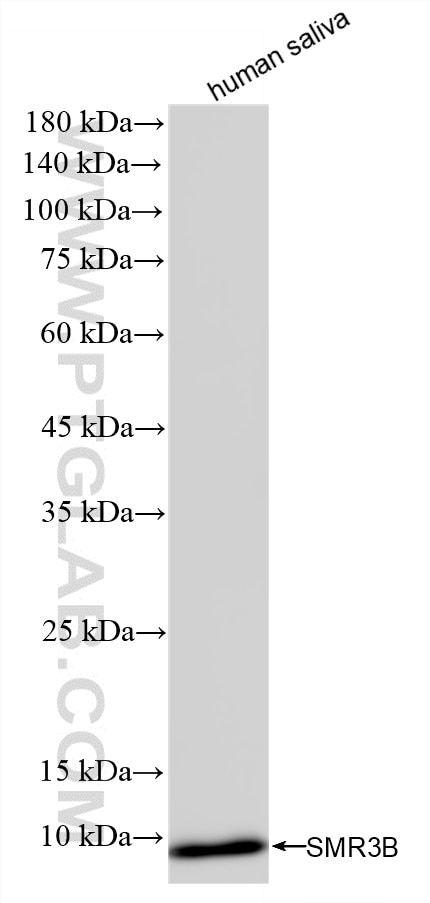
| Positive WB detected in | human saliva, human saliva tissue |
Recommended dilution
| Application | Dilution |
|---|---|
| Western Blot (WB) | WB : 1:500-1:2000 |
| It is recommended that this reagent should be titrated in each testing system to obtain optimal results. | |
| Sample-dependent, Check data in validation data gallery. | |
Product Information
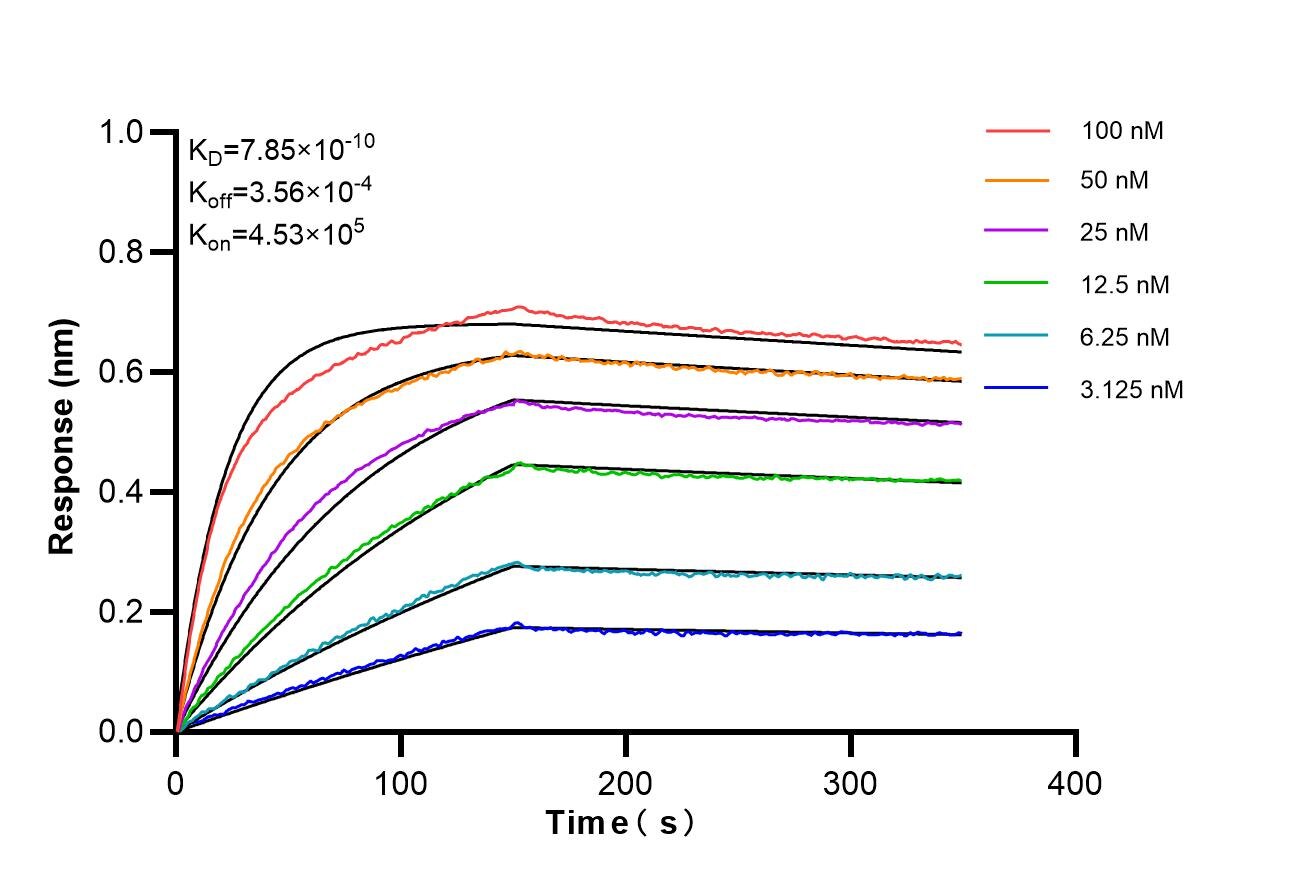
85745-3-RR targets SMR3B in WB, ELISA applications and shows reactivity with human samples.
| Tested Reactivity | human |
| Host / Isotype | Rabbit / IgG |
| Class | Recombinant |
| Type | Antibody |
| Immunogen |
CatNo: Eg3081 Product name: Recombinant Human SMR3B protein (rFc Tag) (HPLC verified) Source: mammalian cells-derived, V37 Tag: C-rFc Domain: 23-79 aa of NM_006685.4 Sequence: QRGPRGPYPPGPLAPPQPFGPGFVPPPPPPPYGPGRIPPPPPAPYGPGIFPPPPPQP Predict reactive species |
| Full Name | submaxillary gland androgen regulated protein 3B |
| Calculated Molecular Weight | 8 kDa |
| Observed Molecular Weight | 8 kDa |
| GenBank Accession Number | NM_006685.4 |
| Gene Symbol | SMR3B |
| Gene ID (NCBI) | 10879 |
| Conjugate | Unconjugated |
| Form | Liquid |
| Purification Method | Protein A purification |
| UNIPROT ID | P02814 |
| Storage Buffer | PBS with 0.02% sodium azide and 50% glycerol, pH 7.3. |
| Storage Conditions | Store at -20°C. Stable for one year after shipment. Aliquoting is unnecessary for -20oC storage. 20ul sizes contain 0.1% BSA. |
Background Information
SMR3B is an androgen-regulated secreted PRP-family peptide produced primarily in the submandibular and sublingual glands. Released into saliva, it contributes to lubrication, oral defense, and glandular homeostasis. Highly tissue-specific, SMR3B serves as a marker of salivary gland function and is altered in xerostomia, Sjögren's syndrome, and head-and-neck cancers, highlighting its relevance in secretory physiology and disease.
Protocols
| Product Specific Protocols | |
|---|---|
| WB protocol for SMR3B antibody 85745-3-RR | Download protocol |
| Standard Protocols | |
|---|---|
| Click here to view our Standard Protocols |



