
Product Information
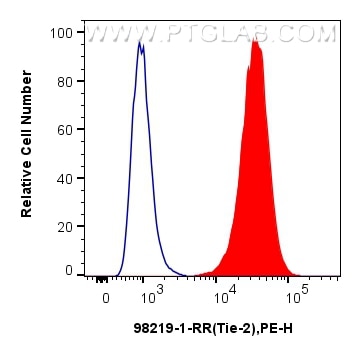
98219-1-PBS targets Tie-2/CD202b in FC applications and shows reactivity with mouse samples.
| Tested Reactivity | mouse |
| Host / Isotype | Rabbit / IgG |
| Class | Recombinant |
| Type | Antibody |
| Immunogen |
CatNo: Eg1514 Product name: Recombinant Mouse Tie-2/CD202b protein (rFc Tag) Source: mammalian cells-derived, pHZ-KIsec-C-rFc Tag: C-rFc Domain: 23-744 aa of NM_001290549.1 Sequence: AMDLILINSLPLVSDAETSLTCIASGWHPHEPITIGRDFEALMNQHQDPLEVTQDVTREWAKKVVWKREKASKINGAYFCEGRVRGQAIRIRTMKMRQQASFLPATLTMTVDRGDNVNISFKKVLIKEEDAVIYKNGSFIHSVPRHEVPDILEVHLPHAQPQDAGVYSARYIGGNLFTSAFTRLIVRRCEAQKWGPDCSRPCTTCKNNGVCHEDTGECICPPGFMGRTCEKACEPHTFGRTCKERCSGPEGCKSYVFCLPDPYGCSCATGWRGLQCNEACPSGYYGPDCKLRCHCTNEEICDRFQGCLCSQGWQGLQCEKEGRPRMTPQIEDLPDHIEVNSGKFNPICKASGWPLPTSEEMTLVKPDGTVLQPNDFNYTDRFSVAIFTVNRVLPPDSGVWVCSVNTVAGMVEKPFNISVKVLPEPLHAPNVIDTGHNFAIINISSEPYFGDGPIKSKKLFYKPVNQAWKYIEVTNEIFTLNYLEPRTDYELCVQLARPGEGGEGHPGPVRRFTTASIGLPPPRGLSLLPKSQTALNLTWQPIFTNSEDEFYVEVERRSLQTTSDQQNIKVPGNLTSVLLSNLVPREQYTVRARVNTKAQGEWSEELRAWTLSDILPPQPENIKISNITDSTAMVSWTIVDGYSISSIIIRYKVQGKNEDQHIDVKIKNATVTQYQLKGLEPETTYHVDIFAENNIGSSNPAFSHELRTLPHSPASADLGGGK Predict reactive species |
| Full Name | endothelial-specific receptor tyrosine kinase |
| Calculated Molecular Weight | 126 kDa |
| GenBank Accession Number | NM_001290549.1 |
| Gene Symbol | Tek |
| Gene ID (NCBI) | 21687 |
| RRID | AB_3745886 |
| Conjugate | Unconjugated |
| Form | Liquid |
| Purification Method | Protein A purfication |
| UNIPROT ID | Q02858 |
| Storage Buffer | PBS only, pH 7.3. |
| Storage Conditions | Store at -80°C. |
Background Information
Tie-2, also known as CD202b or TEK, is a receptor tyrosine kinase (RTK) specifically expressed in endothelial cells. It plays a crucial role in angiogenesis, forming new blood vessels, and maintaining vascular stability. Tie-2 is a member of the Tie receptor family, characterized by the presence of immunoglobulin and epidermal growth factor (EGF) homology domains. Tie-2 plays a significant role in several vascular diseases, including vascular malformations like venous malformations. It is also implicated in pathological vascular remodeling associated with tumor growth, where it is often overexpressed in tumor vessels.



