
How to Write a Good Scientific Abstract
Our top tips and how to write an effective scientific abstract.
Mastering the art of abstract writing is essential for boosting the visibility of your research within a given field and for ensuring its future for your career. Throughout your academic career, you will write many abstracts, covering many different projects and aimed at a wide range of audiences. Practice does make perfect in this case; treat each abstract you write as a stepping stone towards becoming an expert. Never overlook the importance of an abstract either! Often journal editors or conference organisers have to read through hundreds of abstracts, so it is vitally important that your abstract contains all the important and necessary details in a clear and concise way in order for your research to stand out. This blog aims to show you how to write an abstract for a research paper or a conference.
Why is the abstract important?
- Helps disseminate your research (at conferences or via publications)
- Helps to conduct your research
- Helps to present complex information in a clear and concise manner
- Helps to condense detailed report information into a shorter format for database searches
- Helps to provide a summary of your work for future publications and grant applications
An abstract should be:
- Informative (a brief overview of your research)
- Descriptive (including the research aim, objectives of your project, and the analytical methodologies applied)
- Critical (the key outcomes and limitations of your work should be described)
- Written in a formal language
- A conference abstract should contain 150–1000 words (limiting yourself to the word count indicated by the conference organizers)
- Well-formatted (even if the subtitles are not specifically written out, the information in the abstract should follow the order described below to communicate your research succinctly and efficiently)
Writing the Abstract: Step-by-Step Process
When writing an abstract, we must be sure to convey the right amount of information without going into long-winded explanations. The order of your abstract is important, so choose an order that helps the reader link each aspect of your work in a logical order (Figure 1). Always remember to ask yourself if the data presented produces any unanswered questions.
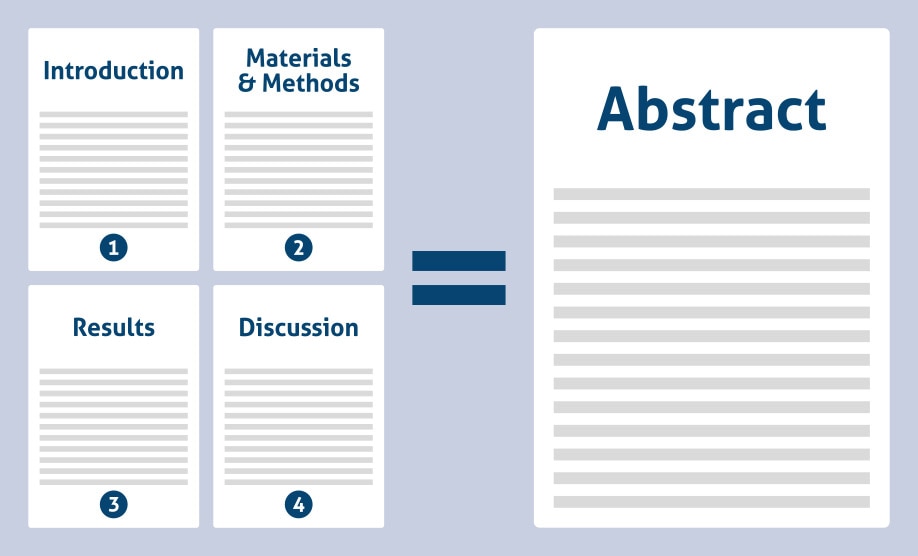
Figure 1. Formatting Your Abstract
What does an abstract include?
1. Introduction: “What is the subject?” Write 1–2 introductory sentences that explain the topic, purpose, and research question(s). The background is needed, but it should not be more in-depth than the results.
2. Materials and methods: “How did you conduct the research and generate results?” Write 1–2 sentences describing your research methods (this may also include the type of data analysis you are using).
3. Results: “Why is it important? What are your discoveries?” Write 1–2 sentences describing the results/findings.
4. Discussion and further directions: “What is the take-home message of your project and its impact?” Write 1–2 sentences containing your conclusions and recommendations. Your conclusions are your study’s contribution to the field.
Final tip: In the end, it is very helpful if someone else reads your abstract. If possible, ask your colleagues to provide their feedback.
Please keep in mind – an abstract is important not only for the conference selection process; it is also essential for your future publication record. A good title and abstract will lead to more people reading the paper itself (Figure 2).
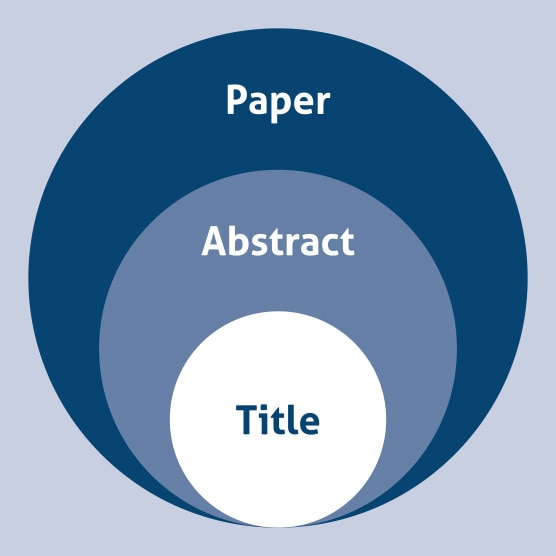
Figure 2. A good abstract will lead to more people being involved in your research.
Think of answering these six questions when writing your abstract:
- What the field knows (general) or What is the broad scientific problem
- What the research field is missing (that your research is addressing)
- What is known specifically within your sub-topic and the current limitation of knowledge or technique
- What you did
- What you saw
- What it means
Top tips for writing a strong abstract
- Follow the conference abstract guidelines. Check the individual requirements for word count, font size, and spacing. Your work is judged on these details.
- Stick to a standard structure. Use a conventional format if specific subsections aren't indicated.
- Do not include references. Keep it simple and stay within the word limit unless specifically required.
- Tailor to the right audience. Consider the expertise level and familiarity with jargon of your intended readers.
- Communicate professionally. Use formal language, complete sentences, and proper punctuation.
- Keep it punchy. Avoid long sentences that might cause the reader to lose focus.
- Create curiosity. State conclusions concisely and avoid overstatements.
- Say it in the title. Ensure your title is powerful and representative of the content.
- Explain the importance. Describe the wider impact and why the research was conducted.
- The take-home message. Focus on the most crucial finding that you want your audience to remember.
Written by Dr. Karolina Szczesna
Senior Product Manager and Technical Support at Proteintech Ltd.
Related Content
- CV writing for academia and industry
- How fellowships can advance your scientific career
- Transitioning from Academia to Industry
Support
Newsletter Signup