

Tested Applications
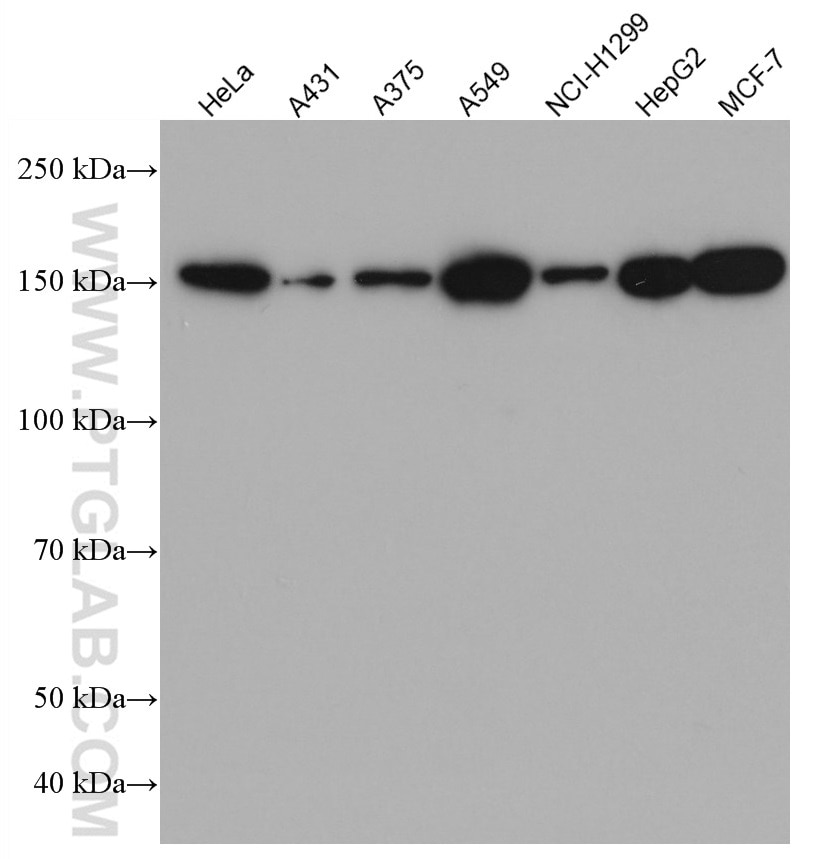
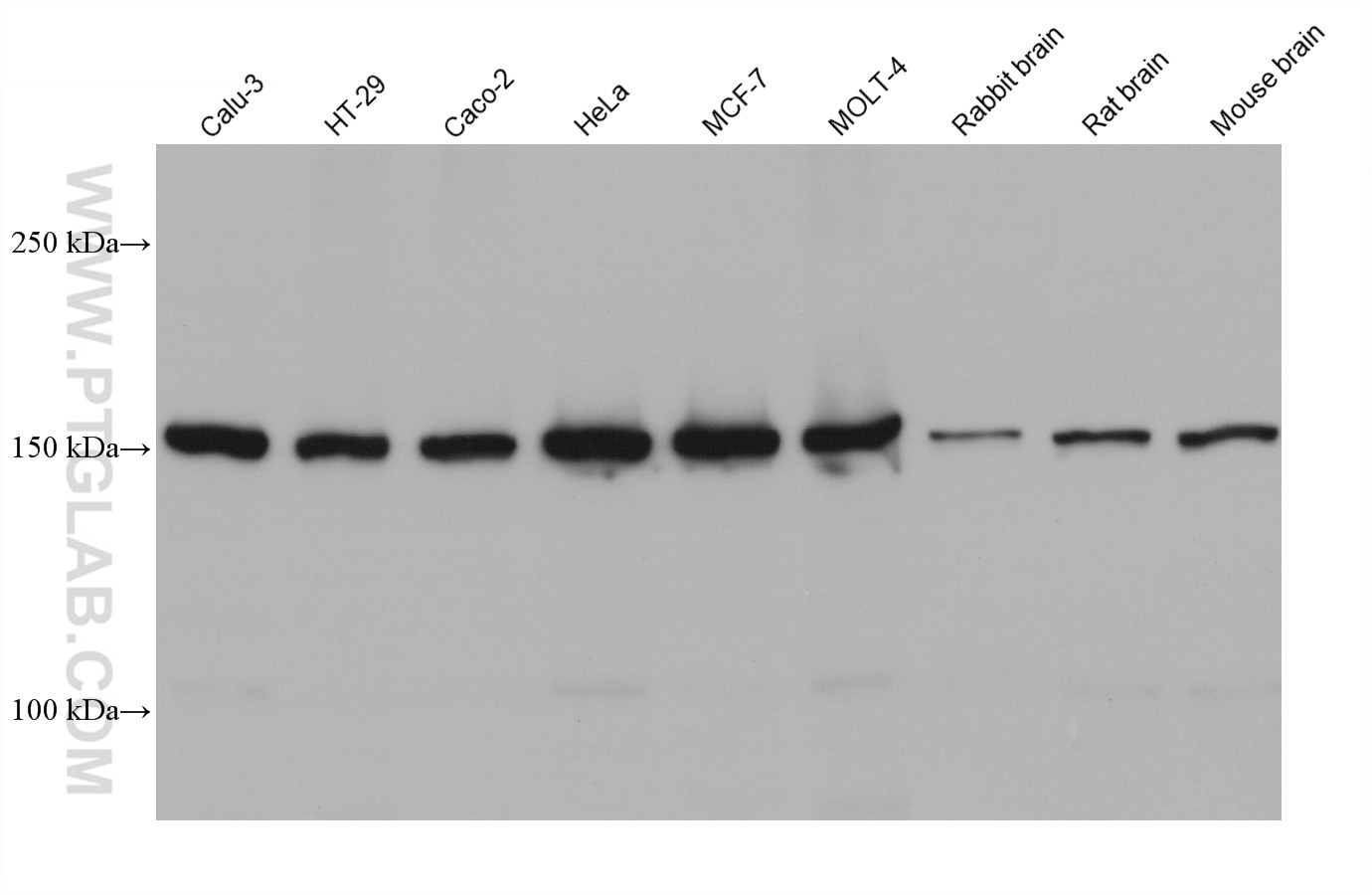
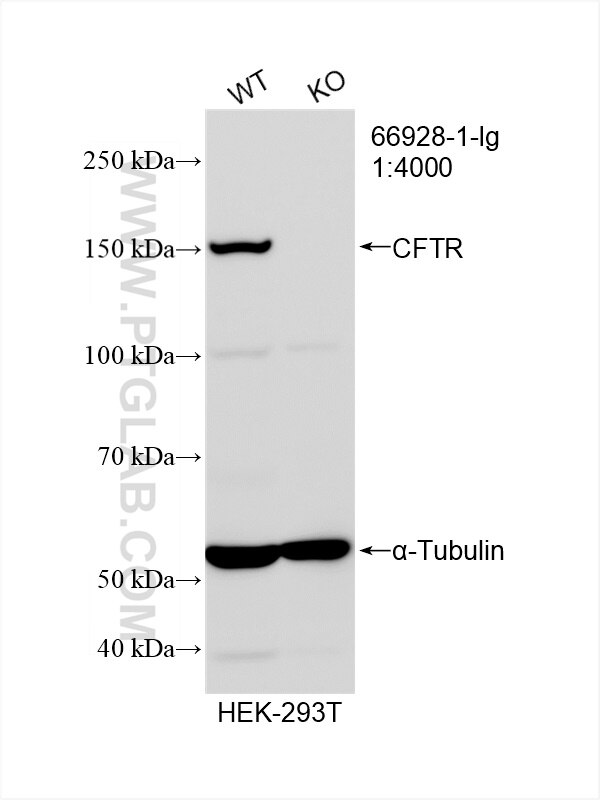
| Positive WB detected in | Calu-3 cells, HEK-293T cells, HeLa cells, HT-29 cells, Caco-2 cells, MCF-7 cells, MOLT-4 cells, rabbit brain tissue, rat brain tissue, mouse brain tissue, A431 cells, A375 cells, A549 cells, NCI-H1299 cells, HepG2 cells |
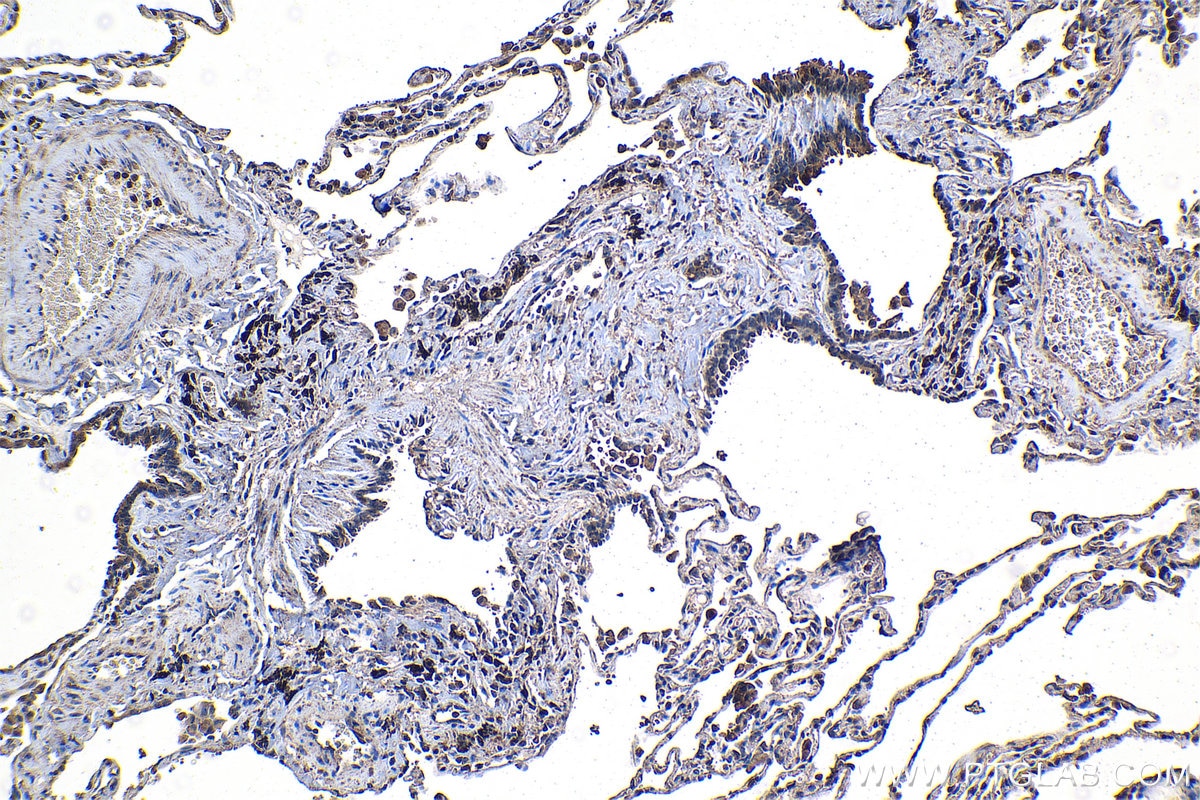
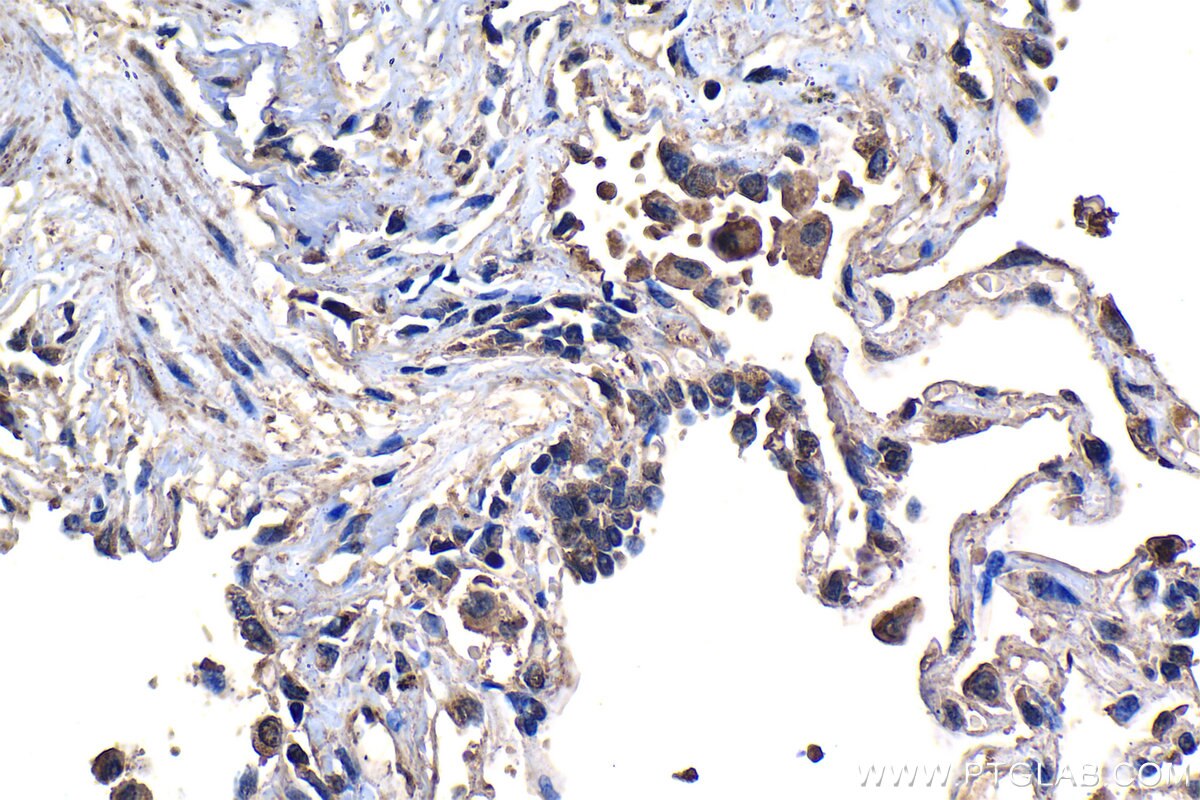
| Positive IHC detected in | human lung tissue Note: suggested antigen retrieval with TE buffer pH 9.0; (*) Alternatively, antigen retrieval may be performed with citrate buffer pH 6.0 |
Recommended dilution
| Application | Dilution |
|---|---|
| Western Blot (WB) | WB : 1:5000-1:50000 |
| Immunohistochemistry (IHC) | IHC : 1:250-1:1000 |
| It is recommended that this reagent should be titrated in each testing system to obtain optimal results. | |
| Sample-dependent, Check data in validation data gallery. | |
Product Information
66928-1-Ig targets CFTR in WB, IHC, ELISA applications and shows reactivity with human, mouse, rat, rabbit samples.
| Tested Reactivity | human, mouse, rat, rabbit |
| Cited Reactivity | human, mouse |
| Host / Isotype | Mouse / IgG1 |
| Class | Monoclonal |
| Type | Antibody |
| Immunogen |
CatNo: Ag27810 Product name: Recombinant human CFTR protein Source: e coli.-derived, PET28a Tag: 6*His Domain: 1-80 aa of NM_000492 Sequence: MQRSPLEKASVVSKLFFSWTRPILRKGYRQRLELSDIYQIPSVDSADNLSEKLEREWDRELASKKNPKLINALRRCFFWR Predict reactive species |
| Full Name | cystic fibrosis transmembrane conductance regulator (ATP-binding cassette sub-family C, member 7) |
| Calculated Molecular Weight | 168 kDa |
| Observed Molecular Weight | 150 kDa |
| GenBank Accession Number | NM_000492 |
| Gene Symbol | CFTR |
| Gene ID (NCBI) | 1080 |
| RRID | AB_2882254 |
| Conjugate | Unconjugated |
| Form | Liquid |
| Purification Method | Protein G purification |
| UNIPROT ID | P13569 |
| Storage Buffer | PBS with 0.02% sodium azide and 50% glycerol, pH 7.3. |
| Storage Conditions | Store at -20°C. Stable for one year after shipment. Aliquoting is unnecessary for -20oC storage. 20ul sizes contain 0.1% BSA. |
Background Information
CFTR is a member of the ATP-binding cassette (ABC) family of membrane transport proteins, functioning as a chloride channel responsible for ion flow across epithelial surfaces of lung, sinuses, pancreas, intestine, and liver. Mutations of CFTR cause cystic fibrosis (CF), a disorder affecting the respiratory, digestive, reproductive systems and sweat glands.
Protocols
| Product Specific Protocols | |
|---|---|
| IHC protocol for CFTR antibody 66928-1-Ig | Download protocol |
| WB protocol for CFTR antibody 66928-1-Ig | Download protocol |
| Standard Protocols | |
|---|---|
| Click here to view our Standard Protocols |
Publications
What published studies show
The CFTR antibody (Cat# 66928-1-Ig) has 7 citations published in Phytomedicine, Acta Pharmacologica Sinica, Aging Cell, Redox Reports, Journal of Cellular and Molecular Medicine, ASN Neuro, and Journal of Physiology and Biochemistry. Research fields span reproductive biology (cAMP signaling in pregnancy loss), oncology (colorectal cancer chemoresistance), cardiology (mitochondrial oxidative stress, ischemia-reperfusion injury), neurology (microglial inflammation), ototoxicity, and pulmonary remodeling. Applications include Western blot in mouse and human samples.
| Species | Application | Title |
|---|---|---|
Phytomedicine Sweroside, the effective component of jianwei shoutai pills, alleviates recurrent pregnancy loss by activating cAMP signaling pathway in maternal-fetal interface. | ||
Acta Pharmacol Sin METTL16 S-glutathionylation-triggered RNA m(6)A modification of IGF2BP3 inhibits CFTR expression and promotes chemoresistance in colorectal cancer. | ||
Aging Cell A Non-Channel Function of CFTR: Attenuating Mitochondrial Oxidative Stress and Cardiomyocyte Senescence via Stabilization by USP45. | ||
Redox Rep Ivacaftor attenuates gentamicin-induced ototoxicity through the CFTR-Nrf2-HO1/NQO1 pathway | ||
J Cell Mol Med Potential Relationship Between YTHDF3 and CFTR in Myocardial Ischemia-Reperfusion Injury. | ||
ASN Neuro Polyglutamine-Expanded Ataxin-3 Accelerates CFTR Degradation Through K63-Linked Ubiquitination to Exacerbate Microglial Inflammation. |
Reviews
What customers say
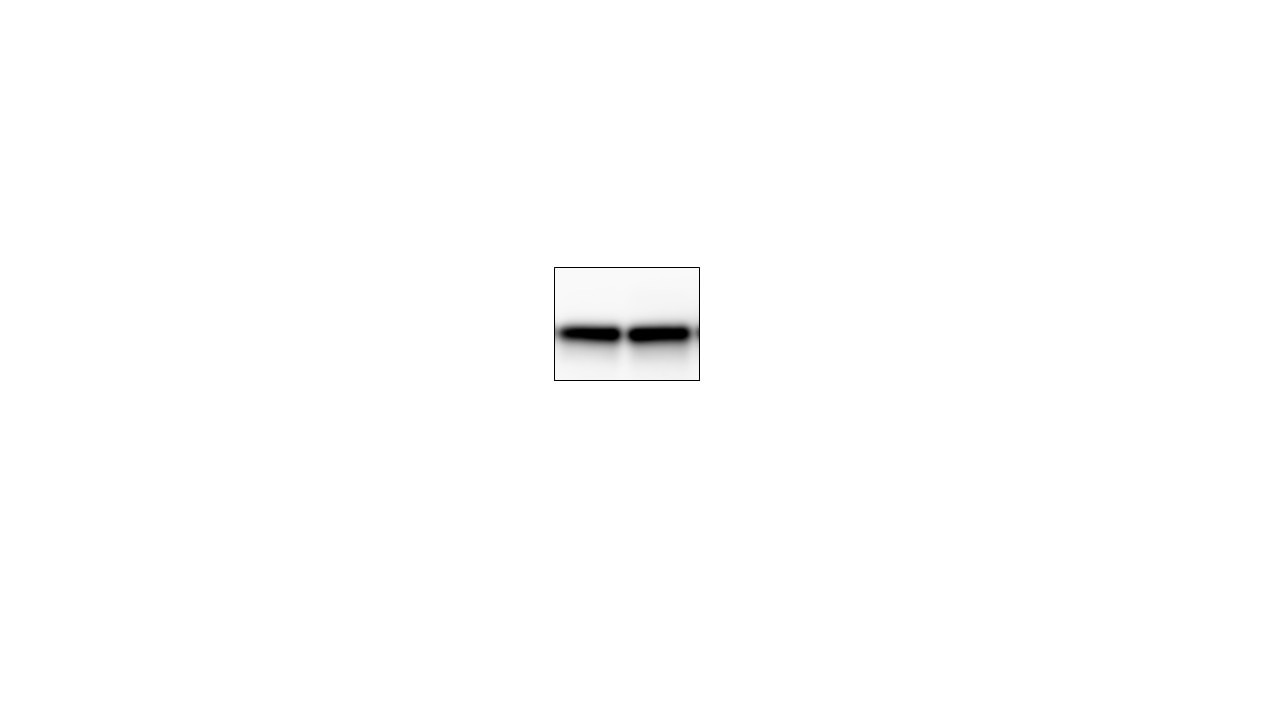
Both reviewers used this antibody for Western Blot and reported positive results. One user tested it on lung tissue at a 1:800 dilution and rated it 5 out of 5, describing the performance as "good." The other user tested it on liver tissue at a 1:1000 dilution, rated it 4 out of 5, and confirmed it worked well for Western Blot. Overall, the antibody received favorable feedback for its WB performance across different tissue types.
The reviews below have been submitted by verified Proteintech customers who received an incentive for providing their feedback.
S (Verified Customer) (06-17-2026) | Good
 |
MALLIKARJUNA (Verified Customer) (10-24-2025) | WORK GOOD FOR WESTRN BLOT
|






