
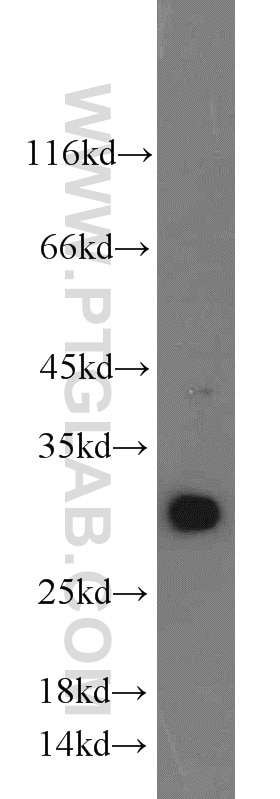
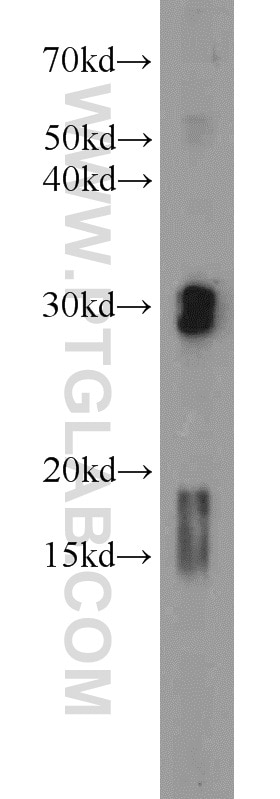
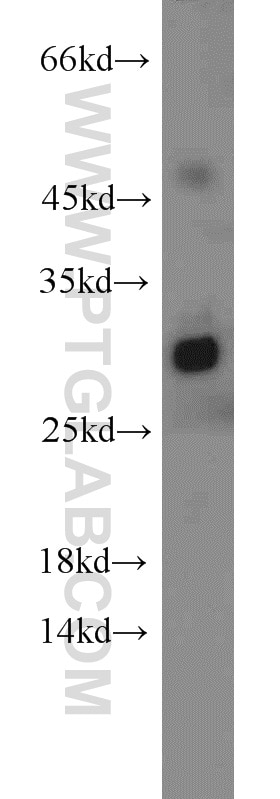
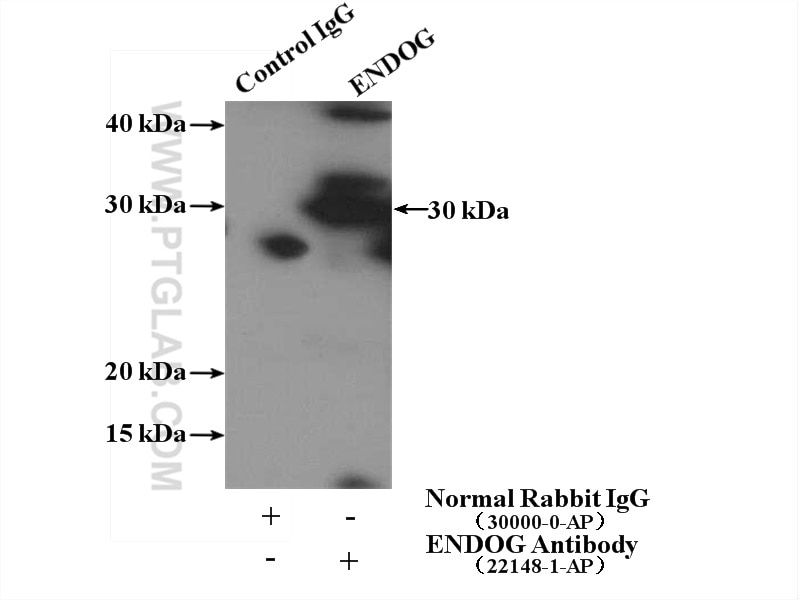

Tested Applications
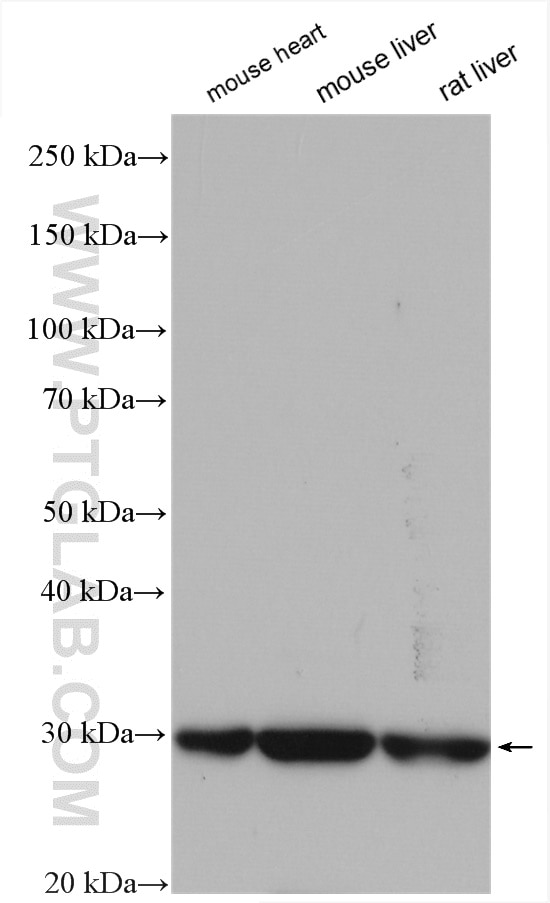
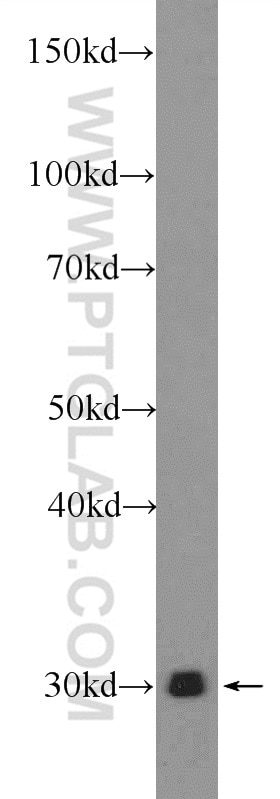
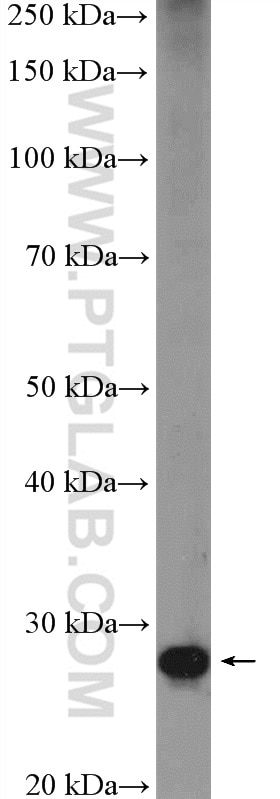
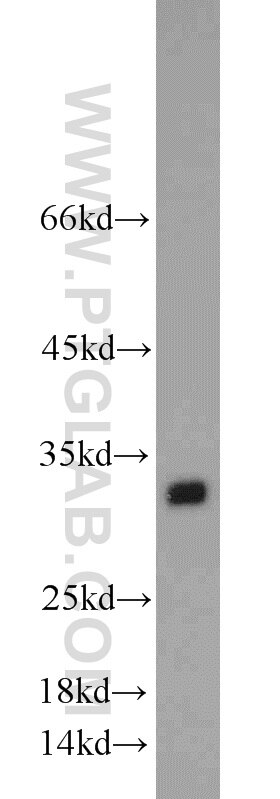
| Positive WB detected in | mouse heart tissue, mouse kidney tissue, mouse liver tissue, mouse skeletal muscle tissue, rat kidney tissue, rat liver tissue |
| Positive IP detected in | mouse heart tissue |
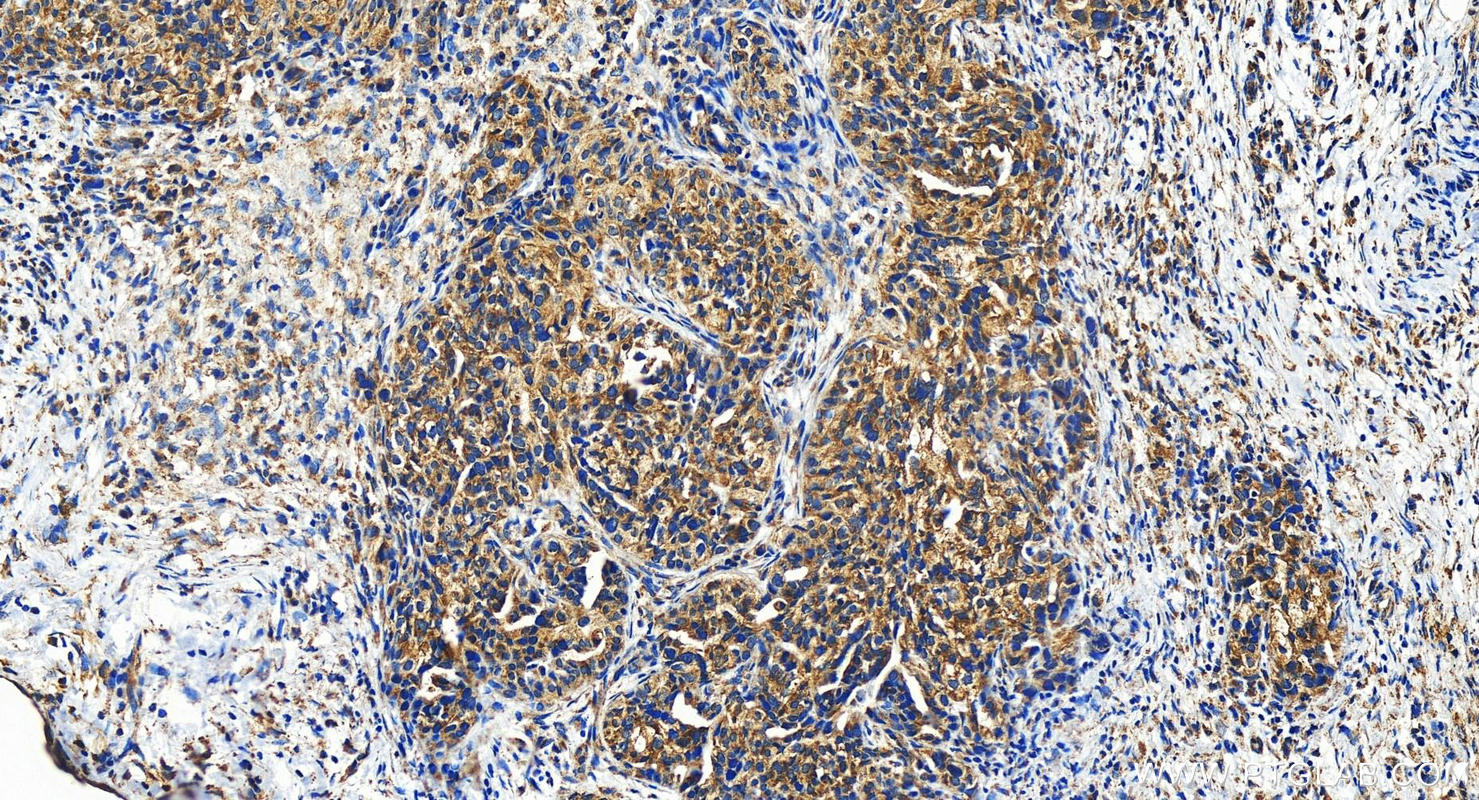
| Positive IHC detected in | human ovary cancer tissue Note: suggested antigen retrieval with TE buffer pH 9.0; (*) Alternatively, antigen retrieval may be performed with citrate buffer pH 6.0 |
Recommended dilution
| Application | Dilution |
|---|---|
| Western Blot (WB) | WB : 1:2000-1:16000 |
| Immunoprecipitation (IP) | IP : 0.5-4.0 ug for 1.0-3.0 mg of total protein lysate |
| Immunohistochemistry (IHC) | IHC : 1:400-1:1600 |
| It is recommended that this reagent should be titrated in each testing system to obtain optimal results. | |
| Sample-dependent, Check data in validation data gallery. | |
Product Information
22148-1-AP targets ENDOG in WB, IHC, IF, IP, CoIP, ELISA applications and shows reactivity with human, mouse, rat samples.
| Tested Reactivity | human, mouse, rat |
| Cited Reactivity | human, mouse, rat |
| Host / Isotype | Rabbit / IgG |
| Class | Polyclonal |
| Type | Antibody |
| Immunogen |
CatNo: Ag17739 Product name: Recombinant human ENDOG protein Source: e coli.-derived, PGEX-4T Tag: GST Domain: 63-297 aa of BC016351 Sequence: ELAKYGLPGLAQLKSRESYVLCYDPRTRGALWVVEQLRPERLRGDGDRRECDFREDDSVHAYHRATNADYRGSGFDRGHLAAAANHRWSQKAMDDTFYLSNVAPQVPHLNQNAWNNLEKYSRSLTRSYQNVYVCTGPLFLPRTEADGKSYVKYQVIGKNHVAVPTHFFKVLILEAAGGQIELRTYVMPNAPVDEAIPLERFLVPIESIERASGLLFVPNILARAGSLKAITAGSK Predict reactive species |
| Full Name | endonuclease G |
| Calculated Molecular Weight | 297 aa, 33 kDa |
| Observed Molecular Weight | 27-30 kDa |
| GenBank Accession Number | BC016351 |
| Gene Symbol | ENDOG |
| Gene ID (NCBI) | 2021 |
| RRID | AB_11232230 |
| Conjugate | Unconjugated |
| Form | Liquid |
| Purification Method | Antigen affinity purification |
| UNIPROT ID | Q14249 |
| Storage Buffer | PBS with 0.02% sodium azide and 50% glycerol, pH 7.3. |
| Storage Conditions | Store at -20°C. Stable for one year after shipment. Aliquoting is unnecessary for -20oC storage. 20ul sizes contain 0.1% BSA. |
Background Information
Endonuclease G, also named as EndoG, is a mitochondrial protein. It's a nuclease which was first characterized in bovine heart mitochondrial extracts. It's involved in many cellular process, including apoptosis, paternal mitochondrial elimination and autophage (PMID:33473107). It is a nuclear encoded, sugar-non-specific (PMID:15066427) and well-conserved nuclease (PMID:17244531). It can be released from the mitochondria and translocated to the nucleus where it induces fragmentation of DNA, leading to apoptosis (PMID:11452314). EndoG is a 297-amino-acid long protein with a molecular weight of 30-35 kDa. There is a homodimer form with MW about 60-70 kDa.
Protocols
| Product Specific Protocols | |
|---|---|
| IHC protocol for ENDOG antibody 22148-1-AP | Download protocol |
| IP protocol for ENDOG antibody 22148-1-AP | Download protocol |
| WB protocol for ENDOG antibody 22148-1-AP | Download protocol |
| Standard Protocols | |
|---|---|
| Click here to view our Standard Protocols |
Publications
What published studies show
The ENDOG Polyclonal antibody (catalog number 22148-1-AP) has 14 total citations. These appear in journals including J Nanobiotechnology, JHEP Rep, Cell Reports, Life Sciences, International Journal of Molecular Sciences, Frontiers in Pharmacology, Inflammation, Chemical Biology & Interactions, Cancers, Molecular and Cellular Neuroscience, Metallomics, and FEBS Open Biology. The research fields span apoptosis, ferroptosis, liver injury, mitochondrial dysfunction, oxidative stress, neurotoxicity, and various cancers (lung, bladder, ovarian, hepatocellular, and solid tumors).
| Species | Application | Title |
|---|---|---|
J Nanobiotechnology Multifunctional Fe-based coordination polymer nano-bomb modified with β-lapachone and CaO2 for targeted tumor dual chemodynamic therapy with enhanced ferroptosis and H2O2 self-supply | ||
JHEP Rep Downregulation of hepatic METTL3 contributes to APAP-induced liver injury in mice | ||
Cell Rep An updated inventory of genes essential for oxidative phosphorylation identifies a mitochondrial origin in familial Ménière's disease | ||
Life Sci Inhibition of autophagy enhances timosaponin AIII-induced lung cancer cell apoptosis and anti-tumor effect in vitro and in vivo. | ||
Int J Mol Sci Proteomics Analysis of Tangeretin-Induced Apoptosis through Mitochondrial Dysfunction in Bladder Cancer Cells. | ||
Front Pharmacol Quercitrin Attenuates Acetaminophen-Induced Acute Liver Injury by Maintaining Mitochondrial Complex I Activity. |
Reviews
What customers say
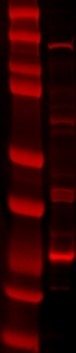
The single review for this product is a 5-star rating from a Western Blot application. The user tested the antibody on mitochondrial fraction from mouse brain tissue at a 1:1000 dilution with overnight incubation at 4°C, paired with an IRDye 680LT secondary antibody at 1:15000. The protocol used a 4–12% Bis-Tris gradient gel and overnight transfer at 30V. The reviewer reported clear, specific band detection, confirming the antibody performs well for detecting the target in subcellular fractions under standard WB conditions.
The reviews below have been submitted by verified Proteintech customers who received an incentive for providing their feedback.
Lana (Verified Customer) (06-11-2021) | SDS-PAGE: 40 ug/ul RIPA protein lysate, 4-12% Bis-Tris gradient gel. Transfer: Immobilon-FL transfer membranes (Millipore) O/N at 30V, 4C. Blocking: SEA Block Blocking Buffer 1h, room T. Primary Ab: O/N incubation at 4C, 1:1000. Secondary Ab: IRDye 680LT Goat anti-Rabbit, 1:15000. Lines of WB image: 1 – protein ladder, 2 – mitochondria fraction lysate.
 |










