

Tested Applications
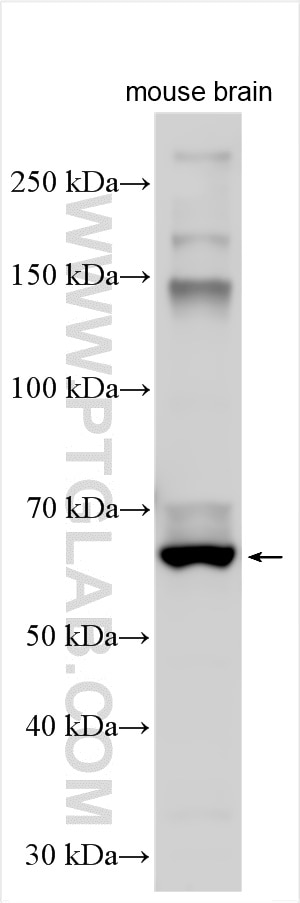
| Positive WB detected in | mouse brain tissue |
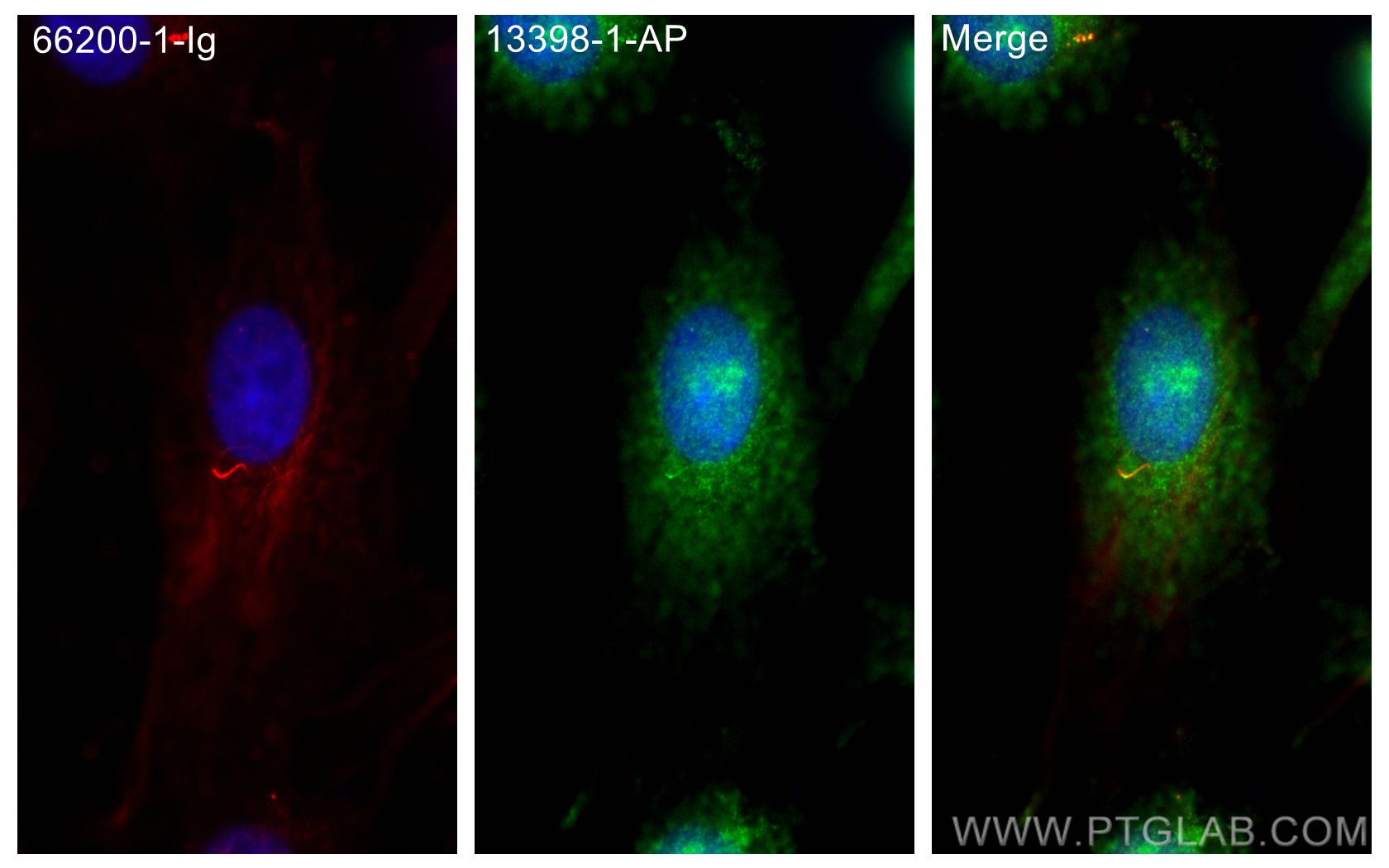
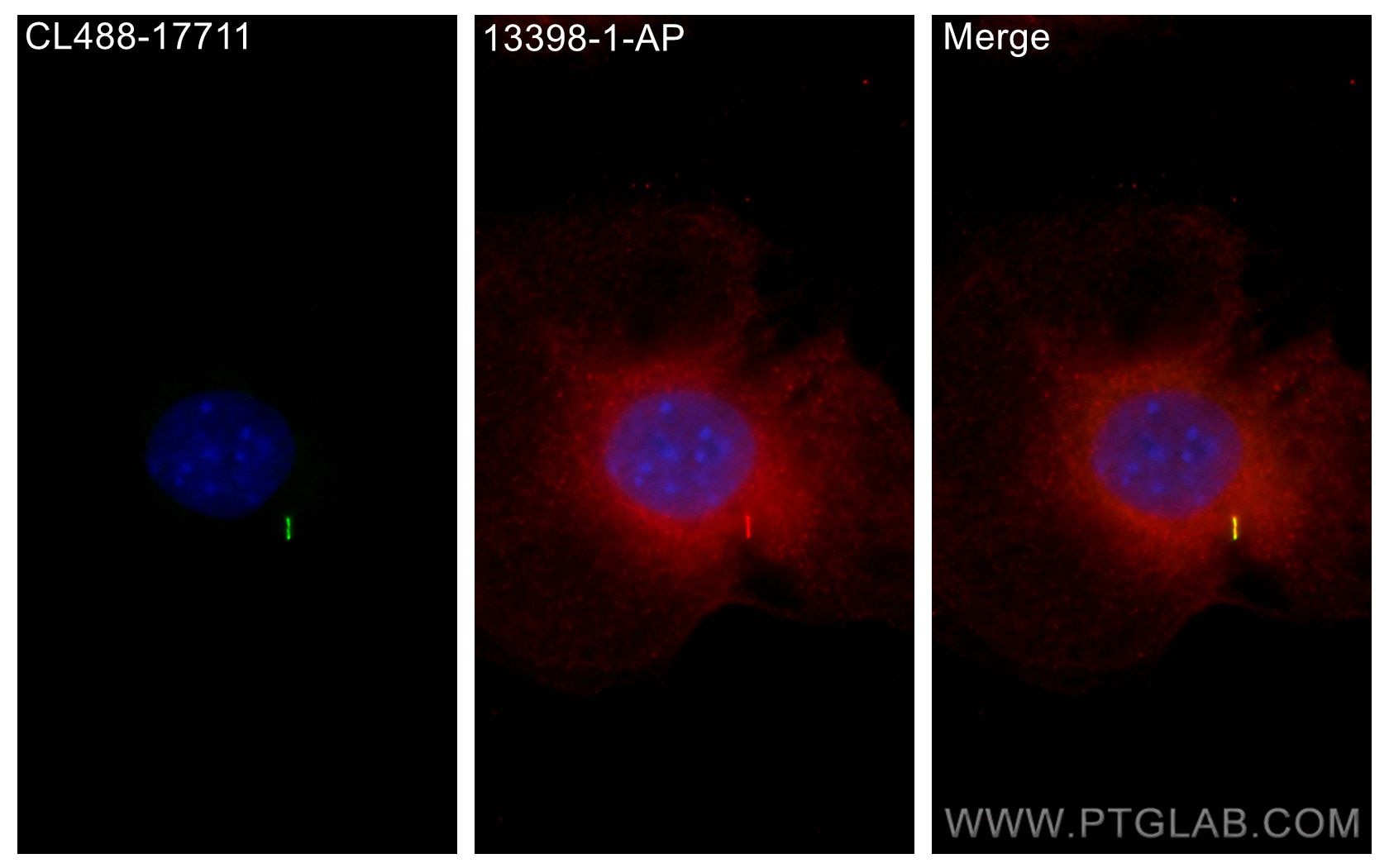
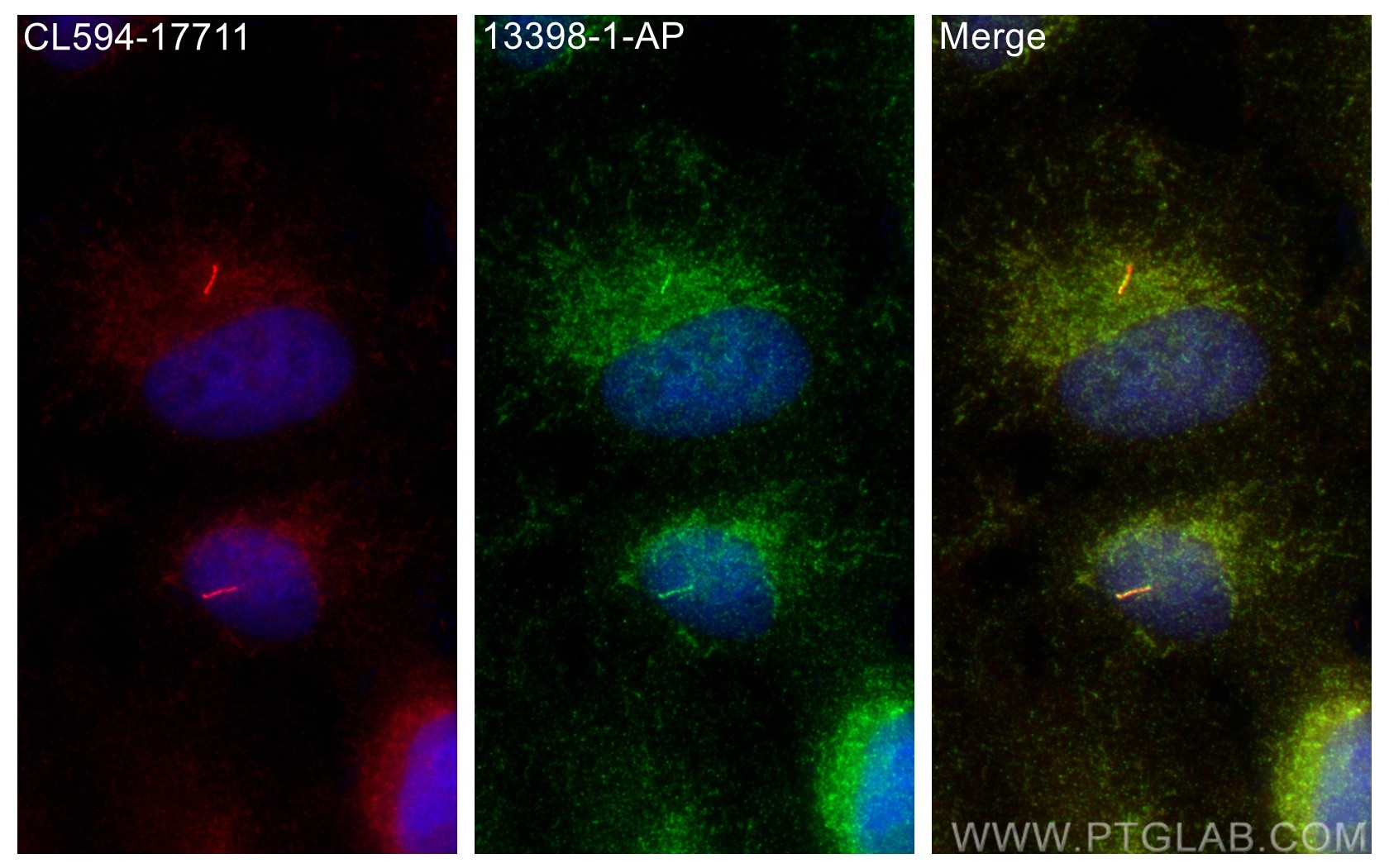
| Positive IF/ICC detected in | MDCK cells, ARPE-19 cells, C2C12 cells |
Recommended dilution
| Application | Dilution |
|---|---|
| Western Blot (WB) | WB : 1:1000-1:8000 |
| Immunofluorescence (IF)/ICC | IF/ICC : 1:200-1:800 |
| It is recommended that this reagent should be titrated in each testing system to obtain optimal results. | |
| Sample-dependent, Check data in validation data gallery. | |
Product Information
13398-1-AP targets GPR161 in WB, IHC, IF/ICC, IP, CoIP, ELISA applications and shows reactivity with human, mouse, canine samples.
| Tested Reactivity | human, mouse, canine |
| Cited Reactivity | human, mouse, pig, chicken, zebrafish, bovine |
| Host / Isotype | Rabbit / IgG |
| Class | Polyclonal |
| Type | Antibody |
| Immunogen |
CatNo: Ag4221 Product name: Recombinant human GPR161 protein Source: e coli.-derived, PGEX-4T Tag: GST Domain: 321-529 aa of BC028163 Sequence: PLIYGLWNKTVRKELLGMCFGDRYYREPFVQRQRTSRLFSISNRITDLGLSPHLTALMAGGQPLGHSSSTGDTGFSCSQDSGTDMMLLEDYTSDDNPPSHCTCPPKRRSSVTFEDEVEQIKEAAKNSILHVKAEVHKSLDSYAASLAKAIEAEAKINLFGEEALPGVLVTARTVPGGGFGGRRGSRTLVSQRLQLQSIEEGDVLAAEQR Predict reactive species |
| Full Name | G protein-coupled receptor 161 |
| Calculated Molecular Weight | 529 aa, 59 kDa |
| Observed Molecular Weight | 59 kDa |
| GenBank Accession Number | BC028163 |
| Gene Symbol | GPR161 |
| Gene ID (NCBI) | 23432 |
| RRID | AB_2113965 |
| Conjugate | Unconjugated |
| Form | Liquid |
| Purification Method | Antigen affinity purification |
| UNIPROT ID | Q8N6U8 |
| Storage Buffer | PBS with 0.02% sodium azide and 50% glycerol, pH 7.3. |
| Storage Conditions | Store at -20°C. Stable for one year after shipment. Aliquoting is unnecessary for -20oC storage. 20ul sizes contain 0.1% BSA. |
Background Information
GPR161 (also known as RE2) is an orphan G protein-coupled receptor and plays an important role in the Hh pathway. In the absence of Hh signals, GPR161 localizes to primary cilia and keeps the downstream GLI transcription factors in their repressor forms (PMID: 26305592). Ciliary localization of GPR161 requires TULP3 and the IFT-A complex. In the presence of SHH, GPR161 is removed from primary cilia and is internalized into recycling endosomes, preventing its activity and allowing activation of the Shh signaling. GPR161 has a calculated molecular mass of 59 kDa. The 70-kDa band probably represents a modified version of GPR161 (PMID: 18250320).
Protocols
| Product Specific Protocols | |
|---|---|
| IF protocol for GPR161 antibody 13398-1-AP | Download protocol |
| WB protocol for GPR161 antibody 13398-1-AP | Download protocol |
| Standard Protocols | |
|---|---|
| Click here to view our Standard Protocols |
Publications
What published studies show
The GPR161 antibody (Cat# 13398-1-AP) has 46 citations across 30 journals, including Cell, Nature Communications, Science Advances, Developmental Cell, EMBO Journal, Journal of Cell Biology, Molecular Biology of the Cell, Biology Open, and eLife. Research fields span ciliary biology, Hedgehog signaling, ciliary protein trafficking, BBSome function, GPCR regulation, polycystic kidney disease, cancer (medulloblastoma, breast cancer, pancreatic cancer), neurodevelopment, and inflammatory diseases.
| Species | Application | Title |
|---|---|---|
Kidney Int Certain heterozygous variants in the kinase domain of the serine/threonine kinase NEK8 can cause an autosomal dominant form of polycystic kidney disease | ||
Nat Commun Light- and chemical-induced ciliary signaling governs dorsal/ventral regionalization of human telencephalic organoids. | ||
Nat Commun Spatiotemporal manipulation of ciliary glutamylation reveals its roles in intraciliary trafficking and Hedgehog signaling. | ||
Sci Adv Synchronized temporal-spatial analysis via microscopy and phosphoproteomics (STAMP) of quiescence |
Reviews
What customers say
Two reviews were found for this product. One user reported poor performance in immunofluorescence on RPE1 cells, noting that while Triton permeabilization yielded ciliary signal, it was non-specific with no difference observed between stimulated and unstimulated conditions at both 6h and 24h time points. Another user gave a five-star rating for Western Blot, simply describing the antibody as "very efficient." Overall, feedback is mixed, with strong WB performance but concerns about specificity in IF applications.
The reviews below have been submitted by verified Proteintech customers who received an incentive for providing their feedback.
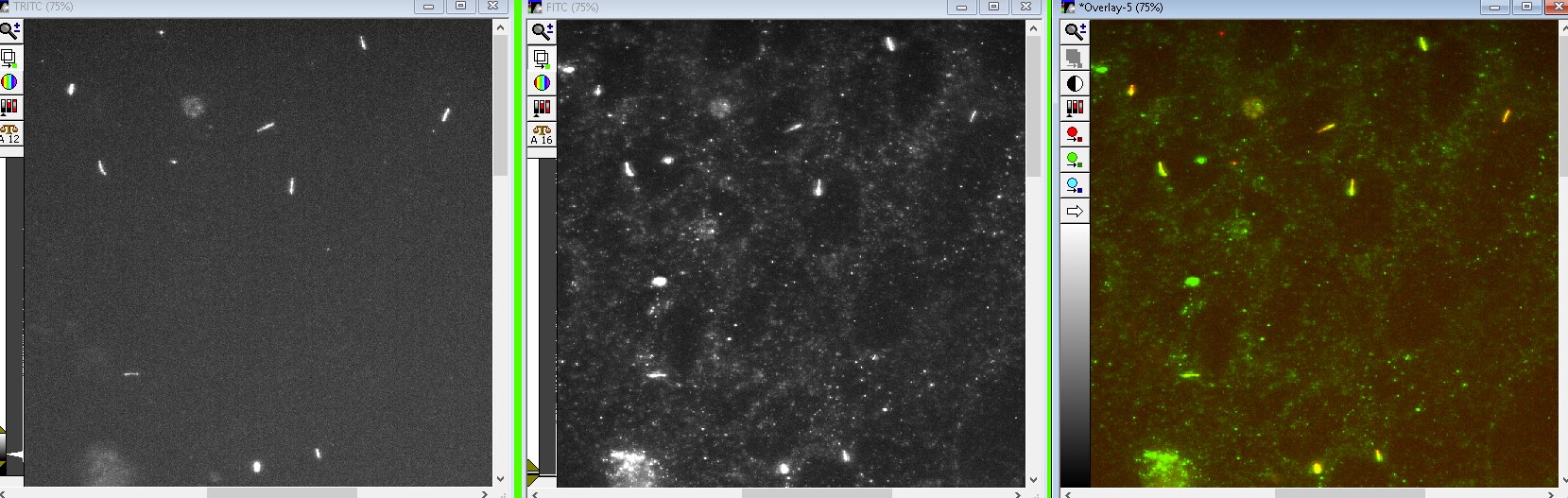
Charlotte (Verified Customer) (06-02-2023) | This protein is expressed within the primary cilia in starvation medium and exits it when stimulated with ShhN. I tested this antibody by IF on 3T3 but difficult to get some signal out. I switched to RPE1 cells that gave me nice signal if you permeabilise with triton and not Methanol. However, the signal is aspecific because there is no difference between - and + ShhN. I also tested at 6h and 24h post stimulation (even though it is reported to exit the primary cilia within 2h) with the same result : ciliary signal in both case.
 |
daniel (Verified Customer) (09-15-2022) | very efficient
|





