
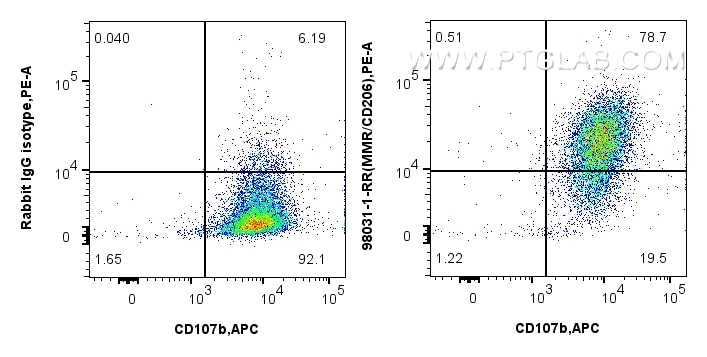
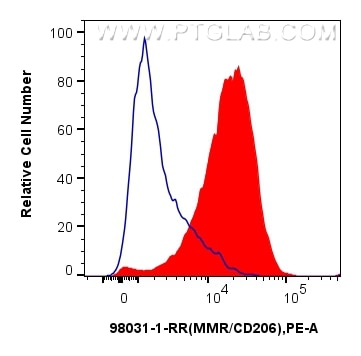
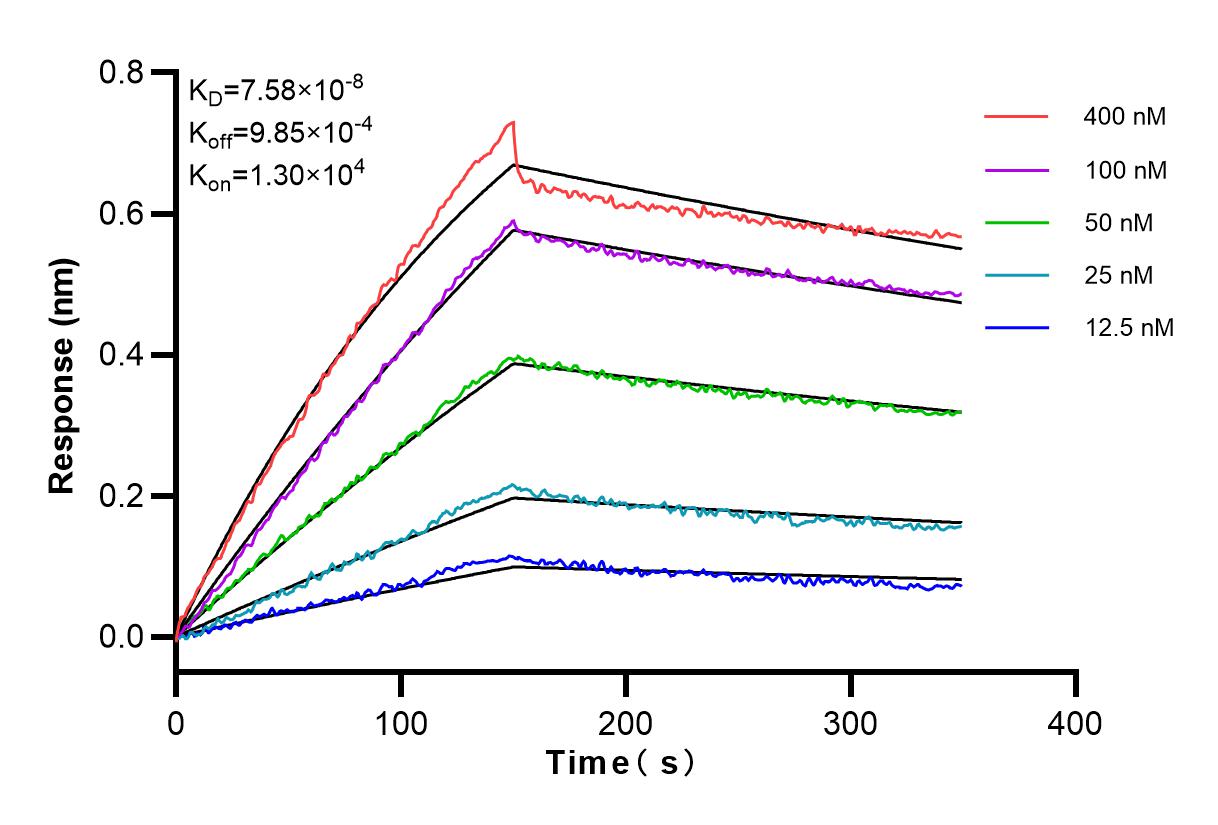
Tested Applications
| Positive FC detected in | mouse peritoneal macrophages |
Recommended dilution
| Application | Dilution |
|---|---|
| Flow Cytometry (FC) | FC : 0.25 ug per 10^6 cells in 100 μl suspension |
| This reagent has been tested for flow cytometric analysis. It is recommended that this reagent should be titrated in each testing system to obtain optimal results. | |
| Sample-dependent, Check data in validation data gallery. | |
Published Applications
| IF | See 3 publications below |
| FC | See 12 publications below |
Product Information
98031-1-RR targets CD206 in IF, FC applications and shows reactivity with mouse samples.
| Tested Reactivity | mouse |
| Cited Reactivity | human, mouse, rat |
| Host / Isotype | Rabbit / IgG |
| Class | Recombinant |
| Type | Antibody |
| Immunogen |
CatNo: Eg0790 Product name: Recombinant mouse MMR/CD206 protein Source: mammalian cells-derived, pHZ-KIsec-C-6*HIS Tag: C-6*HIS Domain: 23-1388 aa of NM_008625.2 Sequence: RQFLIYNEDHKRCVDALSAISVQTATCNPEAESQKFRWVSDSQIMSVAFKLCLGVPSKTDWASVTLYACDSKSEYQKWECKNDTLFGIKGTELYFNYGNRQEKNIKLYKGSGLWSRWKVYGTTDDLCSRGYEAMYSLLGNANGAVCAFPFKFENKWYADCTSAGRSDGWLWCGTTTDYDKDKLFGFCPLHFEGSERLWNKDPLTGILYQINSKSALTWHQARASCKQQNADLLSVTEIHEQMYLTGLTSSLSSGLWIGLNSLSVRSGWQWAGGSPFRYLNWLPGSPSSEPGKSCVSLNPGKNAKWENLECVQKLGYICKKGNNTLNPFIIPSASDVPTGCPNQWWPYAGHCYRIHREEKKIQKYALQACRKEGGDLASIHSIEEFDFIFSQLGYEPNDELWIGLNDIKIQMYFEWSDGTPVTFTKWLPGEPSHENNRQEDCVVMKGKDGYWADRACEQPLGYICKMVSQSHAVVPEGADKGCRKGWKRHGFYCYLIGSTLSTFTDANHTCTNEKAYLTTVEDRYEQAFLTSLVGLRPEKYFWTGLSDVQNKGTFRWTVDEQVQFTHWNADMPGRKAGCVAMKTGVAGGLWDVLSCEEKAKFVCKHWAEGVTRPPEPTTTPEPKCPENWGTTSKTSMCFKLYAKGKHEKKTWFESRDFCKAIGGELASIKSKDEQQVIWRLITSSGSYHELFWLGLTYGSPSEGFTWSDGSPVSYENWAYGEPNNYQNVEYCGELKGDPGMSWNDINCEHLNNWICQIQKGKTLLPEPTPAPQDNPPVTADGWVIYKDYQYYFSKEKETMDNARAFCKKNFGDLATIKSESEKKFLWKYINKNGGQSPYFIGMLISMDKKFIWMDGSKVDFVAWATGEPNFANDDENCVTMYTNSGFWNDINCGYPNNFICQRHNSSINATAMPTTPTTPGGCKEGWHLYKNKCFKIFGFANEEKKSWQDARQACKGLKGNLVSIENAQEQAFVTYHMRDSTFNAWTGLNDINAEHMFLWTAGQGVHYTNWGKGYPGGRRSSLSYEDADCVVVIGGNSREAGTWMDDTCDSKQGYICQTQTDPSLPVSPTTTPKDGFVTYGKSSYSLMKLKLPWHEAETYCKDHTSLLASILDPYSNAFAWMKMHPFNVPIWIALNSNLTNNEYTWTDRWRVRYTNWGADEPKLKSACVYMDVDGYWRTSYCNESFYFLCKKSDEIPATEPPQLPGKCPESEQTAWIPFYGHCYYFESSFTRSWGQASLECLRMGASLVSIETAAESSFLSYRVEPLKSKTNFWIGMFRNVEGKWLWLNDNPVSFVNWKTGDPSGERNDCVVLASSSGLWNNIHCSSYKGFICKMPKIIDPVTTHSSITTKADQRKMDPQPKGSSKA Predict reactive species |
| Full Name | mannose receptor, C type 1 |
| Calculated Molecular Weight | 165 kDa |
| GenBank Accession Number | NM_008625.2 |
| Gene Symbol | CD206 |
| Gene ID (NCBI) | 17533 |
| RRID | AB_3672176 |
| Conjugate | Unconjugated |
| Form | Liquid |
| Purification Method | Protein A purfication |
| UNIPROT ID | Q2HZ94 |
| Storage Buffer | PBS with 0.09% sodium azide, pH 7.3. |
| Storage Conditions | Store at 2-8°C. Stable for one year after shipment. |
Background Information
CD206, also named as MMR, CLEC13D and MRC1, is a type I membrane receptor that mediates the endocytosis of glycoproteins by macrophages. CD206 has been shown to bind high-mannose structures on the surface of potentially pathogenic viruses, bacteria, and fungi so that they can be neutralized by phagocytic engulfment. CD206 is a 170 kDa transmembrane protein which contains 5 domains: an amino-terminal cysteine-rich region, a fibronectin type II repeat, a series of eight tandem lectin-like carbohydrate recognition domains (responsible for the recognition of mannose and fucose), a transmembrane domain, and an intracellular carboxy-terminal tail. It is expressed on most tissue macrophages, in vitro derived dendritic cells, lymphatic and sinusoidal endothelia.
Protocols
| Product Specific Protocols | |
|---|---|
| FC protocol for CD206 antibody 98031-1-RR | Download protocol |
| Standard Protocols | |
|---|---|
| Click here to view our Standard Protocols |
Publications
| Species | Application | Title |
|---|---|---|
Bioact Mater A ceramic microbridge microfluidic chip to study osteogenic differentiation of mesenchymal stem cells in bioactive ceramic immune microenvironment | ||
Bioact Mater Engineered polypeptide cascade-release platform restores macrophage plasticity for accelerated diabetic wound healing. | ||
Respir Res GJB2 drives LUAD progression in part via cAMP-mediated M2 macrophage polarization through the PKA-CREB pathway. | ||
Neurochem Res AQP4-IgG-Induced Astrocyte-Derived Small Extracellular Vesicles Carrying Mitochondrial DNA Regulate the TLR9/MyD88/NF-κB Pathway to Drive Microglial Activation and Neuromyelitis Optica. | ||
J Nanobiotechnology Extracellular vesicles derived from Kaempferia Galanga L. show promise for targeted oral therapy in the treatment of ulcerative colitis. | ||
Inflammation Moxibustion Alleviates Inflammation via SIRT5-mediated Post-translational Modification and Macrophage Polarization |




