
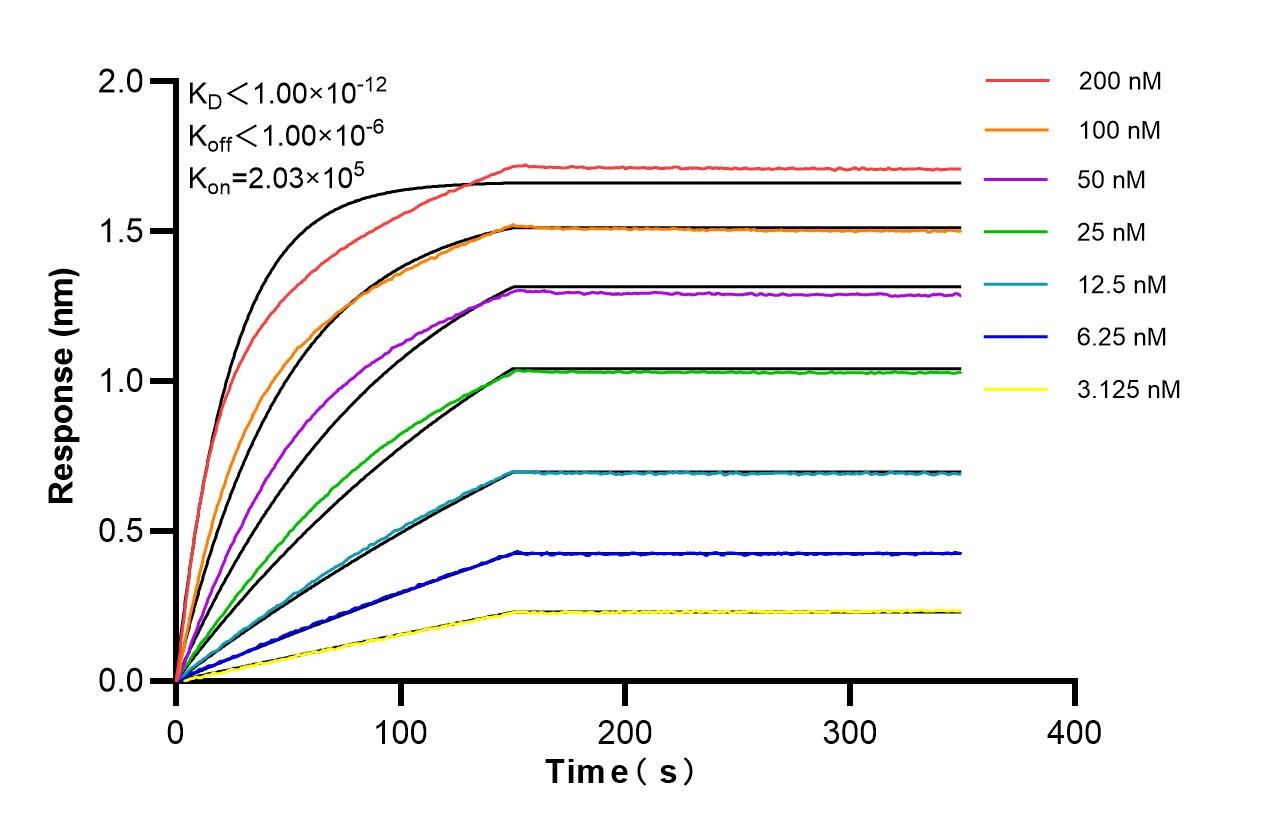
Tested Applications
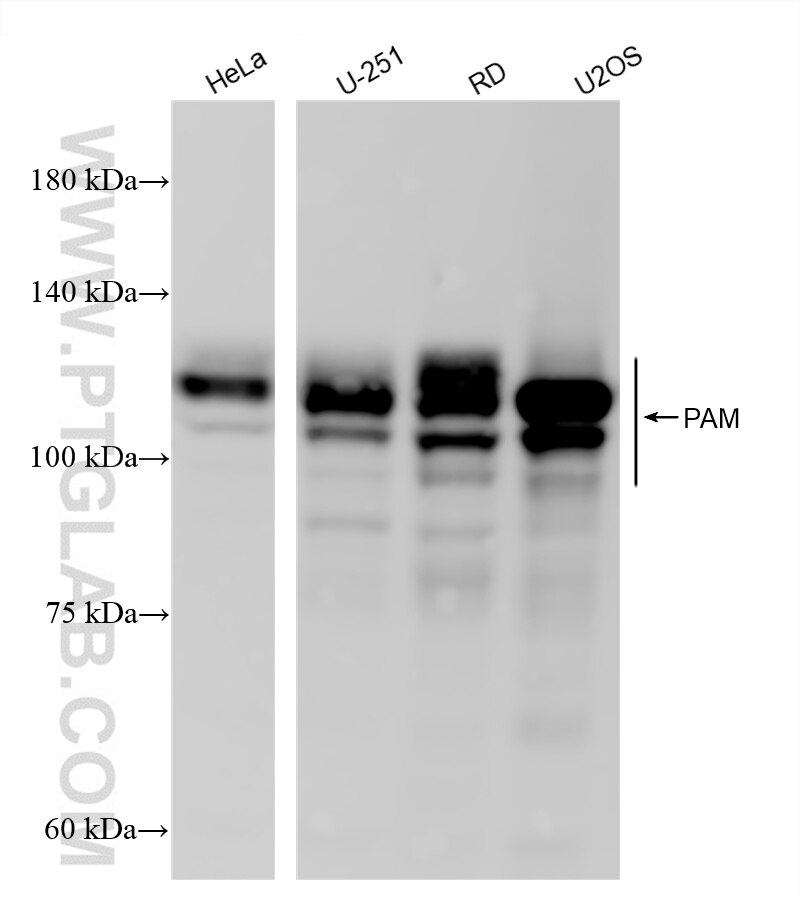
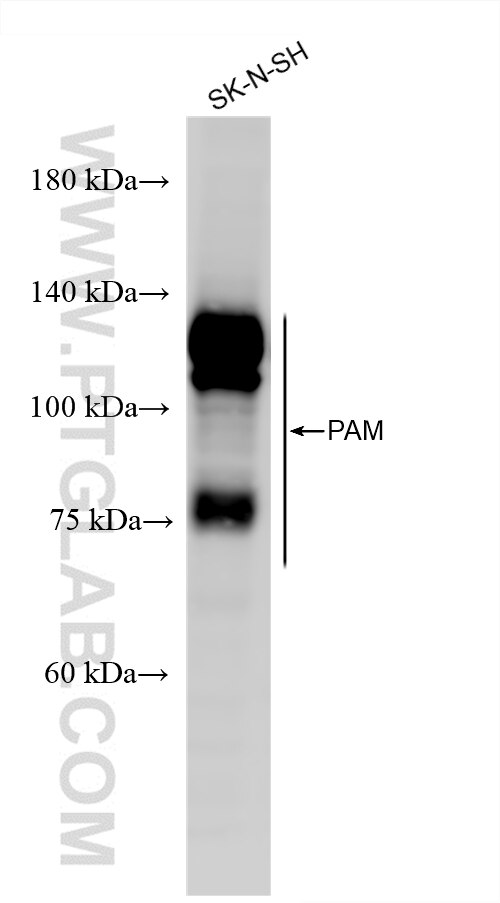
| Positive WB detected in | HeLa cells, U-251 cells, RD cells, U2OS cells, SK-N-SH cells |
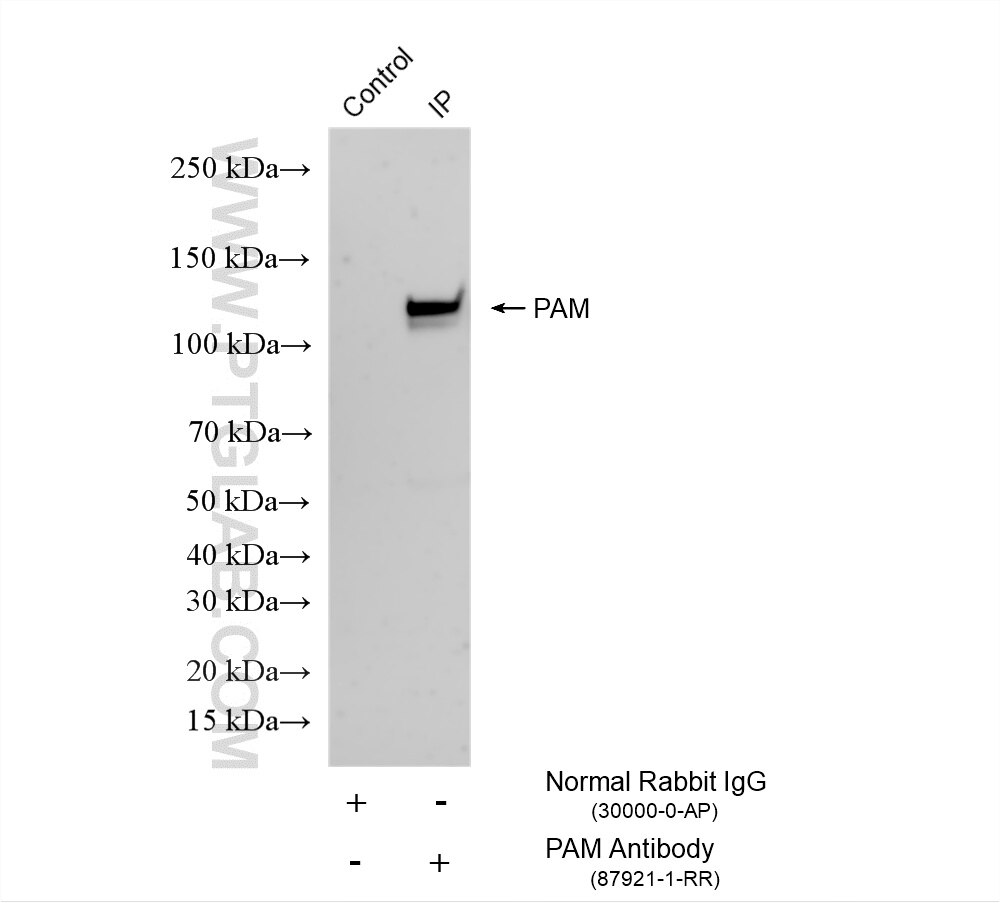
| Positive IP detected in | U2OS cells |
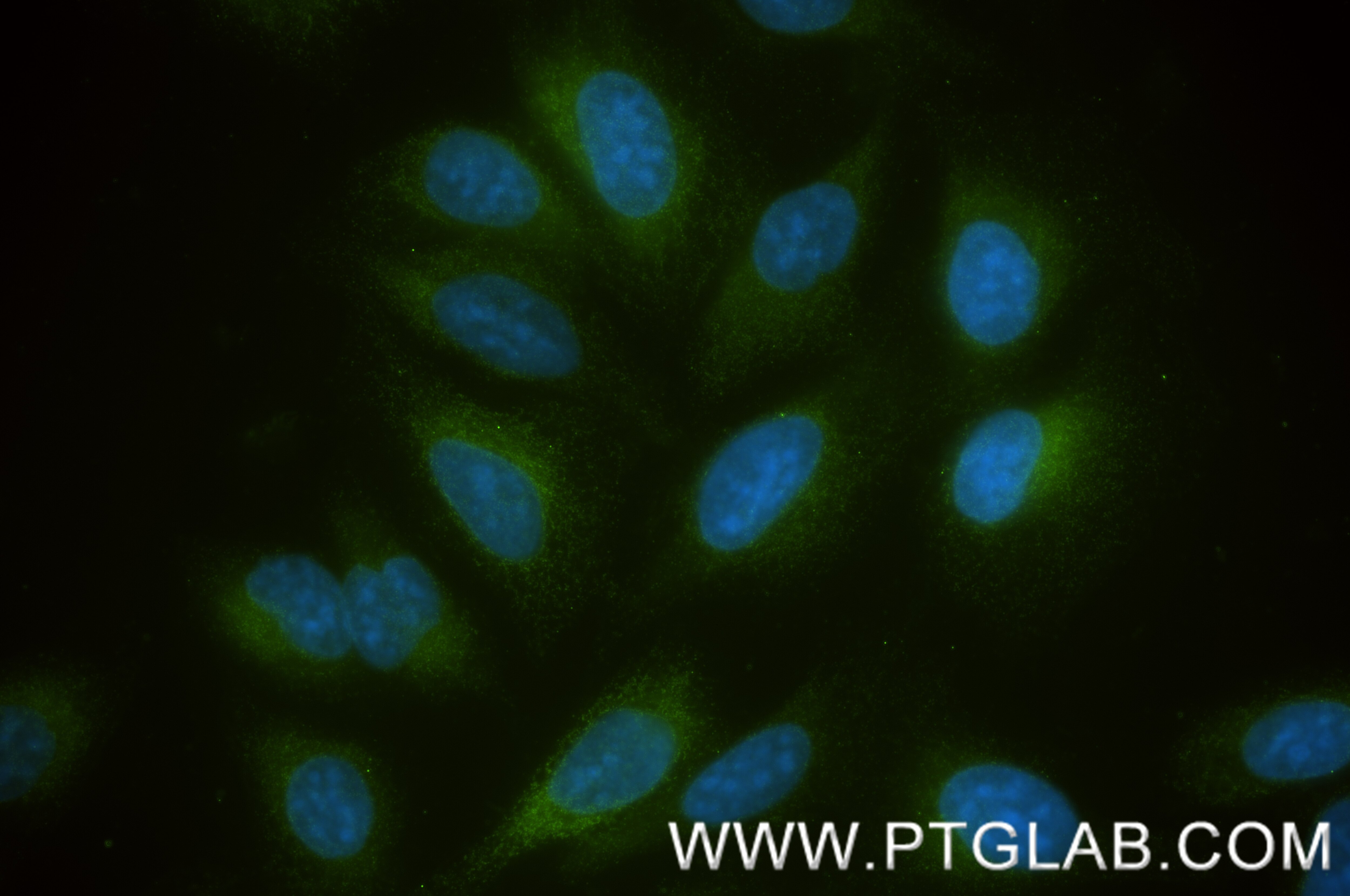
| Positive IF/ICC detected in | U2OS cells |
Recommended dilution
| Application | Dilution |
|---|---|
| Western Blot (WB) | WB : 1:2000-1:10000 |
| Immunoprecipitation (IP) | IP : 0.5-4.0 ug for 1.0-3.0 mg of total protein lysate |
| Immunofluorescence (IF)/ICC | IF/ICC : 1:200-1:800 |
| It is recommended that this reagent should be titrated in each testing system to obtain optimal results. | |
| Sample-dependent, Check data in validation data gallery. | |
Product Information
87921-1-RR targets PAM in WB, IF/ICC, IP, ELISA applications and shows reactivity with human samples.
| Tested Reactivity | human |
| Host / Isotype | Rabbit / IgG |
| Class | Recombinant |
| Type | Antibody |
| Immunogen |
CatNo: Eg5194 Product name: Recombinant human PAM protein Source: mammalian cells-derived, pHZ-KIsec-C-rFc Tag: C-rFc Domain: 21-494 aa of NM_001177306.2 Sequence: FRSPLSVFKRFKETTRPFSNECLGTTRPVVPIDSSDFALDIRMPGVTPKQSDTYFCMSMRIPVDEEAFVIDFKPRASMDTVHHMLLFGCNMPSSTGSYWFCDEGTCTDKANILYAWARNAPPTRLPKGVGFRVGGETGSKYFVLQVHYGDISAFRDNNKDCSGVSLHLTRLPQPLIAGMYLMMSVDTVIPAGEKVVNSDISCHYKNYPMHVFAYRVHTHHLGKVVSGYRVRNGQWTLIGRQSPQLPQAFYPVGHPVDVSFGDLLAARCVFTGEGRTEATHIGGTSSDEMCNLYIMYYMEAKHAVSFMTCTQNVAPDMFRTIPPEANIPIPVKSDMVMMHEHHKETEYKDKIPLLQQPKREEEEVLDQGDFYSLLSKLLGEREDVVHVHKYNPTEKAESESDLVAEIANVVQKKDLGRSDAREGAEHERGNAILVRDRIHKFHRLVSTLRPPESRVFSLQQPPPGEGTWEPEHTG Predict reactive species |
| Full Name | peptidylglycine alpha-amidating monooxygenase |
| Calculated Molecular Weight | 108 kDa |
| Observed Molecular Weight | 75 kDa and 105-120 kDa |
| GenBank Accession Number | NM_001177306.2 |
| Gene Symbol | PAM |
| Gene ID (NCBI) | 5066 |
| RRID | AB_3745828 |
| Conjugate | Unconjugated |
| Form | Liquid |
| Purification Method | Protein A purification |
| UNIPROT ID | P19021-1 |
| Storage Buffer | PBS with 0.02% sodium azide and 50% glycerol, pH 7.3. |
| Storage Conditions | Store at -20°C. Stable for one year after shipment. Aliquoting is unnecessary for -20oC storage. 20ul sizes contain 0.1% BSA. |
Background Information
Peptidyl-glycine alpha-amidating monooxygenase (PAM) is a bifunctional type I membrane protein essential for neuropeptide maturation. It catalyzes the C-terminal amidation of peptides via two sequential enzymatic domains: peptidylglycine α-hydroxylating monooxygenase (PHM, ~44-46 kDa) and peptidyl-α-hydroxyglycine α-amidating lyase (PAL, ~50 kDa), which together convert glycine-extended precursors into bioactive amidated peptides. PAM undergoes alternative splicing, generating integral membrane isoforms such as PAM-1 (~120 kDa) and PAM-2 (~105 kDa). Endoproteolytic cleavage produces soluble monofunctional PHM and PAL, as well as a bifunctional ~75 kDa fragment. The cleaved cytosolic domain (sfCD, ~16 kDa) can translocate to the nucleus, influencing gene expression. PAM also supports angiogenesis and tumor progression, notably in glioblastoma, highlighting its therapeutic potential (PMID: 8436961; PMID: 32054826).
Protocols
| Product Specific Protocols | |
|---|---|
| IF protocol for PAM antibody 87921-1-RR | Download protocol |
| IP protocol for PAM antibody 87921-1-RR | Download protocol |
| WB protocol for PAM antibody 87921-1-RR | Download protocol |
| Standard Protocols | |
|---|---|
| Click here to view our Standard Protocols |






