
Product Information
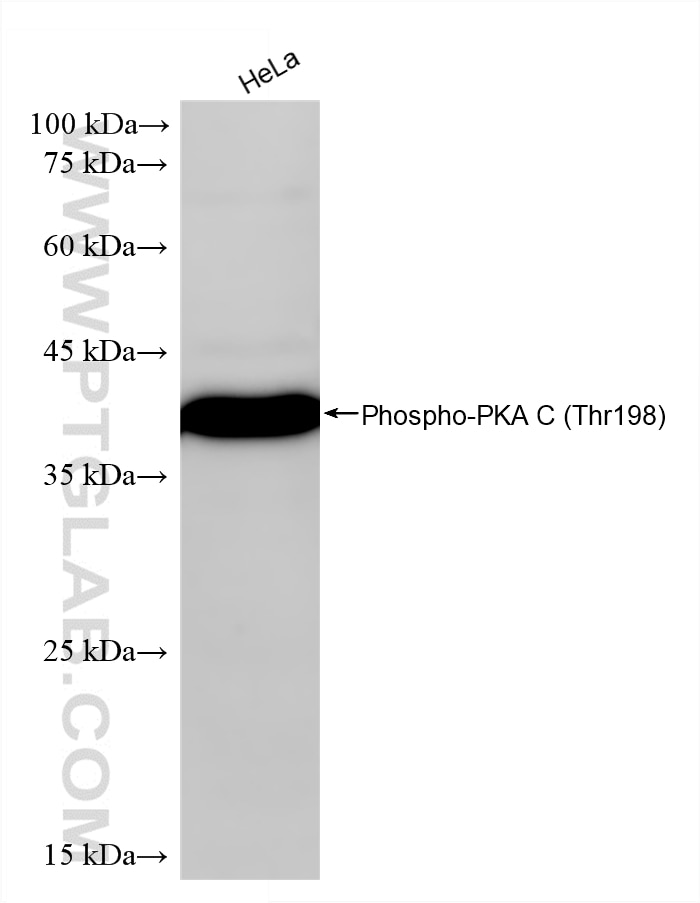
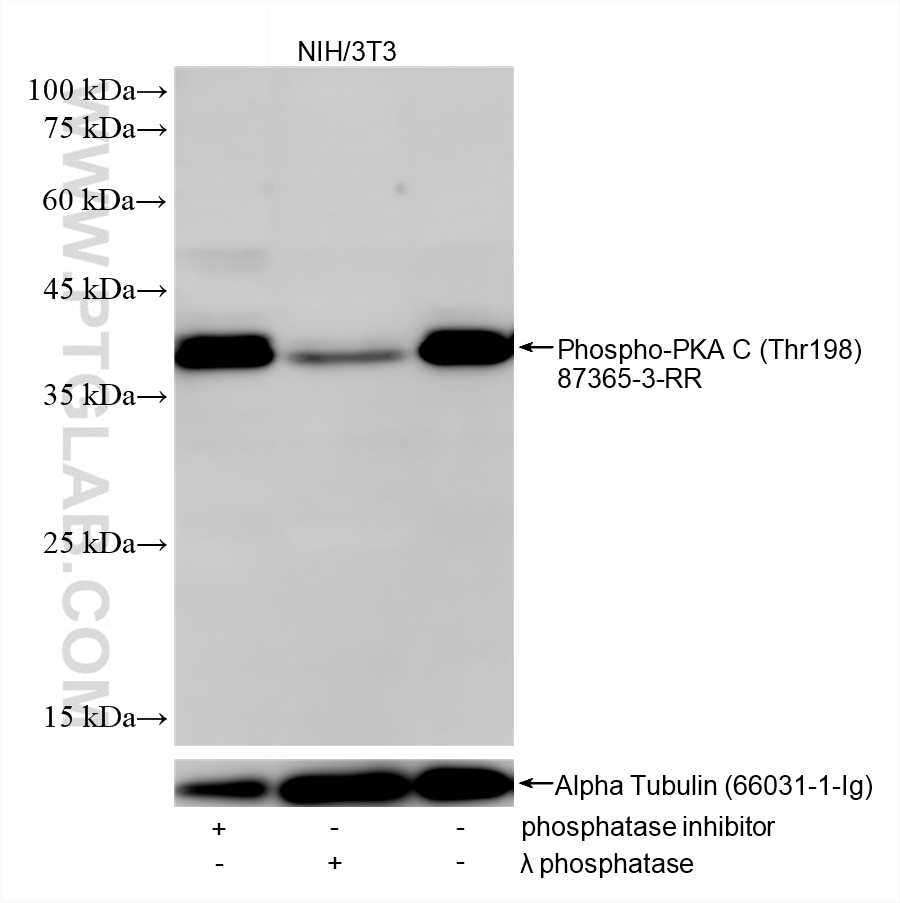
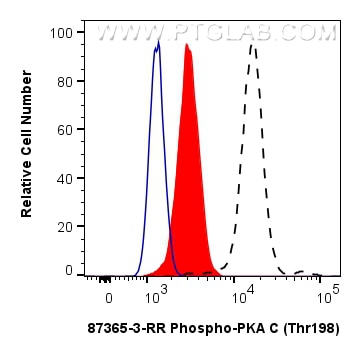
87365-3-PBS targets Phospho-PKA C (Thr198) in WB, FC (Intra), Indirect ELISA applications and shows reactivity with human, mouse samples.
| Tested Reactivity | human, mouse |
| Host / Isotype | Rabbit / IgG |
| Class | Recombinant |
| Type | Antibody |
| Immunogen |
Peptide Predict reactive species |
| Full Name | protein kinase, cAMP-dependent, catalytic, alpha |
| Calculated Molecular Weight | 41 kDa |
| Observed Molecular Weight | 38-43 kDa |
| GenBank Accession Number | NM_002730 |
| Gene Symbol | PRKACA |
| Gene ID (NCBI) | 5566 |
| RRID | AB_3745487 |
| Conjugate | Unconjugated |
| Form | Liquid |
| Purification Method | Protein A purification |
| UNIPROT ID | P17612 |
| Storage Buffer | PBS only, pH 7.3. |
| Storage Conditions | Store at -80°C. |
Background Information
Protein kinase A (PKA) is a 3′-5′-cyclic adenosine monophosphate (cAMP)-dependent kinase that is at the center of diverse biological functions in numerous systems. Inactive PKA is composed of two catalytic (PKA-C) and two regulatory (PKA-R) subunits. The binding of cAMP to the PKA-R subunits activates the enzyme, causing the release of PKA-C. Humans have three genes encoding PKA-C: PRKACA, PRKACB, and PRKACG, and two types of PKA-R's: type PKA-RI (PKA-Riα and PKA-Riβ) and type PKA-RII (PKA-RIIα and PKA-RIIβ).(PMID: 36431013, PMID: 39592424)
This antibody recognizes the phosphorylation at the Thr198 site of PKA-C (including PRKACA, PRKACB, and PRKACG). After removing methionine, the site is also called Thr197.




