

Tested Applications
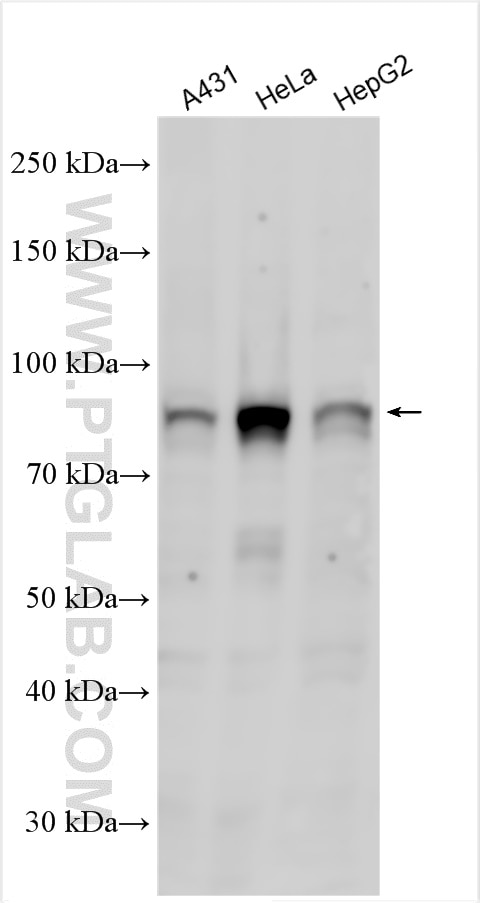
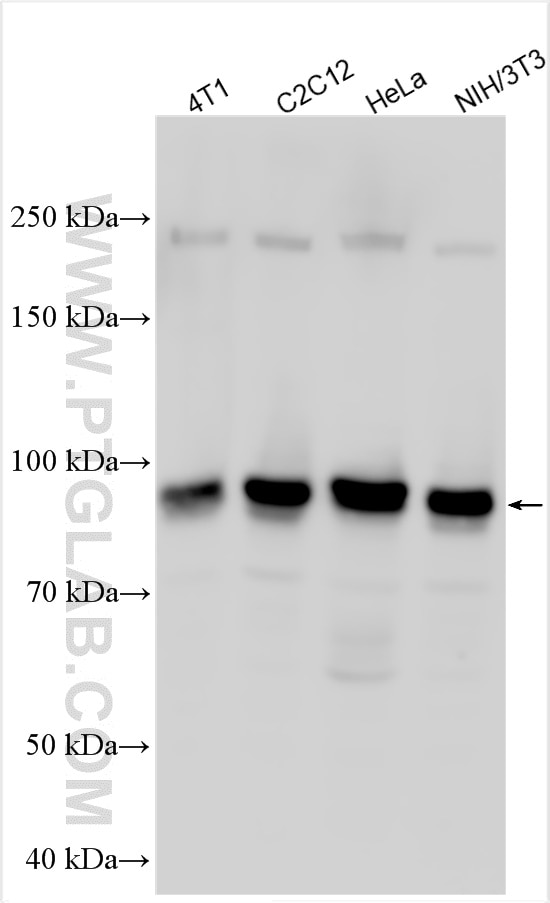
| Positive WB detected in | A431 cells, 4T1 cells, HeLa cells, C2C12 cells, NIH/3T3 cells, HepG2 cells |
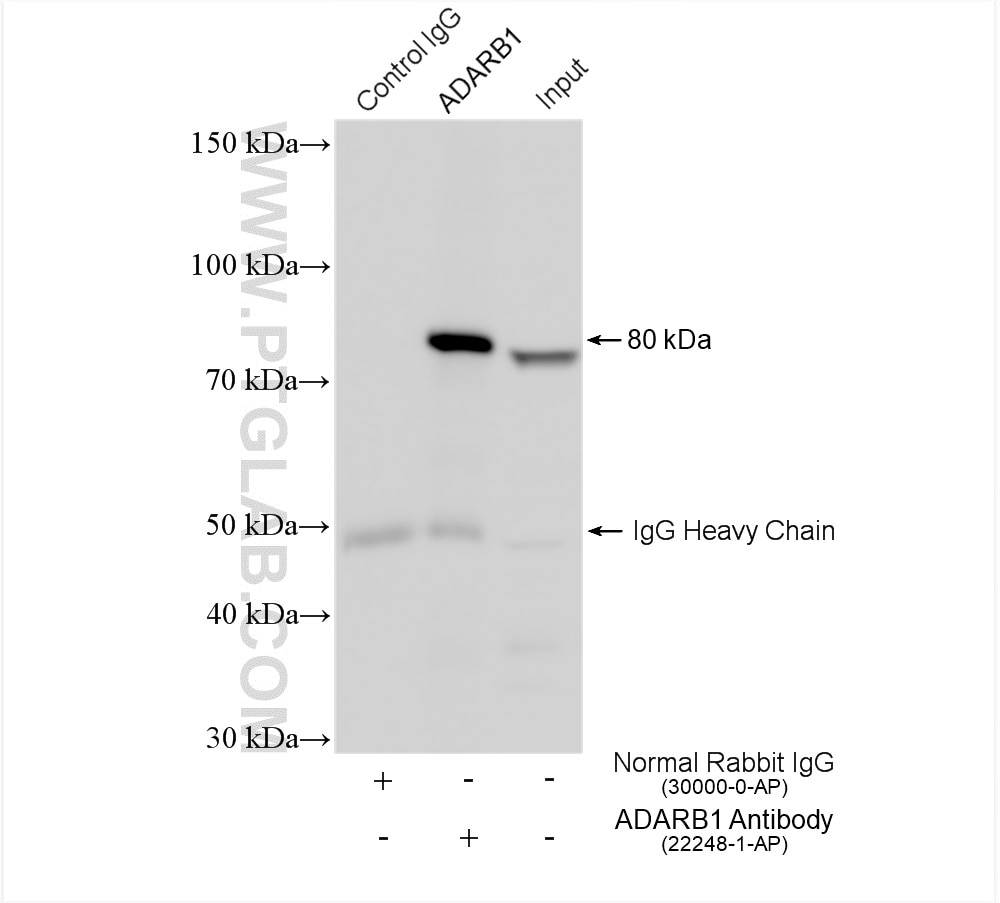
| Positive IP detected in | HeLa cells |
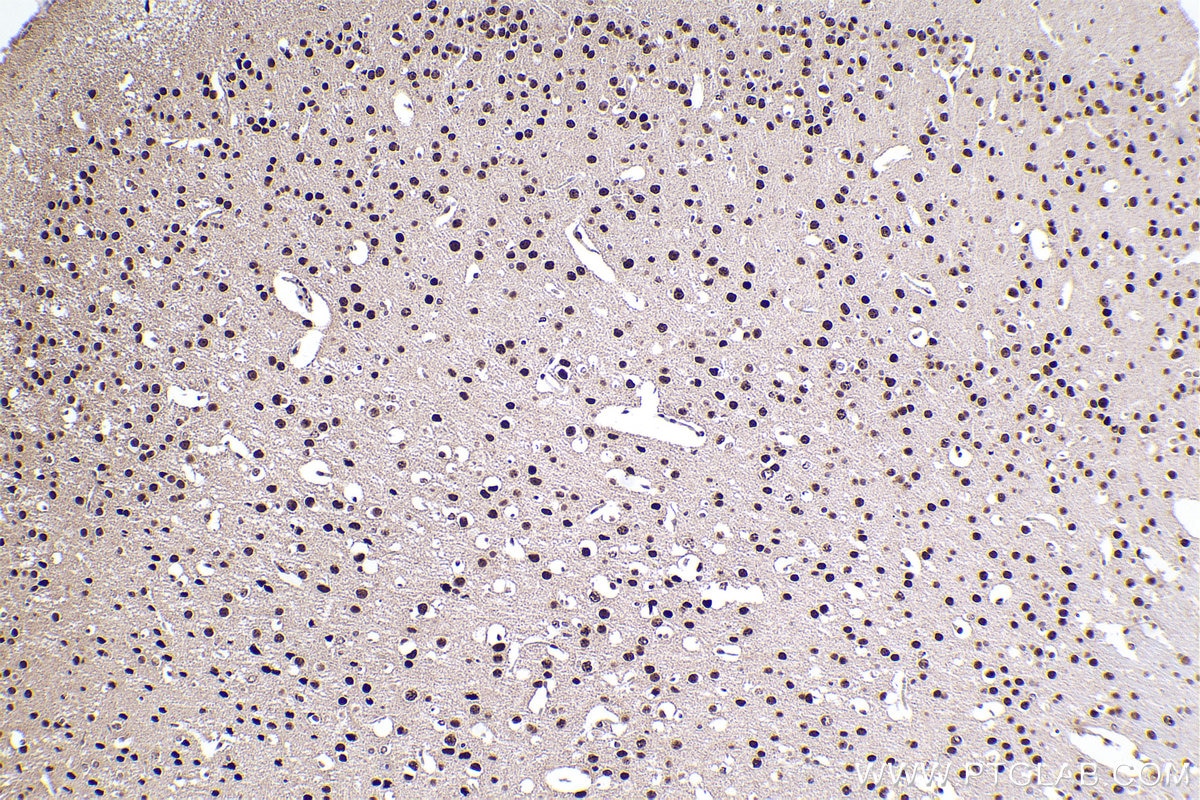
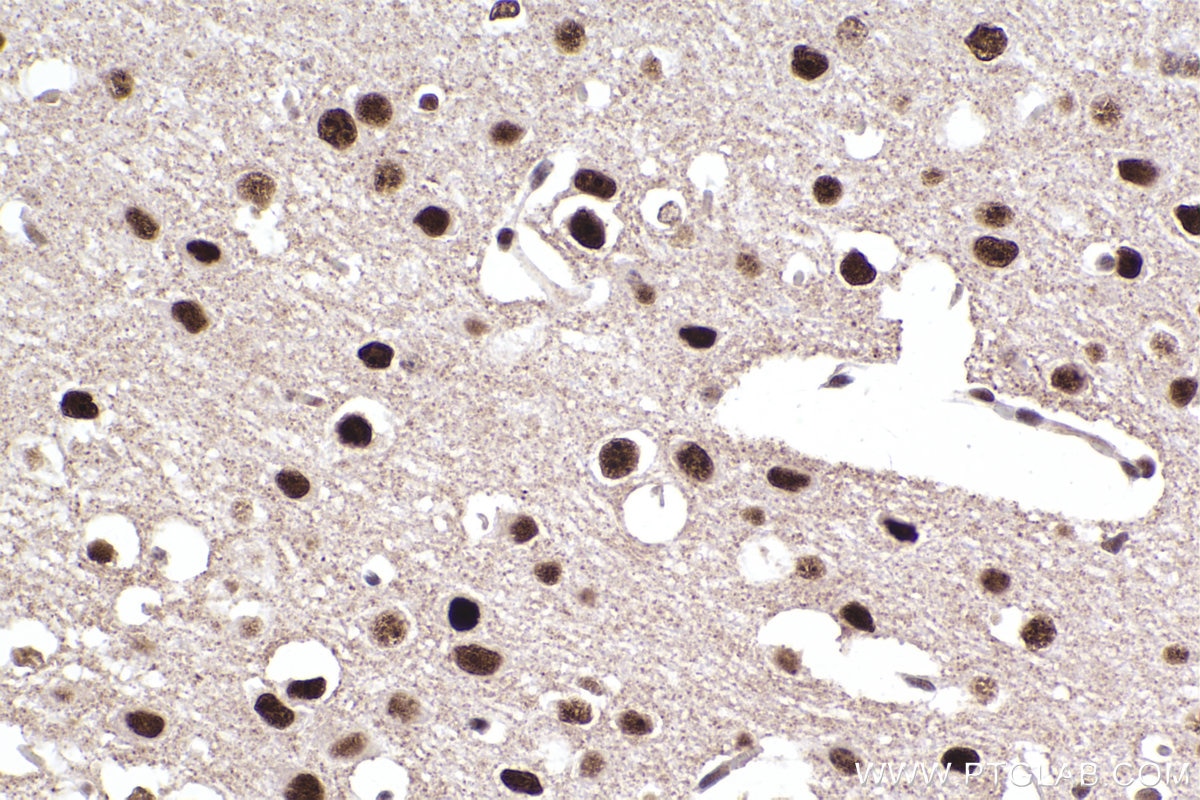
| Positive IHC detected in | mouse brain tissue Note: suggested antigen retrieval with TE buffer pH 9.0; (*) Alternatively, antigen retrieval may be performed with citrate buffer pH 6.0 |
Recommended dilution
| Application | Dilution |
|---|---|
| Western Blot (WB) | WB : 1:1000-1:4000 |
| Immunoprecipitation (IP) | IP : 0.5-4.0 ug for 1.0-3.0 mg of total protein lysate |
| Immunohistochemistry (IHC) | IHC : 1:1000-1:4000 |
| It is recommended that this reagent should be titrated in each testing system to obtain optimal results. | |
| Sample-dependent, Check data in validation data gallery. | |
Product Information
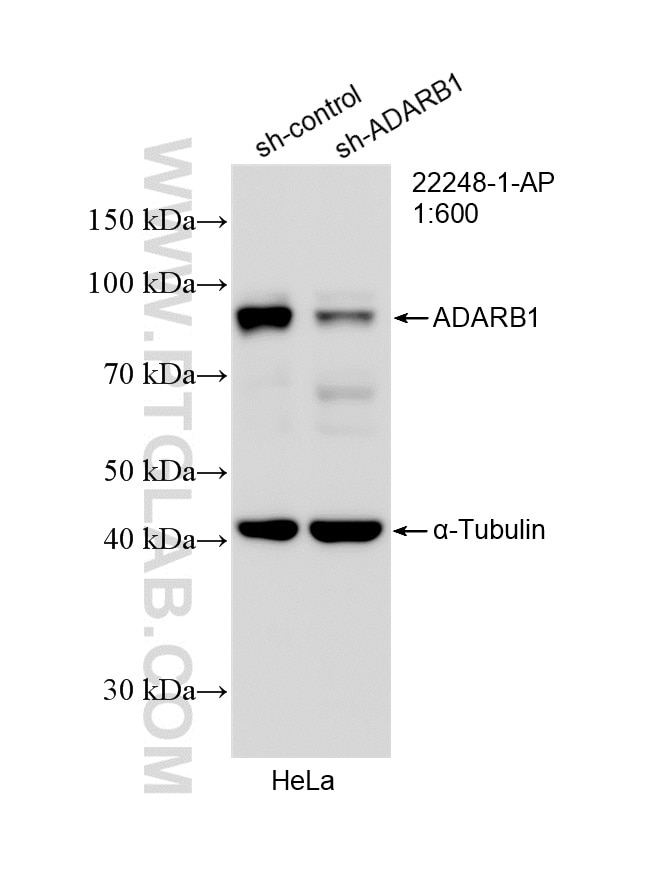
22248-1-AP targets ADARB1 in WB, IHC, IF, IP, RIP, ELISA applications and shows reactivity with human, mouse, rat samples.
| Tested Reactivity | human, mouse, rat |
| Cited Reactivity | human, mouse, rat |
| Host / Isotype | Rabbit / IgG |
| Class | Polyclonal |
| Type | Antibody |
| Immunogen |
CatNo: Ag17743 Product name: Recombinant human ADARB1 protein Source: e coli.-derived, PGEX-4T Tag: GST Domain: 176-392 aa of BC065545 Sequence: LFNGFETPDKAEPPFYVGSNGDDSFSSSGDLSLSASPVPASLAQPPLPALPPFPPPSGKNPVMILNELRPGLKYDFLSESGESHAKSFVMSVVVDGQFFEGSGRNKKLAKARAAQSALAAIFNLHLDQTPSRQPIPSEGLQLHLPQVLADAVSRLVLGKFGDLTDNFSSPHARRKVLAGVVMTTGTDVKDAKVISVSTGTKCINGEYMSDRGLALND Predict reactive species |
| Full Name | adenosine deaminase, RNA-specific, B1 (RED1 homolog rat) |
| Calculated Molecular Weight | 741 aa, 81 kDa |
| Observed Molecular Weight | 74-86 kDa |
| GenBank Accession Number | BC065545 |
| Gene Symbol | ADARB1 |
| Gene ID (NCBI) | 104 |
| RRID | AB_2879047 |
| Conjugate | Unconjugated |
| Form | Liquid |
| Purification Method | Antigen affinity purification |
| UNIPROT ID | P78563 |
| Storage Buffer | PBS with 0.02% sodium azide and 50% glycerol, pH 7.3. |
| Storage Conditions | Store at -20°C. Stable for one year after shipment. Aliquoting is unnecessary for -20oC storage. 20ul sizes contain 0.1% BSA. |
Background Information
ADARB1(Double-stranded RNA-specific editase 1) is also named as ADAR2, DRADA2, RED1 and belongs to the ADAR family. It catalyses the deamination of adenosine to inosine at the GluR2 Q/R site in the pre-mRNA encoding the critical subunit of AMPA receptors. This protein has some isoforms with the molecular weight from 77 kDa to 81 kDa and 7 kDa, but it can be detected a very strong band at 50 kDa in addition to a predicted band at 75 kDa as the result of western blot, while ADARB1 has several alternative splice variants (PMID:23103828).
Protocols
| Product Specific Protocols | |
|---|---|
| IHC protocol for ADARB1 antibody 22248-1-AP | Download protocol |
| IP protocol for ADARB1 antibody 22248-1-AP | Download protocol |
| WB protocol for ADARB1 antibody 22248-1-AP | Download protocol |
| Standard Protocols | |
|---|---|
| Click here to view our Standard Protocols |
Publications
What published studies show
Anti-ADAR2 antibody (Cat# 22248-1-AP) has 19 citations published in journals including Nature, Nature Cancer, Science Immunology, EMBO Journal, FASEB Journal, Scientific Reports, Journal of Neurochemistry, and Basic Research in Cardiology. Associated research fields span RNA editing mechanisms, oncology (prostate, ovarian, glioblastoma, colorectal, lung, hepatocellular, and testicular cancers), cardiovascular disease, neurology (SMA, epilepsy, C9orf72 repeat expansion), viral infection (SARS-CoV-2), pulmonary fibrosis, and drug metabolism.
| Species | Application | Title |
|---|---|---|
Sci Immunol DDX6 induces immunosuppression in cancer by disrupting structural stability of endogenous double-stranded RNAs. | ||
Basic Res Cardiol Reduction of A-to-I RNA editing in the failing human heart regulates formation of circular RNAs. | ||
EMBO J Viral N protein hijacks deaminase-containing RNA granules to enhance SARS-CoV-2 mutagenesis | ||
Sci Signal A reduction in A-to-I RNA editing by ADAR disrupts Pumilio-mediated inhibition of MAPK signaling to drive intestinal stem cell aging |







