

Tested Applications
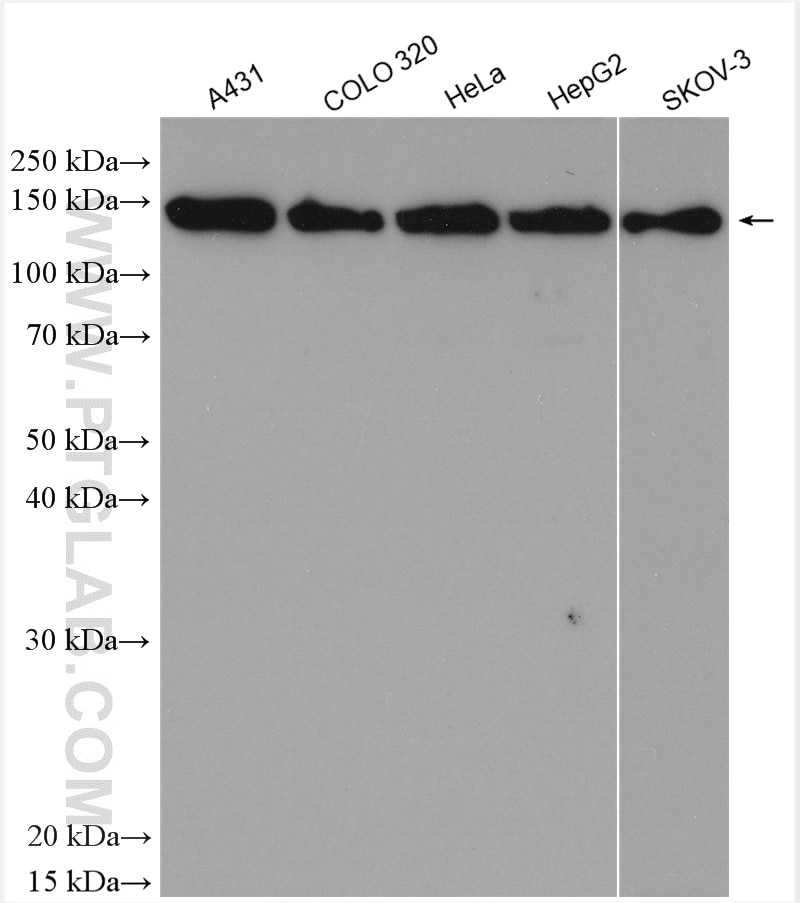
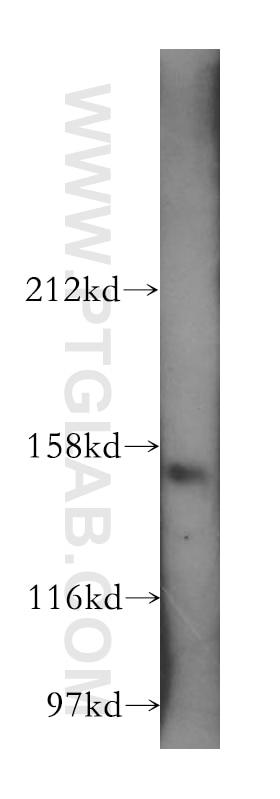
| Positive WB detected in | A431 cells, mouse thymus tissue, COLO 320 cells, HeLa cells, HepG2 cells, SKOV-3 cells |
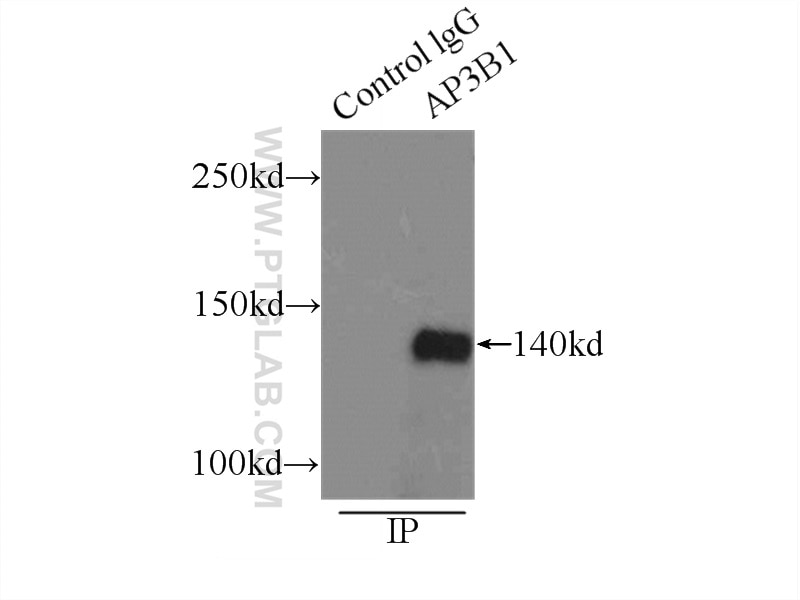
| Positive IP detected in | COLO 320 cells |
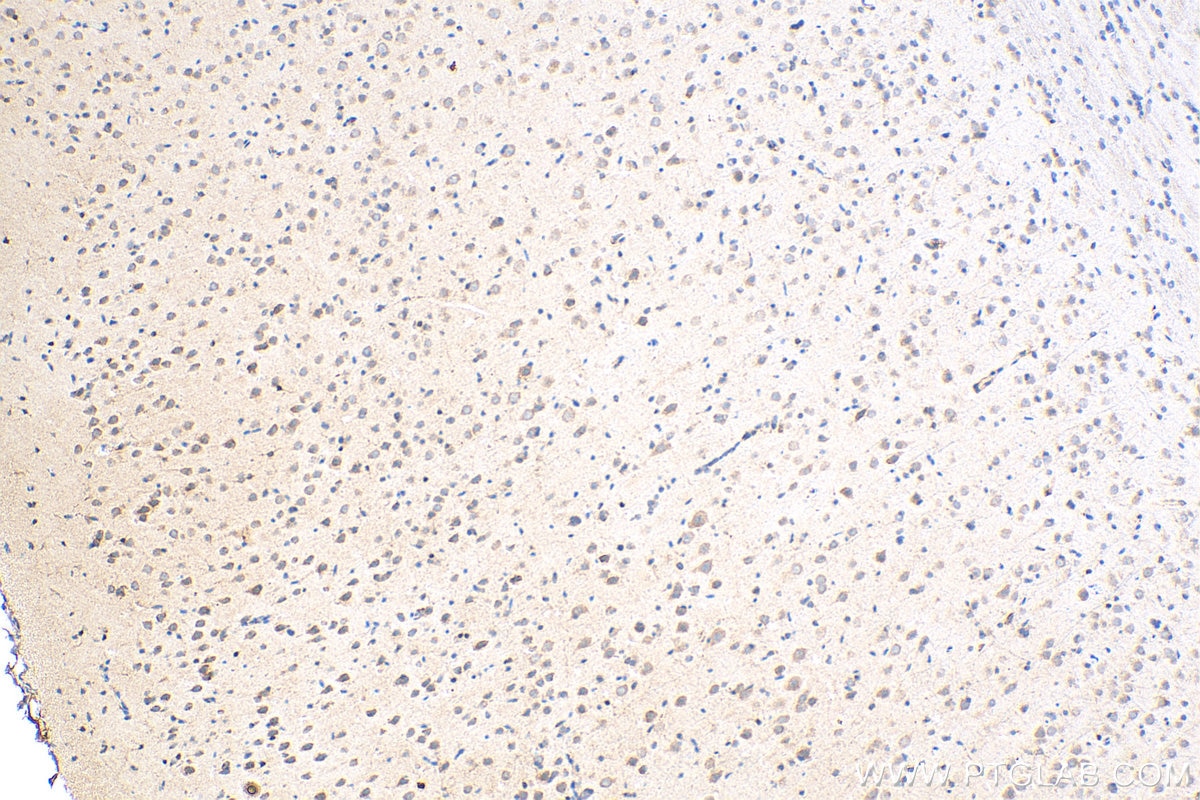
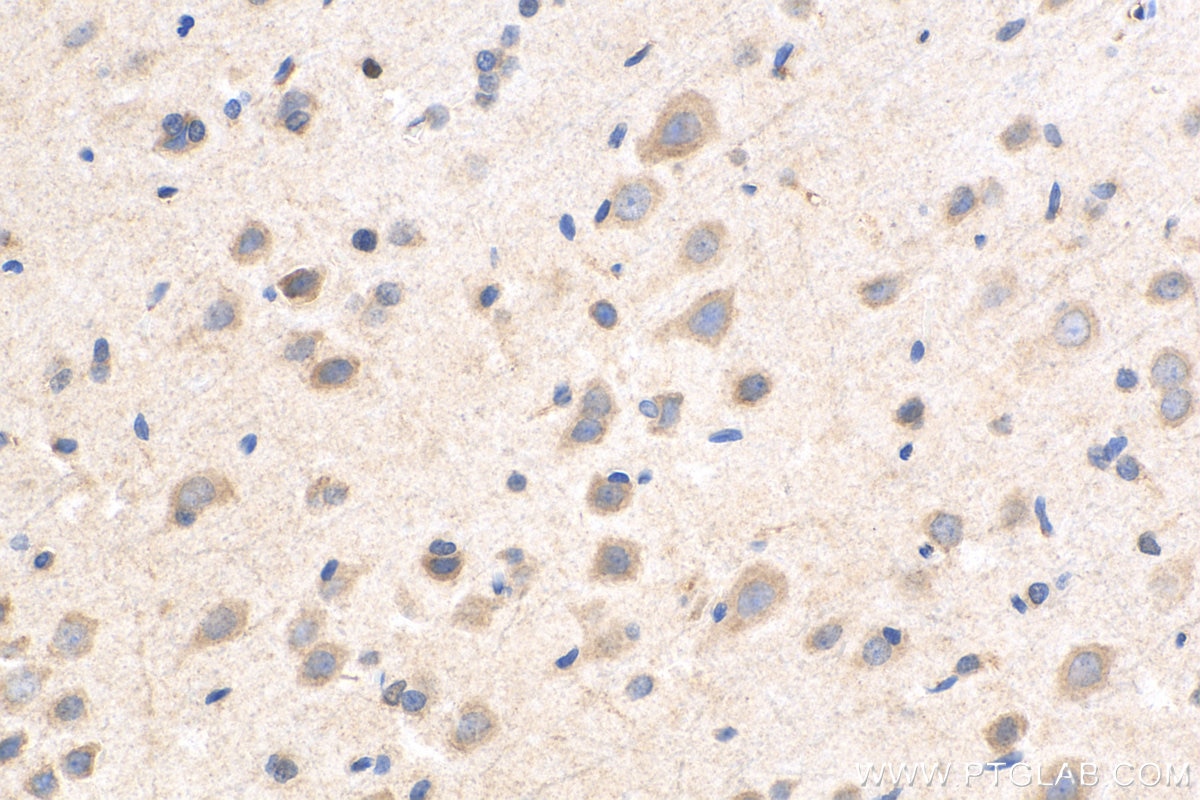
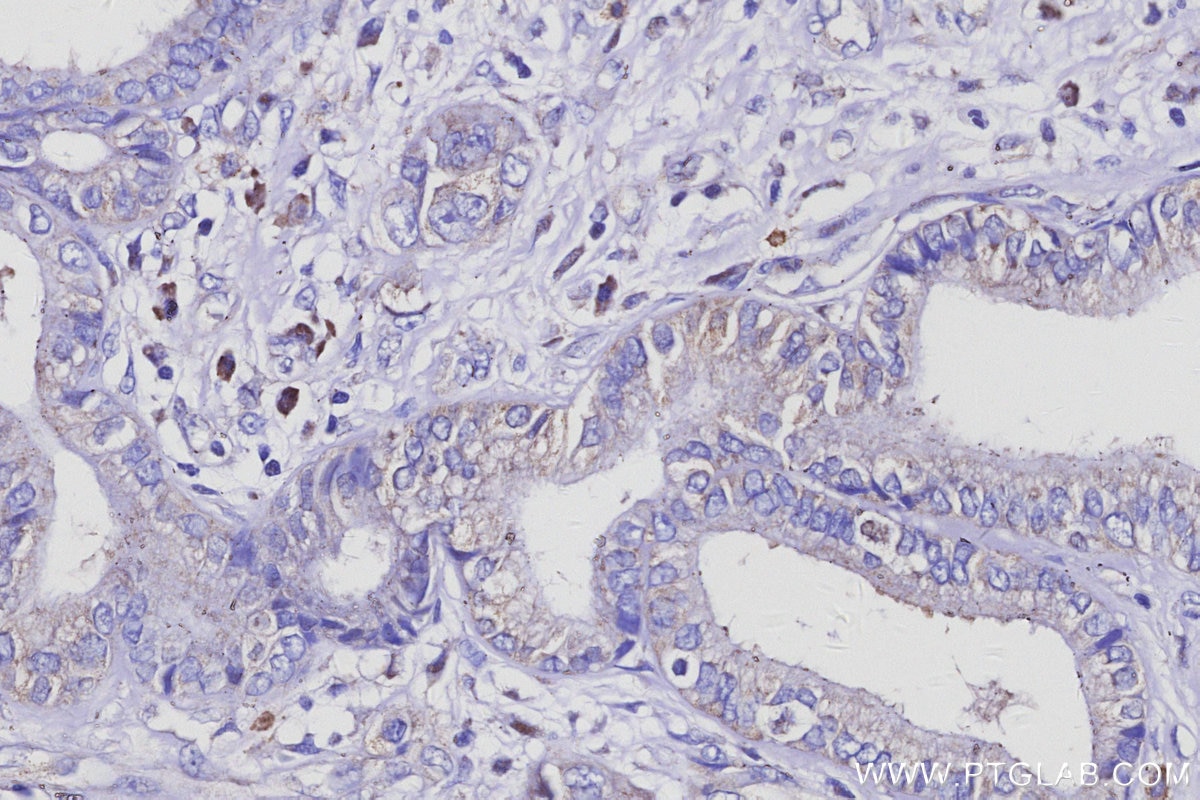
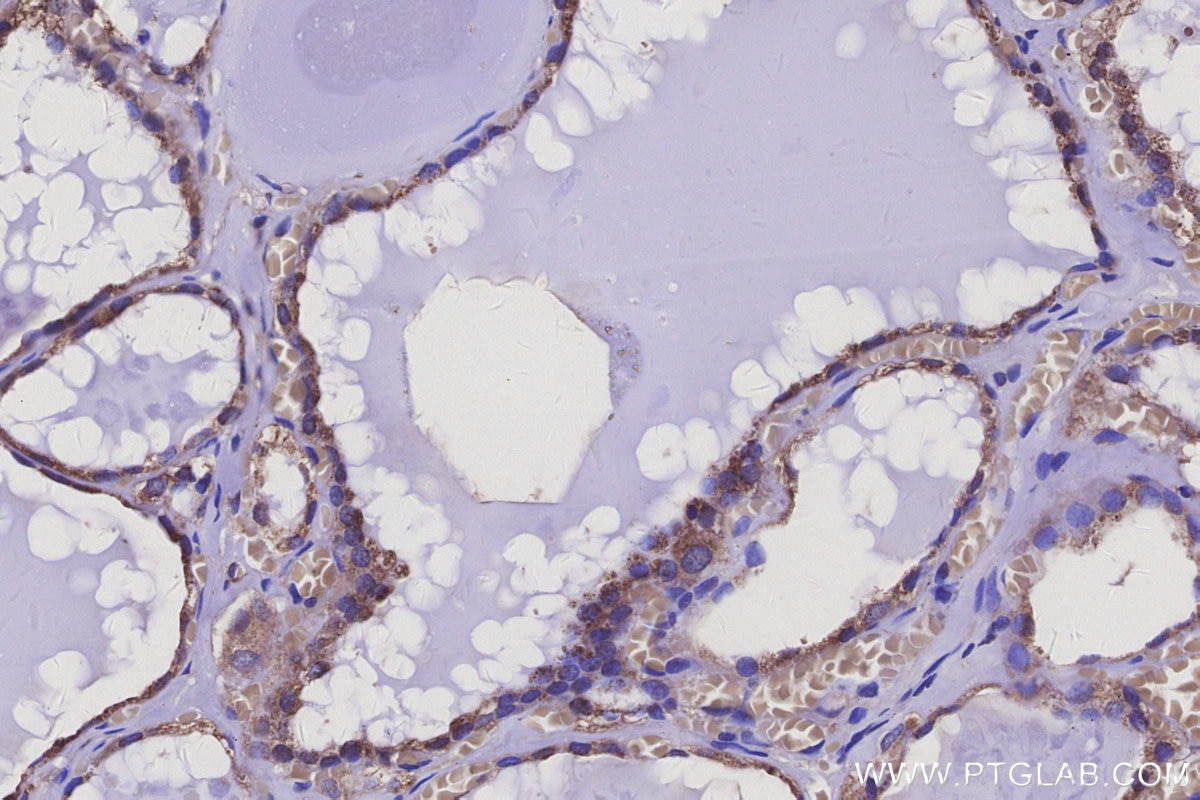
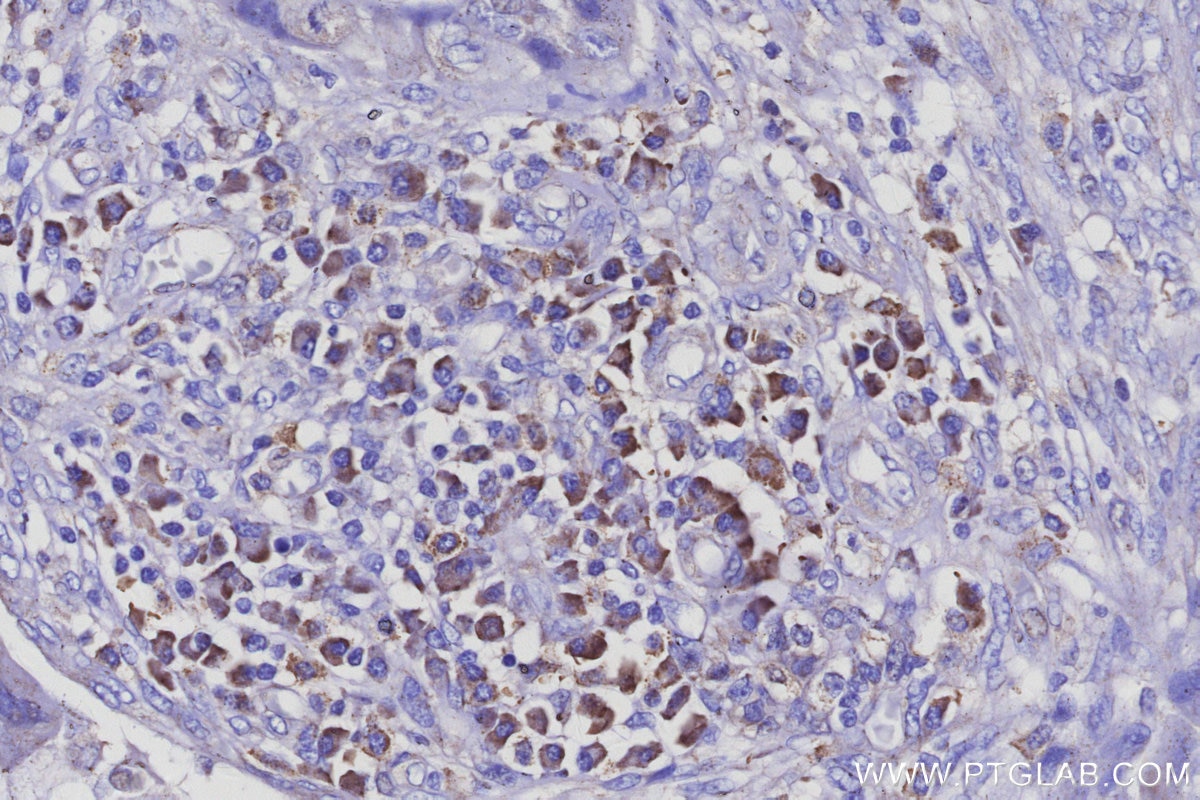
| Positive IHC detected in | rat brain tissue, human pancreas cancer tissue, human thyroid cancer tissue Note: suggested antigen retrieval with TE buffer pH 9.0; (*) Alternatively, antigen retrieval may be performed with citrate buffer pH 6.0 |
Recommended dilution
| Application | Dilution |
|---|---|
| Western Blot (WB) | WB : 1:500-1:3000 |
| Immunoprecipitation (IP) | IP : 0.5-4.0 ug for 1.0-3.0 mg of total protein lysate |
| Immunohistochemistry (IHC) | IHC : 1:50-1:500 |
| It is recommended that this reagent should be titrated in each testing system to obtain optimal results. | |
| Sample-dependent, Check data in validation data gallery. | |
Product Information
13384-1-AP targets AP3B1 in WB, IHC, IF, IP, ELISA applications and shows reactivity with human, mouse, rat samples.
| Tested Reactivity | human, mouse, rat |
| Cited Reactivity | human, mouse |
| Host / Isotype | Rabbit / IgG |
| Class | Polyclonal |
| Type | Antibody |
| Immunogen |
CatNo: Ag4225 Product name: Recombinant human AP3B1 protein Source: e coli.-derived, PGEX-4T Tag: GST Domain: 763-1094 aa of BC038444 Sequence: KTSDSSNDESSSIEDSSSDSESESEPESESESRRVTKEKEKKTKQDRTPLTKDVSLLDLDDFNPVSTPVALPTPALSPSLMADLEGLHLSTSSSVISVSTPAFVPTKTHVLLHRMSGKGLAAHYFFPRQPCIFGDKMVSIQITLNNTTDRKIENIHIGEKKLPIGMKMHVFNPIDSLEPEGSITVSMGIDFCDSTQTASFQLCTKDDCFNVNIQPPVGELLLPVAMSEKDFKKEQGVLTGMNETSAVIIAAPQNFTPSVIFQKVVNVANVGAVPSGQDNIHRFAAKTVHSGSLMLVTVELKEGSTAQLIINTEKTVIGSVLLRELKPVLSQG Predict reactive species |
| Full Name | adaptor-related protein complex 3, beta 1 subunit |
| Calculated Molecular Weight | 1094 aa, 121 kDa |
| Observed Molecular Weight | 140 kDa |
| GenBank Accession Number | BC038444 |
| Gene Symbol | AP3B1 |
| Gene ID (NCBI) | 8546 |
| RRID | AB_2056499 |
| Conjugate | Unconjugated |
| Form | Liquid |
| Purification Method | Antigen affinity purification |
| UNIPROT ID | O00203 |
| Storage Buffer | PBS with 0.02% sodium azide and 50% glycerol, pH 7.3. |
| Storage Conditions | Store at -20°C. Stable for one year after shipment. Aliquoting is unnecessary for -20oC storage. 20ul sizes contain 0.1% BSA. |
Background Information
AP3B1 is the 140-kDa β3A subunit of the adaptor-related protein complex-3 (AP-3), a ubiquitous heterotetrameric complex that is localized to the trans-Golgi network and endosomes and is involved in protein trafficking to lysosomes or specialized endosomal-lysosomal organelles (PMID: 9182526; 9545220). This complex is composed of two larger subunits (δ and β3A or β3B), a medium subunit (μ3A or μ3B), and a small subunit (σ3A or σ3B). The absence of the β3A subunit (AP3B1) results in the loss of stability of AP3 and leads to degradation of μ3A, to which β3A is directly bound, while the other subunits are variably affected (PMID: 16507770). AP3B1 contains three main domains: the N-terminal head domain, the hinge, and the C-terminal ear domain. It has been reported as a target of IP(7)-mediated pyrophosphorylation (PMID: 19934039). Defects in AP3B1 are the cause of Hermansky-Pudlak syndrome type 2 (HPS2) (PMID: 10024875; 16507770).
Protocols
| Product Specific Protocols | |
|---|---|
| IHC protocol for AP3B1 antibody 13384-1-AP | Download protocol |
| IP protocol for AP3B1 antibody 13384-1-AP | Download protocol |
| WB protocol for AP3B1 antibody 13384-1-AP | Download protocol |
| Standard Protocols | |
|---|---|
| Click here to view our Standard Protocols |
Publications
What published studies show
The anti-AP3B1 antibody (Cat# 13384-1-AP) has 19 citations across journals including Nature Communications, Journal of Biological Chemistry, Molecular Biology of the Cell, EMBO Reports, Cell Reports, and Advanced Science. Research fields span vesicle and lysosomal trafficking, Hermansky-Pudlak syndrome, neurodegeneration, bone formation, endothelial biology, pulmonary fibrosis, autophagy, male fertility, antiviral immunity, and planar cell polarity. Most studies used Western blot in human or mouse samples.
| Species | Application | Title |
|---|---|---|
Nat Commun Misrouting of v-ATPase subunit V0a1 dysregulates lysosomal acidification in a neurodegenerative lysosomal storage disease model. | ||
J Nanobiotechnology Milk-derived small extracellular vesicles: nanomaterials to promote bone formation | ||
Adv Sci (Weinh) Evoked Weibel-Palade Body Exocytosis Modifies the Endothelial Cell Surface by Releasing a Substrate-Selective Phosphodiesterase | ||
Haematologica Defective AP-3-dependent VAMP8 trafficking impairs Weibel-Palade body exocytosis in Hermansky-Pudlak Syndrome type 2 blood outgrowth endothelial cells. | ||
Cell Rep Modeling of Fibrotic Lung Disease Using 3D Organoids Derived from Human Pluripotent Stem Cells.
| ||
Cell Mol Life Sci ELAPOR1 mediated vesicle traffic is required for acrosome biogenesis and male fertility in mice. |









