
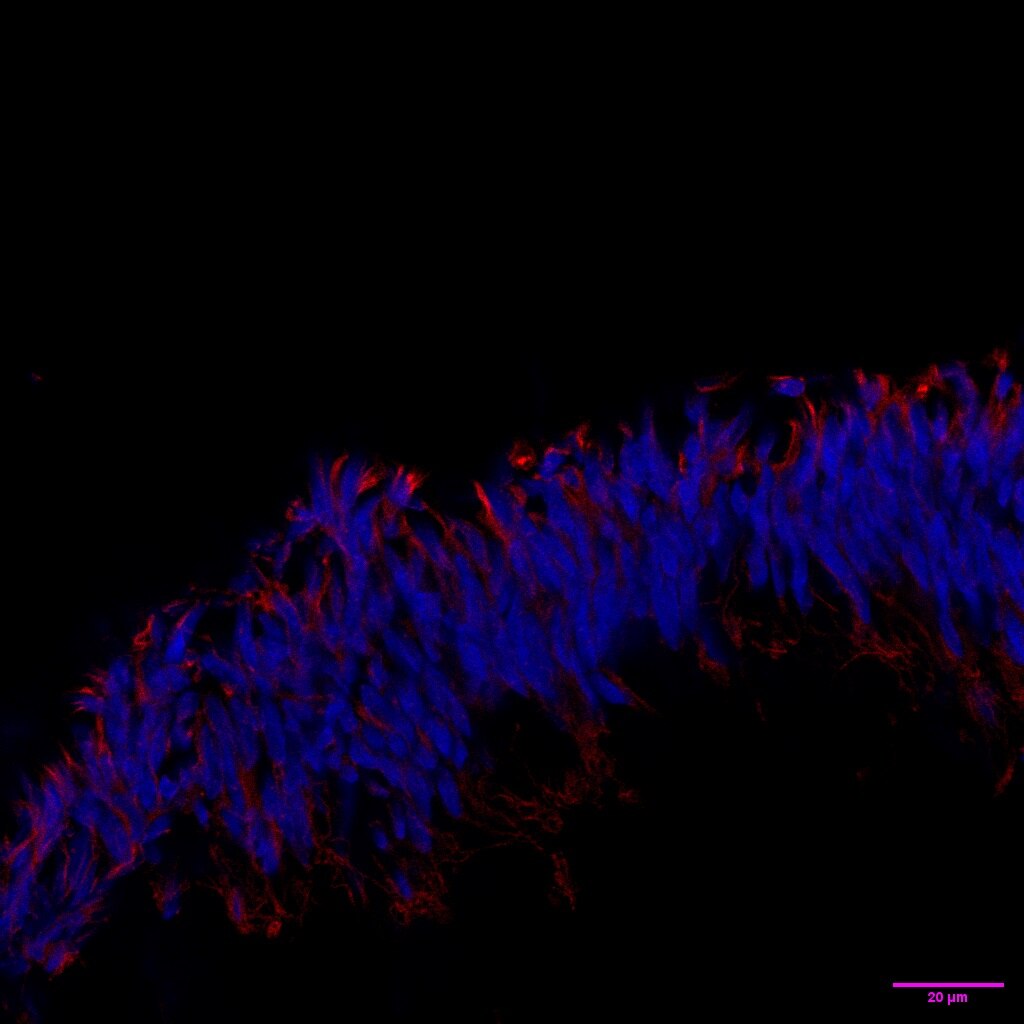

Tested Applications
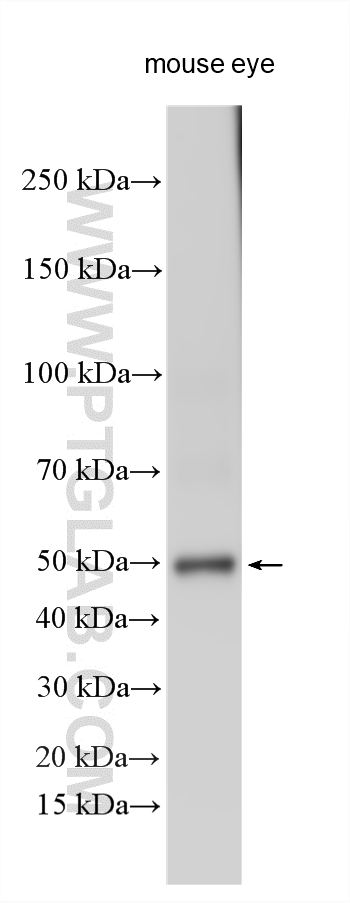
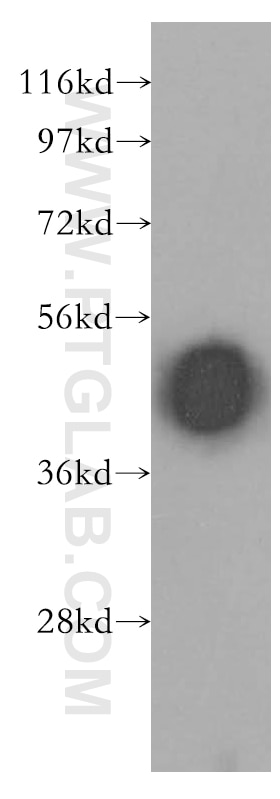
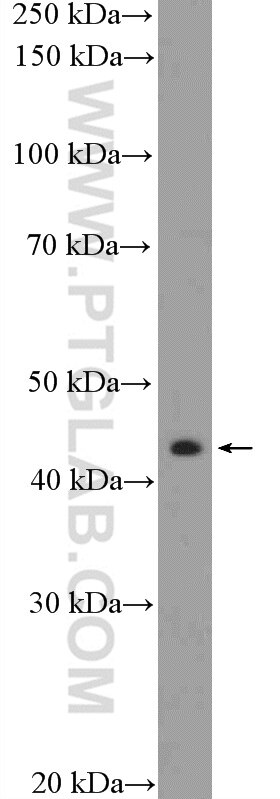
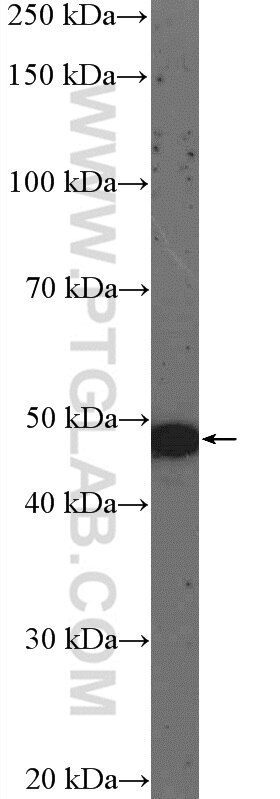
| Positive WB detected in | mouse eye tissue, human brain tissue, mouse heart tissue |
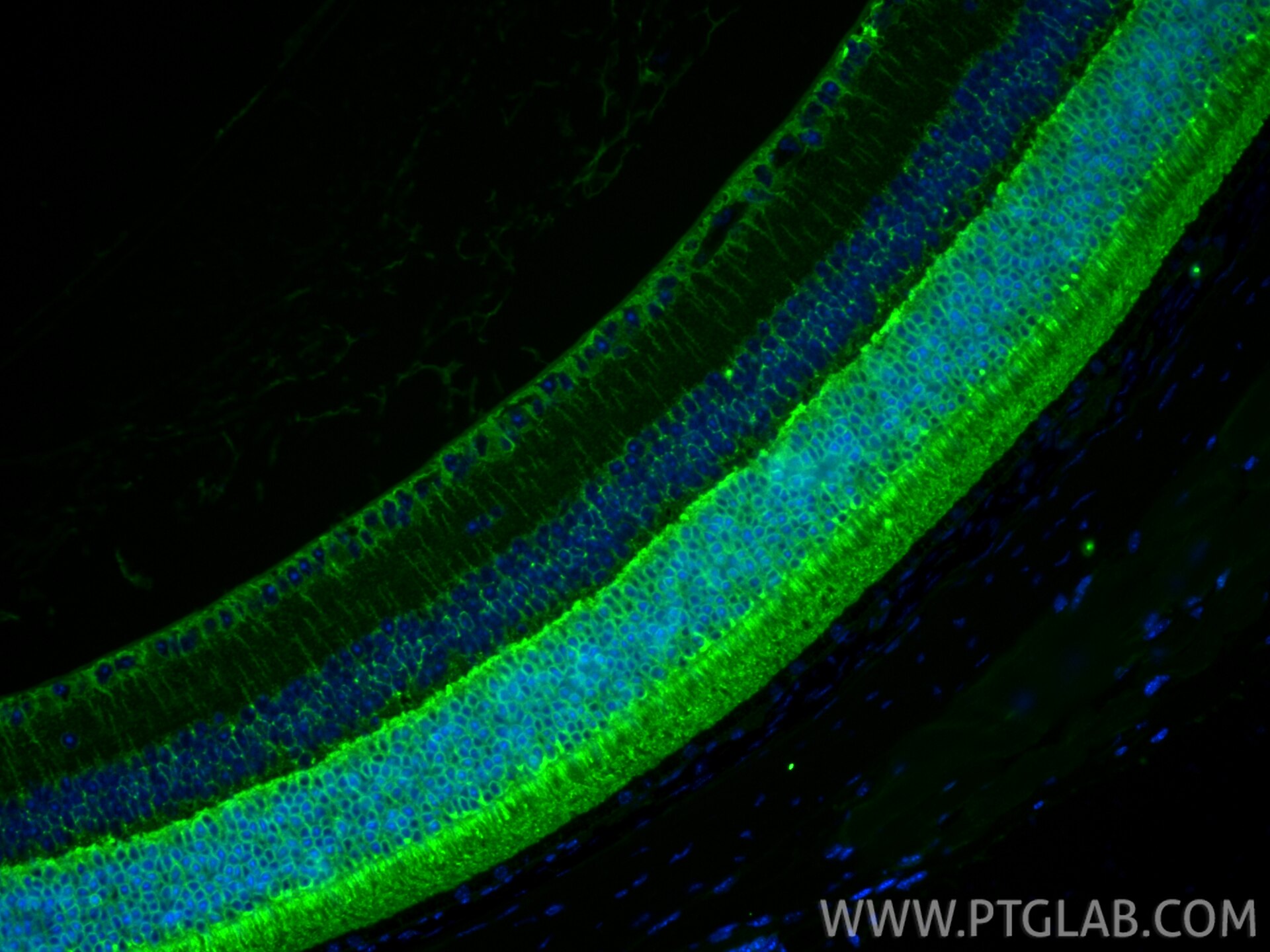
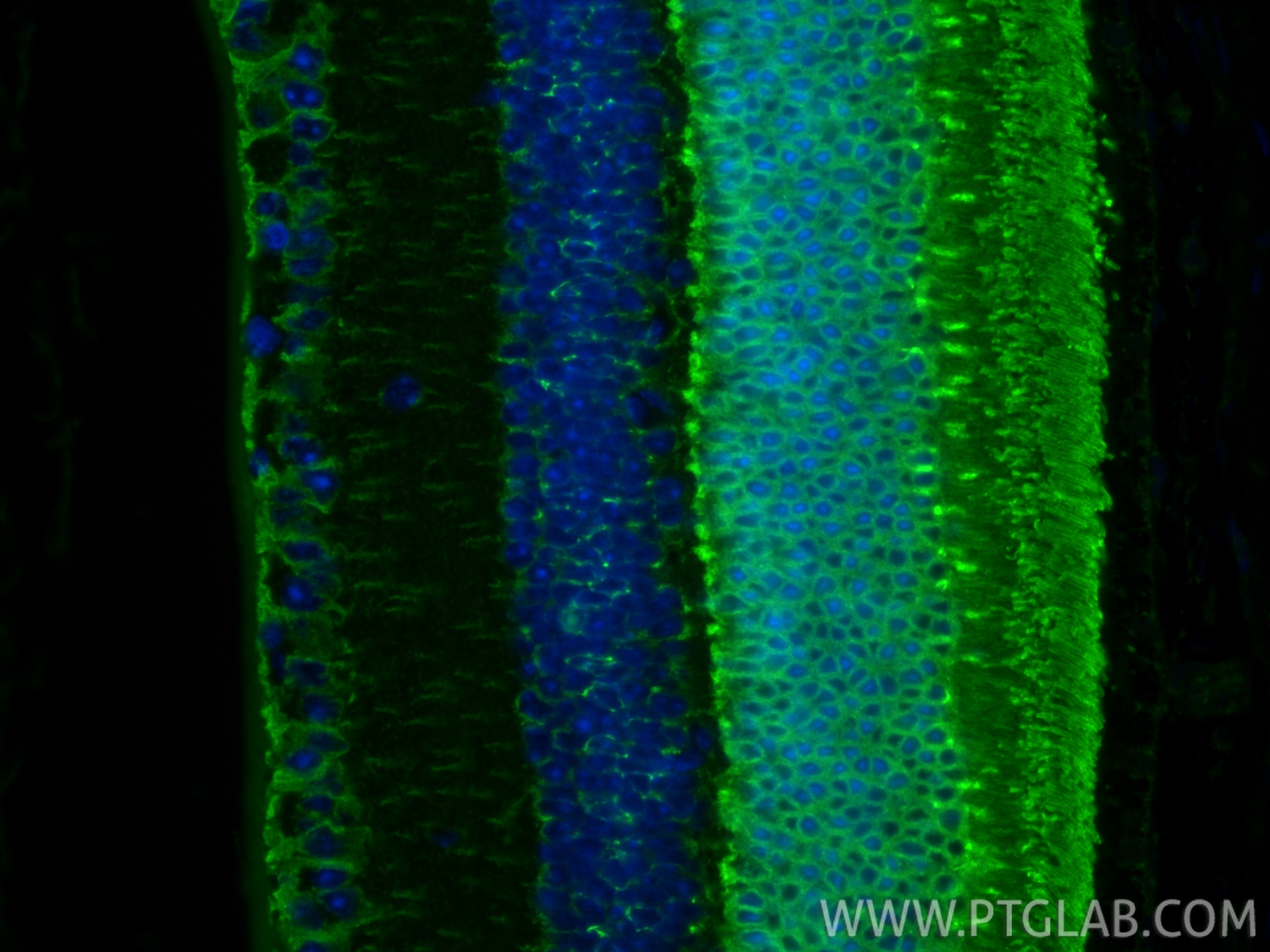
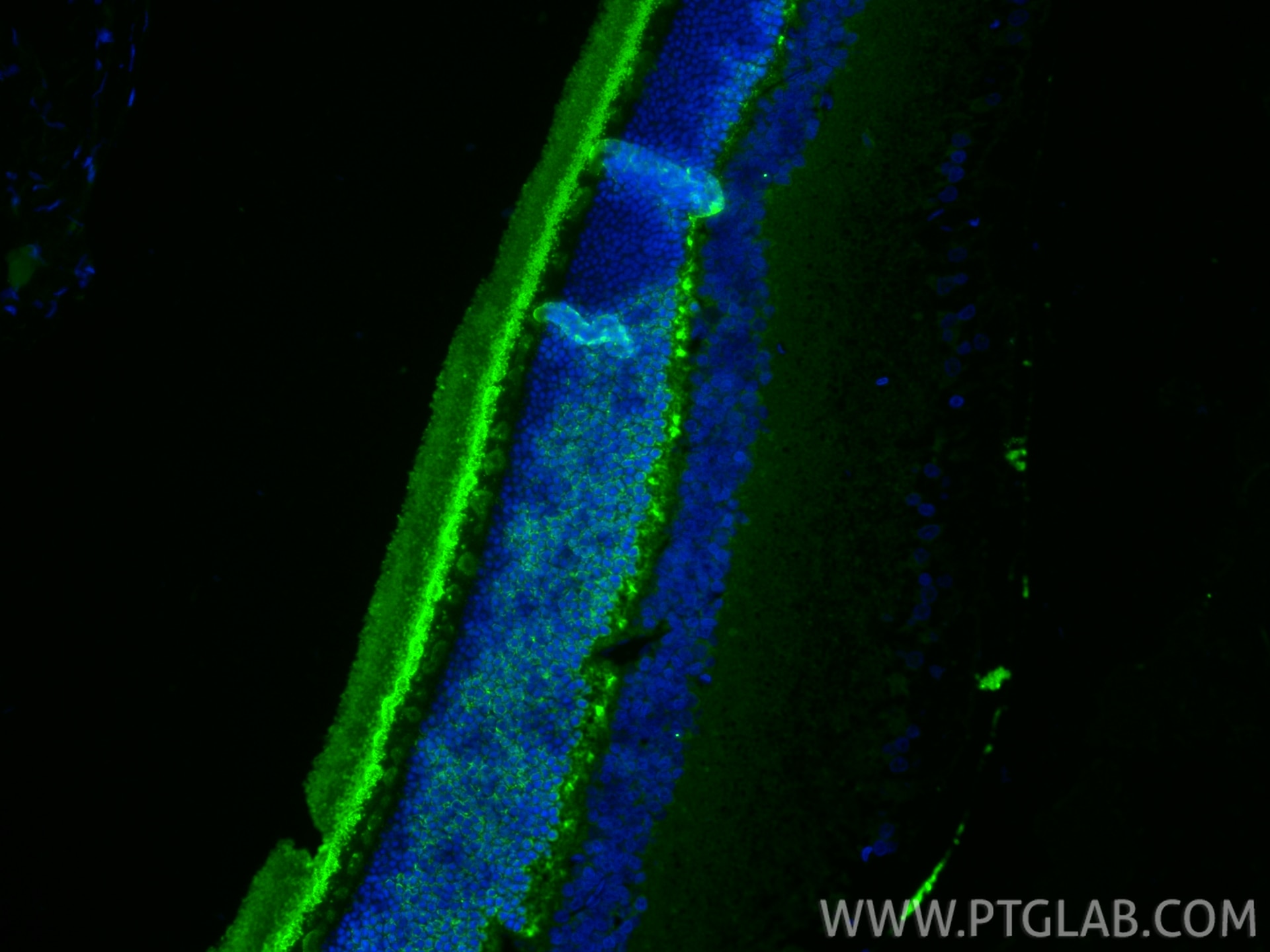
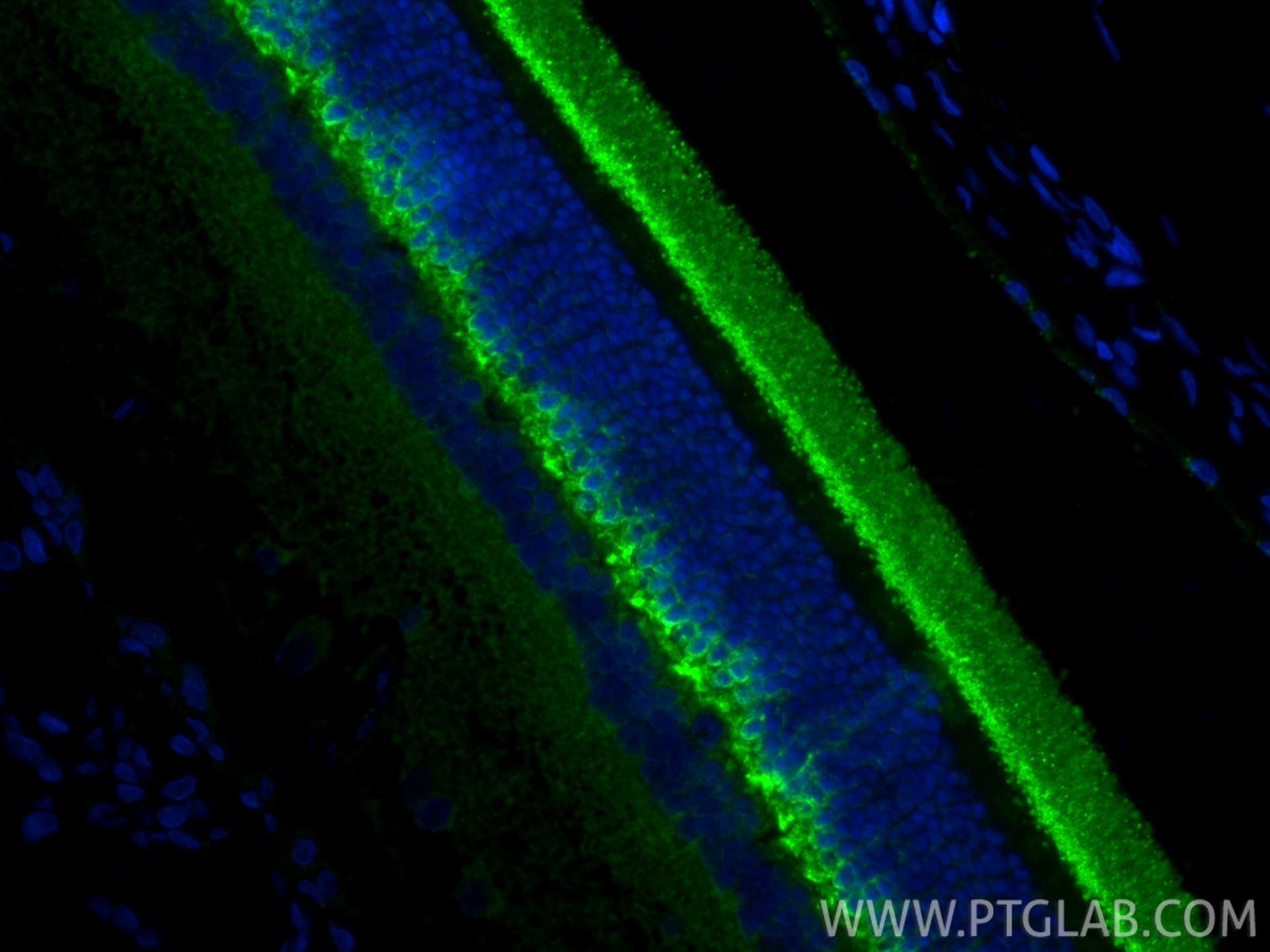
| Positive IF-P detected in | mouse eye tissue, rat eye tissue |
Recommended dilution
| Application | Dilution |
|---|---|
| Western Blot (WB) | WB : 1:1000-1:4000 |
| Immunofluorescence (IF)-P | IF-P : 1:50-1:500 |
| It is recommended that this reagent should be titrated in each testing system to obtain optimal results. | |
| Sample-dependent, Check data in validation data gallery. | |
Product Information
11100-2-AP targets Arrestin C in WB, IHC, IF-P, ELISA applications and shows reactivity with human, mouse, rat samples.
| Tested Reactivity | human, mouse, rat |
| Cited Reactivity | human, mouse |
| Host / Isotype | Rabbit / IgG |
| Class | Polyclonal |
| Type | Antibody |
| Immunogen |
CatNo: Ag1580 Product name: Recombinant human ARR3 protein Source: e coli.-derived, PGEX-4T Tag: GST Domain: 1-300 aa of BC012096 Sequence: MSKVFKKTSSNGKLSIYLGKRDFVDHVDTVEPIDGVVLVDPEYFKCRKLFVMLTCAFRYGRDDLEVIGLTFRKDLYVQTLQVVPAESSSPQGPLTVLQERLLHKLGDNAYPFTLQMVTNLPCSVTLQPGPEDAGKPCGIDFEVKSFCAENPEETVSKRDYVRLVVRKVQFAPPEAGPGPSAQTIRRFLLSAQPLQLQAWMDREVHYHGEPISVNVSINNCTNKVIKKIKISVDQITDVVLYSLDKYTKTVFIQEFTETVAANSSFSQSFAVTPILAASCQKRGLALDGKLKHEDTNLASS Predict reactive species |
| Full Name | arrestin 3, retinal (X-arrestin) |
| Calculated Molecular Weight | 43 kDa |
| Observed Molecular Weight | 43 kDa |
| GenBank Accession Number | BC012096 |
| Gene Symbol | Arrestin C |
| Gene ID (NCBI) | 407 |
| RRID | AB_2289959 |
| Conjugate | Unconjugated |
| Form | Liquid |
| Purification Method | Antigen affinity purification |
| UNIPROT ID | P36575 |
| Storage Buffer | PBS with 0.02% sodium azide and 50% glycerol, pH 7.3. |
| Storage Conditions | Store at -20°C. Stable for one year after shipment. Aliquoting is unnecessary for -20oC storage. 20ul sizes contain 0.1% BSA. |
Background Information
Arrestin C, also known as Arrestin 3 or Retinal Cone Arrestin, is a protein encoded by the ARR3 gene. It belongs to the arrestin family, which plays a crucial role in regulating G-protein-coupled receptor (GPCR) signaling and trafficking. Arrestin C is composed of two major domains: the N-domain and the C-domain, connected by a hinge region. These domains form a structure resembling two clamshells placed end-to-end. The C-terminal tail (C-tail) of Arrestin C interacts extensively with the N-domain, stabilizing its basal conformation. Arrestin C is predominantly expressed in cone photoreceptors and pinealocytes in the retina. It is involved in the shut-off mechanisms associated with high-acuity color vision by binding to phosphorylated and activated opsins, thereby inhibiting their ability to interact with transducin.
Protocols
| Product Specific Protocols | |
|---|---|
| IF protocol for Arrestin C antibody 11100-2-AP | Download protocol |
| WB protocol for Arrestin C antibody 11100-2-AP | Download protocol |
| Standard Protocols | |
|---|---|
| Click here to view our Standard Protocols |
Publications
What published studies show
Arrestin C Polyclonal antibody (Cat# 11100-2-AP) has 10 citations published in journals including Nature Communications, Free Radical Biology and Medicine, International Journal of Molecular Sciences, Investigative Ophthalmology & Visual Science, Cancers, Frontiers in Molecular Neuroscience, BMC Cancer, HGG Advances, Pediatric Blood & Cancer, and STAR Protocols. Research fields span retinoblastoma, cone photoreceptor biology, retinal degeneration, macular dystrophy, ferroptosis, and iPSC-derived photoreceptor differentiation.
| Species | Application | Title |
|---|---|---|
Nat Commun A high-risk retinoblastoma subtype with stemness features, dedifferentiated cone states and neuronal/ganglion cell gene expression. | ||
Free Radic Biol Med Targeting ZIP8 mediated ferroptosis as a novel strategy to protect against the retinal pigment epithelial degeneration | ||
Int J Mol Sci Tridimensional Retinoblastoma Cultures as Vitreous Seeds Models for Live-Cell Imaging of Chemotherapy Penetration. | ||
Invest Ophthalmol Vis Sci Establishment and Comprehensive Characterization of a Novel Preclinical Platform of Metastatic Retinoblastoma for Therapeutic Developments | ||
Cancers (Basel) Clinical, Genomic, and Pharmacological Study of MYCN-Amplified RB1 Wild-Type Metastatic Retinoblastoma. | ||
Front Mol Neurosci A mouse model of cone photoreceptor function loss (cpfl9) with degeneration due to a mutation in Gucy2e |
Reviews
What customers say
The product has one review from a user who applied it for immunofluorescence. The reviewer gave it a 5-star rating and reported great outcomes with no unspecific staining, indicating high specificity and reliable performance in their application.
The reviews below have been submitted by verified Proteintech customers who received an incentive for providing their feedback.
Alessandro (Verified Customer) (01-19-2023) | great outcome, no unspecific staining
|










