

Tested Applications
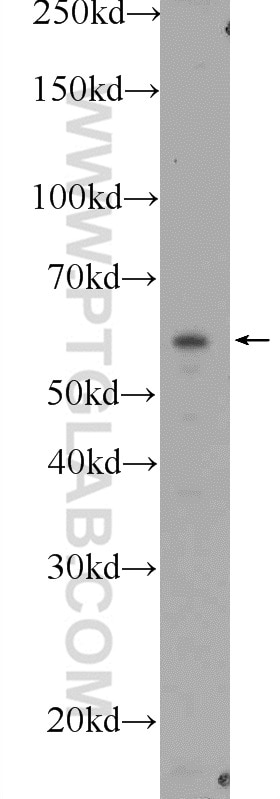
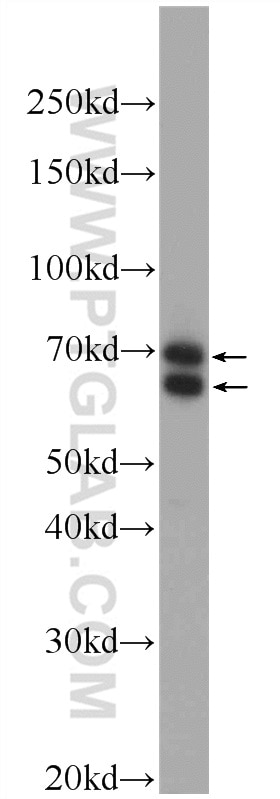
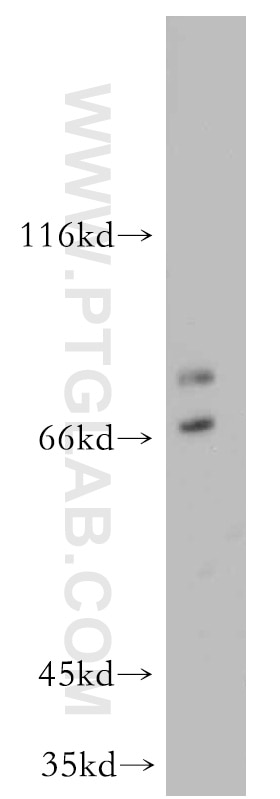
| Positive WB detected in | mouse kidney tissue, mouse brain tissue, mouse heart tissue |
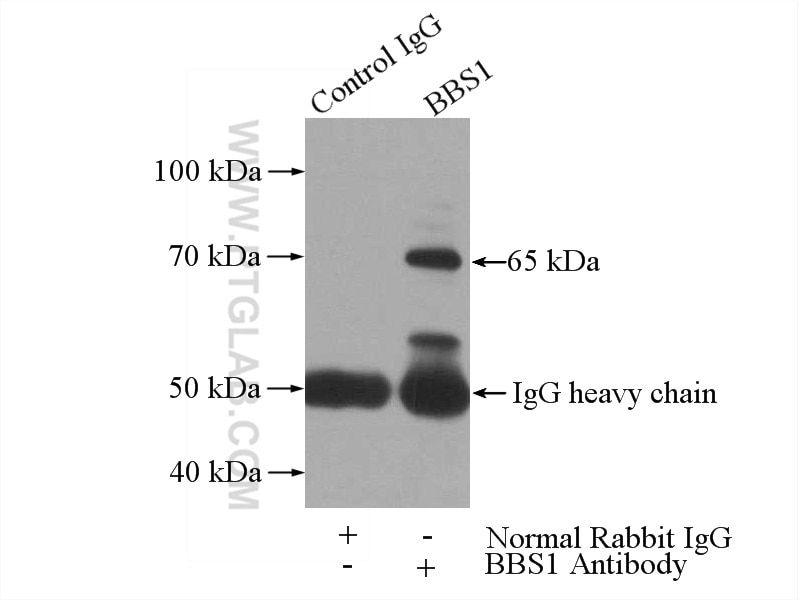
| Positive IP detected in | mouse brain tissue |
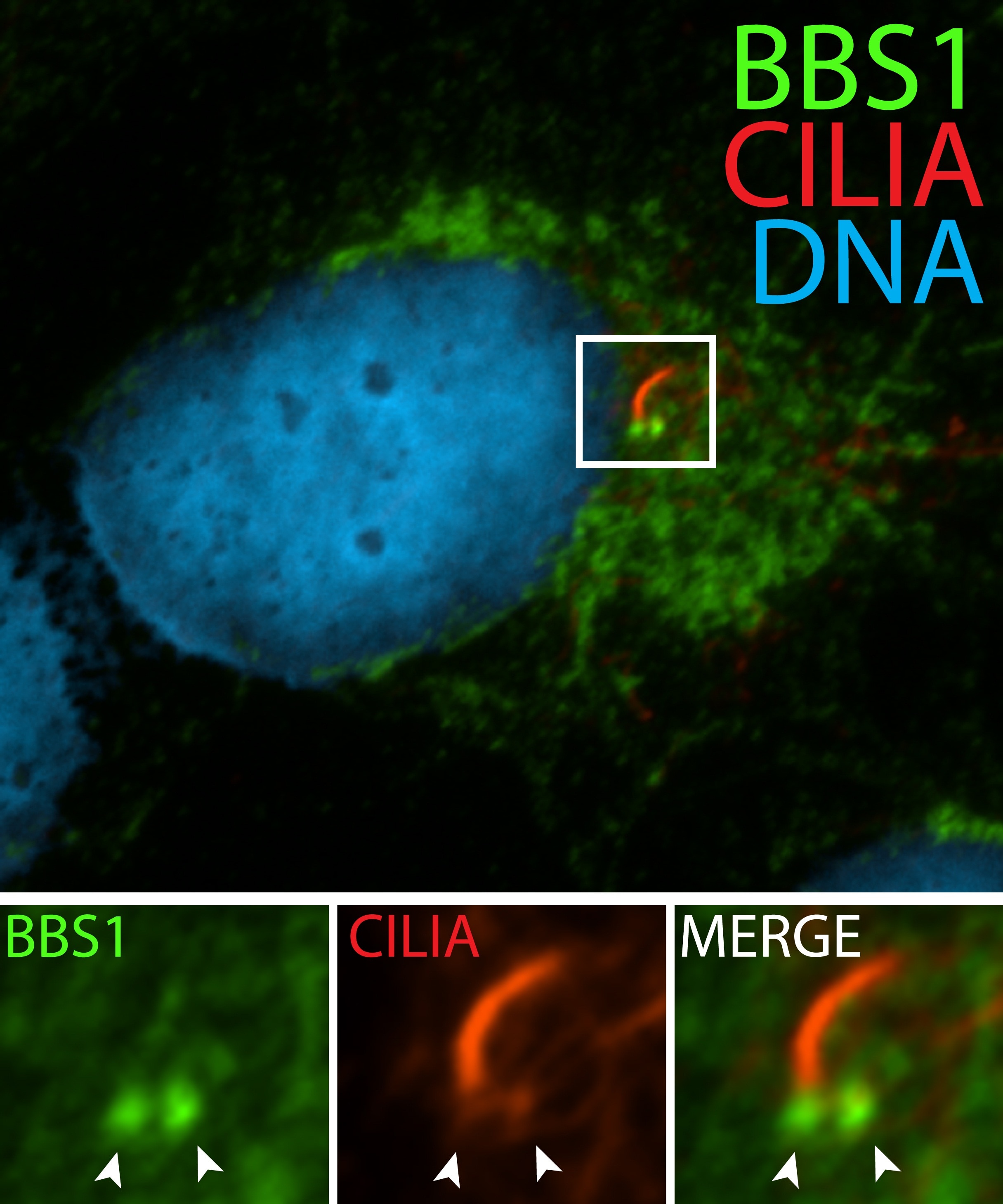
| Positive IF/ICC detected in | hTERT-RPE1 cells |
Recommended dilution
| Application | Dilution |
|---|---|
| Western Blot (WB) | WB : 1:500-1:1000 |
| Immunoprecipitation (IP) | IP : 0.5-4.0 ug for 1.0-3.0 mg of total protein lysate |
| Immunofluorescence (IF)/ICC | IF/ICC : 1:20-1:200 |
| It is recommended that this reagent should be titrated in each testing system to obtain optimal results. | |
| Sample-dependent, Check data in validation data gallery. | |
Product Information
21118-1-AP targets BBS1 in WB, IF/ICC, IP, ELISA applications and shows reactivity with human, mouse samples.
| Tested Reactivity | human, mouse |
| Cited Reactivity | human, mouse |
| Host / Isotype | Rabbit / IgG |
| Class | Polyclonal |
| Type | Antibody |
| Immunogen |
CatNo: Ag15460 Product name: Recombinant human BBS1 protein Source: e coli.-derived, PGEX-4T Tag: GST Domain: 105-463 aa of BC047642 Sequence: SCLVLGTENKELLVLDPEAFTILAKMSLPSVPVFLEVSGQFDVEFRLAAACRNGNIYILRRDSKHPKYCIELSAQPVGLIRVHKVLVVGSTQDSLHGFTHKGKKLWTVQMPAAILTMNLLEQHSRGLQAVMAGLANGEVRIYRDKALLNVIHTPDAVTSLCFGRYGREDNTLIMTTRGGGLIIKILKRTAMFVEGGSEVGPPPAQAMKLNVPRKTRLYVDQTLREREAGTAMHRAFQTDLYLLRLRAARAYLQALESSLSPLSTTAREPLKLHAVVQGLGPTFKLTLHLQNTSTTRPVLGLLVCFLYNEALYSLPRAFFKVPLLVPGLNYPLETFVESLSNKGISDIIKVGPALVPRGR Predict reactive species |
| Full Name | Bardet-Biedl syndrome 1 |
| Calculated Molecular Weight | 593 aa, 65 kDa |
| Observed Molecular Weight | 65 kDa |
| GenBank Accession Number | BC047642 |
| Gene Symbol | BBS1 |
| Gene ID (NCBI) | 582 |
| RRID | AB_2878814 |
| Conjugate | Unconjugated |
| Form | Liquid |
| Purification Method | Antigen affinity purification |
| UNIPROT ID | Q8NFJ9 |
| Storage Buffer | PBS with 0.02% sodium azide and 50% glycerol, pH 7.3. |
| Storage Conditions | Store at -20°C. Stable for one year after shipment. Aliquoting is unnecessary for -20oC storage. 20ul sizes contain 0.1% BSA. |
Background Information
Bardet-Biedl syndrome (BBS) is a multisystem non-motile ciliopathy primarily characterized by retinal cone-rod dystrophy, obesity and related complications, postaxial polydactyly, cognitive impairment, hypogonadotropic hypogonadism and/or genitourinary malformations, and renal malformations and/or renal parenchymal disease. BBS1 protein, which is a key component of the BBSome, a protein complex involved in the regulation of cilia function and other cellular processes, has been implicated in the immune synapse assembly by promoting the centrosome polarization to the antigen-presenting cells.
Protocols
| Product Specific Protocols | |
|---|---|
| IP protocol for BBS1 antibody 21118-1-AP | Download protocol |
| WB protocol for BBS1 antibody 21118-1-AP | Download protocol |
| Standard Protocols | |
|---|---|
| Click here to view our Standard Protocols |
Publications
What published studies show
The BBS1 Polyclonal antibody (Cat# 21118-1-AP) has 3 citations published in EMBO Journal, PLoS Biology, and Journal of Biological Chemistry. The cited research focuses on ciliary biology, including BBSome-mediated ciliary signaling, melanocortin 1 receptor–BBSome interactions in primary cilia and melanin production, and DIAPH roles in primary ciliogenesis. Applications used include Western blotting and immunofluorescence in human and mouse samples.
| Species | Application | Title |
|---|---|---|
EMBO J Rabl2 GTP hydrolysis licenses BBSome-mediated export to fine-tune ciliary signaling. | ||
PLoS Biol Melanocortin 1 receptor mediates melanin production by interacting with the BBSome in primary cilia | ||
Reviews
What customers say
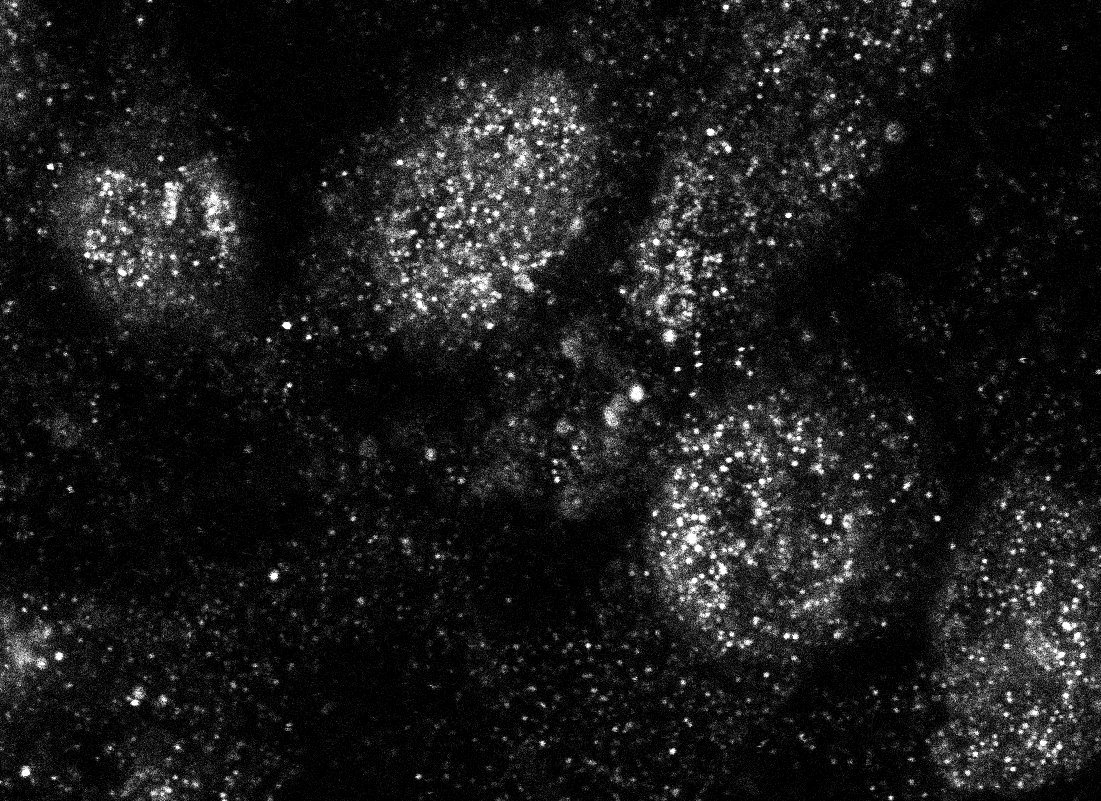
One user review is available for this product. A researcher performed immunofluorescence on HeLa cells using a 1:100 dilution and observed both nuclear staining and perinuclear staining with a Golgi-like pattern. The reviewer rated the product 3 out of 5 stars, suggesting the staining pattern may not have been entirely specific to the intended target.
The reviews below have been submitted by verified Proteintech customers who received an incentive for providing their feedback.
Jerome (Verified Customer) (05-07-2019) | Nuclear staining, and perinuclear staining that looks like a Golgi
 |






