

Tested Applications
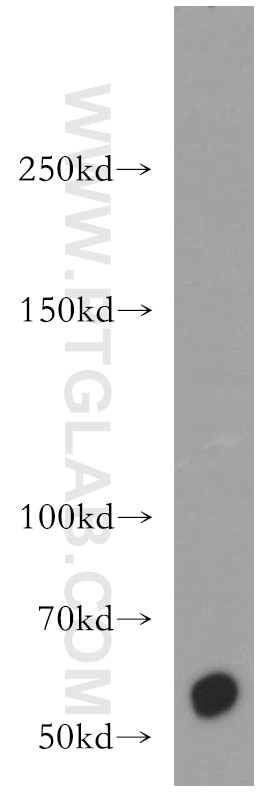
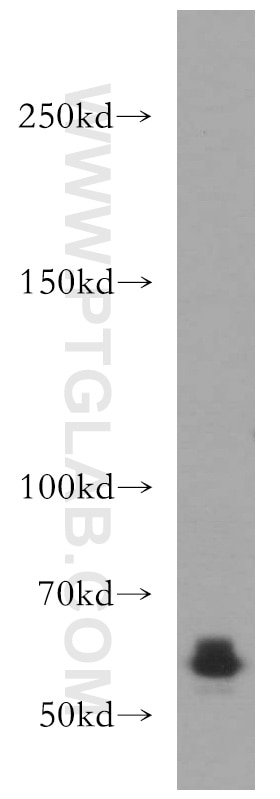
| Positive WB detected in | A431 cells, Y79 cells |
Recommended dilution
| Application | Dilution |
|---|---|
| Western Blot (WB) | WB : 1:200-1:1000 |
| It is recommended that this reagent should be titrated in each testing system to obtain optimal results. | |
| Sample-dependent, Check data in validation data gallery. | |
Product Information
13496-1-AP targets CDH23 in WB, IF, ELISA applications and shows reactivity with human, mouse, rat samples.
| Tested Reactivity | human, mouse, rat |
| Cited Reactivity | mouse |
| Host / Isotype | Rabbit / IgG |
| Class | Polyclonal |
| Type | Antibody |
| Immunogen |
CatNo: Ag4322 Product name: Recombinant human CDH23 protein Source: e coli.-derived, PGEX-4T Tag: GST Domain: 1-352 aa of BC032581 Sequence: MGRHVATSCHVAWLLVLISGCWGQVNRLPFFTNHFFDTYLLISEDTPVGSSVTQLLAQDMDNDPLVFGVSGEEASRFFAVEPDTGVVWLRQPLDRETKSEFTVEFSVSDHQGVITRKVNIQVGDVNDNAPTFHNQPYSVRIPENTPVGTPIFIVNATDPDLGAGGSVLYSFQPPSQFFAIDSARGIVTVIRELDYETTQAYQLTVNATDQDKTRPLSTLANLAIIITDVQDMDPIFINLPYSTNIYEHSPPGTTVRIITAIDQDKGRPRGIGYTIVSGNTNSIFALDYISGVLTLNGLLDRENPLYSHGFILTVKGTELNDDRTPSDATVTTTFNILVIDINDNAPEFNSSE Predict reactive species |
| Full Name | cadherin-like 23 |
| Calculated Molecular Weight | 3354 aa, 369 kDa |
| Observed Molecular Weight | 59 kDa |
| GenBank Accession Number | BC032581 |
| Gene Symbol | CDH23 |
| Gene ID (NCBI) | 64072 |
| RRID | AB_10667006 |
| Conjugate | Unconjugated |
| Form | Liquid |
| Purification Method | Antigen affinity purification |
| UNIPROT ID | Q9H251 |
| Storage Buffer | PBS with 0.02% sodium azide and 50% glycerol, pH 7.3. |
| Storage Conditions | Store at -20°C. Stable for one year after shipment. Aliquoting is unnecessary for -20oC storage. 20ul sizes contain 0.1% BSA. |
Protocols
| Product Specific Protocols | |
|---|---|
| WB protocol for CDH23 antibody 13496-1-AP | Download protocol |
| Standard Protocols | |
|---|---|
| Click here to view our Standard Protocols |
Publications
What published studies show
The CDH23 polyclonal antibody (Cat# 13496-1-AP) has 1 total citation. The cited publication appeared in Human Molecular Genetics and investigated the impact of Usher syndrome on olfaction, placing the research in the fields of human genetics, inherited sensory disorders, and olfactory biology. The antibody was applied in Western blot and immunofluorescence using mouse samples.
| Species | Application | Title |
|---|---|---|



