

Tested Applications
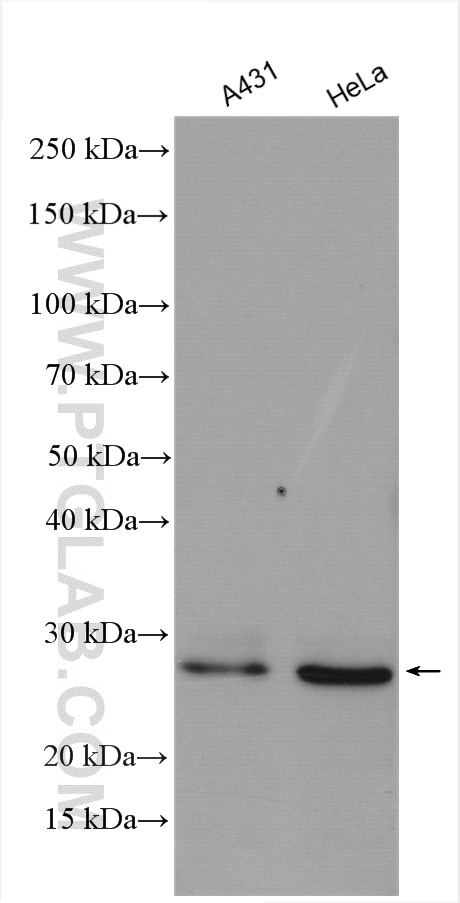
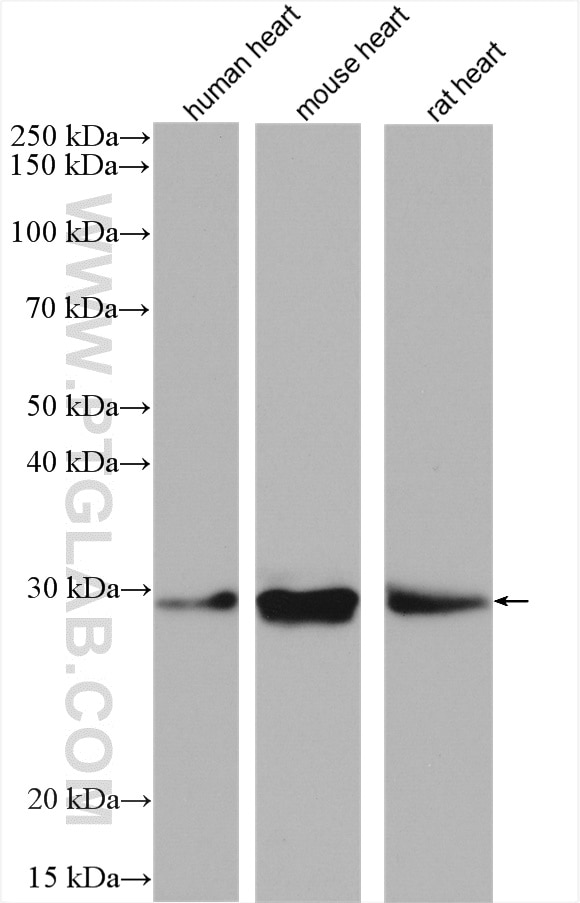
| Positive WB detected in | A431 cells, human heart tissue, mouse heart tissue, rat heart tissue, HeLa cells |
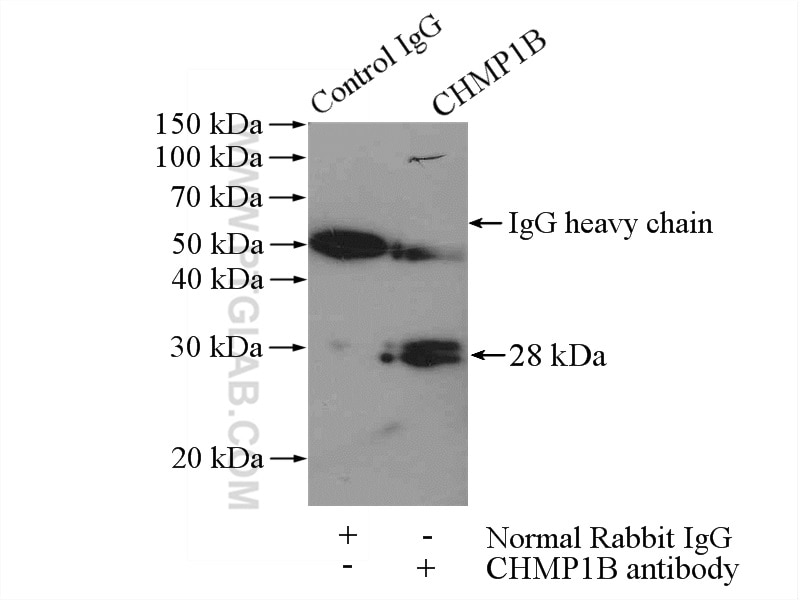
| Positive IP detected in | HeLa cells |
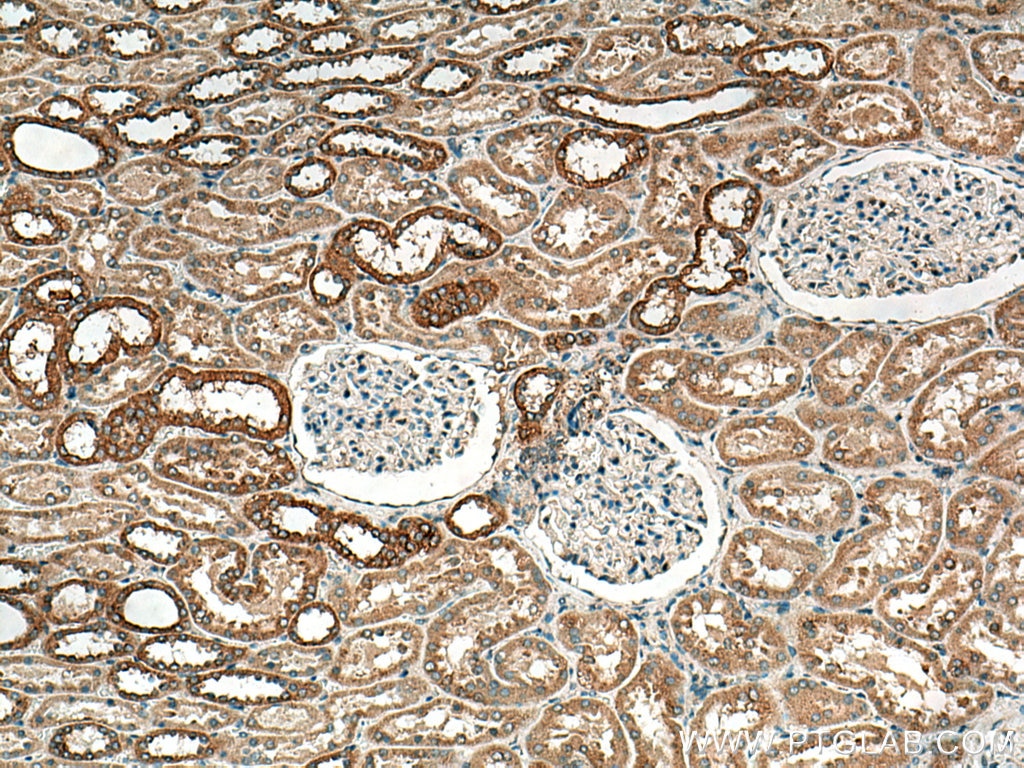
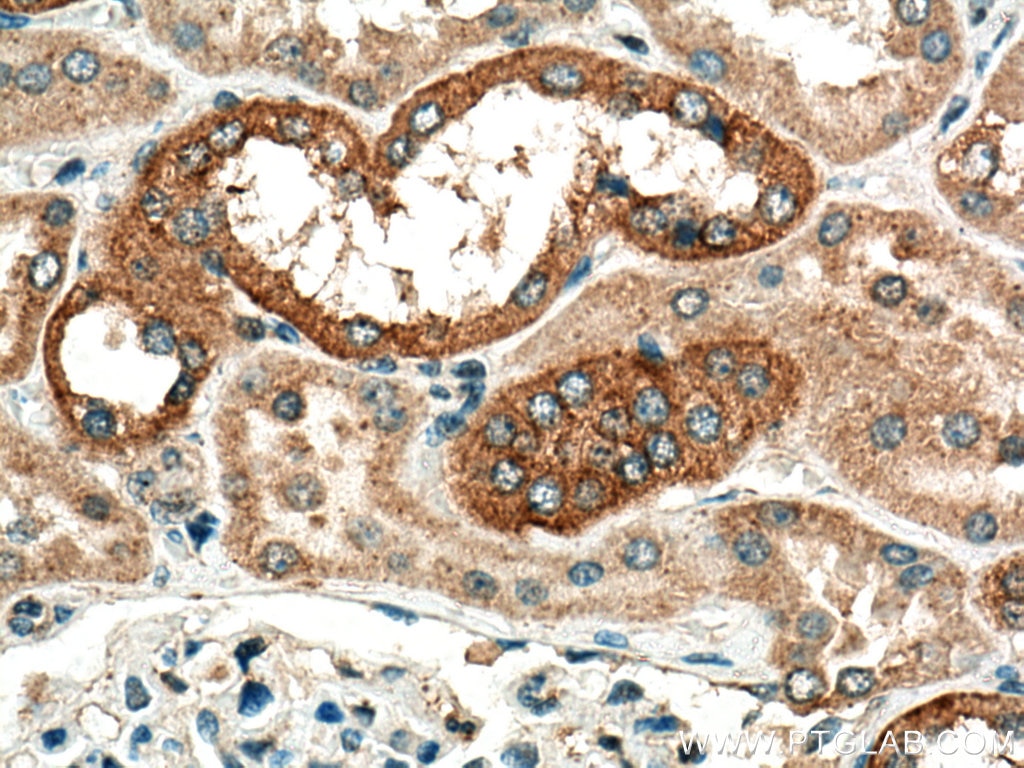
| Positive IHC detected in | human kidney tissue Note: suggested antigen retrieval with TE buffer pH 9.0; (*) Alternatively, antigen retrieval may be performed with citrate buffer pH 6.0 |
Recommended dilution
| Application | Dilution |
|---|---|
| Western Blot (WB) | WB : 1:2000-1:12000 |
| Immunoprecipitation (IP) | IP : 0.5-4.0 ug for 1.0-3.0 mg of total protein lysate |
| Immunohistochemistry (IHC) | IHC : 1:50-1:500 |
| It is recommended that this reagent should be titrated in each testing system to obtain optimal results. | |
| Sample-dependent, Check data in validation data gallery. | |
Product Information
14639-1-AP targets CHMP1B in WB, IHC, IF, IP, ELISA applications and shows reactivity with human, mouse, rat samples.
| Tested Reactivity | human, mouse, rat |
| Cited Reactivity | human, mouse |
| Host / Isotype | Rabbit / IgG |
| Class | Polyclonal |
| Type | Antibody |
| Immunogen |
CatNo: Ag6222 Product name: Recombinant human CHMP1B protein Source: e coli.-derived, PGEX-4T Tag: GST Domain: 1-199 aa of BC065933 Sequence: MSNMEKHLFNLKFAAKELSRSAKKCDKEEKAEKAKIKKAIQKGNMEVARIHAENAIRQKNQAVNFLRMSARVDAVAARVQTAVTMGKVTKSMAGVVKSMDATLKTMNLEKISALMDKFEHQFETLDVQTQQMEDTMSSTTTLTTPQNQVDMLLQEMADEAGLDLNMELPQGQTGSVGTSVASAEQDELSQRLARLRDQV Predict reactive species |
| Full Name | chromatin modifying protein 1B |
| Calculated Molecular Weight | 22 kDa |
| Observed Molecular Weight | 28 kDa |
| GenBank Accession Number | BC065933 |
| Gene Symbol | CHMP1B |
| Gene ID (NCBI) | 57132 |
| RRID | AB_2079353 |
| Conjugate | Unconjugated |
| Form | Liquid |
| Purification Method | Antigen affinity purification |
| UNIPROT ID | Q7LBR1 |
| Storage Buffer | PBS with 0.02% sodium azide and 50% glycerol, pH 7.3. |
| Storage Conditions | Store at -20°C. Stable for one year after shipment. Aliquoting is unnecessary for -20oC storage. 20ul sizes contain 0.1% BSA. |
Protocols
| Product Specific Protocols | |
|---|---|
| IHC protocol for CHMP1B antibody 14639-1-AP | Download protocol |
| IP protocol for CHMP1B antibody 14639-1-AP | Download protocol |
| WB protocol for CHMP1B antibody 14639-1-AP | Download protocol |
| Standard Protocols | |
|---|---|
| Click here to view our Standard Protocols |
Publications
What published studies show
The CHMP1B polyclonal antibody (Cat# 14639-1-AP) has 17 citations published in journals including Science, Nature Cell Biology, Nature Communications, Developmental Cell, Autophagy, Journal of Cell Biology, mBio, Journal of Extracellular Vesicles, Traffic, Virologica Sinica, Life Science Alliance, Ecotoxicology and Environmental Safety, eLife, and bioRxiv. Research fields span ESCRT-III endosomal biology, autophagy and mitophagy, viral replication (HIV, vaccinia, swine fever), membrane repair, endosomal recycling, cancer, and nanoplastic-induced cellular stress.
| Species | Application | Title |
|---|---|---|
Nat Cell Biol Endosomal membrane tension regulates ESCRT-III-dependent intra-lumenal vesicle formation. | ||
J Extracell Vesicles Accessory ESCRT-III proteins are conserved and selective regulators of Rab11a-exosome formation | ||
Autophagy ATP6V1D drives hepatocellular carcinoma stemness and progression via both lysosome acidification-dependent and -independent mechanisms | ||
Autophagy Classical swine fever virus hijacks ESCRT-III and VPS4A to promote phagophore closure for accelerating mitophagy. | ||
Nat Commun Spatially resolved phosphoproteomics reveals fibroblast growth factor receptor recycling-driven regulation of autophagy and survival |






