
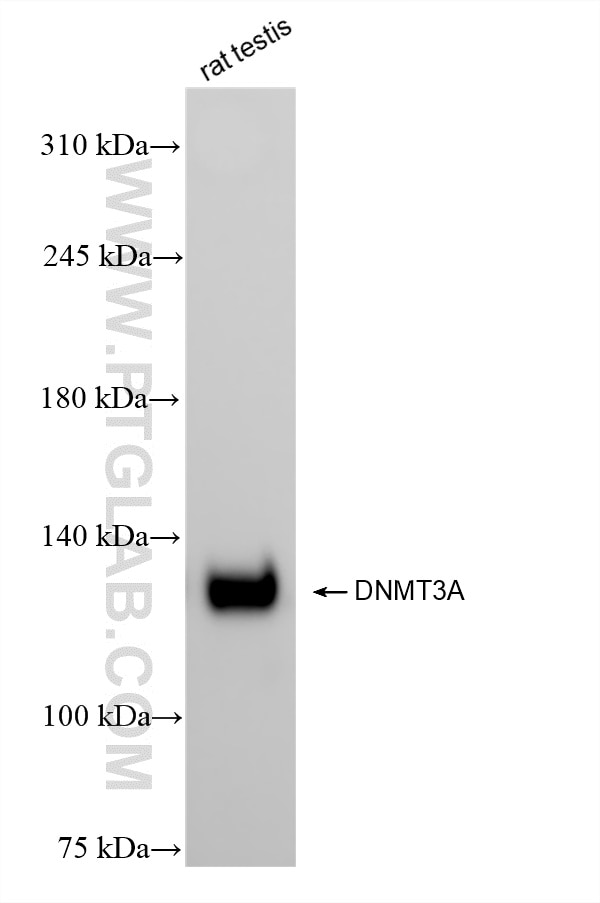
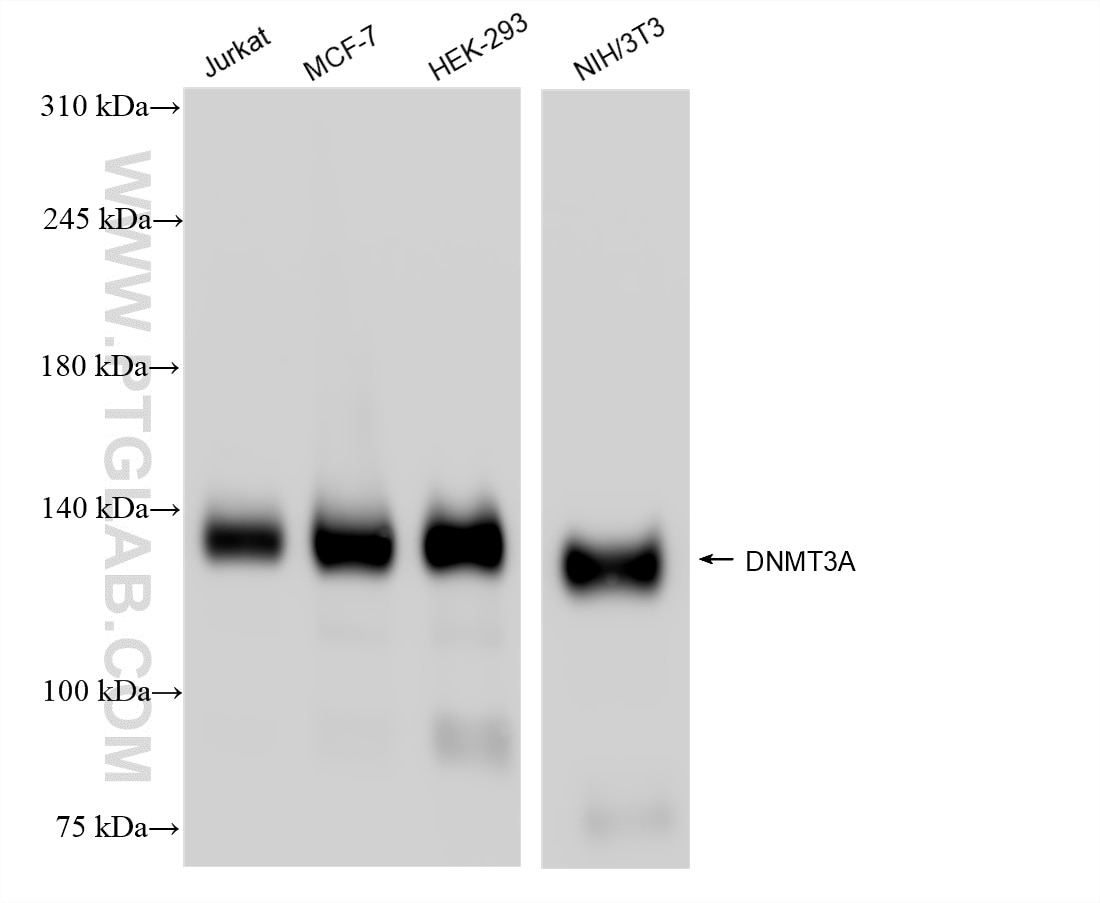
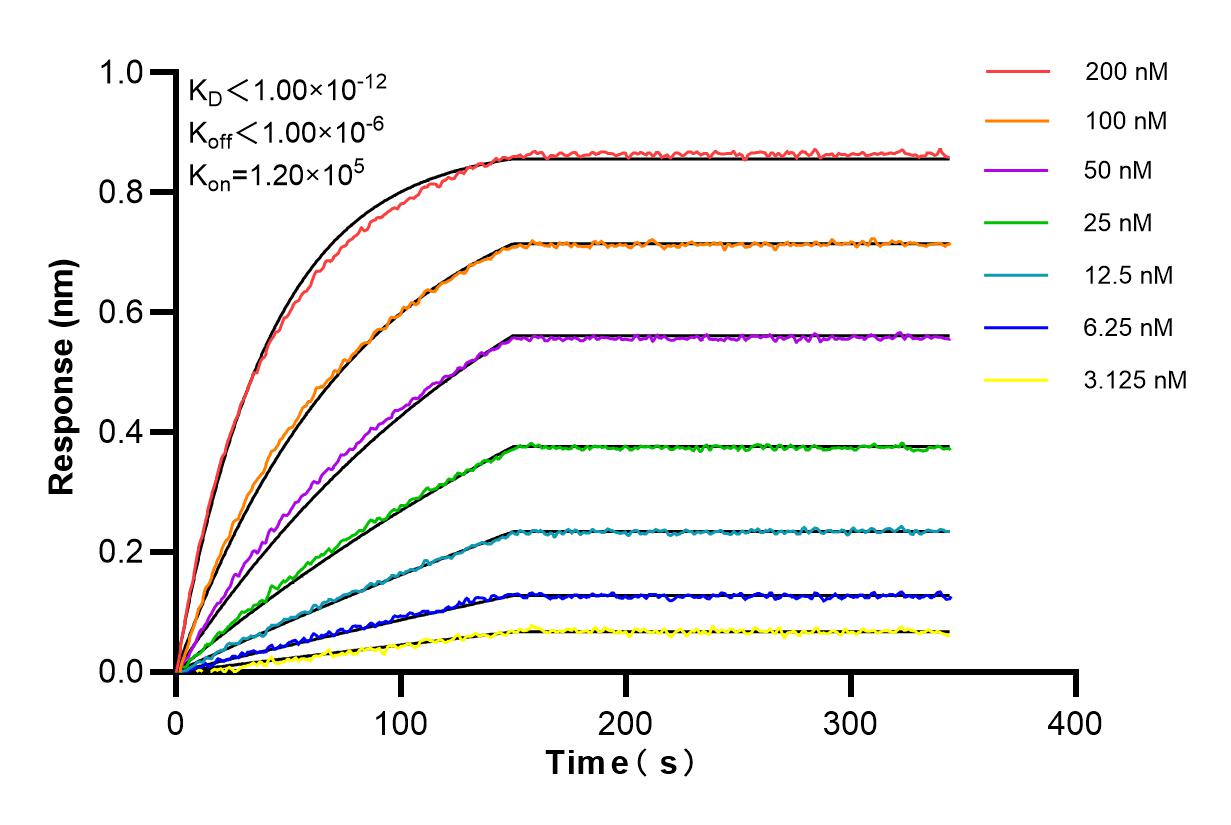

Tested Applications
| Positive WB detected in | Jurkat cells, rat testis tissue, MCF-7 cells, HEK-293 cells, NIH/3T3 cells |
Recommended dilution
| Application | Dilution |
|---|---|
| Western Blot (WB) | WB : 1:2000-1:10000 |
| It is recommended that this reagent should be titrated in each testing system to obtain optimal results. | |
| Sample-dependent, Check data in validation data gallery. | |
Product Information
81474-5-RR targets DNMT3A in WB, ELISA applications and shows reactivity with human, mouse, rat samples.
| Tested Reactivity | human, mouse, rat |
| Host / Isotype | Rabbit / IgG |
| Class | Recombinant |
| Type | Antibody |
| Immunogen |
CatNo: Ag15111 Product name: Recombinant human DNMT3A protein Source: e coli.-derived, PGEX-4T Tag: GST Domain: 1-280 aa of BC043617 Sequence: MPAMPSSGPGDTSSSAAEREEDRKDGEEQEEPRGKEERQEPSTTARKVGRPGRKRKHPPVESGDTPKDPAVISKSPSMAQDSGASELLPNGDLEKRSEPQPEEGSPAGGQKGGAPAEGEGAAETLPEASRAVENGCCTPKEGRGAPAEAGKEQKETNIESMKMEGSRGRLRGGLGWESSLRQRPMPRLTFQAGDPYYISKRKRDEWLARWKREAEKKAKVIAGMNAVEENQGPGESQKVEEASPPAVQQPTDPASPTVATTPEPVGSDAGDKNATKAGDD Predict reactive species |
| Full Name | DNA (cytosine-5-)-methyltransferase 3 alpha |
| Calculated Molecular Weight | 912 aa, 102 kDa |
| Observed Molecular Weight | 130 kDa |
| GenBank Accession Number | BC043617 |
| Gene Symbol | DNMT3A |
| Gene ID (NCBI) | 1788 |
| RRID | AB_3743383 |
| Conjugate | Unconjugated |
| Form | Liquid |
| Purification Method | Protein A purification |
| UNIPROT ID | Q9Y6K1 |
| Storage Buffer | PBS with 0.02% sodium azide and 50% glycerol, pH 7.3. |
| Storage Conditions | Store at -20°C. Stable for one year after shipment. Aliquoting is unnecessary for -20oC storage. 20ul sizes contain 0.1% BSA. |
Background Information
DNA methylation in vertebrate animals is an epigenetic modification that is important for embryonic development, imprinting, and the inactivation of X chromosomes. DNA methylation is catalyzed by a family of DNA methyltransferases (DNMTs) that include the maintenance enzyme DNMT1 and de novo methyltransferases DNMT3a and DNMT3b. The overexpression of DNMT1, DNMT3a, and DNMT3b has been reported in various malignancies, including gastric, urothelial, and lung cancers, and may be related to tumorigenesis, tumor progression, and poor survival. Two isoforms of DNMT3a exist: the full-length DNMT3a, and the shorter form DNMT3a2 which lacks the N-terminal fragment. DNMT3a is expressed ubiquitously at low levels, while DNMT3a2 is specially expressed at high levels in embryonic stem cells and shows restricted expression in tissues known to undergo de novo methylation including testis and ovary. This antibody was raised against the N-terminal region of human DNMT3a. It is expected to detect the 120-130 kDa DNMT3a but not 72-100 kDa DNMT3a2.
Protocols
| Product Specific Protocols | |
|---|---|
| WB protocol for DNMT3A antibody 81474-5-RR | Download protocol |
| Standard Protocols | |
|---|---|
| Click here to view our Standard Protocols |
Publications
What published studies show
The DNMT3A Recombinant monoclonal antibody (242257E1), catalog number 81474-5-RR, has 1 citation. It appears in Environmental International (IF 10.2), in a 2026 study by Junyu Jiang examining how gestational cadmium exposure triggers POI-like ovarian dysfunction and accelerated ovarian aging through epigenetic repression in mice. The research field encompasses environmental toxicology, epigenetics, and reproductive health.
| Species | Application | Title |
|---|---|---|
Environ Int Gestational cadmium exposure triggers POI-Like ovarian dysfunction and accelerated ovarian aging through epigenetic repression of Kl in mice. |




