
Tested Applications
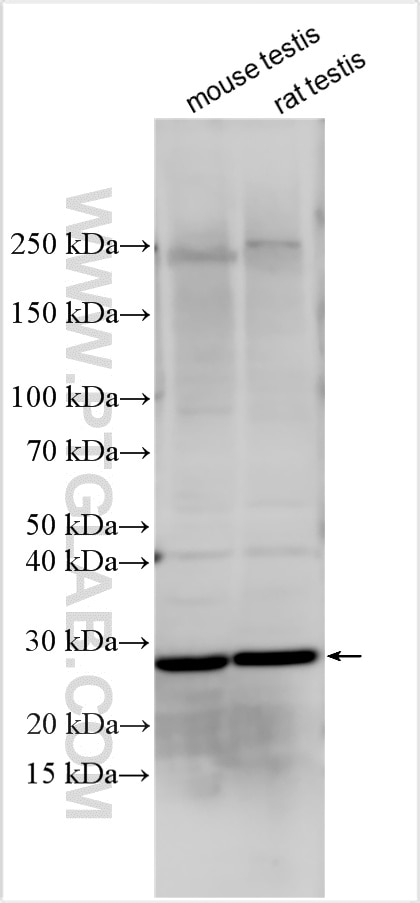
| Positive WB detected in | mouse testis tissue, rat testis tissue |
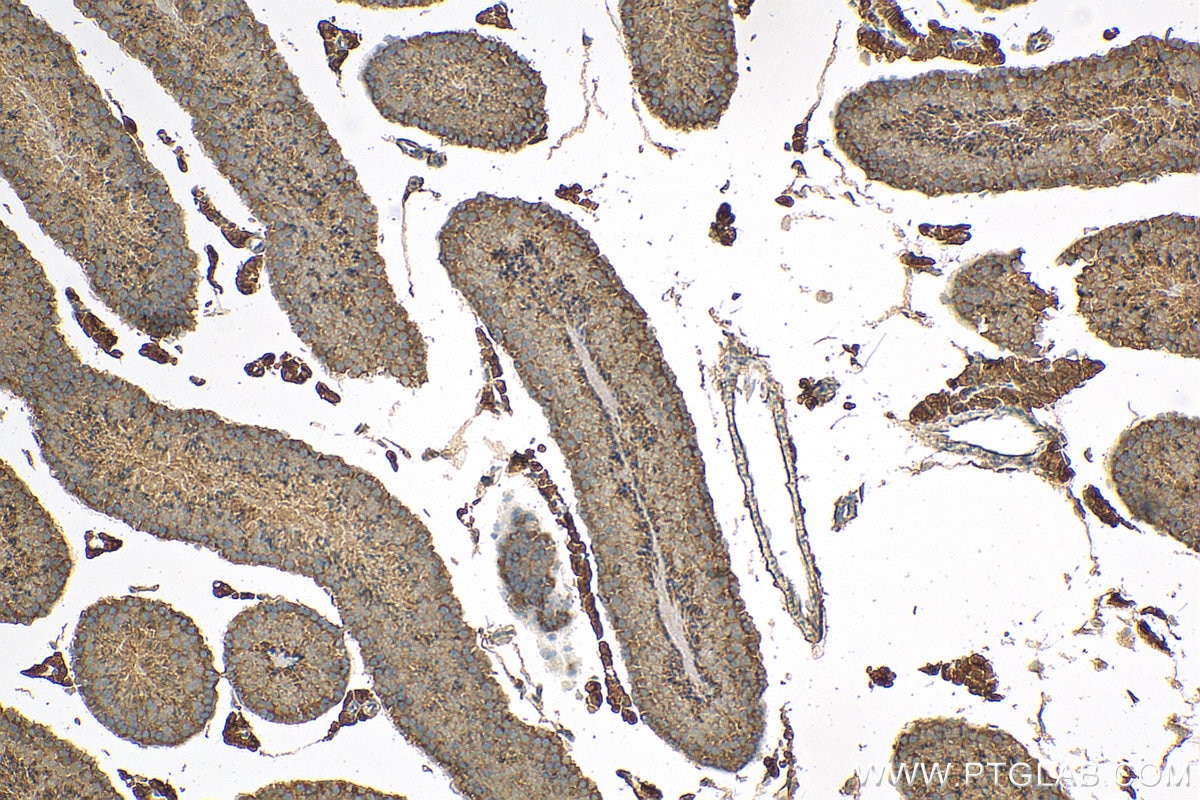
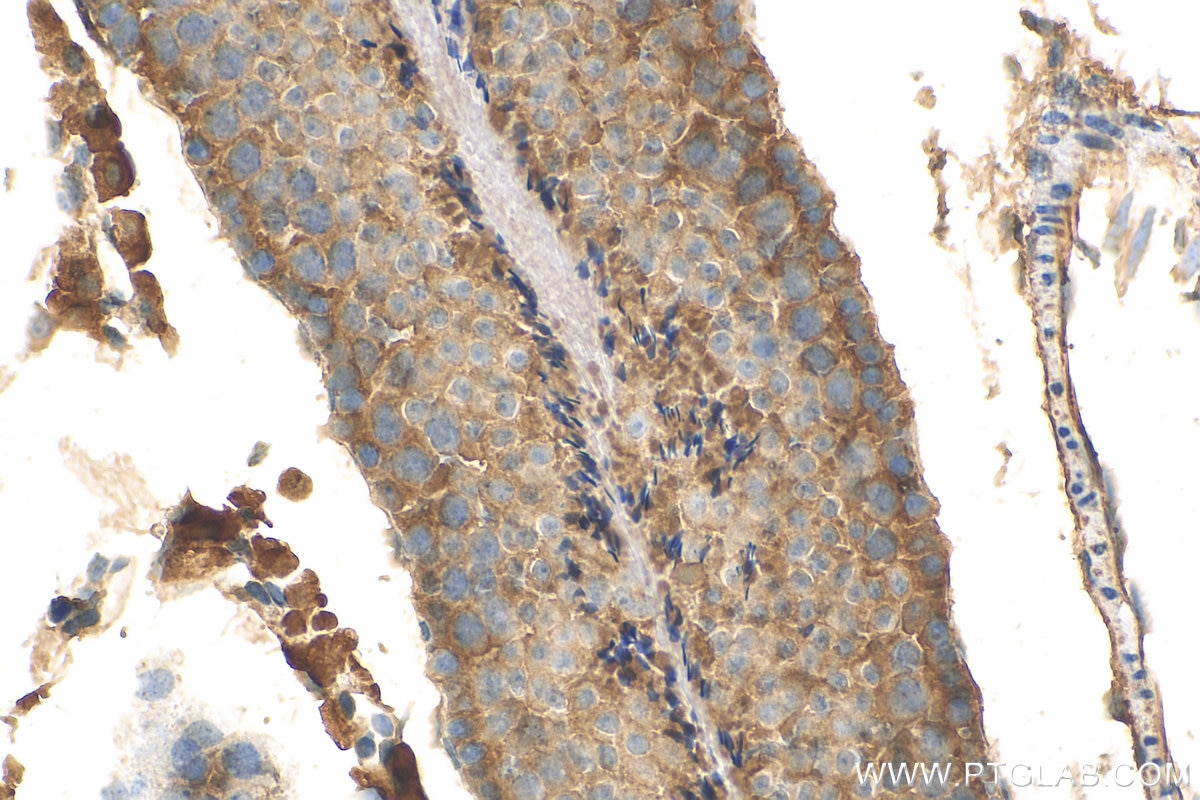
| Positive IHC detected in | mouse testis tissue Note: suggested antigen retrieval with TE buffer pH 9.0; (*) Alternatively, antigen retrieval may be performed with citrate buffer pH 6.0 |
Recommended dilution
| Application | Dilution |
|---|---|
| Western Blot (WB) | WB : 1:500-1:2000 |
| Immunohistochemistry (IHC) | IHC : 1:50-1:500 |
| It is recommended that this reagent should be titrated in each testing system to obtain optimal results. | |
| Sample-dependent, Check data in validation data gallery. | |
Product Information
11784-1-AP targets LY96/MD2 in WB, IHC, IF, IP, CoIP, ELISA applications and shows reactivity with human, mouse, rat samples.
| Tested Reactivity | human, mouse, rat |
| Cited Reactivity | human, mouse, rat |
| Host / Isotype | Rabbit / IgG |
| Class | Polyclonal |
| Type | Antibody |
| Immunogen |
CatNo: Ag2447 Product name: Recombinant human LY96 protein Source: e coli.-derived, PGEX-4T Tag: GST Domain: 1-160 aa of BC020690 Sequence: MLPFLFFSTLFSSIFTEAQKQYWVCNSSDASISYTYCDKMQYPISINVNPCIELKGSKGLLHIFYIPRRDLKQLYFNLYITVNTMNLPKRKEVICRGSDDDYSFCRALKGETVNTTISFSFKGIKFSKGKYKCVVEAISGSPEEMLFCLEFVILHQPNSN Predict reactive species |
| Full Name | lymphocyte antigen 96 |
| Calculated Molecular Weight | 160 aa, 18 kDa |
| Observed Molecular Weight | 20-26 kDa |
| GenBank Accession Number | BC020690 |
| Gene Symbol | MD2 |
| Gene ID (NCBI) | 23643 |
| RRID | AB_2138089 |
| Conjugate | Unconjugated |
| Form | Liquid |
| Purification Method | Antigen affinity purification |
| UNIPROT ID | Q9Y6Y9 |
| Storage Buffer | PBS with 0.02% sodium azide and 50% glycerol, pH 7.3. |
| Storage Conditions | Store at -20°C. Stable for one year after shipment. Aliquoting is unnecessary for -20oC storage. 20ul sizes contain 0.1% BSA. |
Background Information
LY96, also named as ESOP1 or MD 2, is a small secreted glycoprotein that can bind to both the hydrophobic portion of LPS and to the extracellular domain of TLR4. The interaction between MD-2 and LPS bridges the two TLR4 molecules and induces the dimerization of LPS-MD-2-TLR4, which forms the structural basis for biological functions of TLR4/MD-2 complex. Due to its essential role in mediating the interaction between LPS and TLR4, MD-2 has been extensively explored as a therapeutic target for treatment of inflammatory disorders.
Protocols
| Product Specific Protocols | |
|---|---|
| IHC protocol for LY96/MD2 antibody 11784-1-AP | Download protocol |
| WB protocol for LY96/MD2 antibody 11784-1-AP | Download protocol |
| Standard Protocols | |
|---|---|
| Click here to view our Standard Protocols |
Publications
What published studies show
| Species | Application | Title |
|---|---|---|
Adv Sci (Weinh) Clec7a Worsens Long-Term Outcomes after Ischemic Stroke by Aggravating Microglia-Mediated Synapse Elimination | ||
Cancer Lett Molecular Profiling Reveals the Malignant Potential in Solid Pseudopapillary Neoplasms of the Pancreas | ||
J Med Chem Fragment-Based Anti-inflammatory Agent Design and Target Identification: Discovery of AF-45 as an IRAK4 Inhibitor to Treat Ulcerative Colitis and Acute Lung Injury | ||
Front Immunol A novel immunogenic cell death-related subtype classification and risk signature for predicting prognosis and immunotherapy efficacy in gastric cancer | ||
J Agric Food Chem Biotransformation of 18β-Glycyrrhetinic Acid by Human Intestinal Fungus Aspergillus niger RG13B1 and the Potential Anti-Inflammatory Mechanism of Its Metabolites | ||
Eur J Med Chem Discovery of pyrazolo[1,5-a]pyrimidine derivatives targeting TLR4-TLR4∗ homodimerization via AI-powered next-generation screening |




