

Tested Applications
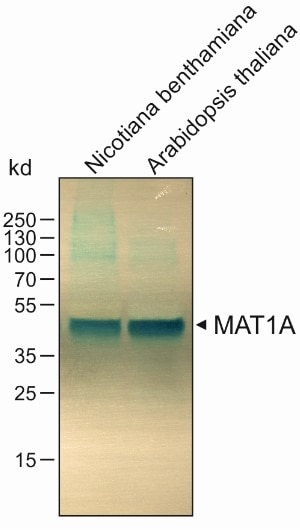
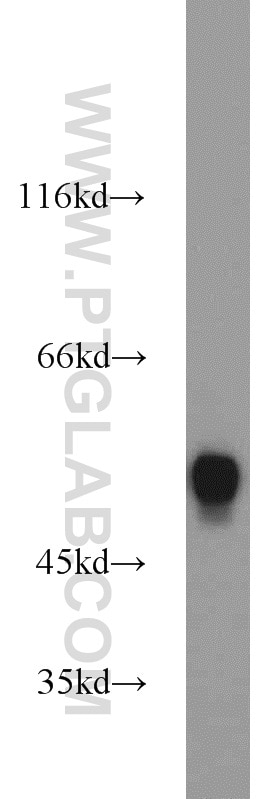
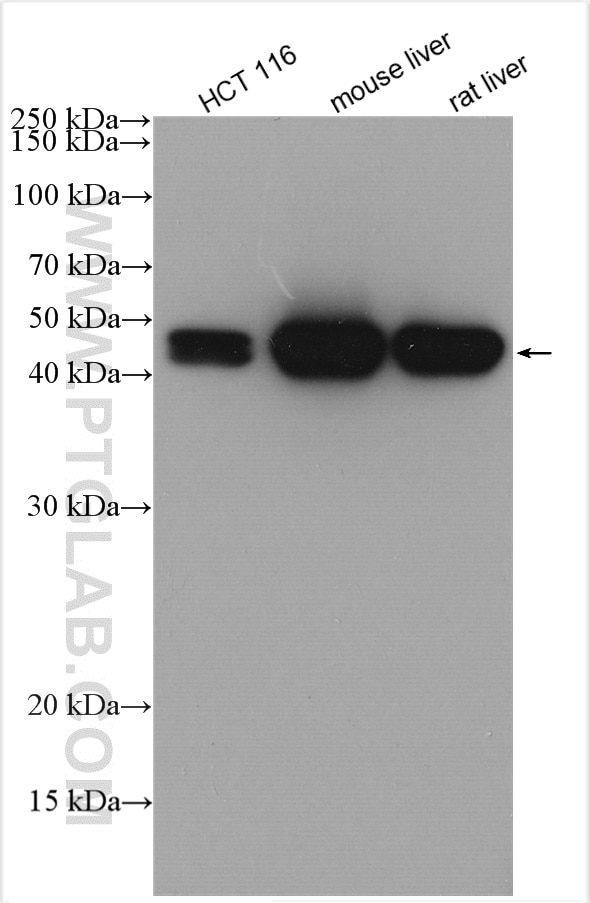
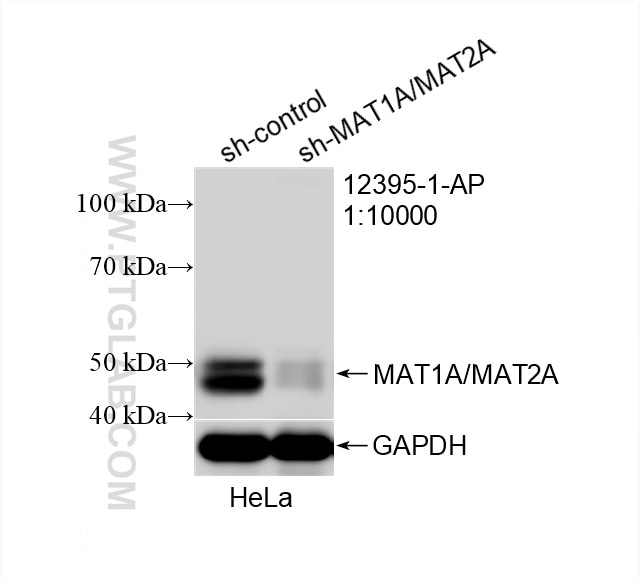
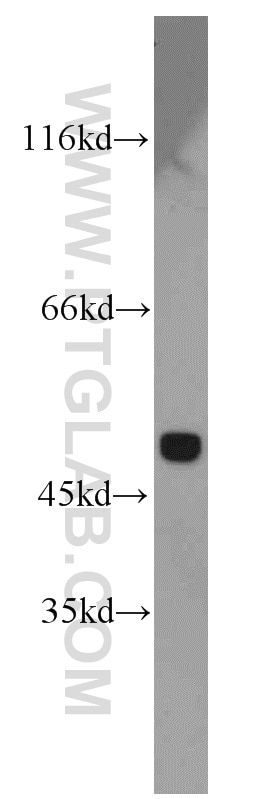
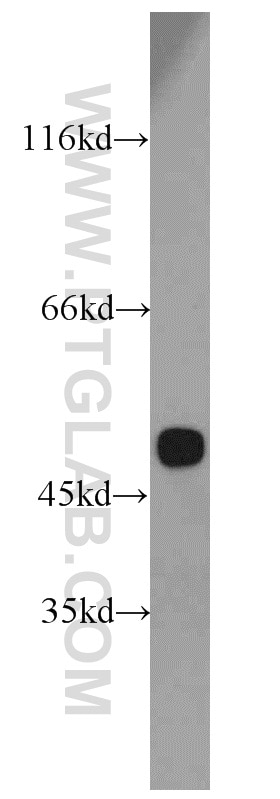
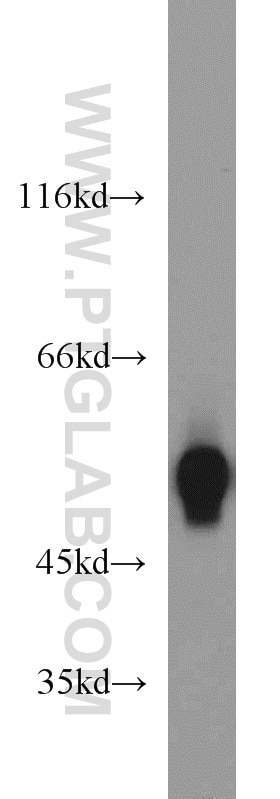
| Positive WB detected in | mouse liver tissue, arabidopsis whole plant tissue, HCT 116 cells, HeLa cells, HepG2 cells, rat liver tissue |
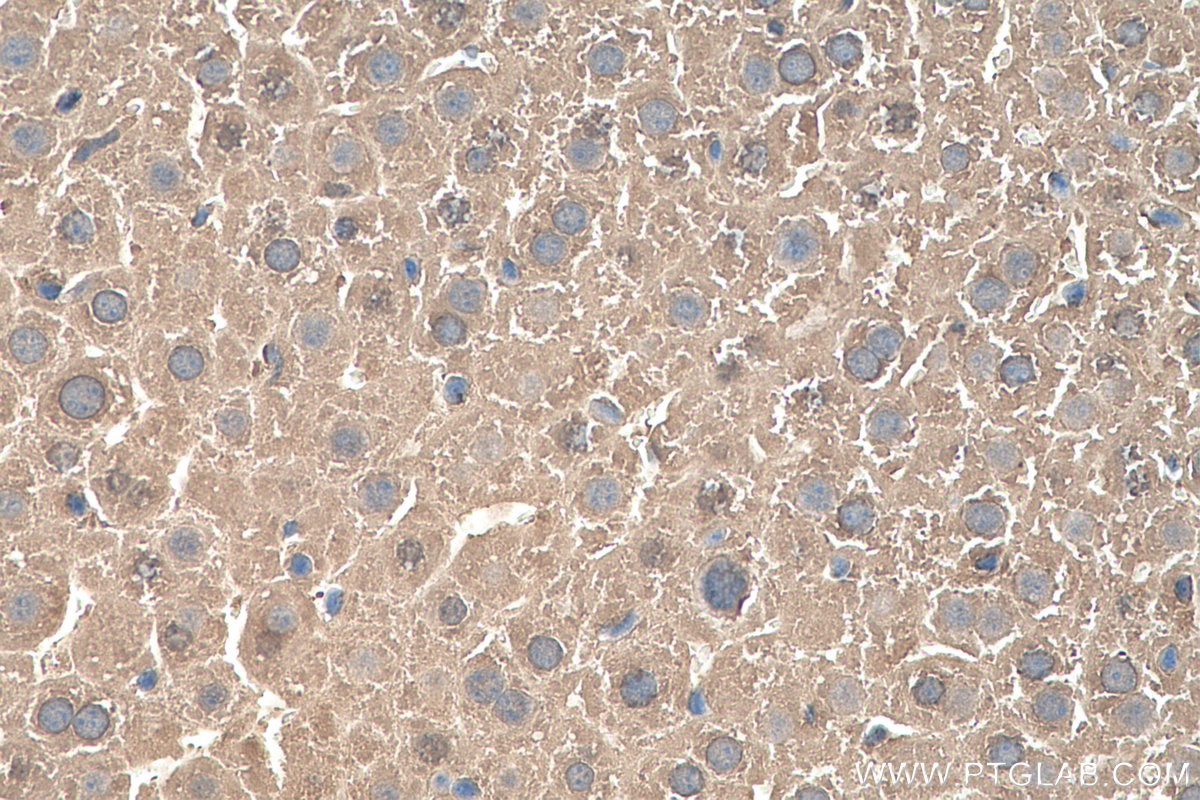
| Positive IHC detected in | mouse liver tissue Note: suggested antigen retrieval with TE buffer pH 9.0; (*) Alternatively, antigen retrieval may be performed with citrate buffer pH 6.0 |
Recommended dilution
| Application | Dilution |
|---|---|
| Western Blot (WB) | WB : 1:1000-1:4000 |
| Immunohistochemistry (IHC) | IHC : 1:50-1:500 |
| It is recommended that this reagent should be titrated in each testing system to obtain optimal results. | |
| Sample-dependent, Check data in validation data gallery. | |
Product Information
12395-1-AP targets MAT1A/MAT2A in WB, IHC, ELISA applications and shows reactivity with human, mouse, rat, arabidopsis samples.
| Tested Reactivity | human, mouse, rat, arabidopsis |
| Cited Reactivity | human, mouse, rat |
| Host / Isotype | Rabbit / IgG |
| Class | Polyclonal |
| Type | Antibody |
| Immunogen |
CatNo: Ag3076 Product name: Recombinant human MAT1A protein Source: e coli.-derived, PGEX-4T Tag: GST Domain: 1-395 aa of BC018359 Sequence: MNGPVDGLCDHSLSEGVFMFTSESVGEGHPDKICDQISDAVLDAHLKQDPNAKVACETVCKTGMVLLCGEITSMAMVDYQRVVRDTIKHIGYDDSAKGFDFKTCNVLVALEQQSPDIAQCVHLDRNEEDVGAGDQGLMFGYATDETEECMPLTIILAHKLNARMADLRRSGLLPWLRPDSKTQVTVQYMQDNGAVIPVRIHTIVISVQHNEDITLEEMRRALKEQVIRAVVPAKYLDEDTVYHLQPSGRFVIGGPQGDAGVTGRKIIVDTYGGWGAHGGGAFSGKDYTKVDRSAAYAARWVAKSLVKAGLCRRVLVQVSYAIGVAEPLSISIFTYGTSQKTERELLDVVHKNFDLRPGVIVRDLDLKKPIYQKTACYGHFGRSEFPWEVPRKLVF Predict reactive species |
| Full Name | methionine adenosyltransferase I, alpha |
| Calculated Molecular Weight | 395 aa, 44 kDa |
| Observed Molecular Weight | 47 kDa, 49 kDa |
| GenBank Accession Number | BC018359 |
| Gene Symbol | MAT1A |
| Gene ID (NCBI) | 4143 |
| RRID | AB_2266186 |
| Conjugate | Unconjugated |
| Form | Liquid |
| Purification Method | Antigen affinity purification |
| UNIPROT ID | Q00266 |
| Storage Buffer | PBS with 0.02% sodium azide and 50% glycerol, pH 7.3. |
| Storage Conditions | Store at -20°C. Stable for one year after shipment. Aliquoting is unnecessary for -20oC storage. 20ul sizes contain 0.1% BSA. |
Background Information
Methionine adenosyltransferase (MAT) is the enzyme that catalyzes the synthesis of S-adeno-sylmethionine (AdoMet), the main donor of methyl groups in the cell. In mammals MAT is encoded by two different genes, MAT1A and MAT2A. MAT1A is expressed only in the mature liver whereas fetal hepatocytes, extrahepatic tissues and liver cancer cells express MAT2A. This antibody was raised against the full length of human MAT1A and can recognize both of MAT1A and MAT2A. Western blot analysis using this antibody detected a single band around 44-50 kDa in liver.
Protocols
| Product Specific Protocols | |
|---|---|
| IHC protocol for MAT1A/MAT2A antibody 12395-1-AP | Download protocol |
| WB protocol for MAT1A/MAT2A antibody 12395-1-AP | Download protocol |
| Standard Protocols | |
|---|---|
| Click here to view our Standard Protocols |
Publications
What published studies show
The MAT1A/MAT2A Polyclonal antibody (Cat# 12395-1-AP) has 12 citations published in journals including Advanced Science, Journal of Agricultural and Food Chemistry, Mechanisms of Ageing and Development, Frontiers in Pharmacology, Toxicological Sciences, BBA Molecular Basis of Disease, American Journal of Pathology, Annals of the New York Academy of Sciences, Proteomics, Biology of Reproduction, Journal of Surgical Oncology, and Longevity & Healthspan. Research fields span methionine metabolism, liver disease (NASH, HCC, biliary atresia), aging, reproductive biology, and toxicology.
| Species | Application | Title |
|---|---|---|
Adv Sci (Weinh) Antibiotic-Induced Gut Microbiota Dysbiosis Modulates Host Transcriptome and m6A Epitranscriptome via Bile Acid Metabolism | ||
J Agric Food Chem Astaxanthin Alleviated La(2)O(3) Nanoparticle-Induced Liver Injury by Activating the Transsulfuration Pathway in Mice. | ||
Front Pharmacol Effect of gentiopicroside on endogenous formaldehyde homocysteine-pathway related proteins in rats with non-alcoholic steatohepatitis. | ||
Toxicol Sci Metabolomic Analysis Reveals Metabolic Changes Caused By Bisphenol A in Rats. | ||
Biochim Biophys Acta Mol Basis Dis Hepatic methionine-cycle dysregulation is associated with immune-inflammatory and fibrogenic remodeling in biliary atresia. |
Reviews
What customers say
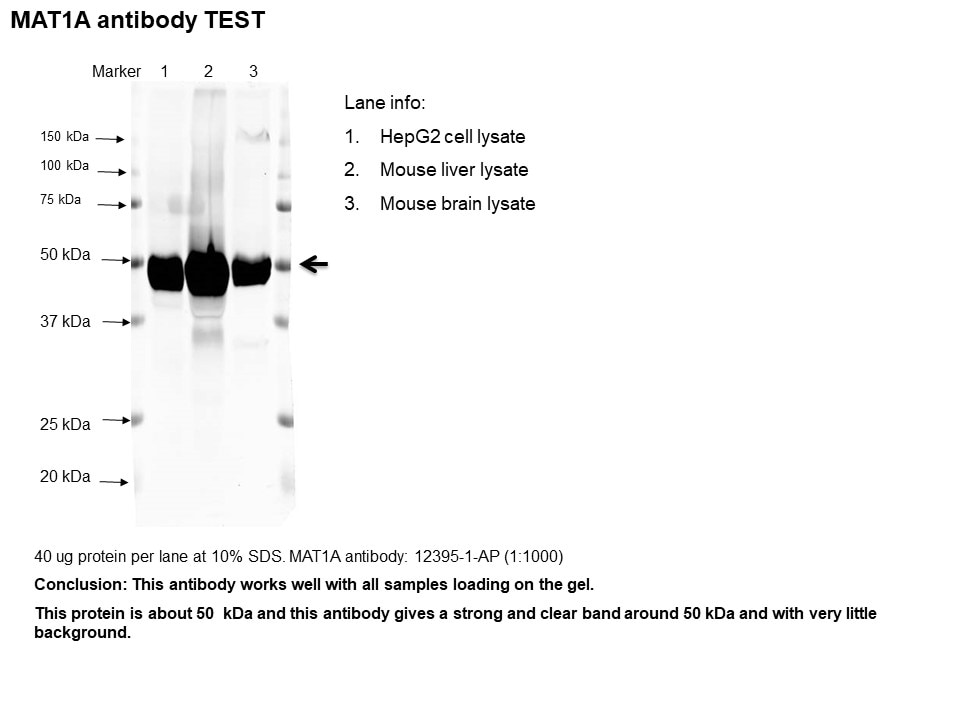
Both reviewers used this antibody for Western Blot and reported positive results. One user tested it at a 1:1000 dilution and noted it "works well for WB," giving it 4 stars. The other user tested it on mouse liver, mouse brain, and HepG2 cells, calling it a "great antibody" and awarding 5 stars. Overall, customers are satisfied with its performance in WB applications across multiple tissue and cell types.
The reviews below have been submitted by verified Proteintech customers who received an incentive for providing their feedback.
MALLIKARJUNA (Verified Customer) (11-26-2025) | works well for wb
|
Hua (Verified Customer) (03-26-2021) | Great antibody
 |









