

Tested Applications
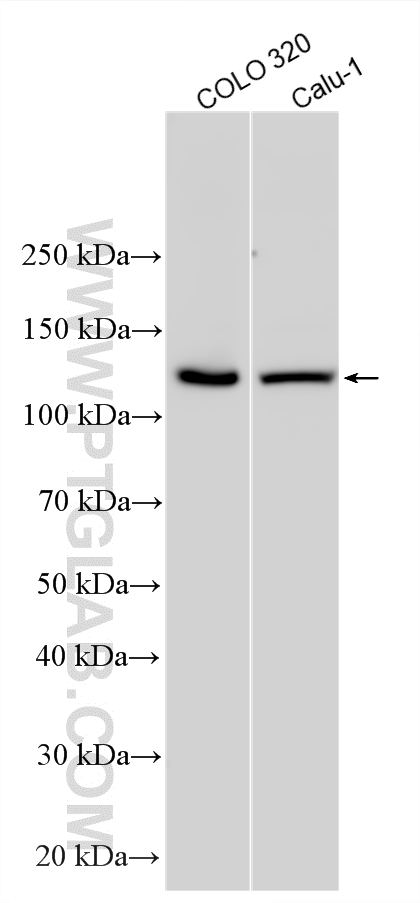
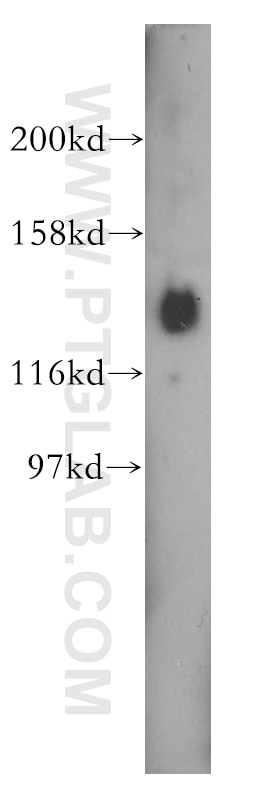
| Positive WB detected in | COLO 320 cells, HeLa cells, Calu-1 cells |
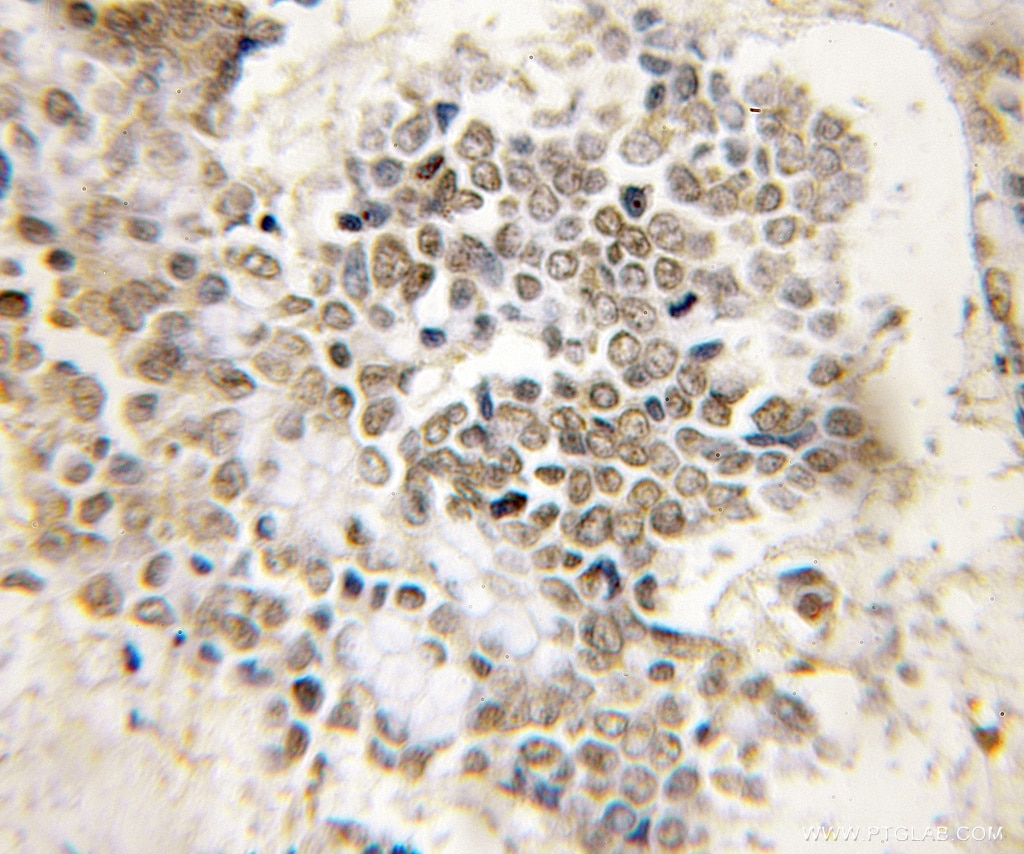
| Positive IHC detected in | human colon cancer tissue Note: suggested antigen retrieval with TE buffer pH 9.0; (*) Alternatively, antigen retrieval may be performed with citrate buffer pH 6.0 |
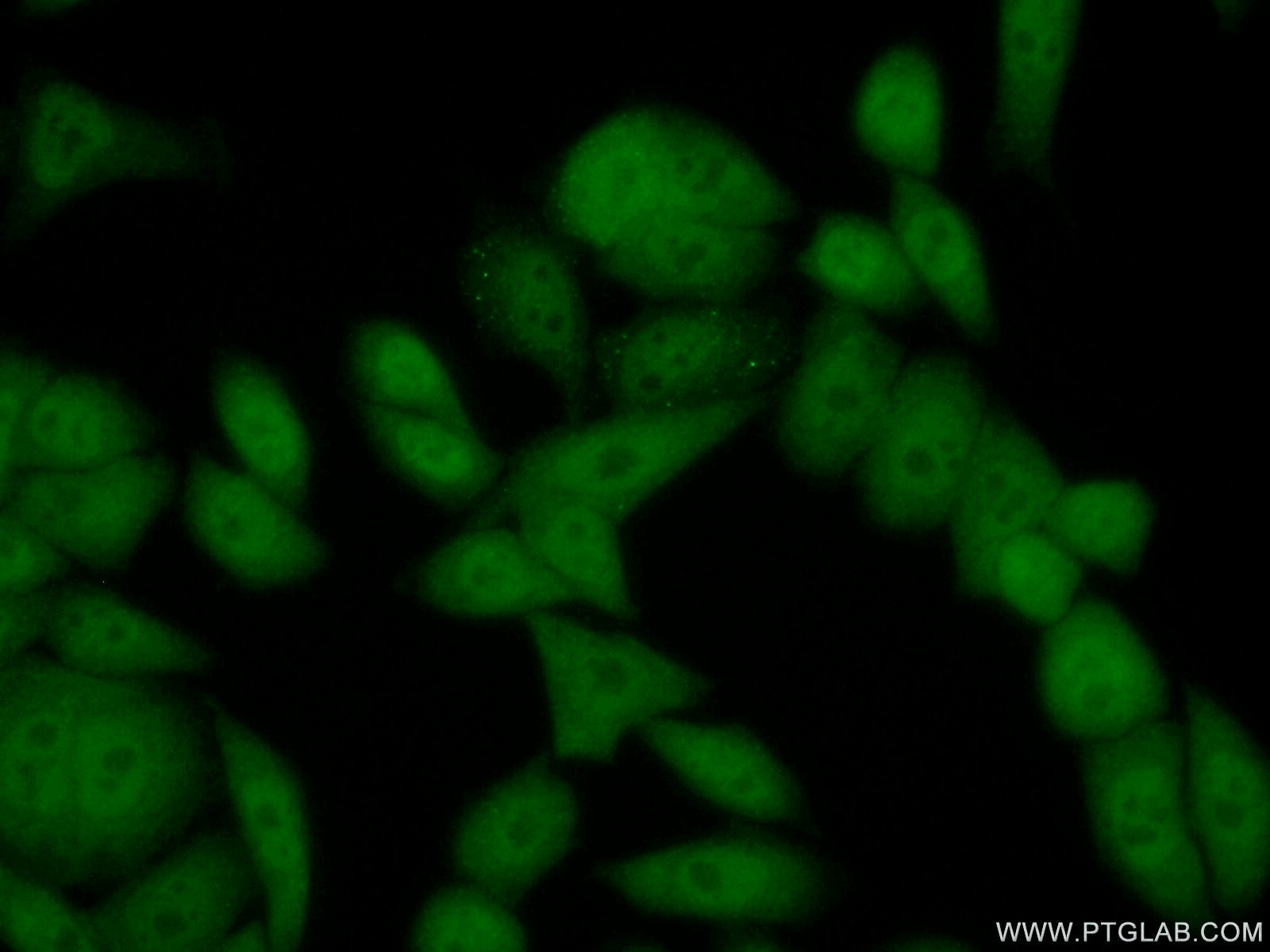
| Positive IF/ICC detected in | HeLa cells |
Recommended dilution
| Application | Dilution |
|---|---|
| Western Blot (WB) | WB : 1:1000-1:8000 |
| Immunohistochemistry (IHC) | IHC : 1:20-1:200 |
| Immunofluorescence (IF)/ICC | IF/ICC : 1:50-1:500 |
| It is recommended that this reagent should be titrated in each testing system to obtain optimal results. | |
| Sample-dependent, Check data in validation data gallery. | |
Product Information
12550-1-AP targets PER3 in WB, IHC, IF/ICC, ELISA applications and shows reactivity with human, mouse, rat samples.
| Tested Reactivity | human, mouse, rat |
| Cited Reactivity | human, mouse, rat |
| Host / Isotype | Rabbit / IgG |
| Class | Polyclonal |
| Type | Antibody |
| Immunogen |
CatNo: Ag3400 Product name: Recombinant human PER3 protein Source: e coli.-derived, T-HIS Tag: 6*His Domain: 17-378 aa of BC026102 Sequence: EALGEESGERWSPEFHLQRKLADSSHSEQQDRNRVSEELIMVVQEMKKYFPSERRNKPSTLDALNYALRCVHSVQANSEFFQILSQNGAPQADVSMYSLEELATIASEHTSKNTDTFVAVFSFLSGRLVHISEQAALILNRKKDVLASSHFVDLLAPQDMRVFYAHTARAQLPFWNNWTQRAARYECAPVKPFFCRIRGGEDRKQEKCHSPFRIIPYLIHVHHPAQPELESEPCCLTVVEKIHSGYEAPRIPVNKRIFTTTHTPGCVFLEVDEKAVPLLGYLPQDLIGTSILSYLHPEDRSLMVAIHQKVLKYAGHPPFEHSPIRFCTQNGDYIILDSSWSSFVNPWSRKISFIIGRHKVRT Predict reactive species |
| Full Name | period homolog 3 (Drosophila) |
| Calculated Molecular Weight | 1201 aa, 132 kDa |
| Observed Molecular Weight | 132 kDa |
| GenBank Accession Number | BC026102 |
| Gene Symbol | PER3 |
| Gene ID (NCBI) | 8863 |
| RRID | AB_2161814 |
| Conjugate | Unconjugated |
| Form | Liquid |
| Purification Method | Antigen affinity purification |
| UNIPROT ID | P56645 |
| Storage Buffer | PBS with 0.02% sodium azide and 50% glycerol, pH 7.3. |
| Storage Conditions | Store at -20°C. Stable for one year after shipment. Aliquoting is unnecessary for -20oC storage. 20ul sizes contain 0.1% BSA. |
Background Information
The suprachiasmatic nuclei (SCN) of the anterior hypothalamus function as a circadian clock in the mammalian brain, generating circadian rhythms in physiology and behavior. The period homolog genesPer3 is an important component of the circadian clock system. PER3 plays a role in cell proliferation, apoptosis,DNA damage response, cell cycle control, and treatment response of chemotherapy agents in cancers.
Protocols
| Product Specific Protocols | |
|---|---|
| IF protocol for PER3 antibody 12550-1-AP | Download protocol |
| IHC protocol for PER3 antibody 12550-1-AP | Download protocol |
| WB protocol for PER3 antibody 12550-1-AP | Download protocol |
| Standard Protocols | |
|---|---|
| Click here to view our Standard Protocols |
Publications
What published studies show
The PER3 Polyclonal antibody (Cat# 12550-1-AP) has 10 citations across journals including Adv Sci, Cancer Lett, Oncogene, J Ethnopharmacol, Arthritis Res Ther, Toxics, Anesth Analg, Int J Biochem Cell Biol, Biochem Biophys Res Commun, and Front Ophthalmol. Research fields span circadian rhythm regulation, breast and colorectal tumorigenesis, sleep disorders, osteoarthritis, lung injury, delirium, cellular senescence, and ocular glutathione metabolism.
| Species | Application | Title |
|---|---|---|
Adv Sci (Weinh) The PRMT6/PARP1/CRL4B Complex Regulates the Circadian Clock and Promotes Breast Tumorigenesis | ||
Cancer Lett Forkhead Box Protein FOXK1 Disrupts the Circadian Rhythm to Promote Breast Tumorigenesis in Response to Insulin Resistance | ||
J Ethnopharmacol Mechanism of action of the Banxia-Xiakucao herb pair in sleep deprivation: New comprehensive evidence from network pharmacology, transcriptomics and molecular biology experiments | ||
Arthritis Res Ther Dark-light cycle disrupts bone metabolism and suppresses joint deterioration in osteoarthritic rats. | ||
Anesth Analg Sleep Fragmentation, Electroencephalographic Slowing, and Circadian Disarray in a Mouse Model for Intensive Care Unit Delirium |





