

Tested Applications
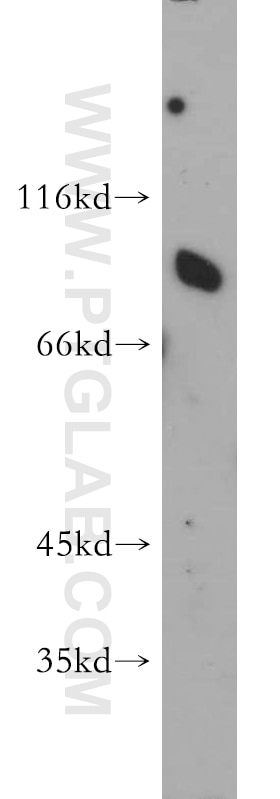
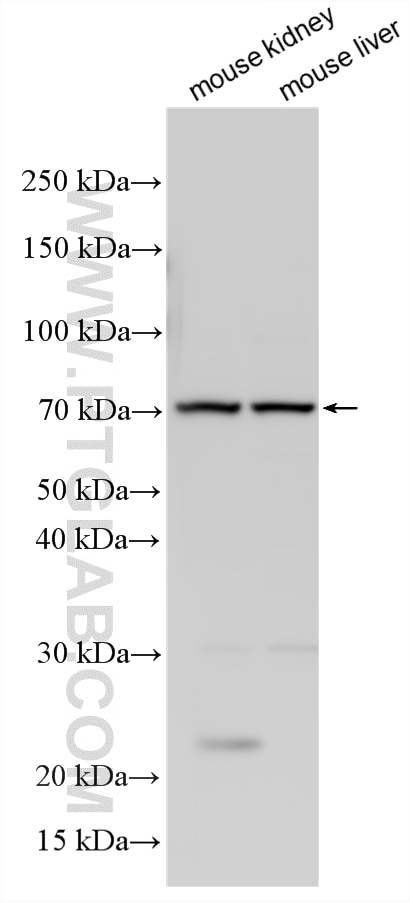
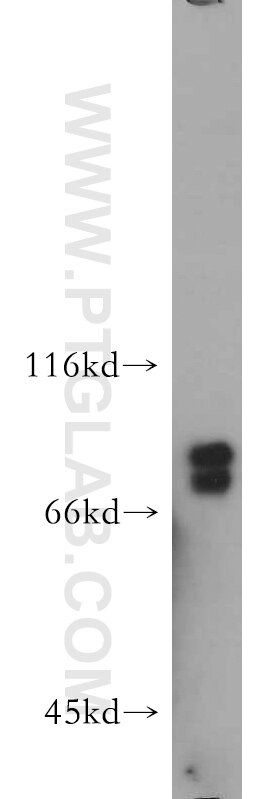
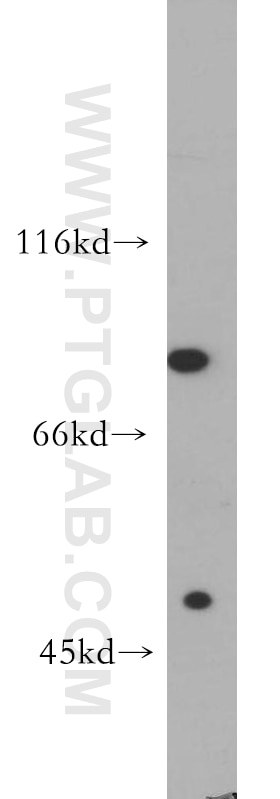
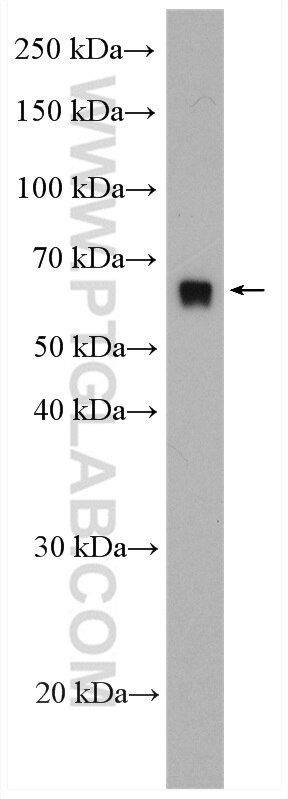
| Positive WB detected in | mouse kidney tissue, HepG2 cells, human brain tissue, human testis tissue, mouse liver tissue |
Recommended dilution
| Application | Dilution |
|---|---|
| Western Blot (WB) | WB : 1:1000-1:6000 |
| It is recommended that this reagent should be titrated in each testing system to obtain optimal results. | |
| Sample-dependent, Check data in validation data gallery. | |
Product Information
21277-1-AP targets SR-BI in WB, IHC, IF, ELISA applications and shows reactivity with human, mouse, rat samples.
| Tested Reactivity | human, mouse, rat |
| Cited Reactivity | human, mouse, rat |
| Host / Isotype | Rabbit / IgG |
| Class | Polyclonal |
| Type | Antibody |
| Immunogen |
CatNo: Ag15759 Product name: Recombinant human SCARB1 protein Source: e coli.-derived, PGEX-4T Tag: GST Domain: 1-230 aa of BC022087 Sequence: MGCSAKARWAAGALGVAGLLCAVLGAVMIVMVPSLIKQQVLKNVRIDPSSLSFNMWKEIPIPFYLSVYFFDVMNPSEILKGEKPQVRERGPYVYREFRHKSNITFNNNDTVSFLEYRTFQFQPSKSHGSESDYIVMPNILVLGAAVMMENKPMTLKLIMTLAFTTLGERAFMNRTVGEIMWGYKDPLVNLINKYFPGMFPFKDKFGLFAELNNSDSGLFTVFTGVQNISR Predict reactive species |
| Full Name | scavenger receptor class B, member 1 |
| Calculated Molecular Weight | 552 aa, 61 kDa |
| Observed Molecular Weight | 61-82 kDa |
| GenBank Accession Number | BC022087 |
| Gene Symbol | SR-BI |
| Gene ID (NCBI) | 949 |
| RRID | AB_10858921 |
| Conjugate | Unconjugated |
| Form | Liquid |
| Purification Method | Antigen affinity purification |
| UNIPROT ID | Q8WTV0 |
| Storage Buffer | PBS with 0.02% sodium azide and 50% glycerol, pH 7.3. |
| Storage Conditions | Store at -20°C. Stable for one year after shipment. Aliquoting is unnecessary for -20oC storage. 20ul sizes contain 0.1% BSA. |
Protocols
| Product Specific Protocols | |
|---|---|
| WB protocol for SR-BI antibody 21277-1-AP | Download protocol |
| Standard Protocols | |
|---|---|
| Click here to view our Standard Protocols |
Publications
What published studies show
SR-BI Polyclonal antibody (Cat# 21277-1-AP) has 32 citations published in journals including Redox Biology, Advanced Science, Biomaterials, Journal of Immunotherapy of Cancer, Atherosclerosis, Journal of Cell Biology, and PNAS. Associated research fields encompass atherosclerosis and foam cell formation, lipid/cholesterol metabolism, hepatic steatosis, reproductive endocrinology (testosterone synthesis in Leydig cells), tumor microenvironment remodeling, neuroinflammation, and viral infections (Dengue, HCV). The antibody is predominantly used for Western blot, with additional IHC and IF applications.
| Species | Application | Title |
|---|---|---|
Redox Biol S-nitrosylation of HINT1 in macrophages aggravates foam cell formation and atherosclerosis. | ||
J Nanobiotechnology Fisetin-loaded nanoparticles as a novel approach for cholesterol regulation in hypercholesterolemia: targeting the ASGR1-mediated mTORC1/AMPK pathway. | ||
MedComm (2020) Urolithin A protects severe acute pancreatitis-associated acute cardiac injury by regulating mitochondrial fatty acid oxidative metabolism in cardiomyocytes | ||
Adv Sci (Weinh) Engineered Microparticles for Treatment of Murine Brain Metastasis by Reprograming Tumor Microenvironment and Inhibiting MAPK Pathway | ||
Biomaterials Targeted immunomodulation of inflammatory monocytes across the blood-brain barrier by curcumin-loaded nanoparticles delays the progression of experimental autoimmune encephalomyelitis. | ||
J Immunother Cancer The NR_109/FUBP1/c-Myc axis regulates TAM polarization and remodels the tumor microenvironment to promote cancer development |






