
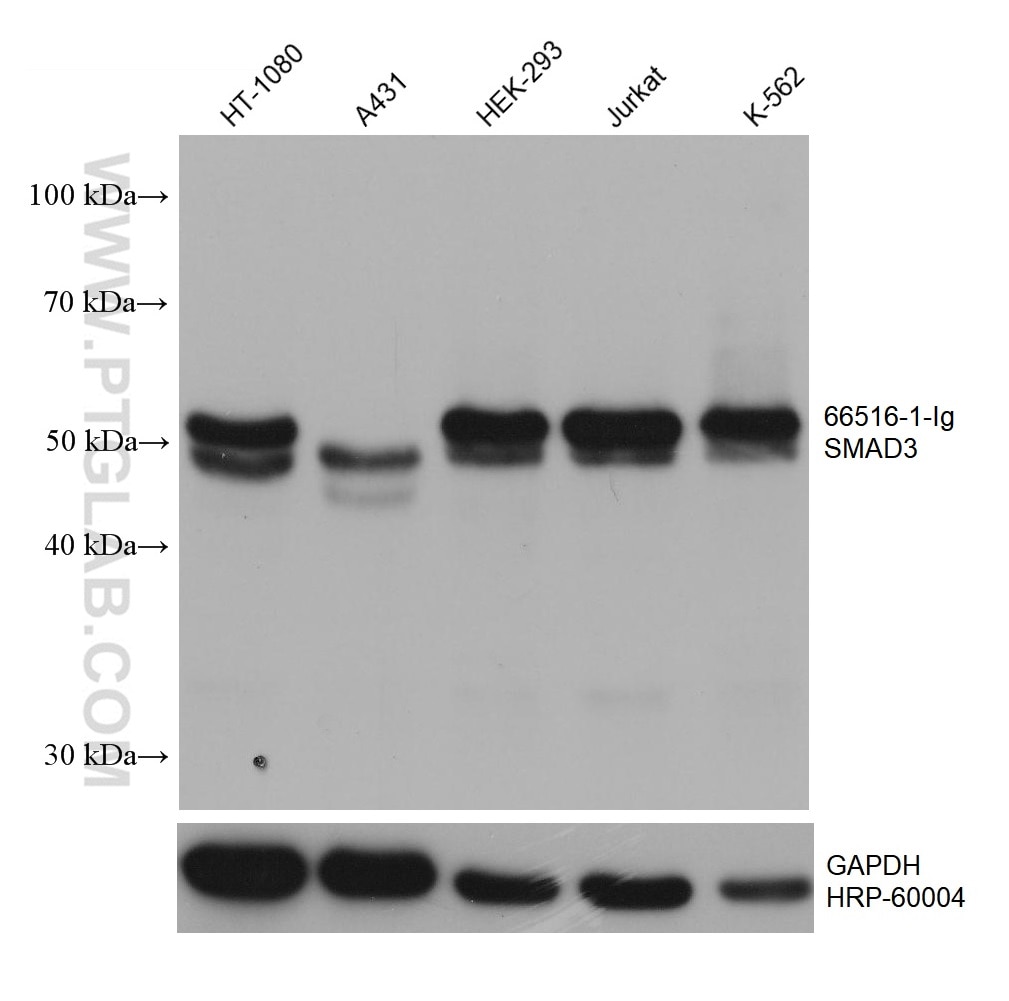
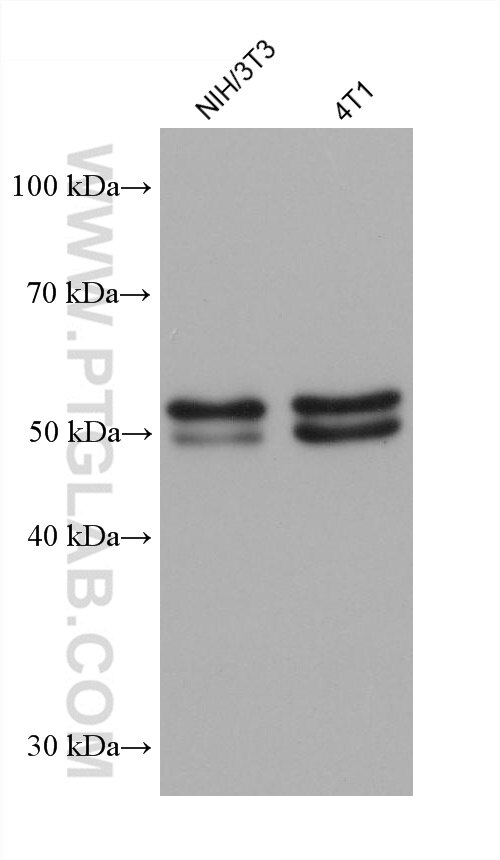
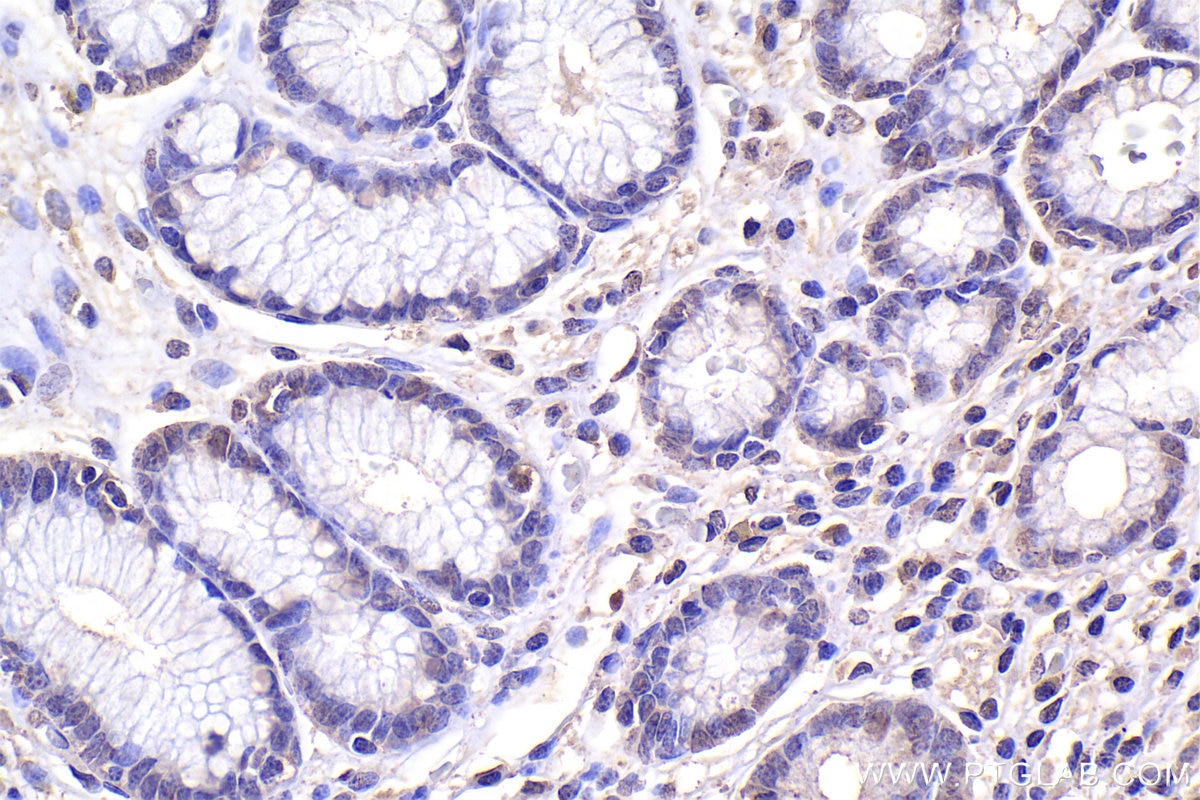
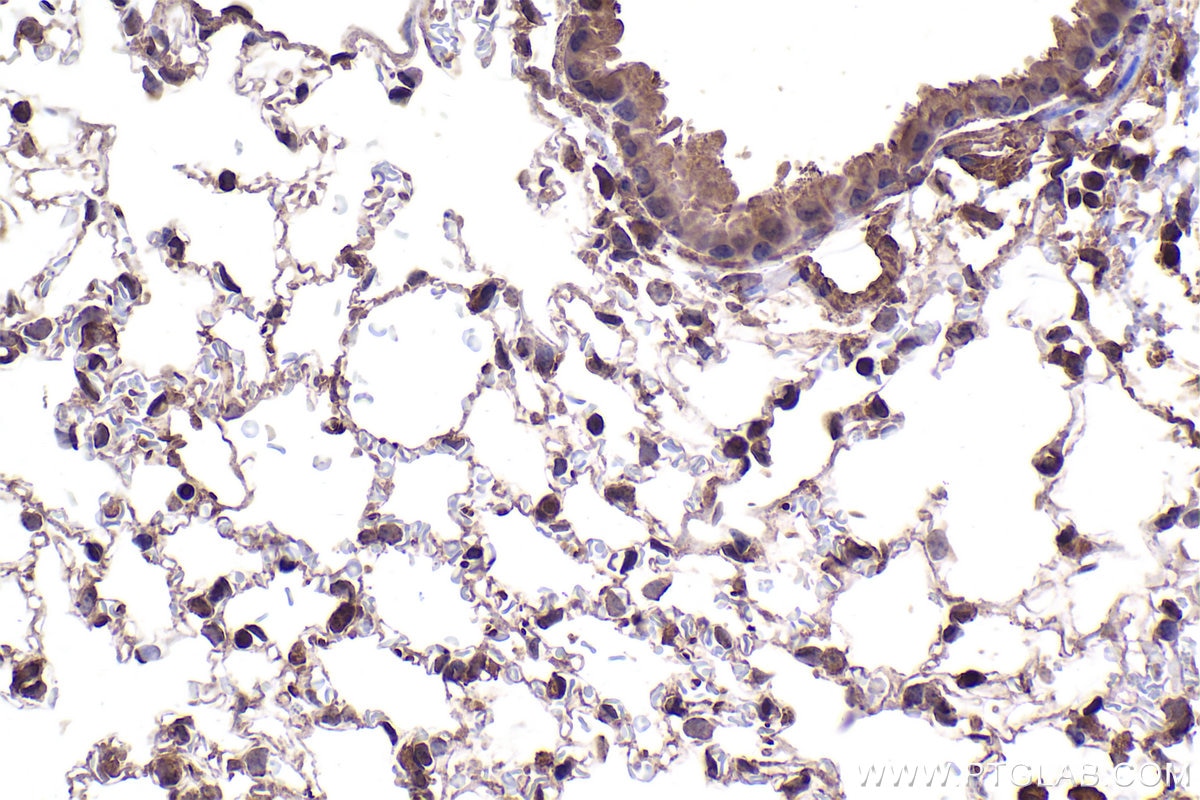
Tested Applications
| Positive WB detected in | HT-1080 cells, NIH/3T3 cells, A431 cells, HEK-293 cells, Jurkat cells, K-562 cells, 4T1 cells |
| Positive IHC detected in | human stomach cancer tissue, mouse lung tissue Note: suggested antigen retrieval with TE buffer pH 9.0; (*) Alternatively, antigen retrieval may be performed with citrate buffer pH 6.0 |
Recommended dilution
| Application | Dilution |
|---|---|
| Western Blot (WB) | WB : 1:2000-1:12000 |
| Immunohistochemistry (IHC) | IHC : 1:500-1:2000 |
| It is recommended that this reagent should be titrated in each testing system to obtain optimal results. | |
| Sample-dependent, Check data in validation data gallery. | |
Product Information
66516-1-Ig targets SMAD3 in WB, IHC, IF, IP, CoIP, ChIP, ELISA applications and shows reactivity with human, mouse samples.
| Tested Reactivity | human, mouse |
| Cited Reactivity | human, mouse, pig, rabbit |
| Host / Isotype | Mouse / IgG1 |
| Class | Monoclonal |
| Type | Antibody |
| Immunogen |
Peptide Predict reactive species |
| Full Name | SMAD family member 3 |
| Calculated Molecular Weight | 48 kDa |
| Observed Molecular Weight | 55-60 kDa |
| GenBank Accession Number | NM_005902 |
| Gene Symbol | SMAD3 |
| Gene ID (NCBI) | 4088 |
| RRID | AB_2881879 |
| Conjugate | Unconjugated |
| Form | Liquid |
| Purification Method | Protein G purification |
| UNIPROT ID | P84022 |
| Storage Buffer | PBS with 0.02% sodium azide and 50% glycerol, pH 7.3. |
| Storage Conditions | Store at -20°C. Stable for one year after shipment. Aliquoting is unnecessary for -20oC storage. 20ul sizes contain 0.1% BSA. |
Background Information
SMAD3, also named as hMAD 3 or Mad3, is a 425 amino acid protein, which contains one MH1 domain and one MH2 domain. SMAD3 localizes in the nucleus and cytoplasm. SMAD3 plays an essential role in development and maintenance of self-tolerance and is a critical mediator of the TGFB signaling pathway. SMAD3 is involved in TGFB dependent regulation of steroidogenesis and in T-cell response to TGFB.
Protocols
| Product Specific Protocols | |
|---|---|
| IHC protocol for SMAD3 antibody 66516-1-Ig | Download protocol |
| WB protocol for SMAD3 antibody 66516-1-Ig | Download protocol |
| Standard Protocols | |
|---|---|
| Click here to view our Standard Protocols |
Publications
What published studies show
| Species | Application | Title |
|---|---|---|
Mol Cancer HDAC6 orchestrates metastatic and immunosuppressive programs in small cell lung cancer through S100A2-TGF-β/SMAD and CSF1R signaling. | ||
Bioact Mater Hydrogel delivering antifibrotic agent and nano-sonosensitizer enhances efficacy of sonodynamic therapy in osteosarcoma treatment. | ||
Bioact Mater Stage-aligned electro-ionic biobattery hydrogel for enhanced wound closure and scar reduction. | ||
Nat Commun Phosphorylation of FOXN3 by NEK6 promotes pulmonary fibrosis through Smad signaling | ||
J Adv Res SIRT7 facilitates ferroptosis resistance of melanocytes via activating the SMAD3-ATF3-GPX4 signaling pathway in vitiligo | ||
J Nanobiotechnology Modification of transvaginal polypropylene mesh with co-axis electrospun nanofibrous membrane to alleviate complications following surgical implantation |
Reviews
What customers say
The reviews below have been submitted by verified Proteintech customers who received an incentive for providing their feedback.
Juliette (Verified Customer) (11-25-2024) | Good
|





