

Tested Applications
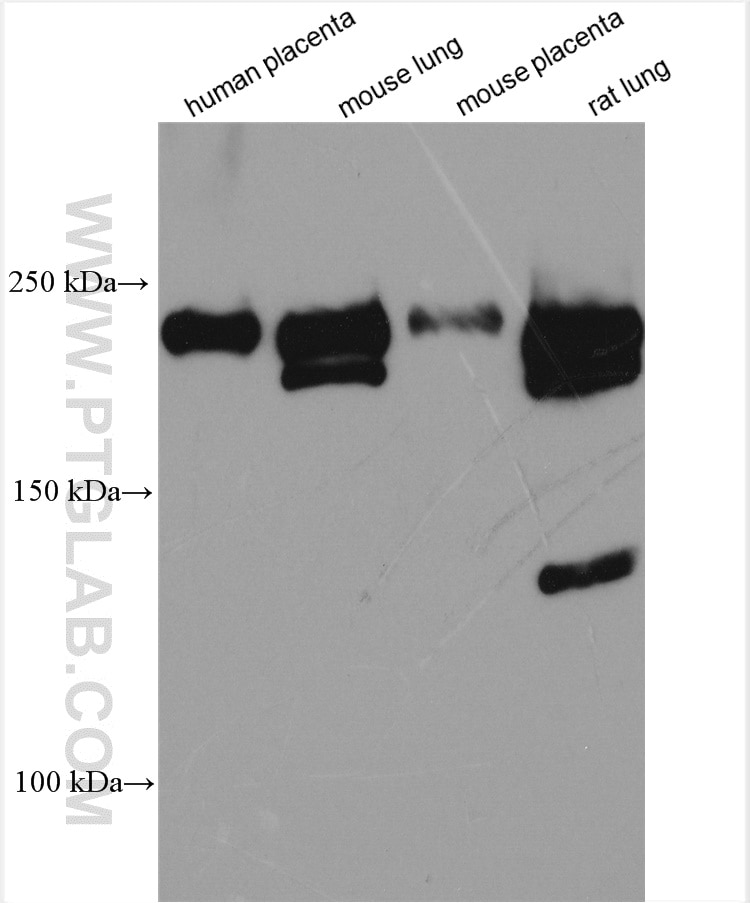
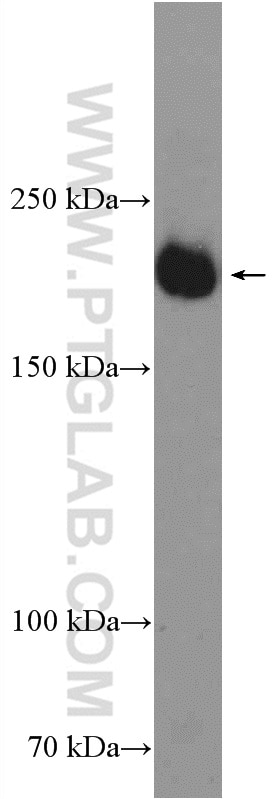
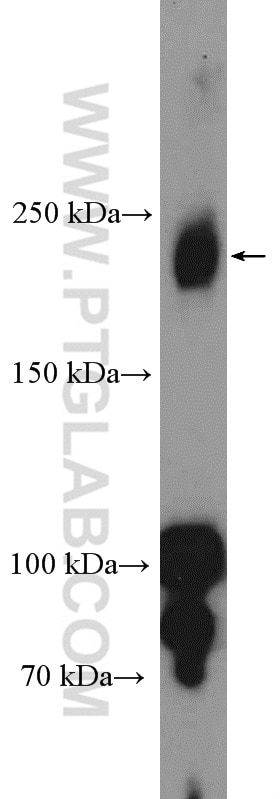
| Positive WB detected in | human placenta tissue, mouse heart tissue, mouse lung tissue, mouse placenta tissue, rat lung tissue |
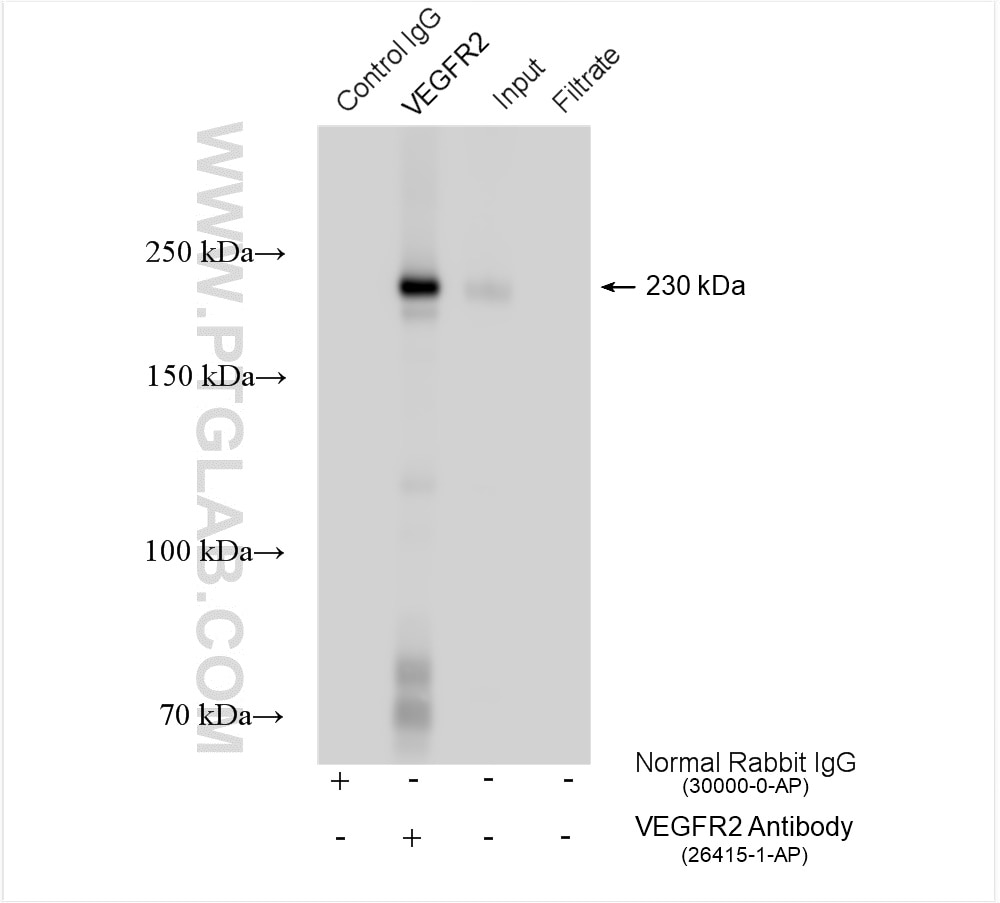
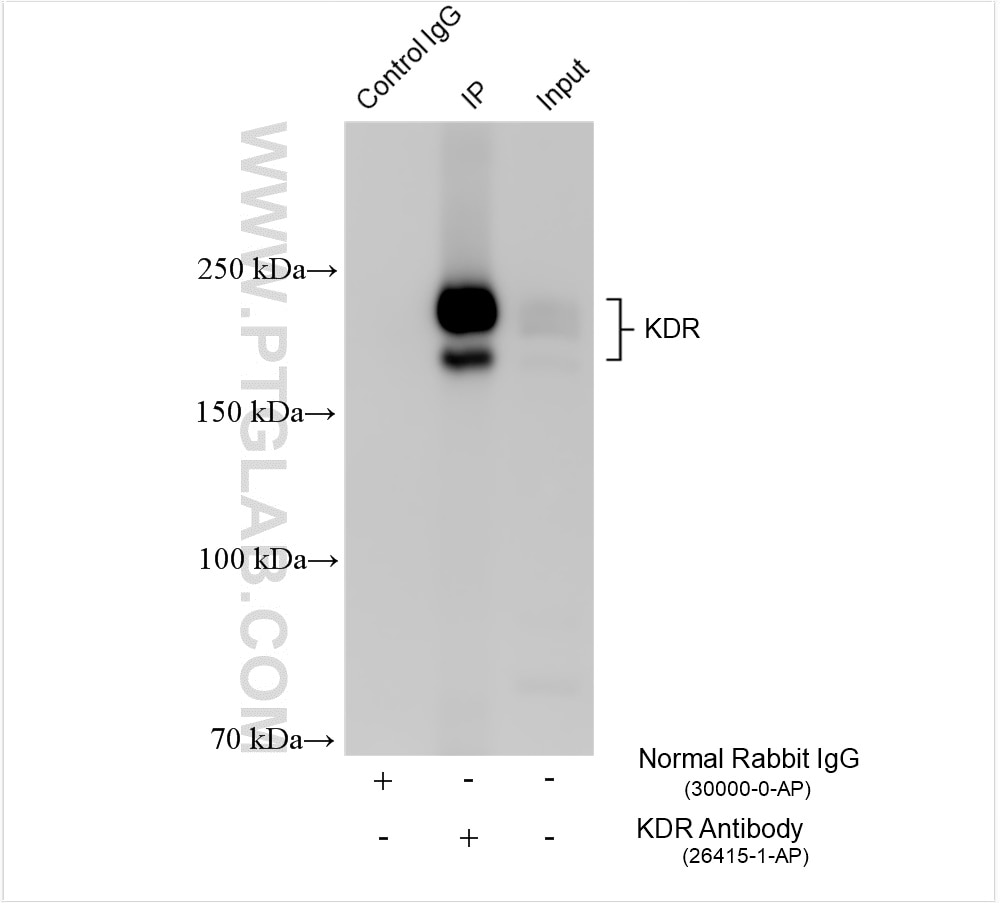
| Positive IP detected in | human placenta tissue, rat skeletal muscle tissue |
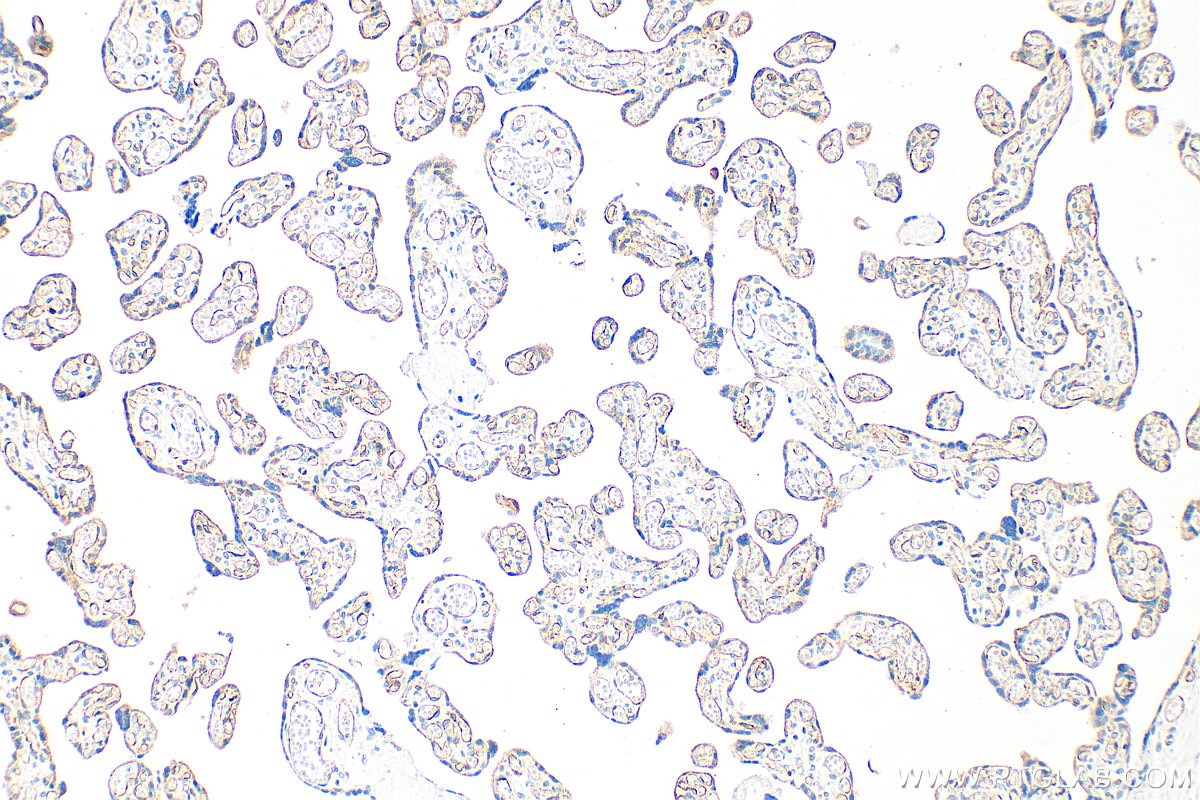
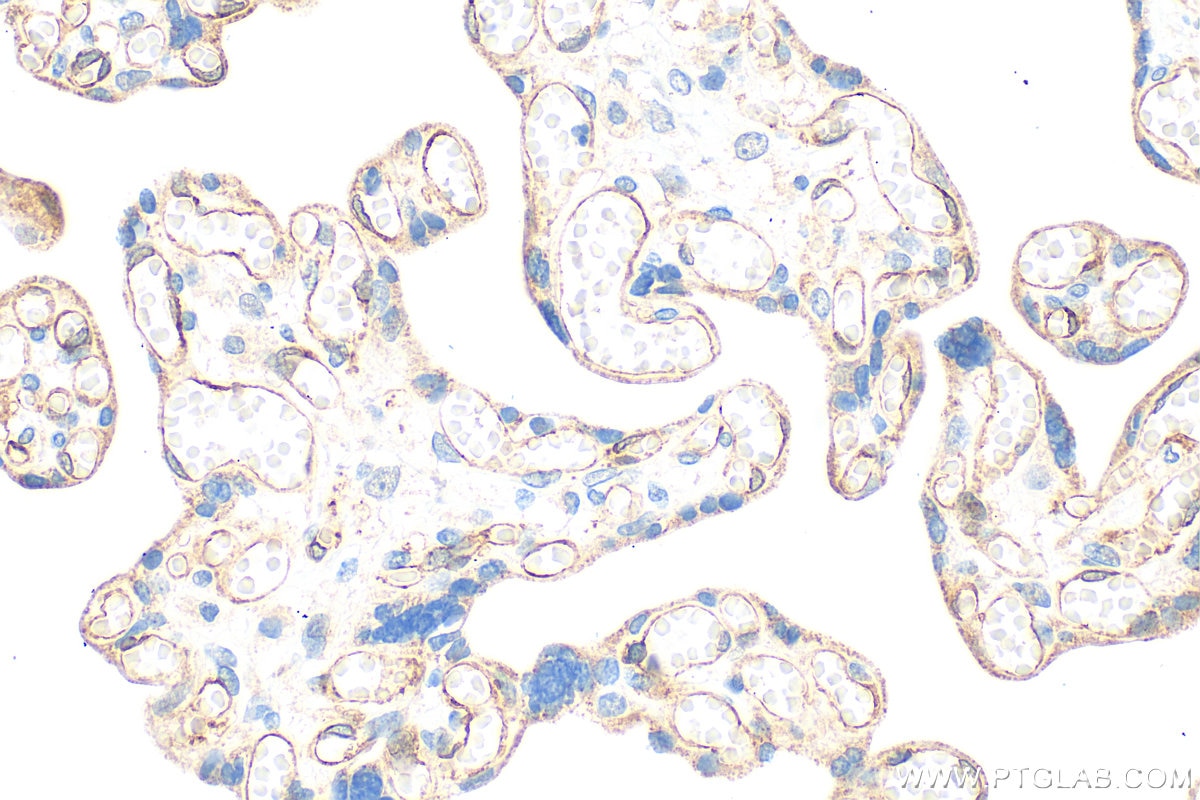
| Positive IHC detected in | human placenta tissue Note: suggested antigen retrieval with TE buffer pH 9.0; (*) Alternatively, antigen retrieval may be performed with citrate buffer pH 6.0 |
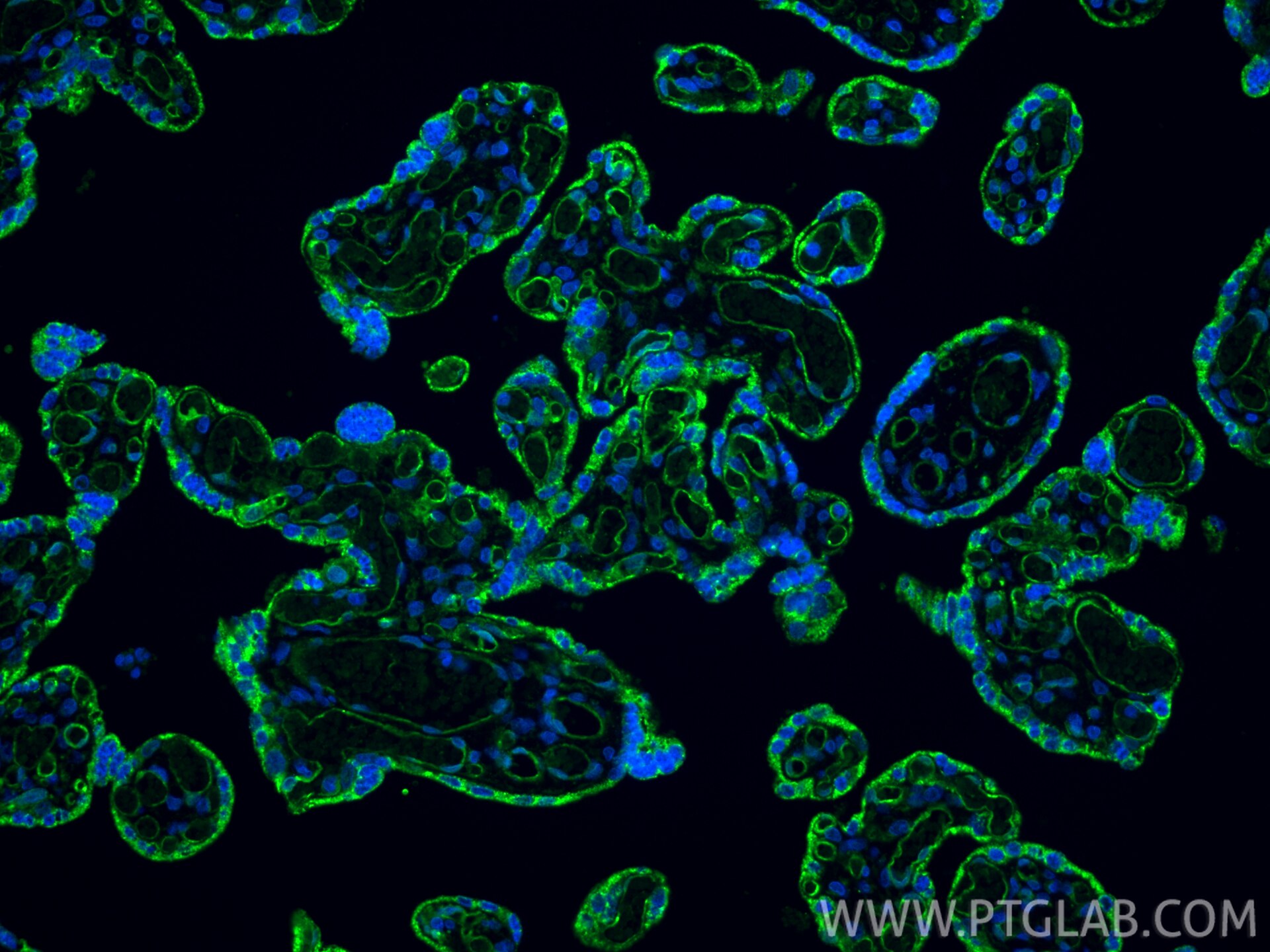
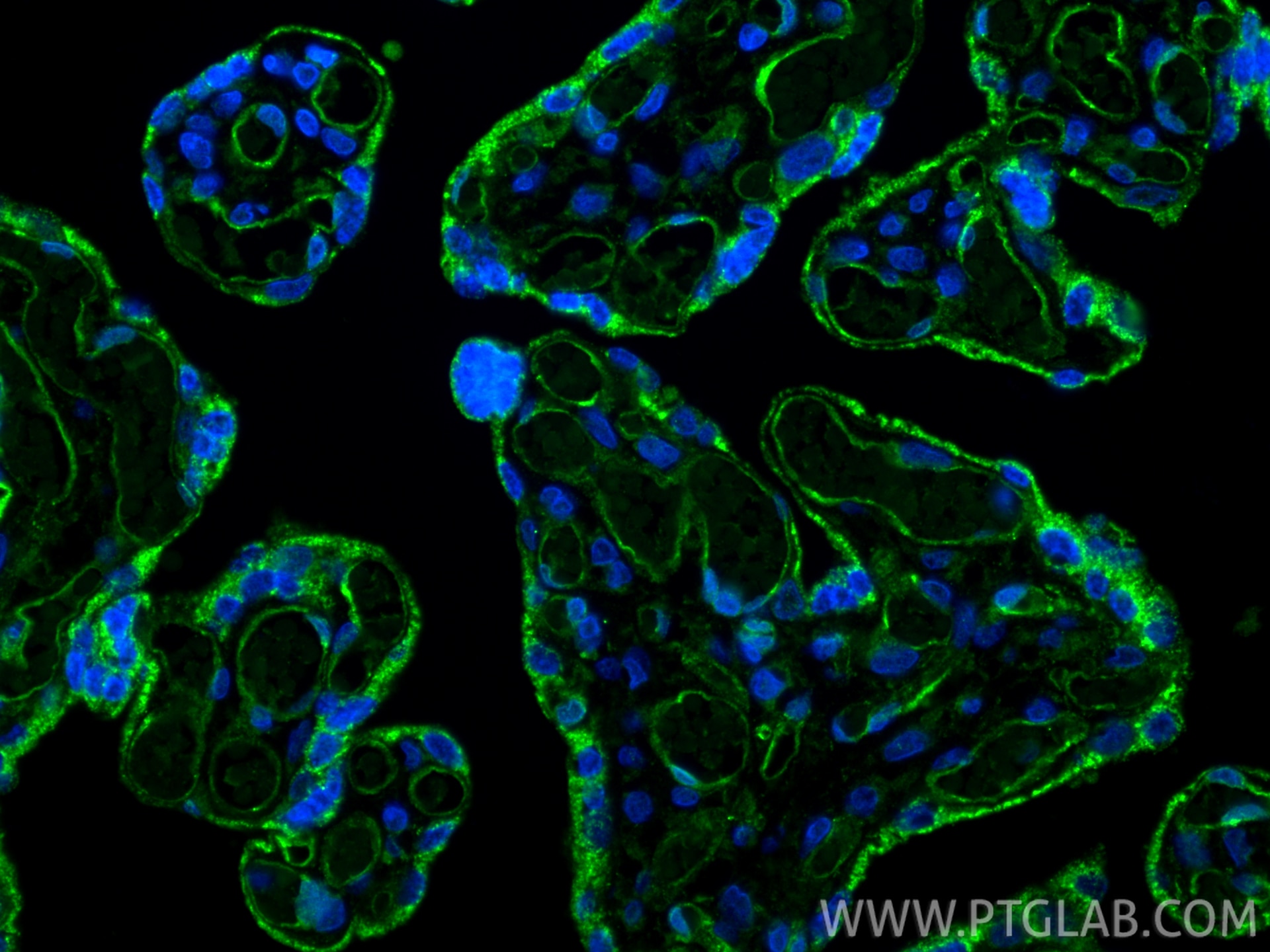
| Positive IF-P detected in | human placenta tissue |
Recommended dilution
| Application | Dilution |
|---|---|
| Western Blot (WB) | WB : 1:1000-1:8000 |
| Immunoprecipitation (IP) | IP : 0.5-4.0 ug for 1.0-3.0 mg of total protein lysate |
| Immunohistochemistry (IHC) | IHC : 1:50-1:500 |
| Immunofluorescence (IF)-P | IF-P : 1:50-1:500 |
| It is recommended that this reagent should be titrated in each testing system to obtain optimal results. | |
| Sample-dependent, Check data in validation data gallery. | |
Product Information
26415-1-AP targets VEGFR2/CD309 in WB, IHC, IF-P, IP, CoIP, ELISA applications and shows reactivity with human, mouse, rat samples.
| Tested Reactivity | human, mouse, rat |
| Cited Reactivity | human, mouse, rat, pig, canine, sheep |
| Host / Isotype | Rabbit / IgG |
| Class | Polyclonal |
| Type | Antibody |
| Immunogen |
CatNo: Ag24589 Product name: Recombinant human KDR protein Source: e coli.-derived, PET28a Tag: 6*His Domain: 1158-1345 aa of BC131822 Sequence: EHLGNLLQANAQQDGKDYIVLPISETLSMEEDSGLSLPTSPVSCMEEEEVCDPKFHYDNTAGISQYLQNSKRKSRPVSVKTFEDIPLEEPEVKVIPDDNQTDSGMVLASEELKTLEDRTKLSPSFGGMVPSKSRESVASEGSNQTSGYQSGYHSDDTDTTVYSSEEAELLKLIEIGVQTGSTAQILQP Predict reactive species |
| Full Name | kinase insert domain receptor (a type III receptor tyrosine kinase) |
| Calculated Molecular Weight | 1356 aa, 152 kDa |
| Observed Molecular Weight | 180-200 kDa, 230 kDa |
| GenBank Accession Number | BC131822 |
| Gene Symbol | KDR |
| Gene ID (NCBI) | 3791 |
| RRID | AB_2756527 |
| Conjugate | Unconjugated |
| Form | Liquid |
| Purification Method | Antigen affinity purification |
| UNIPROT ID | P35968 |
| Storage Buffer | PBS with 0.02% sodium azide and 50% glycerol, pH 7.3. |
| Storage Conditions | Store at -20°C. Stable for one year after shipment. Aliquoting is unnecessary for -20oC storage. 20ul sizes contain 0.1% BSA. |
Background Information
KDR, also named as VEGFR-2, FLK1 and CD309, is a receptor for VEGF or VEGFC. KDR which belongs to the protein kinase superfamily, has a tyrosine-protein kinase activity. The VEGF-kinase ligand/receptor signaling system plays a key role in vascular development and regulation of vascular permeability. In case of HIV-1 infection, the interaction with extracellular viral Tat protein seems to enhance angiogenesis in Kaposi's sarcoma lesions. KDR functions as the main mediator of VEGF-induced endothelial proliferation, survival, migration, tubular morphogenesis and sprouting. Mutations of this gene are implicated in infantile capillary hemangiomas.
Protocols
| Product Specific Protocols | |
|---|---|
| IF protocol for VEGFR2/CD309 antibody 26415-1-AP | Download protocol |
| IHC protocol for VEGFR2/CD309 antibody 26415-1-AP | Download protocol |
| IP protocol for VEGFR2/CD309 antibody 26415-1-AP | Download protocol |
| WB protocol for VEGFR2/CD309 antibody 26415-1-AP | Download protocol |
| Standard Protocols | |
|---|---|
| Click here to view our Standard Protocols |
Publications
What published studies show
Anti-VEGFR2 antibody (Cat# 26415-1-AP) has accumulated 194 citations published in high-impact journals including Nature, Nature Communications, Cell Stem Cell, Science Advances, Advanced Science, Journal of Experimental Medicine, FASEB Journal, and over 100 other journals. Associated research fields encompass angiogenesis and vascular biology, oncology (tumor angiogenesis across multiple cancer types), diabetes complications (retinopathy, nephropathy, wound healing), stroke and neurovascular repair, cardiovascular disease, regenerative medicine, immunology, ophthalmology, and reproductive/placental biology.
| Species | Application | Title |
|---|---|---|
Exploration (Beijing) PSMA-Targeting Macrophage Membrane-Coated Nanoparticles for Precision Diagnosis and Combination Therapy of Prostate Cancer. | ||
Bioact Mater A bioactive composite hydrogel dressing that promotes healing of both acute and chronic diabetic skin wounds | ||
Bioact Mater Bioactive vascular buds promote collateral vessel formation by grafting on the artificial vessel walls | ||
Bioact Mater Electrochemically derived nanographene oxide activates endothelial tip cells and promotes angiogenesis by binding endogenous lysophosphatidic acid. | ||
Cell Stem Cell Modeling blood-brain barrier formation and cerebral cavernous malformations in human PSC-derived organoids |
Reviews
What customers say
All three reviews are positive (average ~4.7/5). Users consistently report successful detection of VEGFR2 by Western Blot in endothelial cell lines including HUVECs and brain endothelial cells. Recommended dilutions range from 1:1000 to 1:3000. One user noted the antibody performed well in an angiogenesis study, while another confirmed reliable results in both primary cells and HEK cells. Overall, reviewers found the antibody specific and effective for its intended application.
The reviews below have been submitted by verified Proteintech customers who received an incentive for providing their feedback.
Poulomi (Verified Customer) (07-02-2024) | The blot was good. It detected VEGFR2 in brain endothelial cells and Hek cells.
|
Sammy (Verified Customer) (01-20-2024) | This works well to detect VEGFR2 in HUVEC lysate. Ab diluted in 3% BSA PBST.
|
Kyosuke (Verified Customer) (06-12-2019) | I am working on angiogenesis study and use this for WB on HUVECs. It works very well.
|










