

Tested Applications
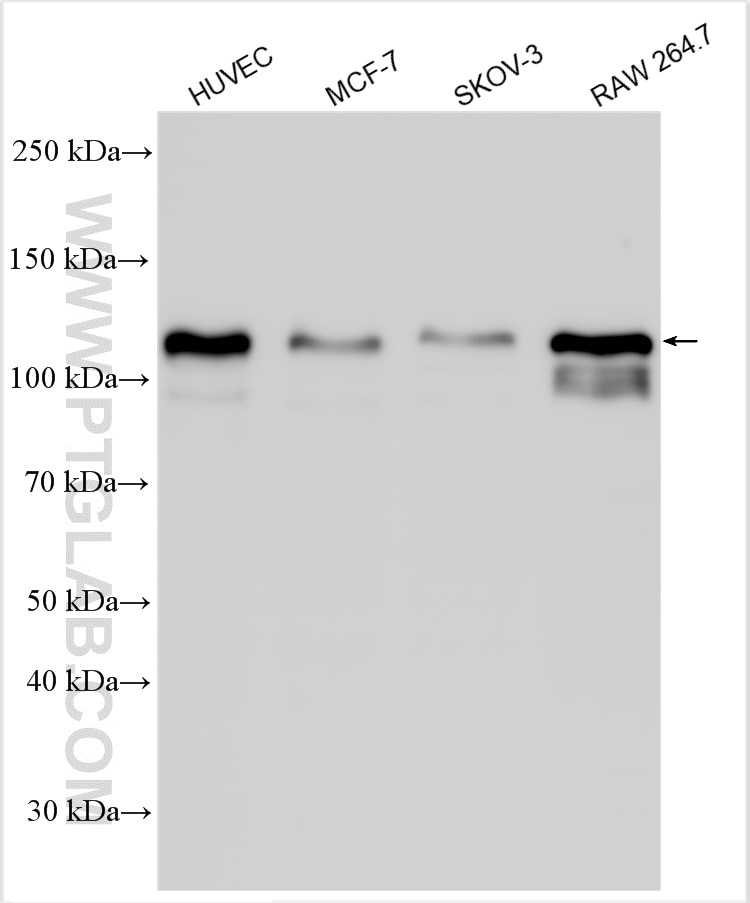
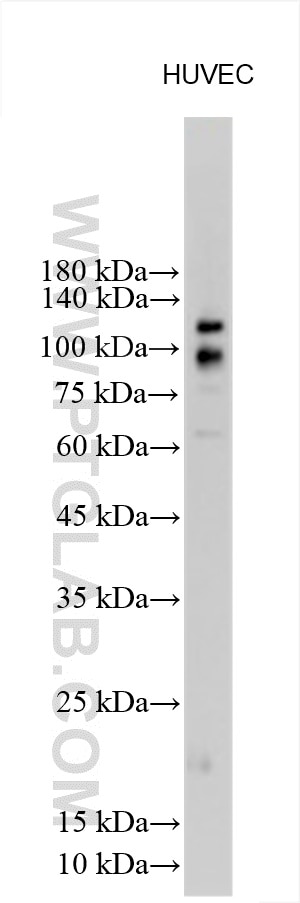
| Positive WB detected in | HUVEC cells, MCF-7 cells, SKOV-3 cells, RAW 264.7 cells |
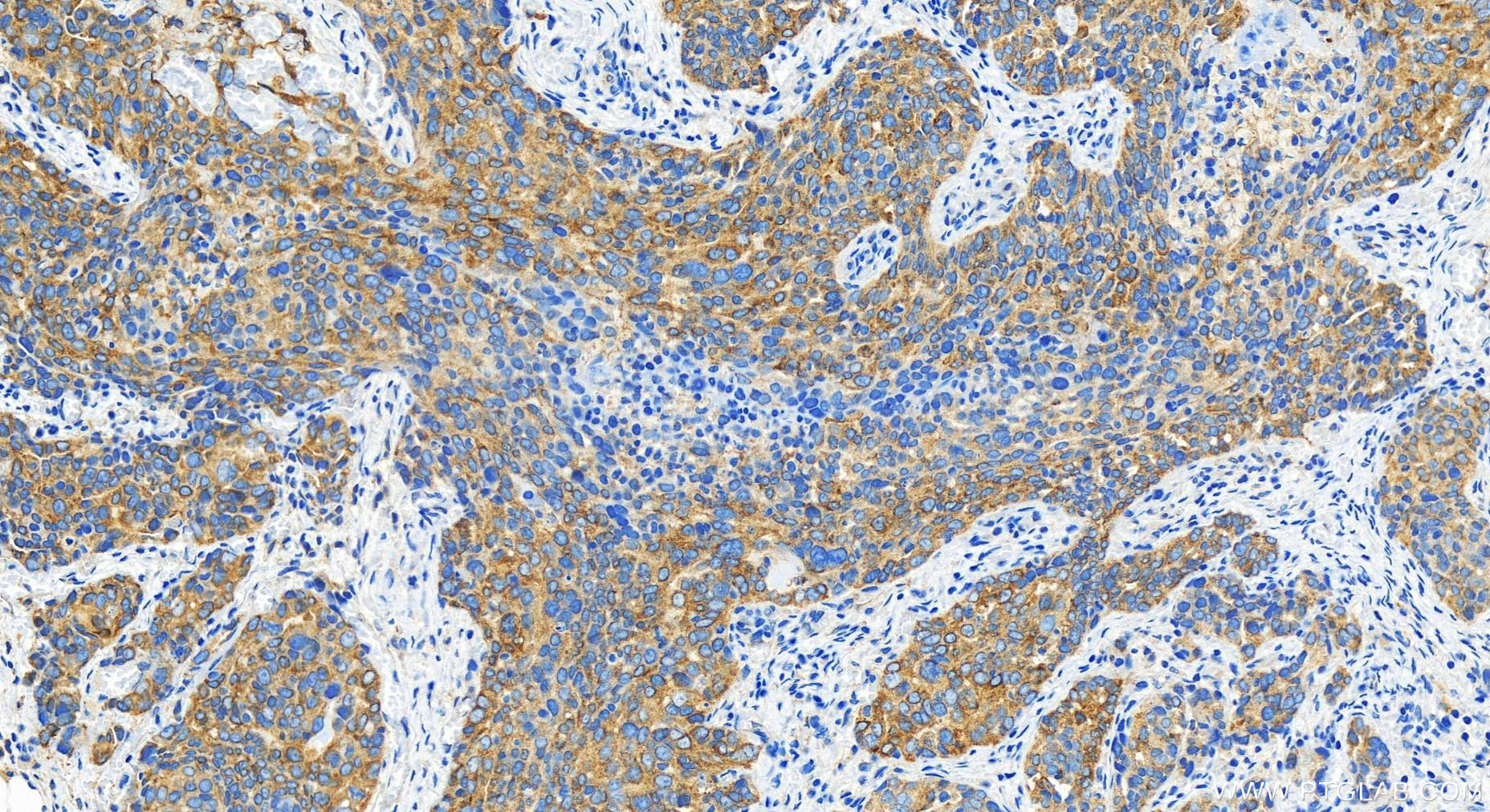
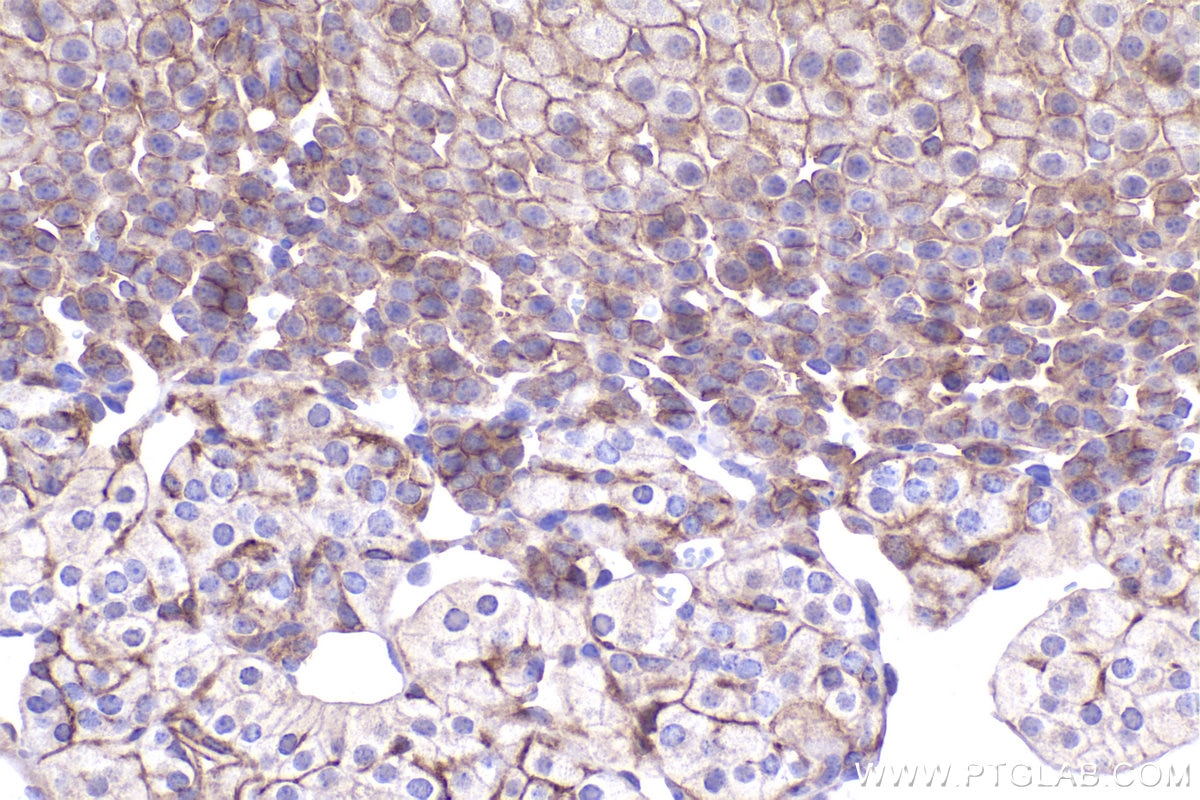
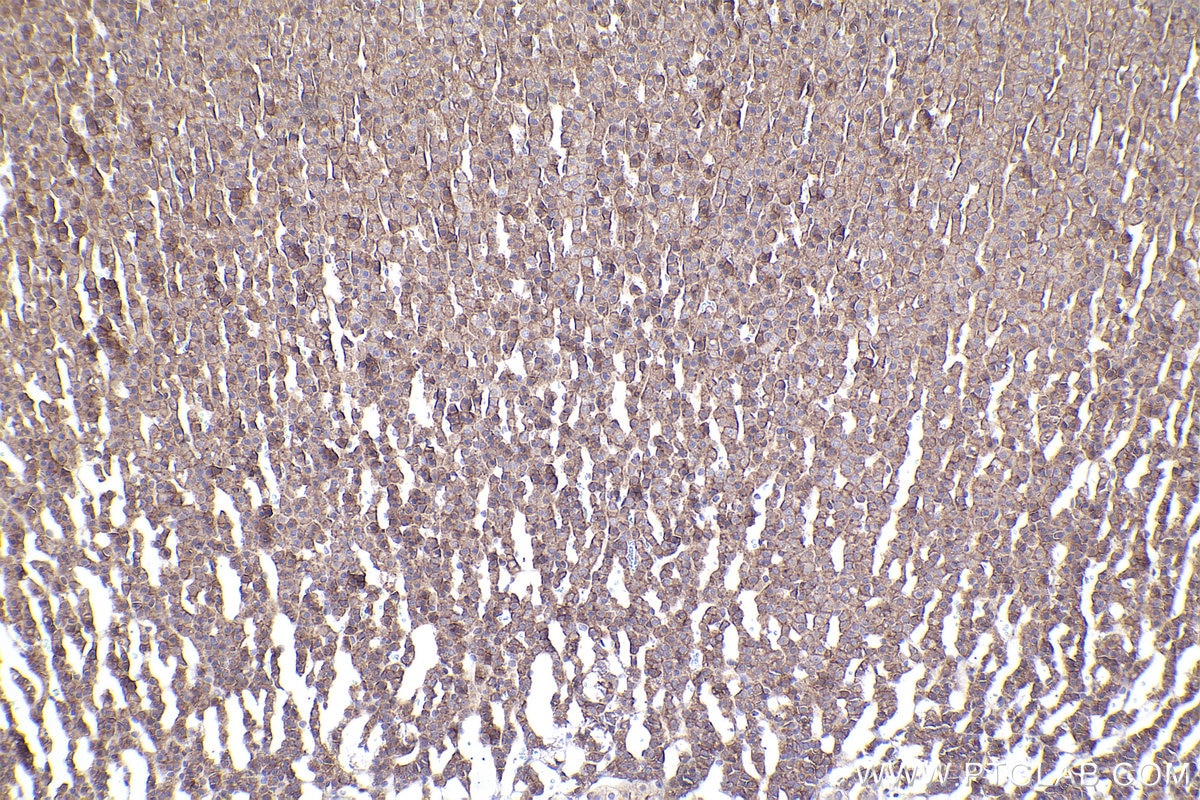
| Positive IHC detected in | human ovary cancer tissue, mouse adrenal gland tissue, rat adrenal gland tissue Note: suggested antigen retrieval with TE buffer pH 9.0; (*) Alternatively, antigen retrieval may be performed with citrate buffer pH 6.0 |
Recommended dilution
| Application | Dilution |
|---|---|
| Western Blot (WB) | WB : 1:2000-1:16000 |
| Immunohistochemistry (IHC) | IHC : 1:1000-1:4000 |
| It is recommended that this reagent should be titrated in each testing system to obtain optimal results. | |
| Sample-dependent, Check data in validation data gallery. | |
Product Information
29948-1-AP targets ADAM17 in WB, IHC, IF, ELISA applications and shows reactivity with human, mouse, rat samples.
| Tested Reactivity | human, mouse, rat |
| Cited Reactivity | human, mouse, canine |
| Host / Isotype | Rabbit / IgG |
| Class | Polyclonal |
| Type | Antibody |
| Immunogen |
CatNo: Ag32418 Product name: Recombinant human ADAM17 protein Source: e coli.-derived, PGEX-4T Tag: GST Domain: 693-824 aa of BC136783 Sequence: CVDKKLDKQYESLSLFHPSNVEMLSSMDSASVRIIKPFPAPQTPGRLQPAPVIPSAPAAPKLDHQRMDTIQEDPSTDSHMDEDGFEKDPFPNSSTAAKSFEDLTDHPVTRSEKAASFKLQRQNRVDSKETEC Predict reactive species |
| Full Name | ADAM metallopeptidase domain 17 |
| Calculated Molecular Weight | 824 aa, 93 kDa |
| Observed Molecular Weight | 90-110 kDa |
| GenBank Accession Number | BC136783 |
| Gene Symbol | ADAM17 |
| Gene ID (NCBI) | 6868 |
| RRID | AB_2935490 |
| Conjugate | Unconjugated |
| Form | Liquid |
| Purification Method | Antigen affinity purification |
| UNIPROT ID | P78536 |
| Storage Buffer | PBS with 0.02% sodium azide and 50% glycerol, pH 7.3. |
| Storage Conditions | Store at -20°C. Stable for one year after shipment. Aliquoting is unnecessary for -20oC storage. 20ul sizes contain 0.1% BSA. |
Background Information
The ADAMs (A Disintegrin And Metalloprotease) are multidomain transmembrane proteins. One of the first ADAMs implicated in membrane shedding is ADAM-17, which is shown to release the active form of tumor necrosis factor (TNF)-a from its precursor (PMID:18238782). ADAM17 is also named as CSVP, TACE. The full length protein has 9 glycosylation sites, a signal peptide, propeptide and 2 isoforms produced by alternative splicing.The 120-kDa form of ADAM-17 is expressed more frequently and at higher levels in primary breast carcinomas compared with normal breast tissue(PMID:17438092).
Protocols
| Product Specific Protocols | |
|---|---|
| IHC protocol for ADAM17 antibody 29948-1-AP | Download protocol |
| WB protocol for ADAM17 antibody 29948-1-AP | Download protocol |
| Standard Protocols | |
|---|---|
| Click here to view our Standard Protocols |
Publications
What published studies show
Anti-ADAM17 (Cat# 29948-1-AP) has 16 citations published in journals including Nature Communications, Science Advances, Signal Transduction and Targeted Therapy, Theranostics, Advanced Science, International Journal of Oral Science, Journal of Ethnopharmacology, and International Immunopharmacology, among others. Research fields span neuroscience, innate immunity, oncology, inflammation, endocrinology, respiratory medicine, and virology, with applications primarily in Western blot, immunofluorescence, and immunohistochemistry across human and mouse models.
| Species | Application | Title |
|---|---|---|
Signal Transduct Target Ther Social memory maintenance relies on social interaction-induced proteolytic products of neuroligin 1. | ||
Nat Commun ADAM9 promotes type I interferon-mediated innate immunity during encephalomyocarditis virus infection | ||
Int J Oral Sci Administration of Porphyromonas gingivalis in pregnant mice enhances glycolysis and histone lactylation/ADAM17 leading to cleft palate in offspring | ||
Theranostics Neutrophil-like pH-responsive pro-efferocytic nanoparticles improve neurological recovery by promoting erythrophagocytosis after intracerebral hemorrhage | ||
Adv Sci (Weinh) ERβ/circAHNAK Axis Inhibits USP10-FMR1 Deubiquitination to Prevent m⁶A-Mediated ADAM17 Decay and Promote Angiogenesis in Clear Cell Renal Cell Carcinoma. | ||
Sci Adv GPNMB is a biomarker for lysosomal dysfunction and is secreted via LRRK2-modulated lysosomal exocytosis. |
Reviews
What customers say
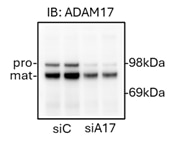
One user (Franck P.) rated this antibody 5/5 stars for Western Blot. They used a 1:1000 dilution on human telomeric HAEC cells lysed with RIPA buffer plus protease and ADAM17 inhibitors, running samples on a NuPAGE 4–12% MES gel. The antibody clearly detected both the proform and mature form of ADAM17, and showed effective knockdown when paired with an ADAM17-specific siRNA compared to a control siRNA. Overall, the reviewer confirmed strong specificity and reliable performance in their experimental setup.
The reviews below have been submitted by verified Proteintech customers who received an incentive for providing their feedback.
franck (Verified Customer) (01-23-2026) | Cells were lyzed with RIPA buffer with protease inhibitor cocktail and ADAM17 inhibitor. NuPAGE 4-12% gel, MES migration. pro: proform of ADAM17 mat: mature form of ADAM17 siC: control siRNA SiA17: si RNA specific for ADAM17
 |






