

Tested Applications
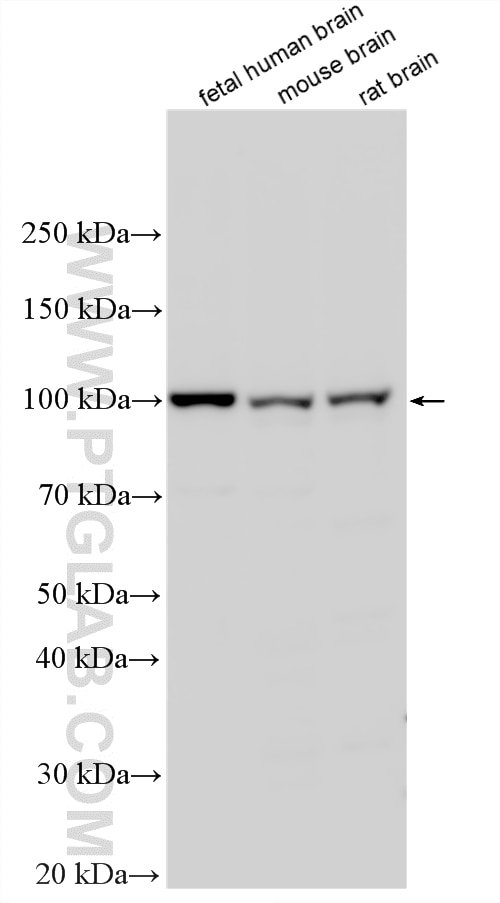
| Positive WB detected in | fetal human brain tissue, mouse brain tissue, rat brain tissue |
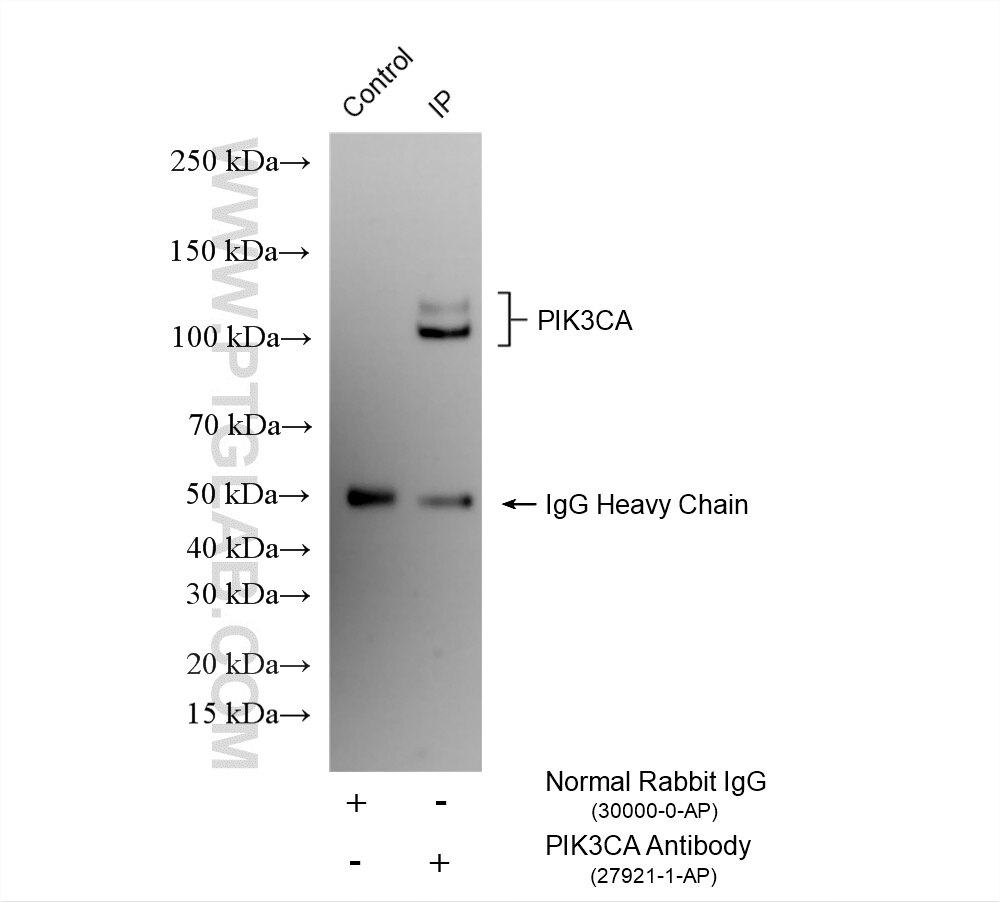
| Positive IP detected in | mouse brain tissue |
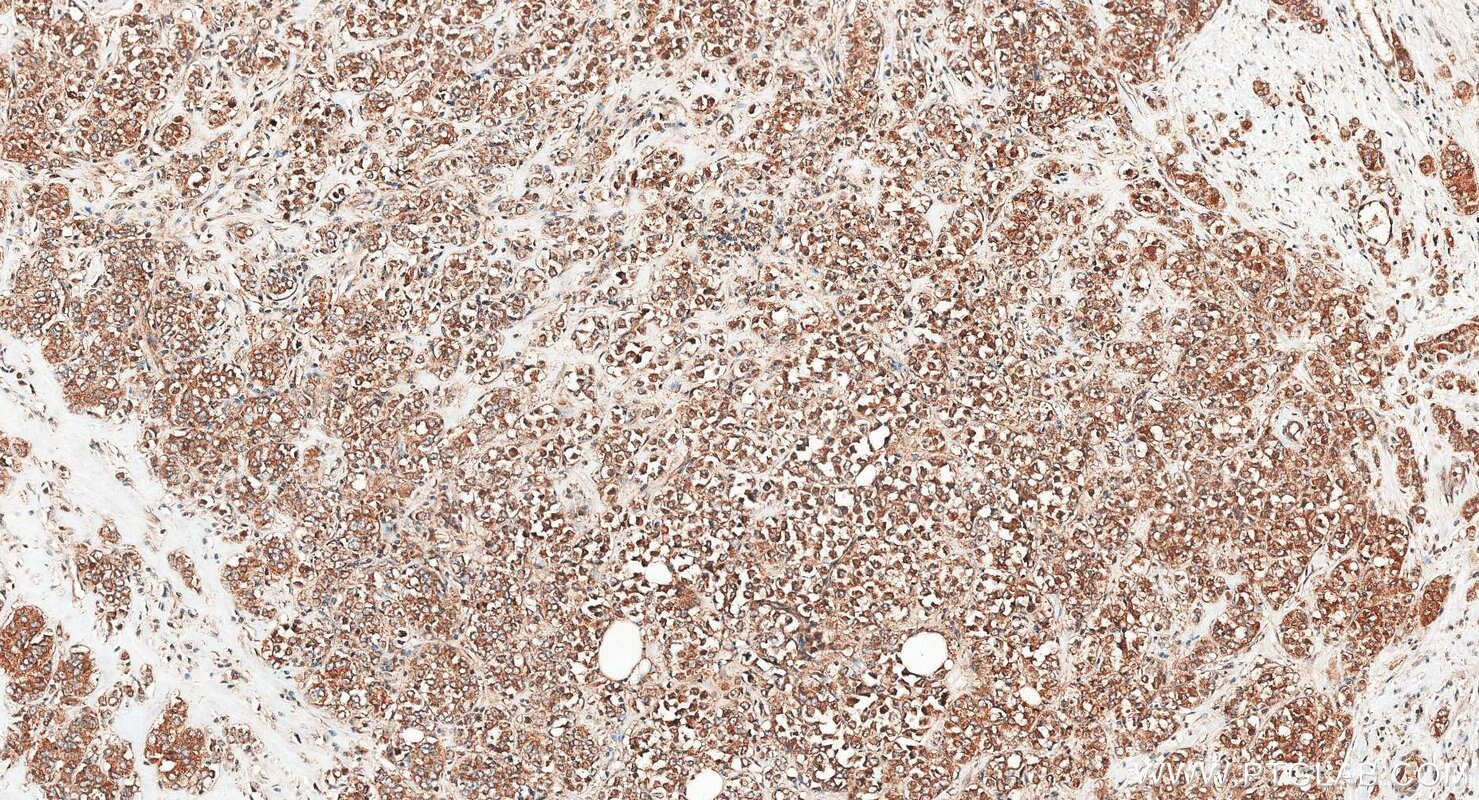
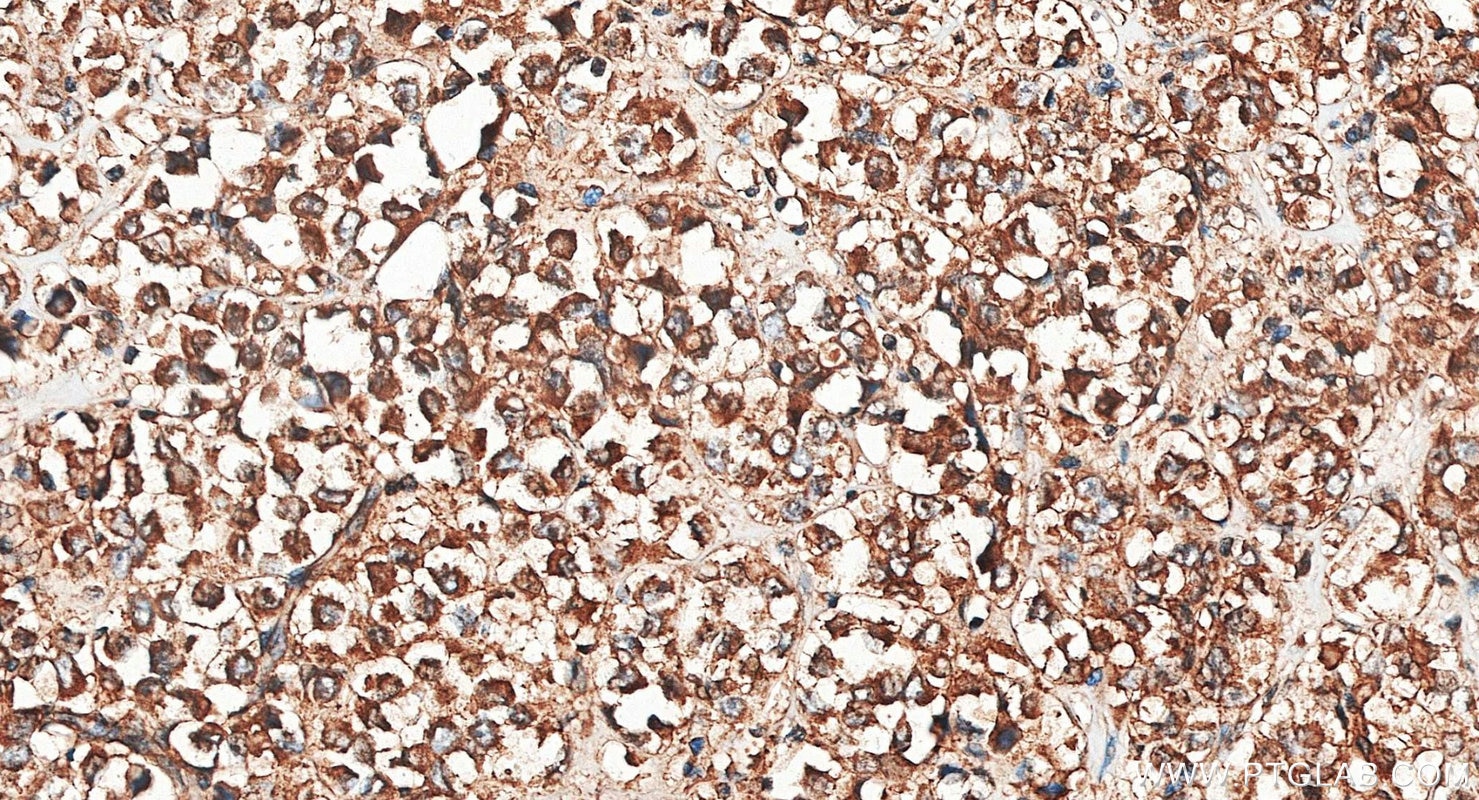
| Positive IHC detected in | human breast cancer tissue Note: suggested antigen retrieval with TE buffer pH 9.0; (*) Alternatively, antigen retrieval may be performed with citrate buffer pH 6.0 |
Recommended dilution
| Application | Dilution |
|---|---|
| Western Blot (WB) | WB : 1:1000-1:4000 |
| Immunoprecipitation (IP) | IP : 0.5-4.0 ug for 1.0-3.0 mg of total protein lysate |
| Immunohistochemistry (IHC) | IHC : 1:200-1:800 |
| It is recommended that this reagent should be titrated in each testing system to obtain optimal results. | |
| Sample-dependent, Check data in validation data gallery. | |
Product Information
27921-1-AP targets PI3 Kinase p110 Alpha in WB, IHC, IF/ICC, IP, CoIP, ELISA applications and shows reactivity with human, mouse, rat samples.
| Tested Reactivity | human, mouse, rat |
| Cited Reactivity | human, mouse, rat |
| Host / Isotype | Rabbit / IgG |
| Class | Polyclonal |
| Type | Antibody |
| Immunogen |
CatNo: Ag27539 Product name: Recombinant human PIK3CA protein Source: e coli.-derived, PGEX-4T Tag: GST Domain: 345-550 aa of BC113601 Sequence: NVNIRDIDKIYVRTGIYHGGEPLCDNVNTQRVPCSNPRWNEWLNYDIYIPDLPRAARLCLSICSVKGRKGAKEEHCPLAWGNINLFDYTDTLVSGKMALNLWPVPHGLEDLLNPIGVTGSNPNKETPCLELEFDWFSSVVKFPDMSVIEEHANWSVSREAGFSYSHAGLSNRLARDNELRENDKEQLKAISTRDPLSEITEQEKDF Predict reactive species |
| Full Name | phosphoinositide-3-kinase, catalytic, alpha polypeptide |
| Calculated Molecular Weight | 1068 aa, 124 kDa |
| Observed Molecular Weight | 110 kDa |
| GenBank Accession Number | BC113601 |
| Gene Symbol | PIK3CA |
| Gene ID (NCBI) | 5290 |
| RRID | AB_2918135 |
| Conjugate | Unconjugated |
| Form | Liquid |
| Purification Method | Antigen affinity purification |
| UNIPROT ID | P42336 |
| Storage Buffer | PBS with 0.02% sodium azide and 50% glycerol, pH 7.3. |
| Storage Conditions | Store at -20°C. Stable for one year after shipment. Aliquoting is unnecessary for -20oC storage. 20ul sizes contain 0.1% BSA. |
Background Information
PIK3CA belongs to the PI3/PI4-kinase family. It phosphorylates PtdIns, PtdIns4P and PtdIns(4,5)P2 with a preference for PtdIns(4,5)P2. Defects in PIK3CA are associated with colorectal cancer (CRC). Defects in PIK3CA are associated with breast cancer. Defects in PIK3CA are associated with ovarian cancer. Defects in PIK3CA may underlie hepatocellular carcinoma (HCC). Defects in PIK3CA are a cause of keratosis seborrheic (KERSEB).
Protocols
| Product Specific Protocols | |
|---|---|
| IF protocol for PI3 Kinase p110 Alpha antibody 27921-1-AP | Download protocol |
| IHC protocol for PI3 Kinase p110 Alpha antibody 27921-1-AP | Download protocol |
| IP protocol for PI3 Kinase p110 Alpha antibody 27921-1-AP | Download protocol |
| WB protocol for PI3 Kinase p110 Alpha antibody 27921-1-AP | Download protocol |
| Standard Protocols | |
|---|---|
| Click here to view our Standard Protocols |
Publications
What published studies show
The PI3 Kinase p110 Alpha Polyclonal antibody (Cat# 27921-1-AP) has accumulated 35 citations across journals including Nature Communications, Advanced Science, eLife, Cell Reports, Journal of Advanced Research, and Journal of Ethnopharmacology, among others. Research fields span oncology (breast, lung, ovarian, and colorectal cancers), PI3K/AKT signaling pathway modulation, metabolic disorders including obesity and insulin resistance, inflammation and fibrosis, cardiovascular disease, neuroinflammation, and natural product pharmacology. The antibody is primarily used for Western blot and co-immunoprecipitation applications.
| Species | Application | Title |
|---|---|---|
Nat Commun Microbiota-indole-3-propionic acid-heart axis mediates the protection of leflunomide against αPD1-induced cardiotoxicity in mice | ||
J Adv Res PTPN22 as a therapeutic target in intervertebral disc degeneration: Modulating mitophagy and pyroptosis through the PI3K/AKT/mTOR axis | ||
Adv Sci (Weinh) Bufalin Inhibits the PI3K/AKT Pathway by Targeting GTF3C4 to Impede Breast Cancer Progression | ||
Phytomedicine Icariside II modulates pulmonary fibrosis via PI3K/Akt/β-catenin pathway inhibition of M2 macrophage program | ||
Adv Healthc Mater Transdermal Delivery of Icariin via Microneedle Patches Attenuates Phthalate-Induced Testicular Injury. | ||
Int J Pharm X Topical transdermal administration of lenalidomide nanosuspensions-based hydrogels against melanoma: In vitro and in vivo studies |





