

Tested Applications
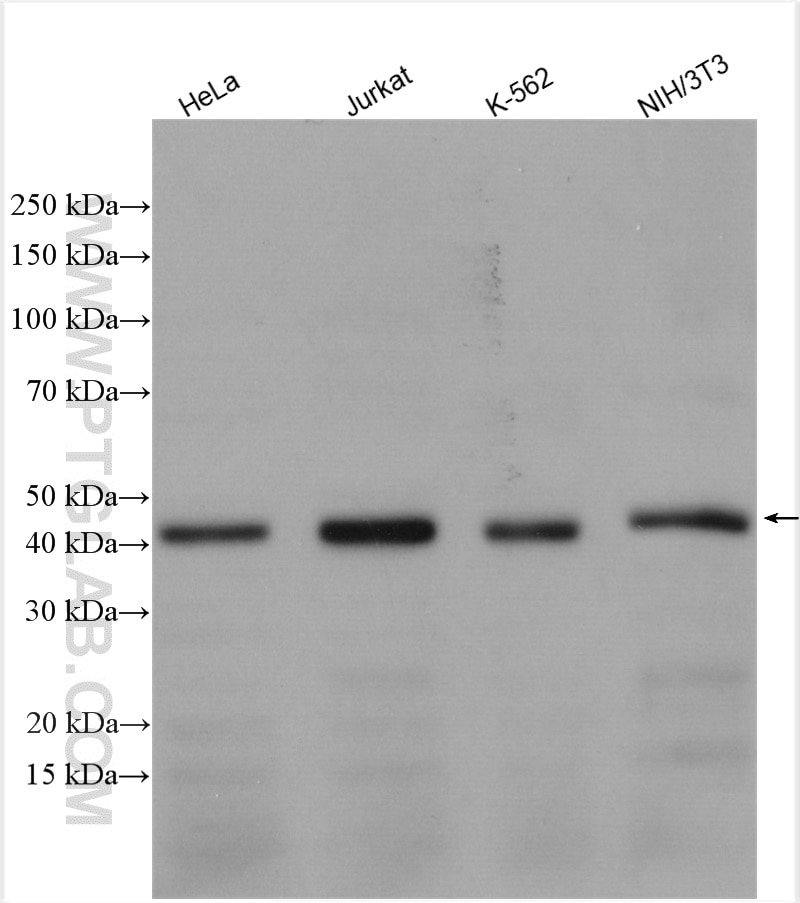
| Positive WB detected in | HeLa cells, Jurkat cells, K-562 cells, NIH/3T3 cells |
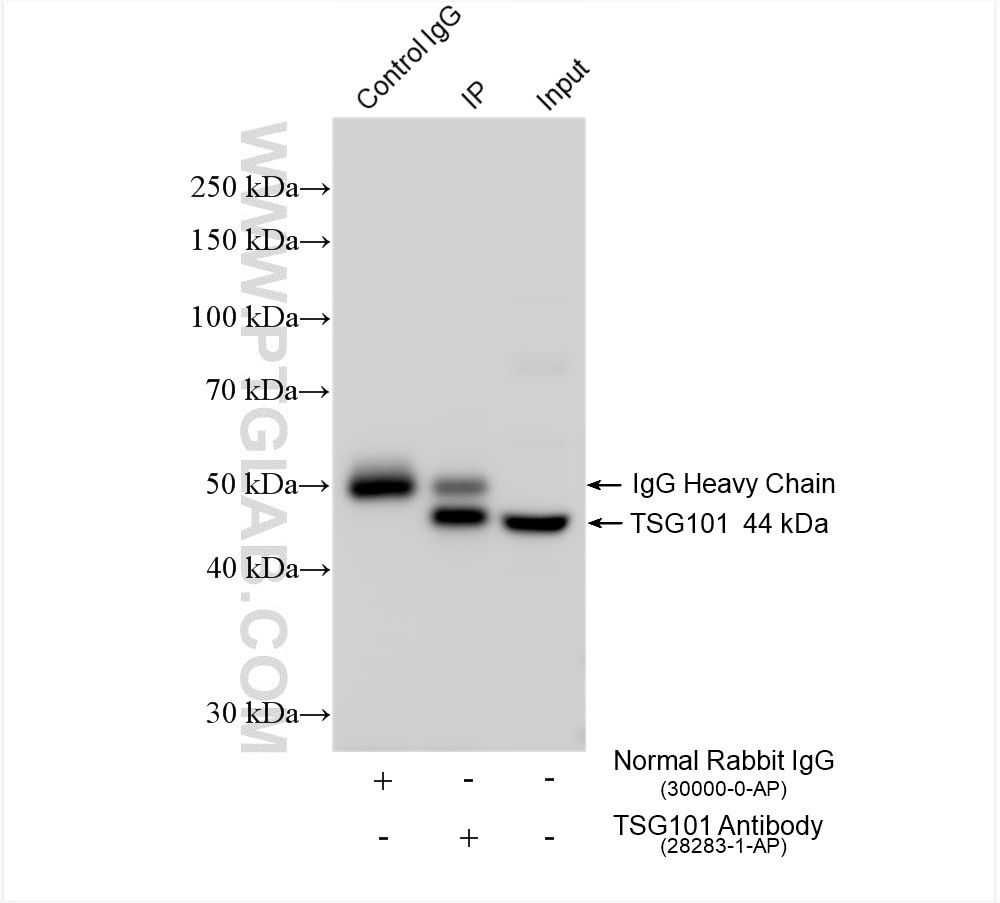
| Positive IP detected in | HeLa cells |
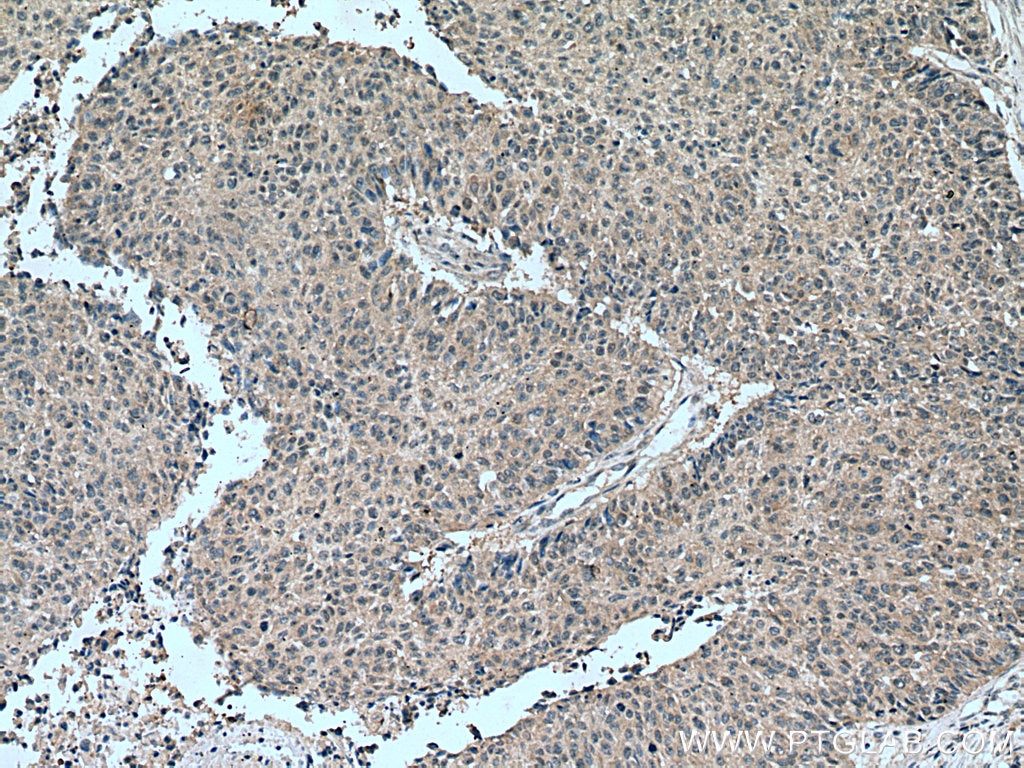
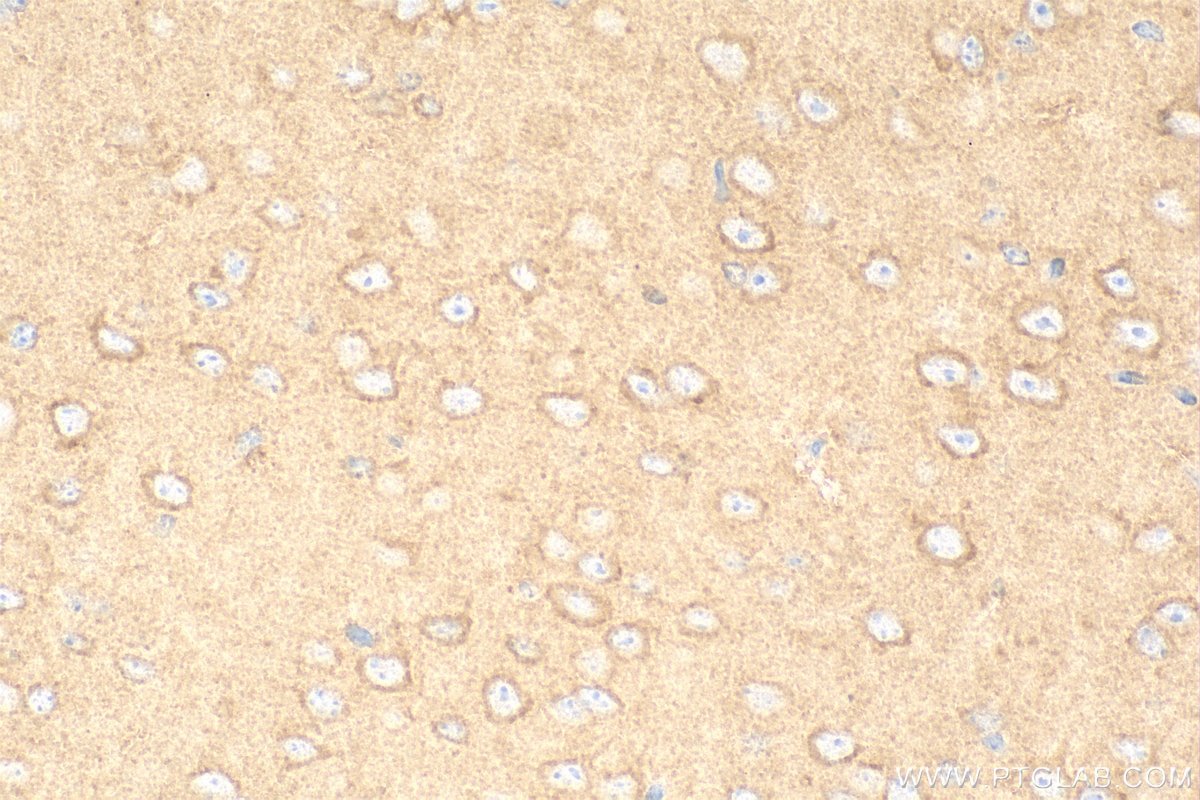
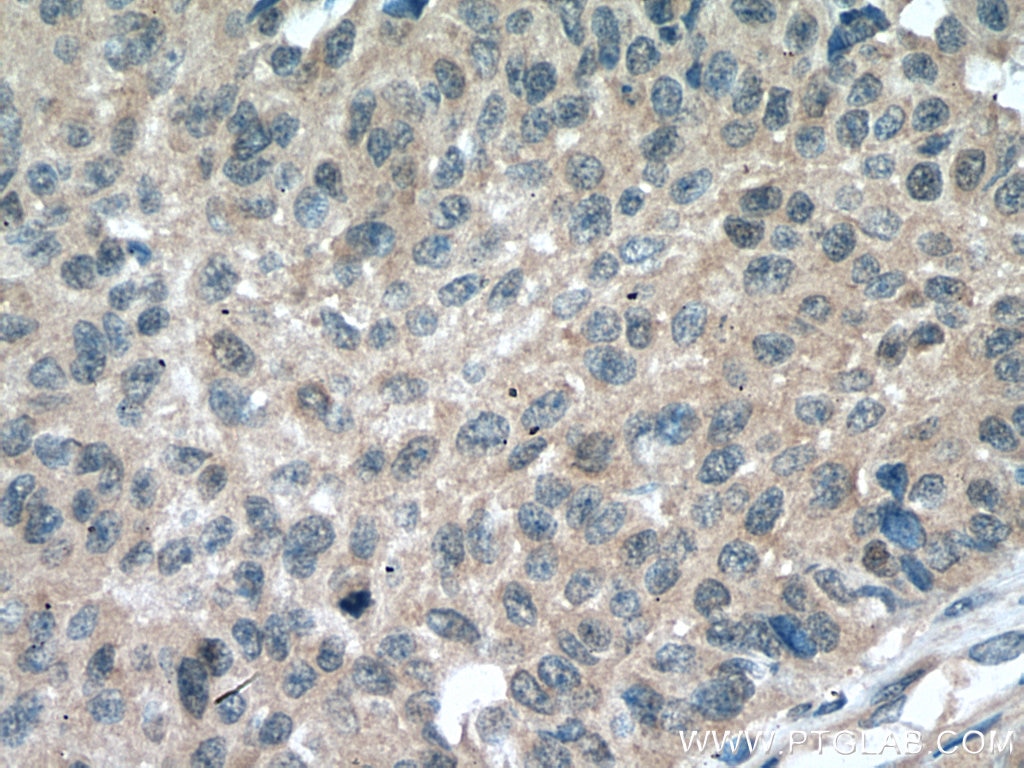
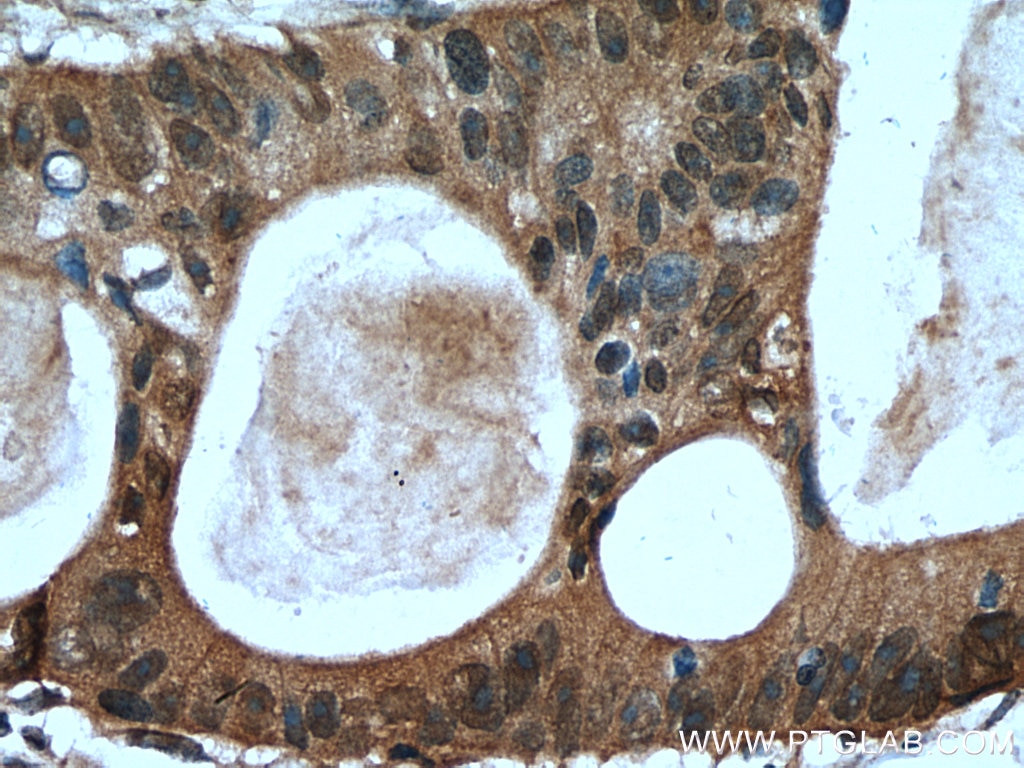
| Positive IHC detected in | human lung cancer tissue, human colon cancer tissue, mouse brain tissue Note: suggested antigen retrieval with TE buffer pH 9.0; (*) Alternatively, antigen retrieval may be performed with citrate buffer pH 6.0 |
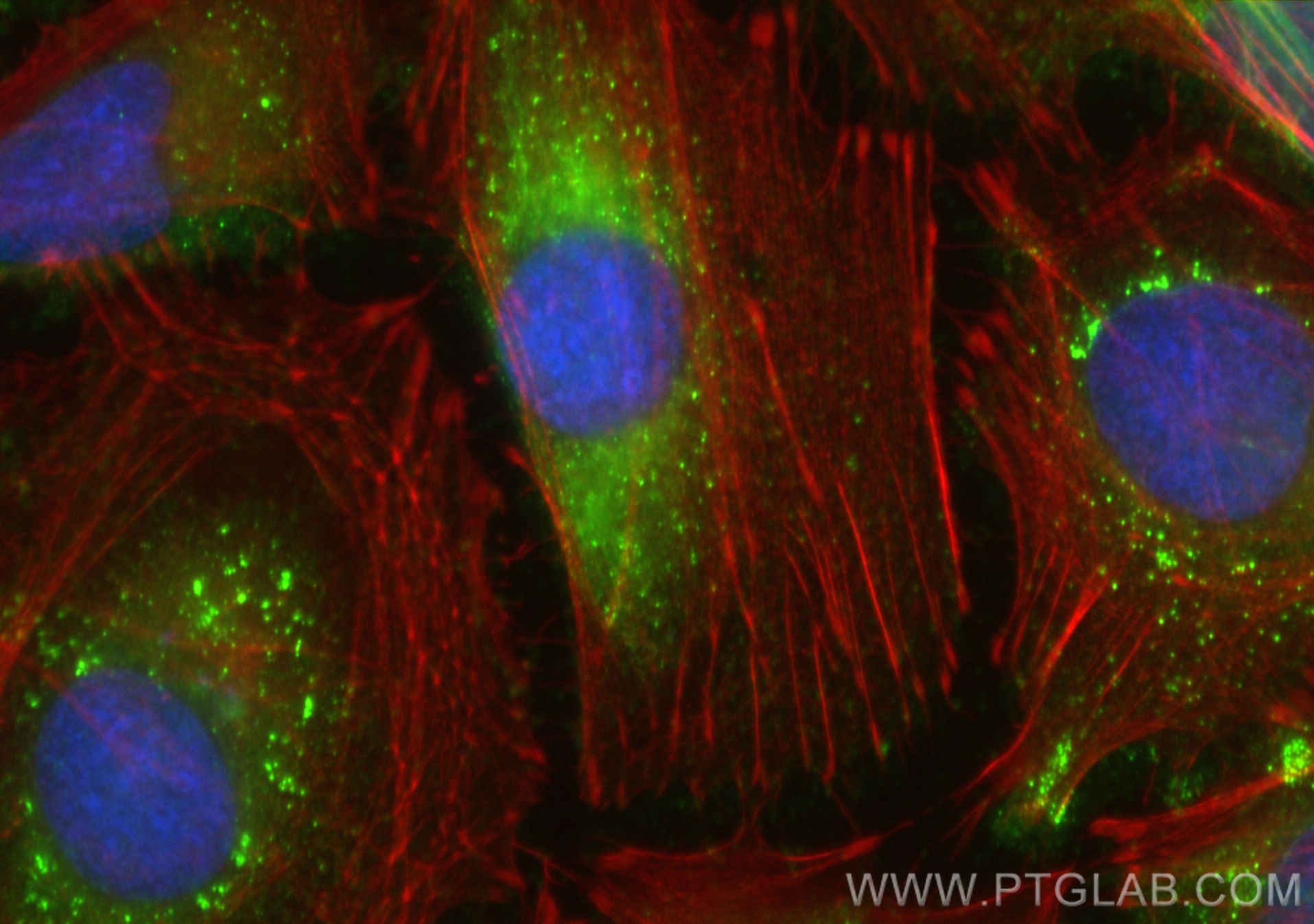
| Positive IF/ICC detected in | HeLa cells |
Recommended dilution
| Application | Dilution |
|---|---|
| Western Blot (WB) | WB : 1:1000-1:10000 |
| Immunoprecipitation (IP) | IP : 0.5-4.0 ug for 1.0-3.0 mg of total protein lysate |
| Immunohistochemistry (IHC) | IHC : 1:50-1:500 |
| Immunofluorescence (IF)/ICC | IF/ICC : 1:50-1:500 |
| It is recommended that this reagent should be titrated in each testing system to obtain optimal results. | |
| Sample-dependent, Check data in validation data gallery. | |
Product Information
28283-1-AP targets TSG101 in WB, IHC, IF/ICC, IP, CoIP, ELISA applications and shows reactivity with human, mouse samples.
| Tested Reactivity | human, mouse |
| Cited Reactivity | human, mouse, rat, rabbit, monkey, chicken, hamster, sheep, goat |
| Host / Isotype | Rabbit / IgG |
| Class | Polyclonal |
| Type | Antibody |
| Immunogen |
CatNo: Ag28569 Product name: Recombinant human TSG101 protein Source: e coli.-derived, PET28a Tag: 6*His Domain: 214-390 aa of BC002487 Sequence: GPSRDGTISEDTIRASLISAVSDKLRWRMKEEMDRAQAELNALKRTEEDLKKGHQKLEEMVTRLDQEVAEVDKNIELLKKKDEELSSALEKMENQSENNDIDEVIIPTAPLYKQILNLYAEENAIEDTILYLGEALRRGVIDLDVFLKHVRLLSRKQFQLRALMQKARKTAGLSDLY Predict reactive species |
| Full Name | tumor susceptibility gene 101 |
| Calculated Molecular Weight | 44 kDa |
| Observed Molecular Weight | 44 kDa |
| GenBank Accession Number | BC002487 |
| Gene Symbol | TSG101 |
| Gene ID (NCBI) | 7251 |
| RRID | AB_2881104 |
| Conjugate | Unconjugated |
| Form | Liquid |
| Purification Method | Antigen affinity purification |
| UNIPROT ID | Q99816 |
| Storage Buffer | PBS with 0.02% sodium azide and 50% glycerol, pH 7.3. |
| Storage Conditions | Store at -20°C. Stable for one year after shipment. Aliquoting is unnecessary for -20oC storage. 20ul sizes contain 0.1% BSA. |
Background Information
TSG101(Tumor susceptibility gene 101 protein) is essential for endosomal sorting, membrane receptor degradation and the final stages of cytokinesis. It plays a crucial role for cell proliferation and cell survival. TSG101 has been identified as a candidate tumor suppressor gene and belongs to the ubiquitin-conjugating enzyme family. TSG101 is a marker for exosome. This protein has 2 isoforms produced by alternative splicing with the molecular mass of 44 and 32 kDa.
Protocols
| Product Specific Protocols | |
|---|---|
| IF protocol for TSG101 antibody 28283-1-AP | Download protocol |
| IHC protocol for TSG101 antibody 28283-1-AP | Download protocol |
| IP protocol for TSG101 antibody 28283-1-AP | Download protocol |
| WB protocol for TSG101 antibody 28283-1-AP | Download protocol |
| Standard Protocols | |
|---|---|
| Click here to view our Standard Protocols |
Publications
What published studies show
Anti-CD63 (Cat# 28283-1-AP) has accumulated 558 citations across high-impact journals including Nature Communications, Nature Metabolism, Cell Metabolism, Science Advances, Advanced Science, Biomaterials, Journal of Extracellular Vesicles, Theranostics, and Oncogene. Research fields span exosome/extracellular vesicle biology, cancer, tissue engineering and regeneration, neurodegeneration, diabetes, inflammation, immunology, wound healing, cardiovascular disease, and metabolic disorders. The antibody is predominantly applied in Western blot.
| Species | Application | Title |
|---|---|---|
Signal Transduct Target Ther GRP75 triggers white adipose tissue browning to promote cancer-associated cachexia | ||
Mol Cancer LncRNA NEAT1 promotes immunosuppression in gastric cancer under endoplasmic reticulum stress by maintaining the M(6)A methylation of SEMA3A in CAFs. | ||
Cell Metab Arachidonic acid triggers spermidine synthase secretion from primary tumor to induce skeletal muscle weakness upon irradiation | ||
Cell Metab Muscle-derived small extracellular vesicles induce liver fibrosis during overtraining | ||
Cell Metab Nondigestible stachyose binds membranous HSP90β on small intestinal epithelium to regulate the exosomal miRNAs: A new function and mechanism | ||
Cell Metab Extracellular vesicles from obese visceral adipose promote pancreatic cancer development and resistance to immune checkpoint blockade therapy. |
Reviews
What customers say
All five reviews are 5-star ratings. Users consistently report excellent performance for Western Blot and Immunofluorescence applications. The antibody was successfully used for exosome characterization (trophoblast-derived and cancer cell-derived exosomes), mouse liver tumor analysis, and cancer cell lysates. TSG101 bands appeared at the expected ~42 kDa. Recommended dilutions range from 1:1,000 to 1:10,000 depending on the application. Multiple users highlighted reliability, with one customer noting they had ordered the product three times due to consistent results.
The reviews below have been submitted by verified Proteintech customers who received an incentive for providing their feedback.
JAMES (Verified Customer) (10-02-2026) | Excellent antibody for exosome characterization. Exosomes were derived from trophoblasts. Western blot dilution: 1 to 1000, in 5% non-fat dry milk
|
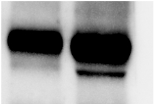
Angélique (Verified Customer) (04-28-2026) | western-blot on mouse liver tumors compared to non-tumor tissue
 |
Sonam (Verified Customer) (11-17-2025) | highly recommend
|
Kamal (Verified Customer) (02-15-2024) | Mouse liver lysates were subjected to SDS PAGE followed by western blot with 28283-1-AP (TSG101 antibody) at dilution of 1:10000 incubated at 4 degree C for 1.5 hours. TSG101 bands appeared at 42 kDa.
|
SONAM (Verified Customer) (01-09-2024) | Antibody works well. Ordered three times..
|








