
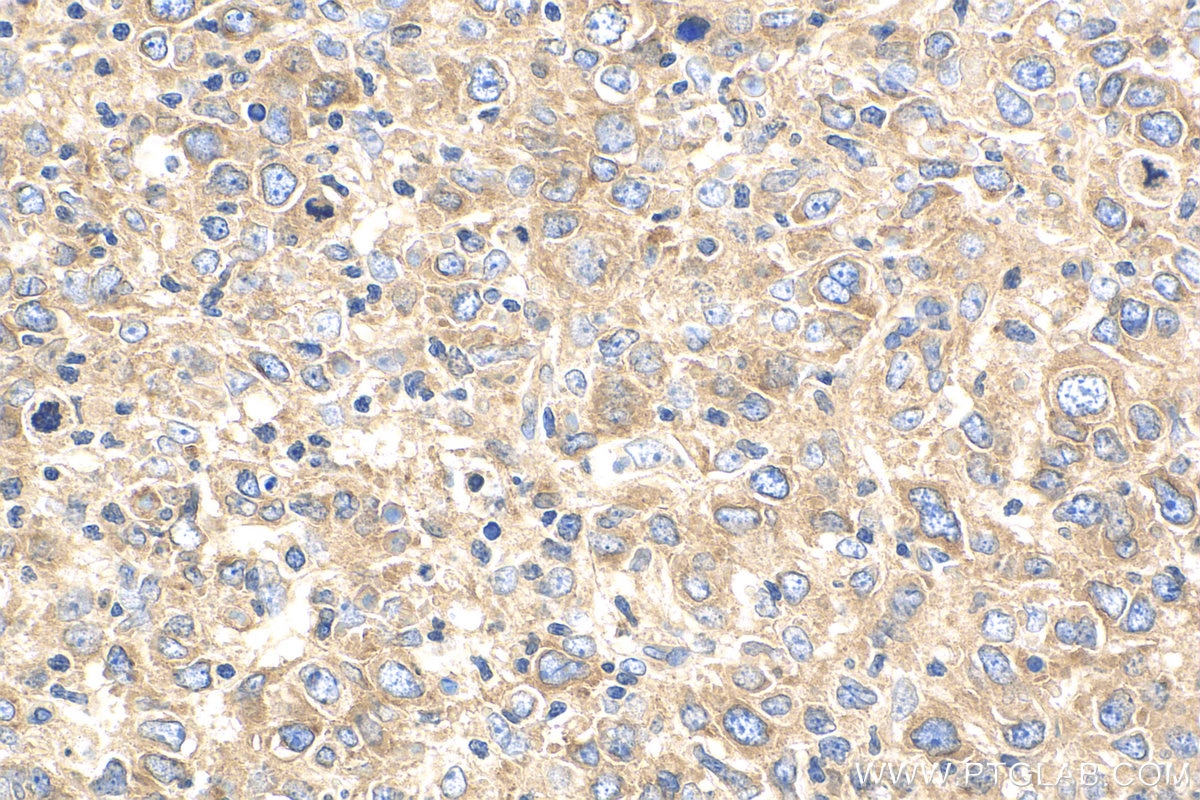

Tested Applications
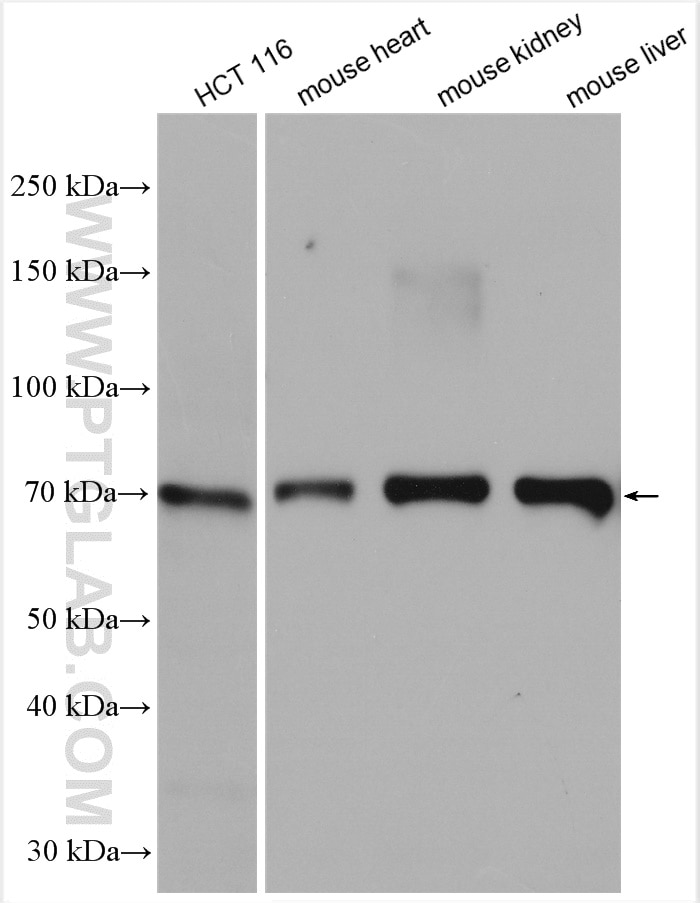
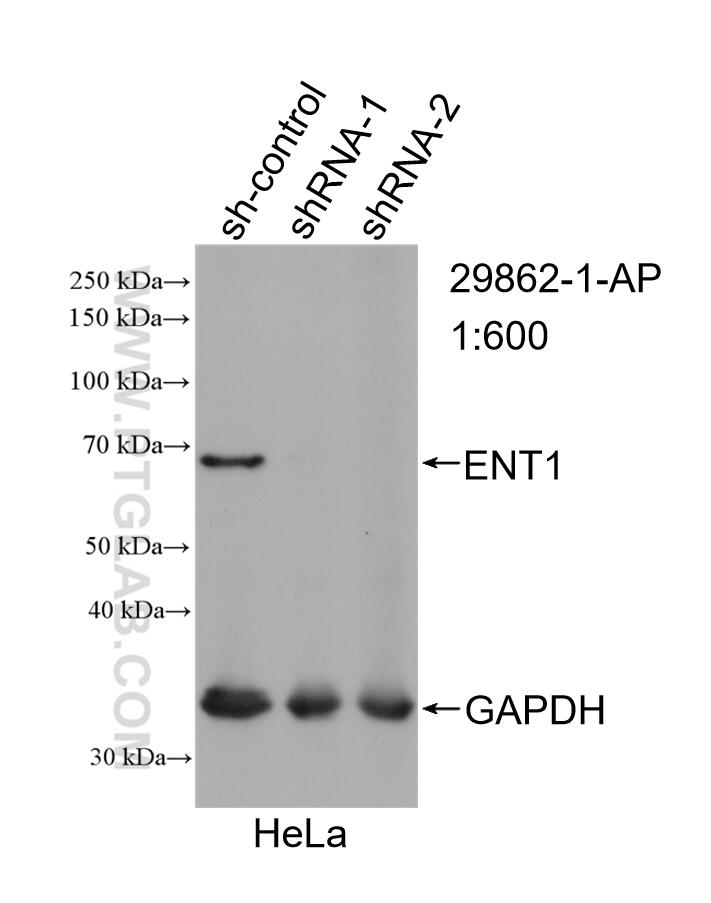
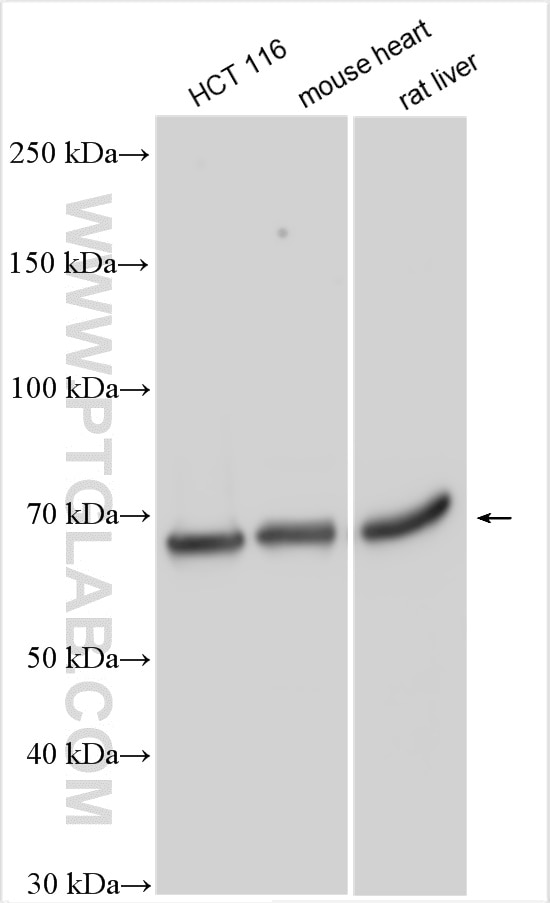
| Positive WB detected in | HCT 116 cells, HeLa cells, mouse heart tissue, rat liver tissue, mouse kidney tissue, mouse liver tissue |
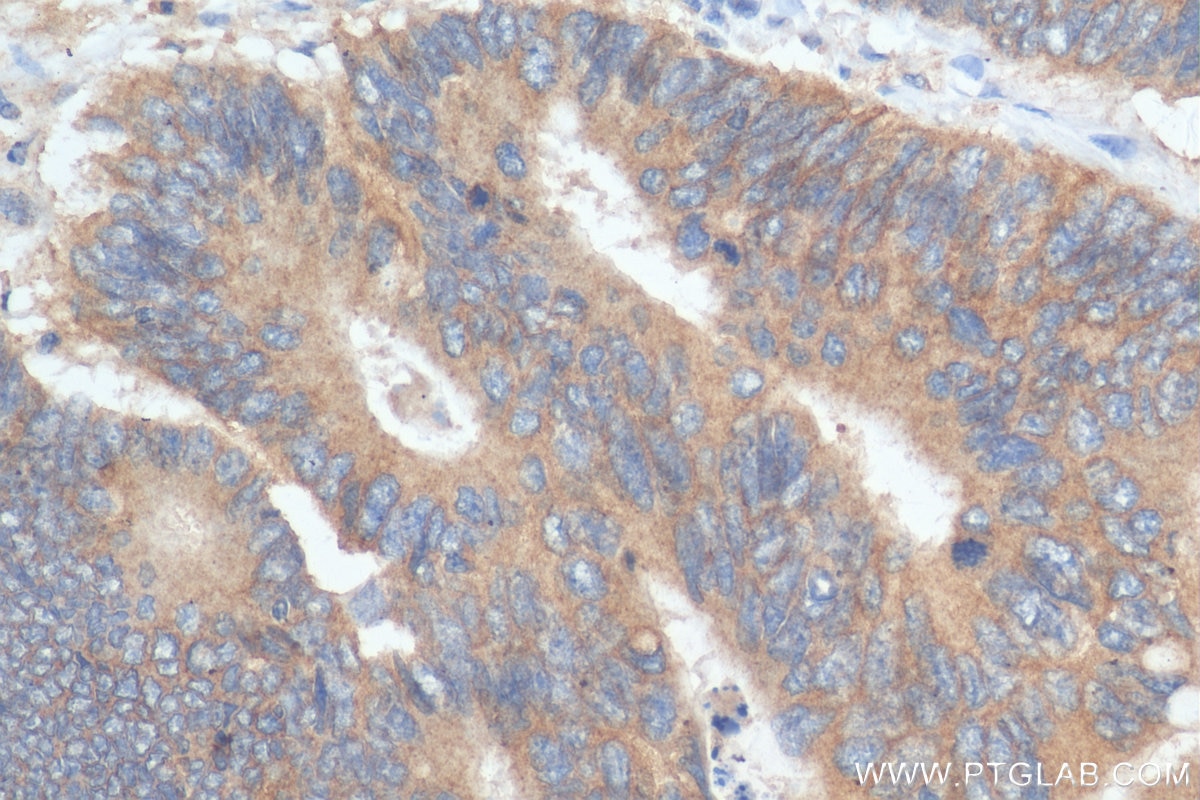
| Positive IHC detected in | human colon cancer tissue, human lymphoma tissue Note: suggested antigen retrieval with TE buffer pH 9.0; (*) Alternatively, antigen retrieval may be performed with citrate buffer pH 6.0 |
Recommended dilution
| Application | Dilution |
|---|---|
| Western Blot (WB) | WB : 1:500-1:2000 |
| Immunohistochemistry (IHC) | IHC : 1:50-1:500 |
| It is recommended that this reagent should be titrated in each testing system to obtain optimal results. | |
| Sample-dependent, Check data in validation data gallery. | |
Product Information
29862-1-AP targets ENT1 in WB, IHC, IF, ELISA applications and shows reactivity with human, mouse, rat samples.
| Tested Reactivity | human, mouse, rat |
| Cited Reactivity | human, mouse, rat |
| Host / Isotype | Rabbit / IgG |
| Class | Polyclonal |
| Type | Antibody |
| Immunogen |
CatNo: Ag32003 Product name: Recombinant human ENT1 protein Source: e coli.-derived, PGEX-4T Tag: GST Domain: 30-82 aa of NM_001372327.1 Sequence: NFFMTATQYFTNRLDMSQNVSLVTAELSKDAQASAAPAAPLPERNSLSAIFNN Predict reactive species |
| Full Name | solute carrier family 29 (nucleoside transporters), member 1 |
| Calculated Molecular Weight | 50KD |
| Observed Molecular Weight | 70 kDa |
| GenBank Accession Number | NM_001372327.1 |
| Gene Symbol | ENT1 |
| Gene ID (NCBI) | 2030 |
| RRID | AB_2935484 |
| Conjugate | Unconjugated |
| Form | Liquid |
| Purification Method | Antigen affinity purification |
| UNIPROT ID | Q99808 |
| Storage Buffer | PBS with 0.02% sodium azide and 50% glycerol, pH 7.3. |
| Storage Conditions | Store at -20°C. Stable for one year after shipment. Aliquoting is unnecessary for -20oC storage. 20ul sizes contain 0.1% BSA. |
Background Information
ENT1 (equilibrative nucleoside transporter 1; also known as SLC29A1) is a ubiquitous protein located at the cell membrane and is a major transporter responsible for the cellular uptake and release of endogenous nucleosides such as adenosine, and nucleoside analogs used in chemotherapy. The predicted molecular weight of ENT1 is 50 kDa, while heavier 54-68 kDa band may be observed due to the glycosylation (PMID: 16448802, 11850433, 16111480). A smaller novel splice variant of the mouse ENT1 has also been identified, which generates a protein of 35-40 kDa (PMID: 18413666).
Protocols
| Product Specific Protocols | |
|---|---|
| IHC protocol for ENT1 antibody 29862-1-AP | Download protocol |
| WB protocol for ENT1 antibody 29862-1-AP | Download protocol |
| Standard Protocols | |
|---|---|
| Click here to view our Standard Protocols |
Publications
What published studies show
The ENT1 Polyclonal antibody (Cat# 29862-1-AP) has 17 citations across journals including Cell Metabolism, PNAS, Small, Materials Today Bio, Drug Resistance Updates, Journal of Clinical Medicine, International Journal of Molecular Sciences, Sleep, Hippocampus, and others. Research fields span oncology (pancreatic, colorectal, gallbladder cancer; gemcitabine resistance), ferroptosis, nucleoside metabolism, autoimmune hepatitis, neurology (blood-brain barrier, Dravet syndrome, glymphatic function), leukemia classification, drug delivery, and purinergic signaling in urology.
| Species | Application | Title |
|---|---|---|
Cell Metab Compartmentalized branched-chain amino acid metabolism orchestrates colorectal cancer dissemination via an UMP-vimentin axis. | ||
Drug Resist Updat Targeting keratin 6 A overcomes gemcitabine resistance by restoring equilibrative nucleoside transporter 1 and TAM-mediated metabolic compensation in pancreatic cancer.
| ||
Small Nanomagnetic Hyperthermia Sensitizes Gemcitabine Chemosensitivity in Pancreatic Cancer by Inhibiting HSPB1 to Amplify ACSL4-Mediated Ferroptosis. | ||
Mater Today Bio A polymeric nanovesicle delivers sulfopin and gemcitabine to remodel tumor microenvironment for enhanced chemoimmunotherapy against orthotopic pancreatic cancer. | ||
Mater Today Bio Targeting FN1 to overcome gemcitabine resistance in gallbladder cancer: Mechanistic insights and an iRGD-modified PEG-PLGA nanoparticle delivery strategy. | ||
Proc Natl Acad Sci U S A Pharmacological inhibition of ENT1 enhances the impact of specific dietary fats on energy metabolism gene expression |






