
Streamlining Multiplex Imaging in Expanded Tissues with FlexAble 2.0 Antibody Labeling Kits and Magnify™ Expansion Microscopy
Authors: Aleksandra Klimas, Tina Ryu, and Yongxin (Leon) Zhao, Magnify Biosciences, Inc.
Key Points:
-
Demonstrates a validated workflow combining Magnify™ Expansion Microscopy with Proteintech’s FlexAble 2.0 Antibody Labeling Kits.
-
FlexAble 2.0 allows for rapid and efficient fluorescent labeling of primary antibodies for use in expanded hydrogel specimens.
-
FlexAble-labeled antibodies successfully diffuse into the porous Magnify™ hydrogel to specifically bind target epitopes for post-expansion labeling.
-
This method simplifies the multiplex staining process for expanded tissues, saving time and preserving specimen integrity compared to sequential staining methods.
-
FlexAble 2.0 eliminates the need for selecting orthogonal primary antibody hosts, streamlining the antibody screening and selection process.
Background
Expansion Microscopy (ExM) is a powerful technique that enables nanoscale resolution imaging on conventional microscopes by physically expanding biological specimens embedded in a swellable hydrogel. Magnify™ (Klimas et al. 2023) is an ExM technique (Figure 1) that uniquely permits immunofluorescent labeling after the expansion protocol has been carried out.
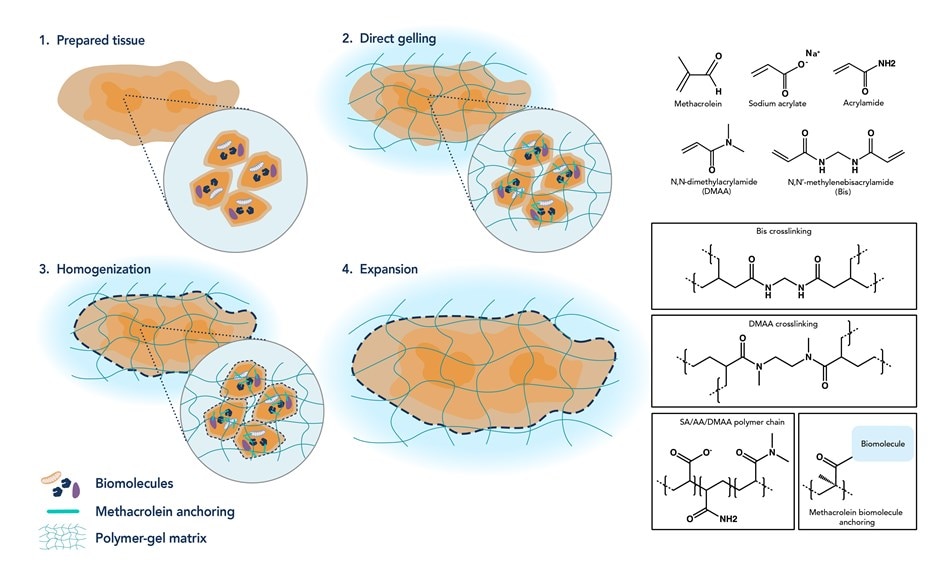
Figure 1: Schematic of the Magnify™ Technique. Fixed tissue (i) is polymerized with a water-swellable hydrogel (ii). This tissue-hydrogel hybrid is then homogenized using heat denaturation (iii). These samples can then be immunostained and then expanded (iv) in pure water prior to imaging. Adapted from (Klimas et al. 2023)
While this method reveals unprecedented detail, the hydrogel matrix can present challenges for traditional multi-step immunofluorescence protocols, including long incubation times. Additionally, the lack of sufficient orthogonal antibody hosts can limit the multiplexing capacity per staining round. The ability to pre-conjugate primary antibodies with fluorophores offers a streamlined alternative to the classic one-primary-one-secondary antibody approach. This application note outlines a method for performing immunofluorescence imaging in Magnify™ expanded specimens using Proteintech’s FlexAble 2.0 Antibody Labeling Kits.
Materials & Methods
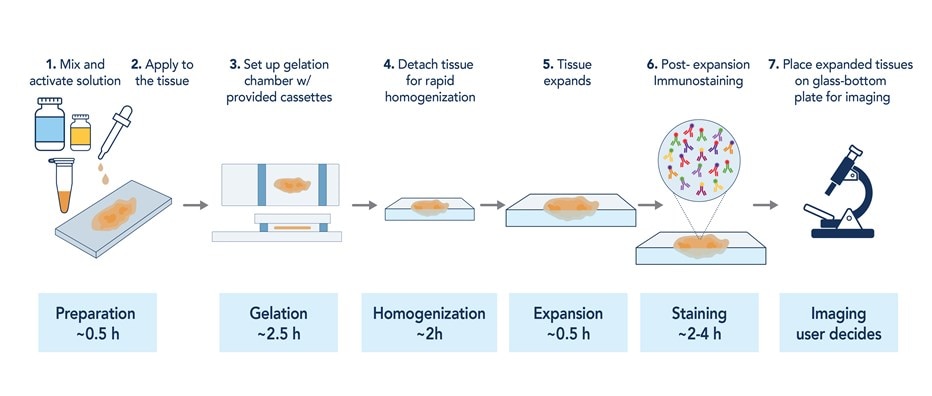
Figure 2: Overview of the Magnify™ Workflow.
Part 1: Specimen Preparation with Magnify™ Kit
Here, fixed biological specimens (e.g., cultured cells, tissue sections) are processed using the appropriate Magnify™ Kit (for Culture Cells, FFPE Tissues, or Fixed Tissues) according to the manufacturer's instructions (Figure 2). For PFA fixed mouse brains, the protocol is as follows:
-
Place PFA fixed mouse brain slices on a superfrost glass slide, allow it to dry slightly, and place the provided spacer around the specimen.
-
Meanwhile, prepare the Magnify™ gelling solution per the manufacturer’s instructions. Apply the gelling solution to the specimen and incubate at 4°C for 20 minutes.
-
After incubation, apply the provided plastic cover to the specimen and then incubate at 37°C for 2 hours in a humidified container to polymerize the specimen.
-
Remove the gelled specimen from the slide, transfer the gel to a 15 mL Falcon tube, and digest using the provided homogenization buffer at 95°C for 100 minutes or until the tissue is cleared.
-
Place the specimen in the gel catcher to discard the homogenization buffer. Transfer the gelled specimen to a six-well plate for easier washing. Wash the digested gels with the provided washing buffer on an orbital shaker at 70 rpm, 15 minutes each, using 5 mL of fresh Magnify™ Buffer W per wash.
-
Replace the washing buffer with a blocking buffer (e.g., PBS with 2% BSA and 0.1% Tween20) and incubate for 15 minutes at room temperature. The transparent specimen is then ready for staining.
Part 2: Primary Antibody Conjugation with FlexAble 2.0
For this example, we used Rabbit anti-Syntaxin 1B (Proteintech, 83298-1-RR), Rabbit anti-Neuregulin (Proteintech, 83323-6-RR), and Rabbit anti-Ephrin A4 (Proteintech, 82951-1-RR). The antibodies were conjugated using the FlexAble 2.0 Antibody Labeling Kits (KFA501 for CoraLite® Plus 488, KFA502 for CoraLite® Plus 555, and KFA503 for CoraLite® Plus 647) following the kit’s protocol, briefly:
-
Equilibrate all reagents to room temperature. For each antibody-conjugate pair, add 2 μg of primary antibody to 4 μL of FlexLinker. Add FlexBuffer to bring the total volume to 32 μL. Mix gently and incubate for 5 minutes at room temperature in the dark.
-
Add 8 μL of FlexQuencher, mix gently, and incubate for 5 minutes at room temperature in the dark. The antibody labeling procedure is now complete.
-
Pipette the whole solution into 1 mL of Magnify™ Buffer S and mix gently. Add 1 µL of DAPI solution for nuclear counterstain (optional). The staining solution is now ready to use.
Part 3: Staining of Expanded Specimen
-
Transfer the Magnify™ processed sample to a 15 mL Falcon tube. Add the pre-assembled conjugated antibody staining solution from Part 2 to the tube containing the gel. Incubate the gel with the prepared staining solution in the 15 mL Falcon tube for 1-3 hours at room temperature.
-
Wash the specimen with 1X Buffer W or 1X PBS three times on an orbital shaker at 70 rpm, 15 minutes each.
-
Optional: fully expand the tissue. Transfer the stained Magnify™ processed sample to a one-well glass-bottom plate with fresh deionized water using droppers on the orbital shaker at least three times for 15 minutes each. After the gel has fully expanded, use droppers to carefully remove all liquid before imaging.
-
The stained, expanded gel is then ready for imaging.
Experimental Results
The Magnify Biosciences team successfully validated this combined workflow. The antibodies that were fluorescently labeled with FlexAble 2.0 efficiently diffuse throughout the hydrogel of the processed specimen and specifically bind to their target epitopes. High-resolution imaging (Figure 3) reveals crisp and specific labeling of Syntaxin 1B, Neuregulin, and Ephrin A4 within the expanded cells. Additionally, volumetric images can easily be acquired (Figure 4) given the clearing properties of the Magnify™ protocol. The signal-to-noise ratio was excellent, and the streamlined protocol with FlexAble 2.0 Antibody Labeling Kits reduced the total staining and washing time by nearly a full day compared to a traditional sequential primary-secondary antibody staining method.
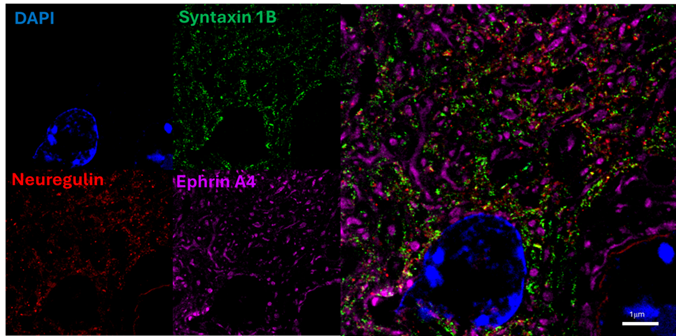
Figure 3: Immunofluorescent images of the mouse brain specimens expanded using a Magnify™ Kit and stained with FlexAble 2.0 Antibody Labeling Kit. Expanded mouse brain tissue was stained with Rabbit anti-Syntaxin 1B (Proteintech, 83298-1-RR), Rabbit anti-Neuregulin (Proteintech, 83323-6-RR), and Rabbit anti-Ephrin A4 (Proteintech, 82951-1-RR). The antibodies were conjugated using the FlexAble 2.0 Antibody Labeling Kit (Syntaxin 1B conjugated with KFA501 CoraLite® Plus 488; Neuregulin conjugated with KFA502 CoraLite® Plus 555; and Ephrin A4 conjugated with KFA503 CoraLite® Plus 647). The sample was imaged using a Nikon Eclipse Ti2 epifluorescence microscope equipped with a CSU-W1 spinning disk confocal module using a CFI Plan Apochromat VC 60×C WI (1.2 NA) objective.
Figure 4: Volumetric image of a mouse brain specimen expanded using a Magnify™ Kit and stained with FlexAble 2.0 Antibody Labeling Kit. Expanded mouse brain tissue was stained with Rabbit anti-Syntaxin 1B (Proteintech, 83298-1-RR), Rabbit anti-Neuregulin (Proteintech, 83323-6-RR), and Rabbit anti-Ephrin A4 (Proteintech, 82951-1-RR). The antibodies were conjugated using the FlexAble 2.0 Antibody Labeling Kit (Syntaxin 1B conjugated with KFA501 CoraLite® Plus 488, Nuregulin conjugated with KFA502 CoraLite® Plus 555, and Ephrin A4 conjugated with KFA503 CoraLite® Plus 647). The sample was imaged using a Nikon Eclipse Ti2 epifluorescence microscope equipped with a CSU-W1 spinning disk confocal module using a CFI Plan Apochromat VC 60×C WI (1.2 NA) objective.
Conclusion
The combination of Magnify™ Expansion Microscopy and Proteintech’s FlexAble 2.0 Antibody Labeling Kits provides a powerful, efficient, and robust method for super-resolution imaging. This workflow simplifies the staining process for expanded tissues, making multiplex and high-content imaging more accessible. This approach is ideal for researchers looking to maximize the detail obtained from their samples on any conventional fluorescence microscope.
References
Klimas, A, Gallagher, BR, Wijesekara, P, Fekir, S, DiBernardo, EF, Cheng, Z, Stolz, DB, Cambi, F, Watkins, SC, Brody, SL, Horani, A, Barth, AL, Moore, CI, Ren, X, Zhao, Y. Magnify is a universal molecular anchoring strategy for expansion microscopy. Nat Biotechnol. 2023 Jun;41(6):858-869. doi: 10.1038/s41587-022-01546-1. Epub 2023 Jan 2. PMID: 36593399; PMCID: PMC10264239.

Related Content
FlexAble Antibody Labeling Kits | Proteintech
Next Generation Expansion Microscopy using Magnify | Proteintech Group
Super-resolution Microscopy | Proteintech
The FlexAble way to improve your immunofluorescence with IBEX | Proteintech Group
Imaging the Rainbow: Multiplexing with Same-Species Antibodies for Immunofluorescence | Proteintech…
Want to upgrade your immunofluorescence workflow? Go Direct! | Proteintech Group
Support
Newsletter Signup
Stay up-to-date with our latest news and events. New to Proteintech? Get 10% off your first order when you sign up.