
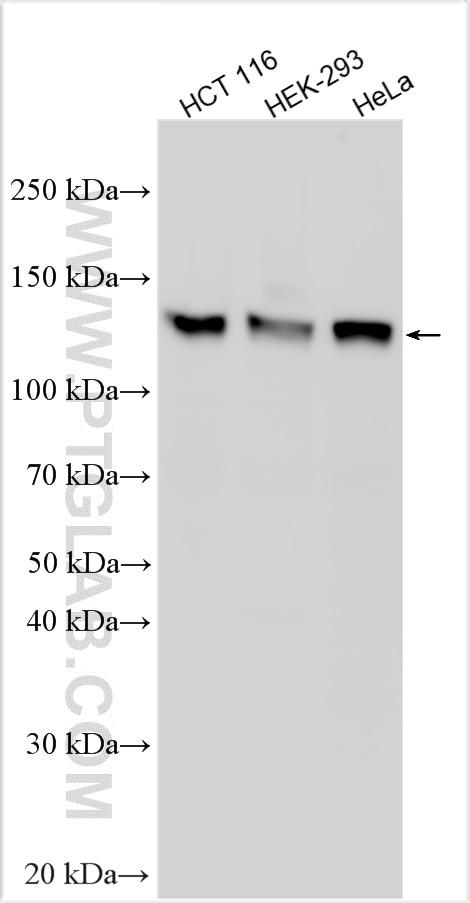
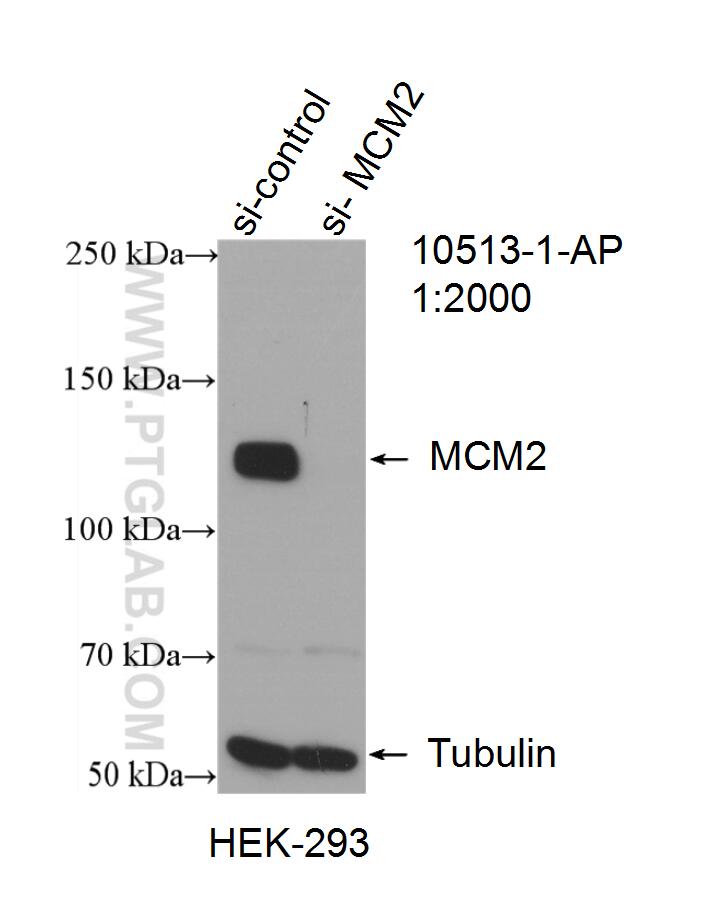
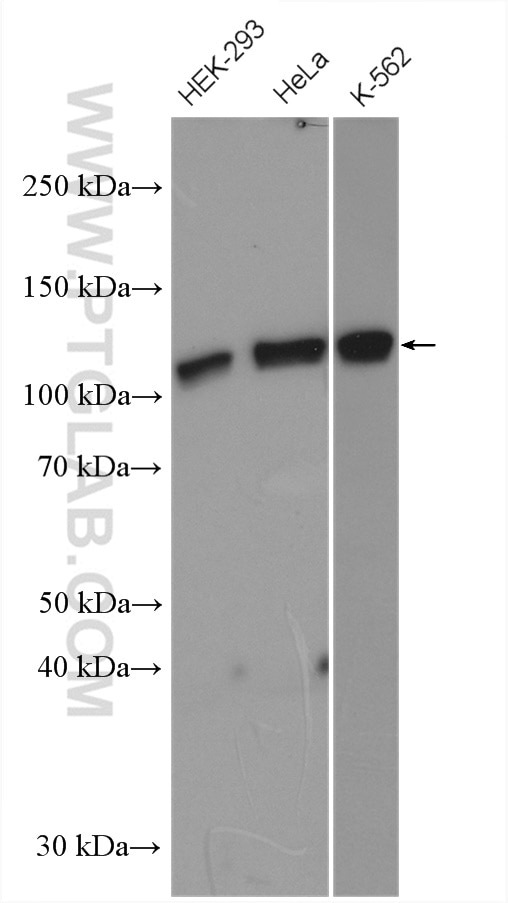
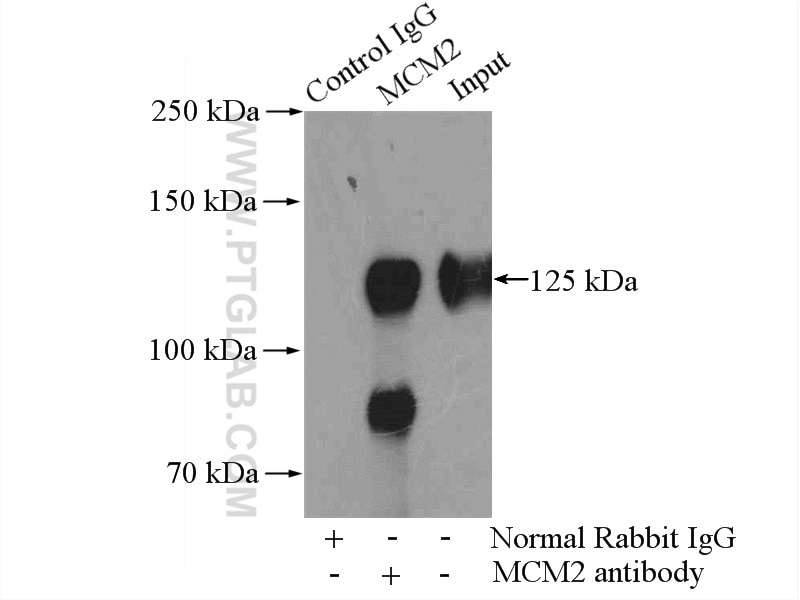

Tested Applications
| Positive WB detected in | HCT 116 cells, HEK-293 cells, HeLa cells, K-562 cells |
| Positive IP detected in | HEK-293 cells |
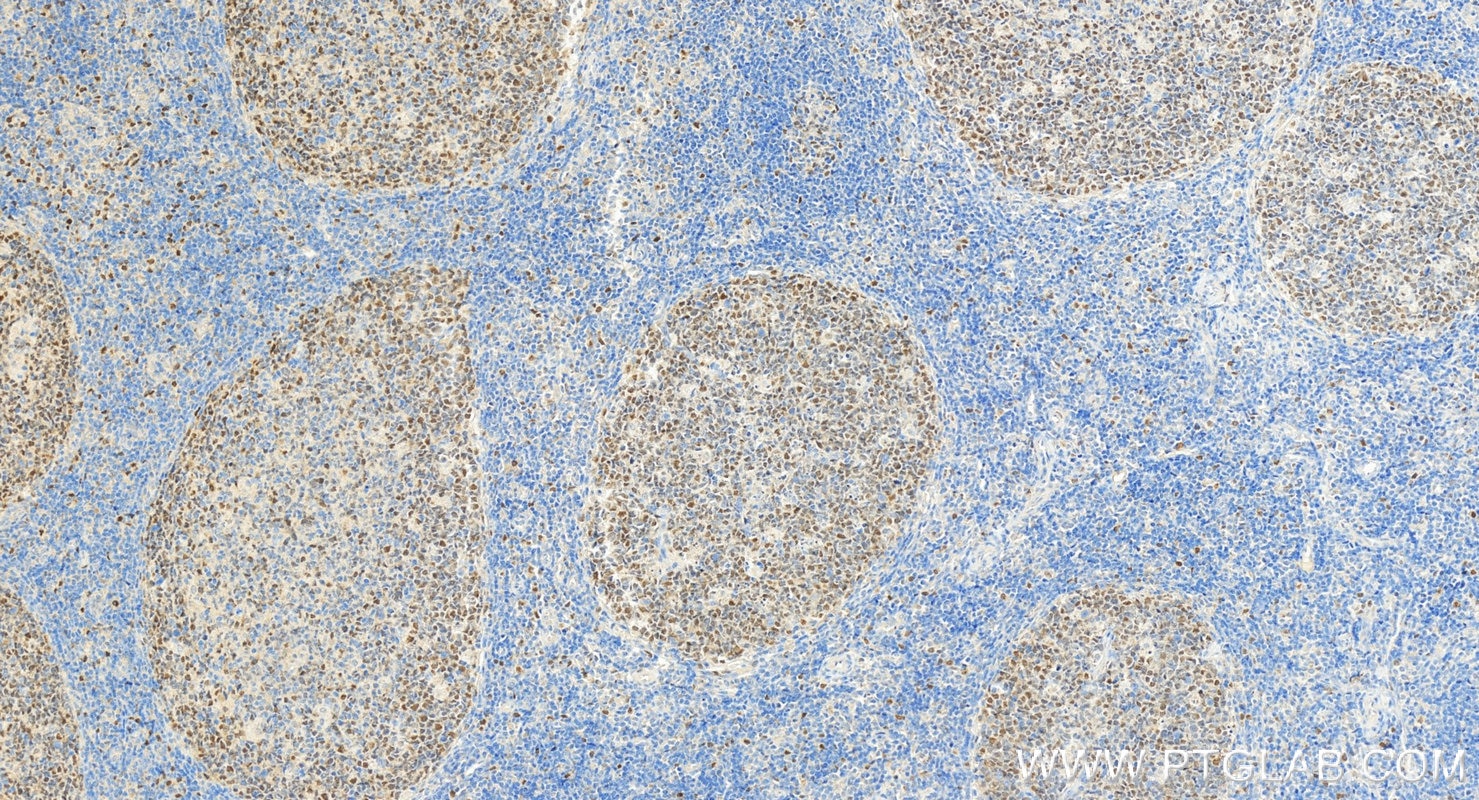
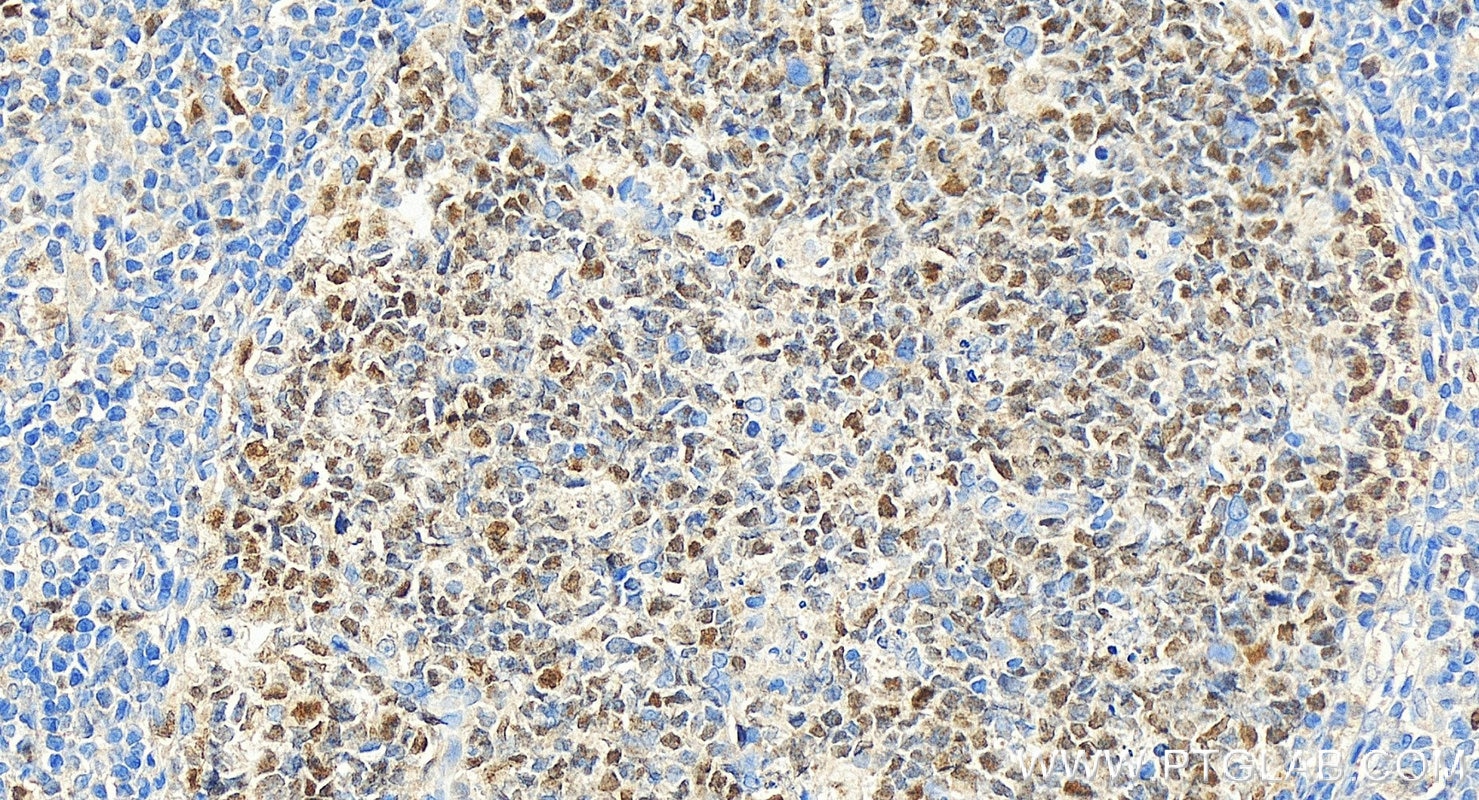
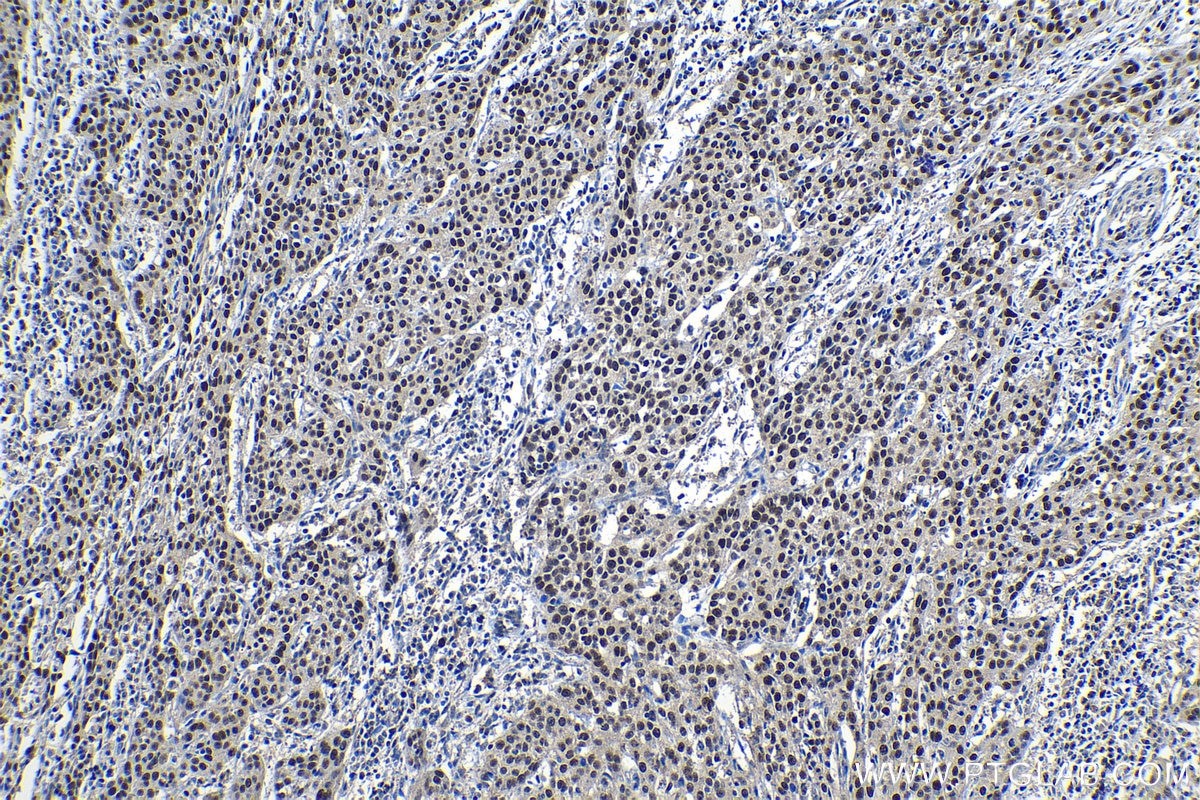
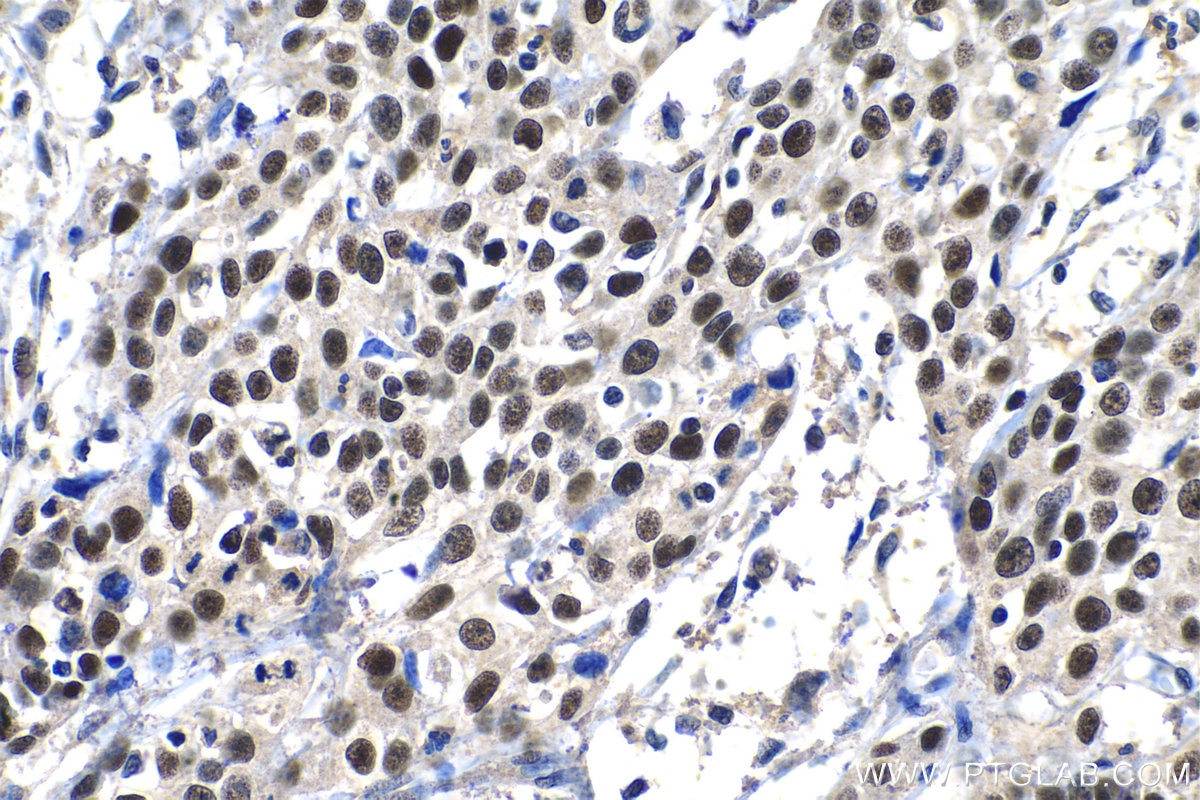
| Positive IHC detected in | human tonsillitis tissue, human cervical cancer tissue Note: suggested antigen retrieval with TE buffer pH 9.0; (*) Alternatively, antigen retrieval may be performed with citrate buffer pH 6.0 |
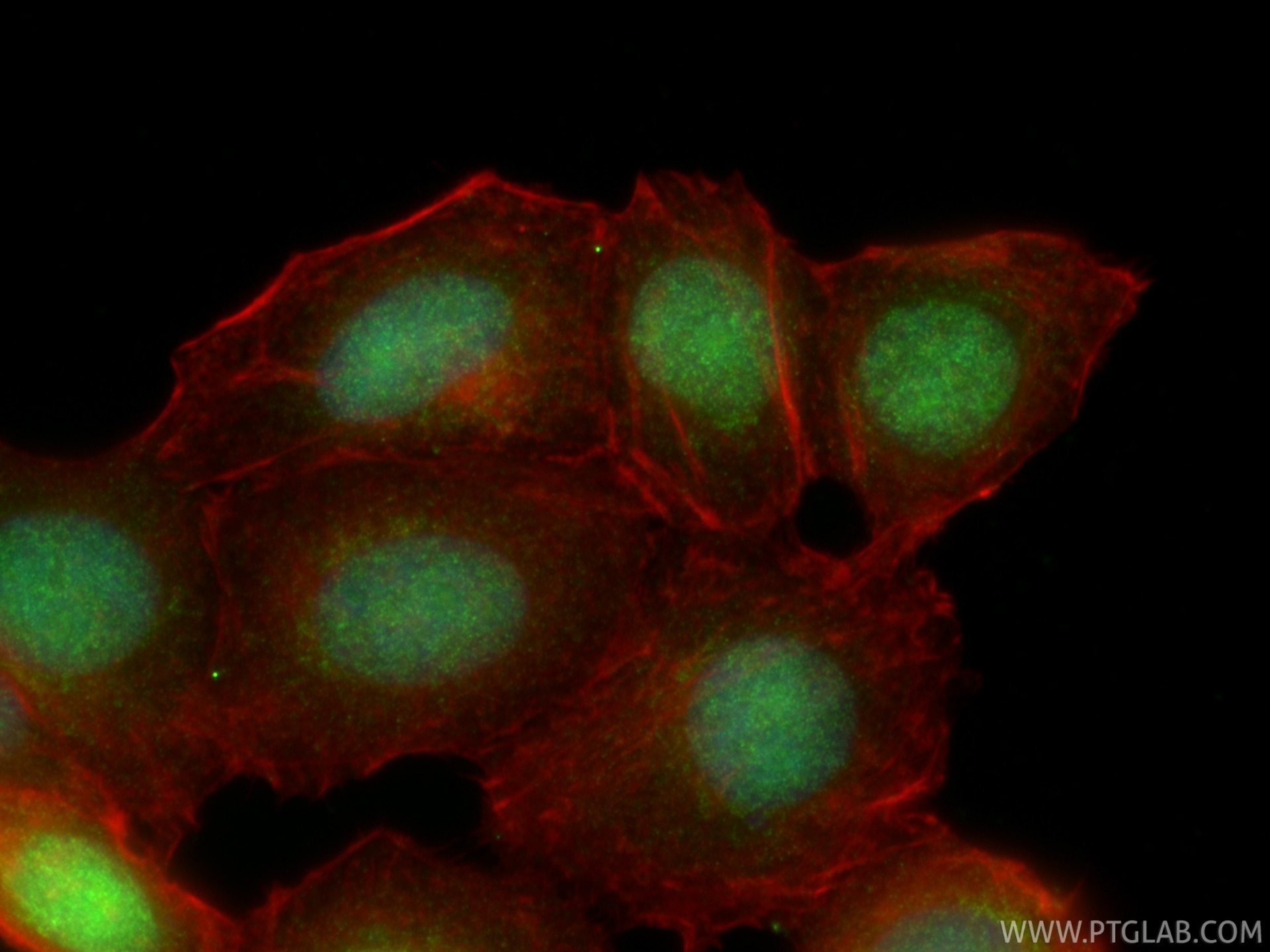
| Positive IF/ICC detected in | MCF-7 cells |
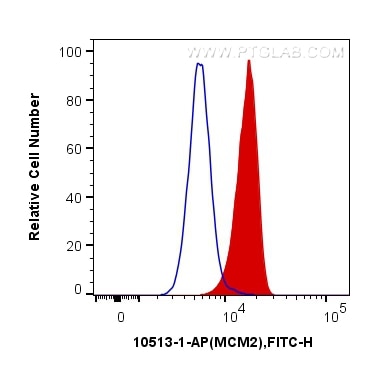
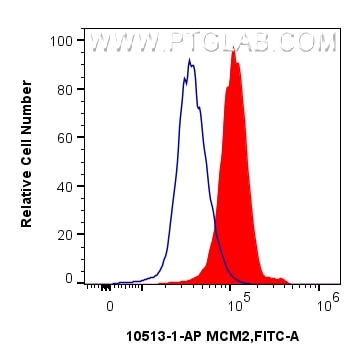
| Positive FC (Intra) detected in | NIH/3T3 cells, HeLa cells |
Recommended dilution
| Application | Dilution |
|---|---|
| Western Blot (WB) | WB : 1:1000-1:8000 |
| Immunoprecipitation (IP) | IP : 0.5-4.0 ug for 1.0-3.0 mg of total protein lysate |
| Immunohistochemistry (IHC) | IHC : 1:1000-1:4000 |
| Immunofluorescence (IF)/ICC | IF/ICC : 1:200-1:800 |
| Flow Cytometry (FC) (INTRA) | FC (INTRA) : 0.20 ug per 10^6 cells in a 100 µl suspension |
| It is recommended that this reagent should be titrated in each testing system to obtain optimal results. | |
| Sample-dependent, Check data in validation data gallery. | |
Product Information
10513-1-AP targets MCM2 in WB, IHC, IF/ICC, FC (Intra), IP, RIP, ELISA applications and shows reactivity with human, mouse samples.
| Tested Reactivity | human, mouse |
| Cited Reactivity | human, mouse, rat |
| Host / Isotype | Rabbit / IgG |
| Class | Polyclonal |
| Type | Antibody |
| Immunogen |
CatNo: Ag0798 Product name: Recombinant human MCM2 protein Source: e coli.-derived, PGEX-4T Tag: GST Domain: 657-904 aa of BC007670 Sequence: FDILCVVRDTVDPVQDEMLARFVVGSHVRHHPSNKEEEGLANGSAAEPAMPNTYGVEPLPQEVLKKYIIYAKERVHPKLNQMDQDKVAKMYSDLRKESMATGSIPITVRHIESMIRMAEAHARIHLRDYVIEDDVNMAIRVMLESFIDTQKFSVMRSMRKTFARYLSFRRDNNELLLFILKQLVAEQVTYQRNRFGAQQDTIEVPEKDLVDKARQINIHNLSAFYDSELFRMNKFSHDLKRKMILQQF Predict reactive species |
| Full Name | minichromosome maintenance complex component 2 |
| Calculated Molecular Weight | 102 kDa |
| Observed Molecular Weight | 116-125 kDa |
| GenBank Accession Number | BC007670 |
| Gene Symbol | MCM2 |
| Gene ID (NCBI) | 4171 |
| RRID | AB_2142131 |
| Conjugate | Unconjugated |
| Form | Liquid |
| Purification Method | Antigen affinity purification |
| UNIPROT ID | P49736 |
| Storage Buffer | PBS with 0.02% sodium azide and 50% glycerol, pH 7.3. |
| Storage Conditions | Store at -20°C. Stable for one year after shipment. Aliquoting is unnecessary for -20oC storage. 20ul sizes contain 0.1% BSA. |
Background Information
The MCM2-7 complex forms the core of the replicative helicase which acts as the molecular motor that uses ATP binding and hydrolysis to fuel the unwinding of double-stranded DNA at the replication fork in eukaryotes. This complex is the putative replicative helicase essential for 'once per cell cycle' DNA replication initiation and elongation in eukaryotic cells. MCM2, also named CDCL1 and BM28, is a human nuclear protein that plays an important role in 2 crucial steps of the cell cycle, namely, onset of DNA replication and cell division.
Protocols
| Product Specific Protocols | |
|---|---|
| FC protocol for MCM2 antibody 10513-1-AP | Download protocol |
| IF protocol for MCM2 antibody 10513-1-AP | Download protocol |
| IHC protocol for MCM2 antibody 10513-1-AP | Download protocol |
| IP protocol for MCM2 antibody 10513-1-AP | Download protocol |
| WB protocol for MCM2 antibody 10513-1-AP | Download protocol |
| Standard Protocols | |
|---|---|
| Click here to view our Standard Protocols |
Publications
What published studies show
The MCM2 polyclonal antibody (Cat# 10513-1-AP) has 60 citations published in journals including Nature, Nature Communications, Molecular Cell, Cancer Research, Cell Reports, Cell Death & Disease, EMBO Reports, Science Advances, and others. Research fields encompass DNA replication, cell cycle regulation, hepatocellular carcinoma, breast cancer, lung cancer, gastric cancer, colorectal cancer, neurogenesis, DNA damage response, and mitochondrial biology, with applications in WB, IHC, IF, and IP.
| Species | Application | Title |
|---|---|---|
Signal Transduct Target Ther O-GlcNAcylation of YTHDF2 promotes HBV-related hepatocellular carcinoma progression in an N6-methyladenosine-dependent manner | ||
Cancer Res LncRNA AGPG confers endocrine resistance in breast cancer by promoting E2F1 activity | ||
Nat Commun DNA replication initiation factor RECQ4 possesses a role in antagonizing DNA replication initiation | ||
Nat Commun Solving the MCM paradox by visualizing the scaffold of CMG helicase at active replisomes |
Reviews
What customers say
The single review for 10513-1-AP rates the antibody 4 out of 5 stars for immunohistochemistry on rat brain tissue at a 1:100 dilution. The reviewer noted that a biotinylated secondary antibody combined with an Alexa Fluor conjugate was necessary to achieve a decent signal and distinguish it from non-specific staining. Overall, the antibody performed well but required optimized secondary detection to obtain clear results.
The reviews below have been submitted by verified Proteintech customers who received an incentive for providing their feedback.
Mandi (Verified Customer) (03-02-2020) | Biotinylated secondary and Alex Fluor needed for decent signal vs non-specific staining
|












