
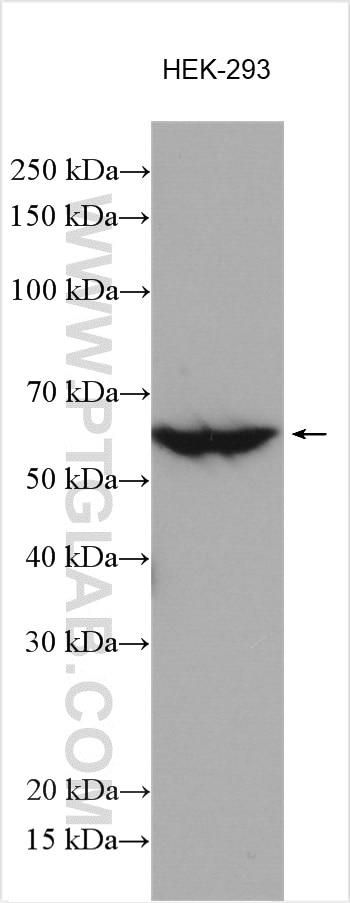
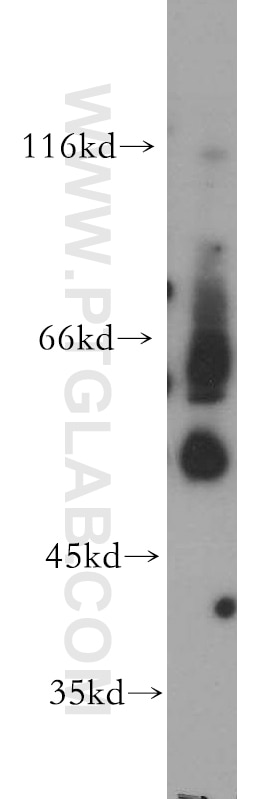
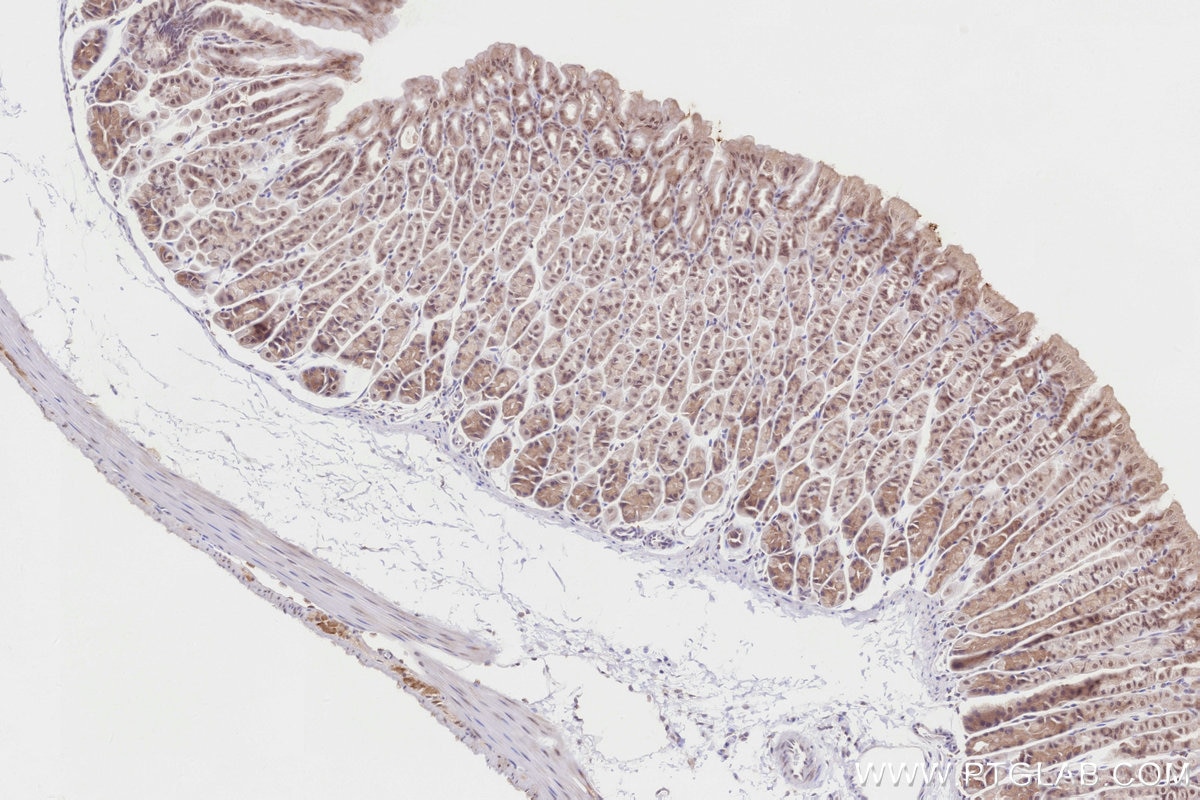
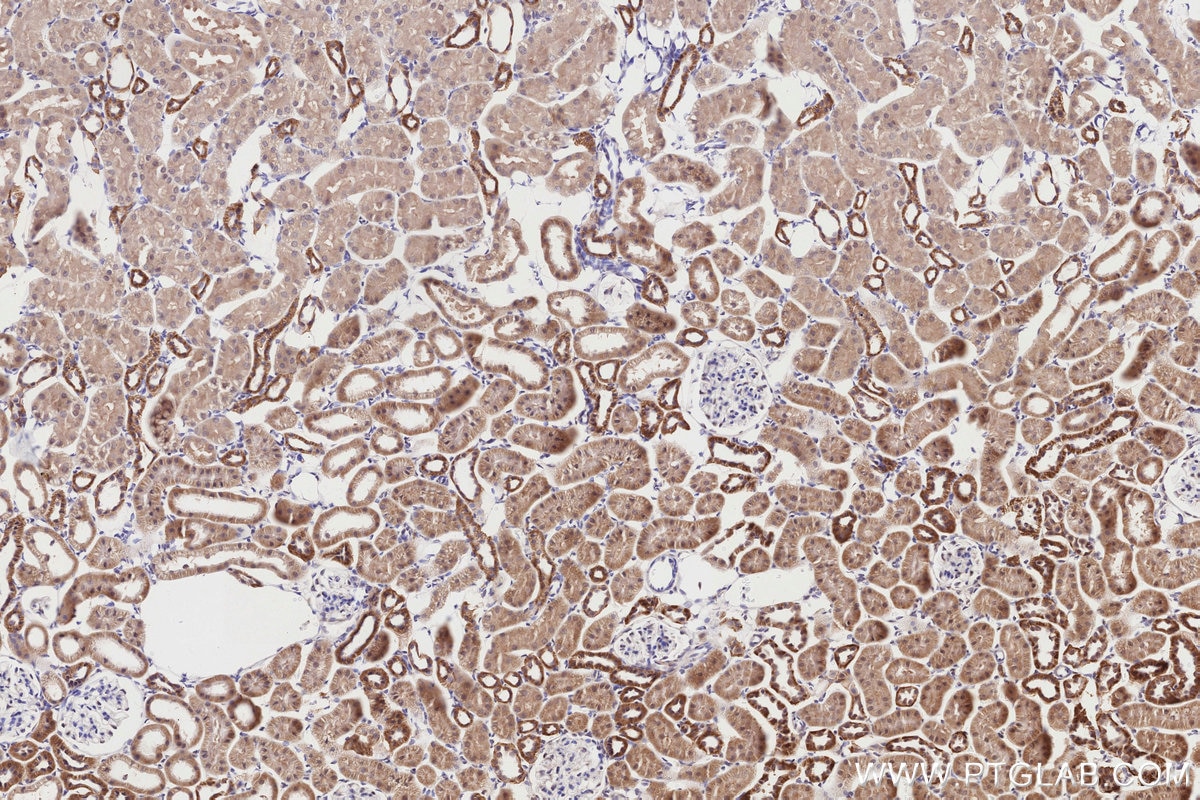

Tested Applications
| Positive WB detected in | HEK-293 cells, mouse kidney tissue |
| Positive IHC detected in | mouse stomach tissue, rat kidney tissue Note: suggested antigen retrieval with TE buffer pH 9.0; (*) Alternatively, antigen retrieval may be performed with citrate buffer pH 6.0 |
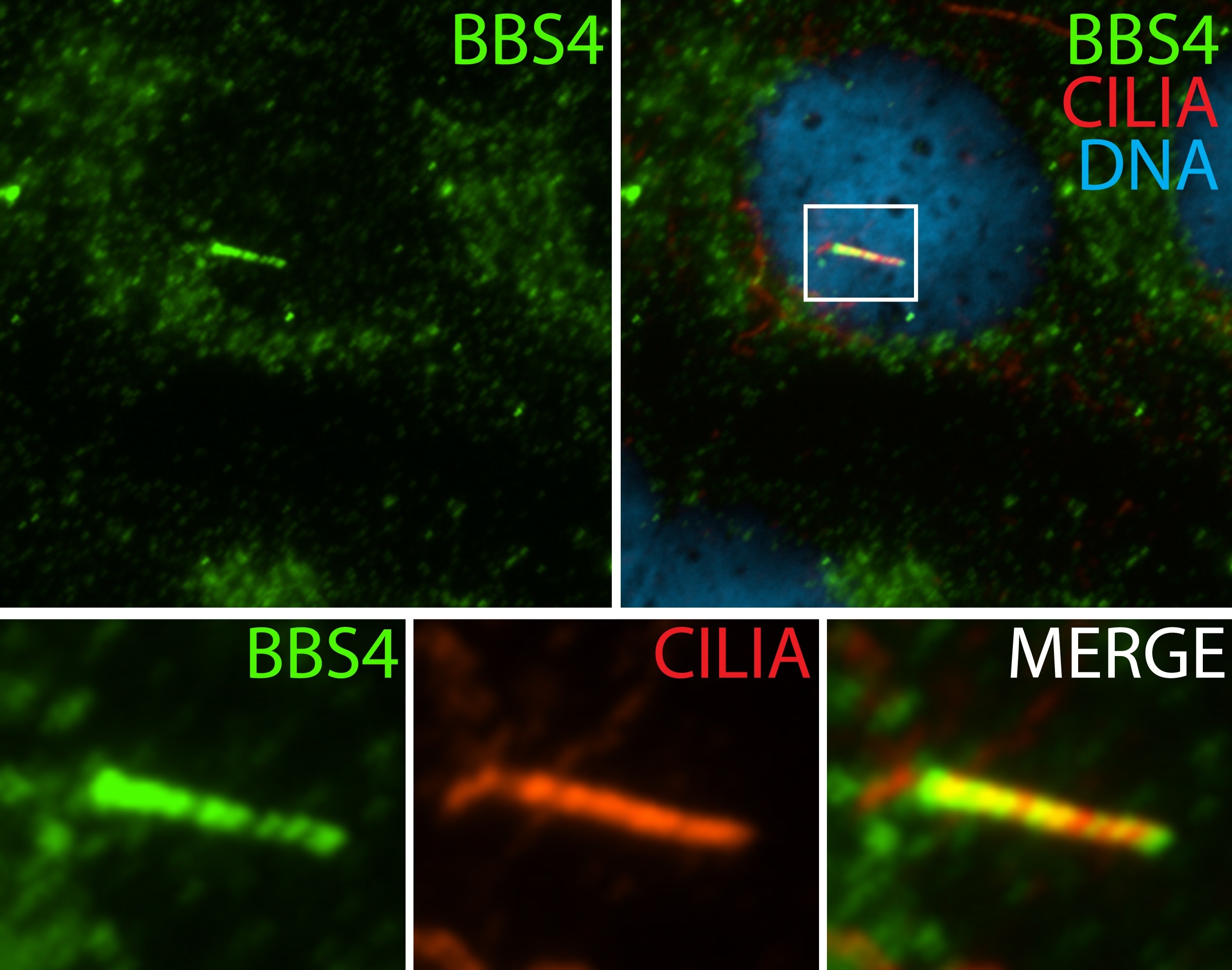
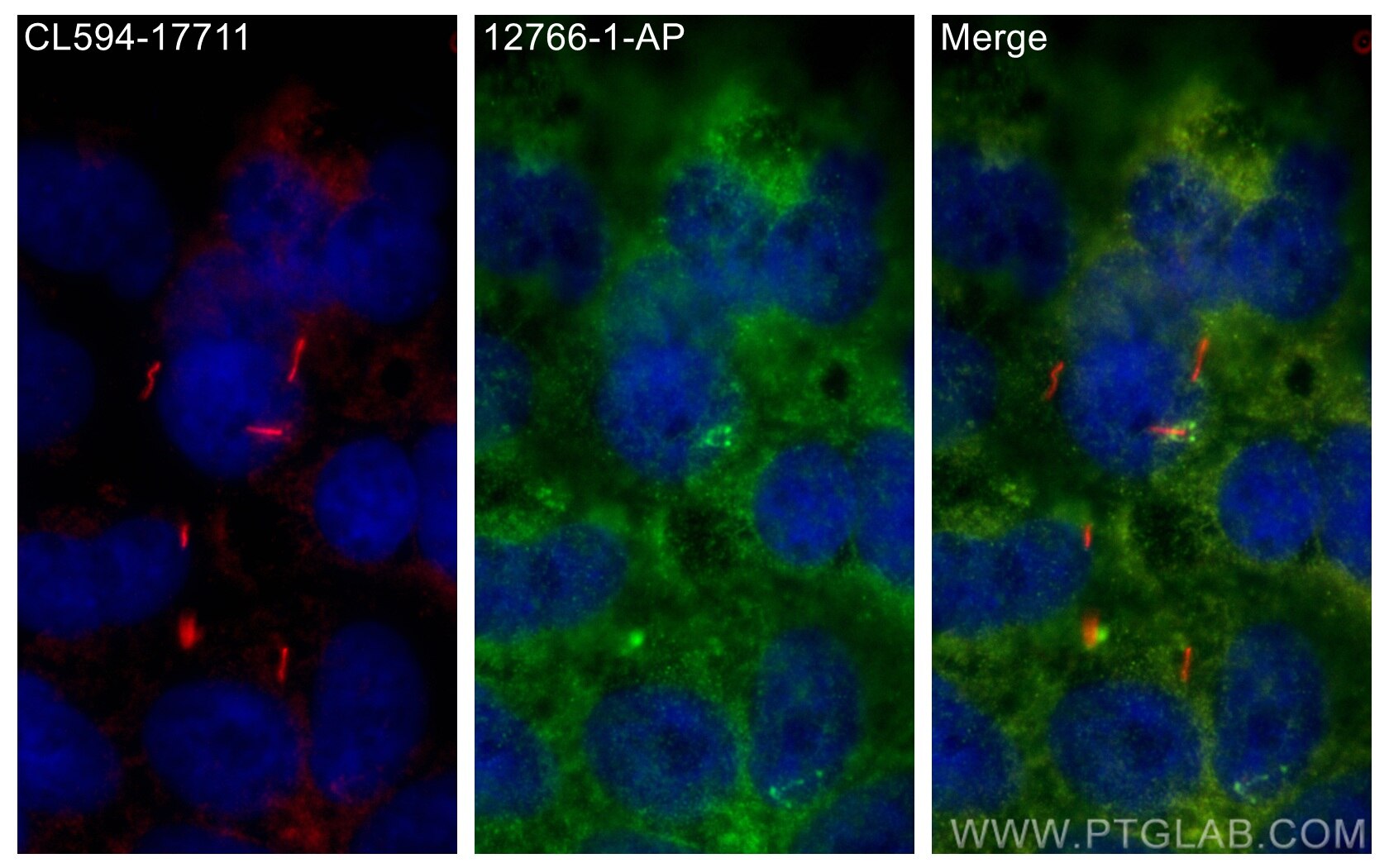
| Positive IF/ICC detected in | hTERT-RPE1 cells |
Recommended dilution
| Application | Dilution |
|---|---|
| Western Blot (WB) | WB : 1:500-1:4000 |
| Immunohistochemistry (IHC) | IHC : 1:500-1:2000 |
| Immunofluorescence (IF)/ICC | IF/ICC : 1:50-1:400 |
| It is recommended that this reagent should be titrated in each testing system to obtain optimal results. | |
| Sample-dependent, Check data in validation data gallery. | |
Product Information
12766-1-AP targets BBS4 in WB, IHC, IF/ICC, ELISA applications and shows reactivity with human, mouse, rat samples.
| Tested Reactivity | human, mouse, rat |
| Cited Reactivity | human, mouse, rat |
| Host / Isotype | Rabbit / IgG |
| Class | Polyclonal |
| Type | Antibody |
| Immunogen |
CatNo: Ag3430 Product name: Recombinant human BBS4 protein Source: e coli.-derived, PGEX-4T Tag: GST Domain: 1-351 aa of BC027624 Sequence: MAEERVATRTQFPVSTESQKPRQKKAPEFPILEKQNWLIHLHYIRKDYEACKAVIKEQLQETQGLCEYAIYVQALIFRLEGNIQESLELFQTCAVLSPQSADNLKQVARSLFLLGKHKAAIEVYNEAAKLNQKDWEISHNLGVCYIYLKQFNKAQDQLHNALNLNRHDLTYIMLGKIHLLEGDLDKAIEVYKKAVEFSPENTELLTTLGLLYLQLGIYQKAFEHLGNALTYDPTNYKAILAAGSMMQTHGDFDVALTKYRVVACAVPESPPLWNNIGMCFFGKKKYVAAISCLKRANYLAPFDWKILYNLGLVHLTMQQYASAFHFLSAAINFQPKMGELYMLLAVALTNL Predict reactive species |
| Full Name | Bardet-Biedl syndrome 4 |
| Calculated Molecular Weight | 519 aa, 58 kDa |
| Observed Molecular Weight | 50-60 kDa |
| GenBank Accession Number | BC027624 |
| Gene Symbol | BBS4 |
| Gene ID (NCBI) | 585 |
| RRID | AB_10596774 |
| Conjugate | Unconjugated |
| Form | Liquid |
| Purification Method | Antigen affinity purification |
| UNIPROT ID | Q96RK4 |
| Storage Buffer | PBS with 0.02% sodium azide and 50% glycerol, pH 7.3. |
| Storage Conditions | Store at -20°C. Stable for one year after shipment. Aliquoting is unnecessary for -20oC storage. 20ul sizes contain 0.1% BSA. |
Background Information
BBS4 (Bardet-Biedl syndrome protein 4) is one of the early BBS proteins discovered, with 35 mutations reported to cause the BBS phenotype (PMID: 26762677). BBS4 undergoes localization to the centriolar satellites of centrosomes and basal body of primary cilia, where it takes part in recruiting cargo to centriolar satellites and allowing the formation of a functional centrosomal microtubule organizing center (MTOC) (PMID: 25860617). Some research has found that BBS4 expression in humans during the development of CNS and sensory organs, concerning the cardinal clinical signs of BBS (PMID: 33860840).
Protocols
| Product Specific Protocols | |
|---|---|
| IF protocol for BBS4 antibody 12766-1-AP | Download protocol |
| IHC protocol for BBS4 antibody 12766-1-AP | Download protocol |
| WB protocol for BBS4 antibody 12766-1-AP | Download protocol |
| Standard Protocols | |
|---|---|
| Click here to view our Standard Protocols |
Publications
What published studies show
The BBS4 Polyclonal antibody (Cat# 12766-1-AP) has 23 citations. These appear in journals including Science, Nature Communications, Autophagy, Nucleic Acids Research, Cell Death & Disease, Developmental Cell, Cell Reports, PLoS Biology, Journal of Cell Biology, EMBO Reports, Cells, Communications Biology, International Journal of Molecular Sciences, Scientific Reports, Journal of Biological Chemistry, eLife, and Cell Communication & Signaling. Research fields center on ciliogenesis, centrosomal/centriolar satellite biology, Bardet-Biedl syndrome, intraflagellar transport, autophagy, and cell cycle regulation.
| Species | Application | Title |
|---|---|---|
Autophagy The ciliary protein RPGRIP1L governs autophagy independently of its proteasome-regulating function at the ciliary base in mouse embryonic fibroblasts. | ||
Nat Commun Coupling bimolecular PARylation biosensors with genetic screens to identify PARylation targets. | ||
Nat Commun An actin filament branching surveillance system regulates cell cycle progression, cytokinesis and primary ciliogenesis | ||
Nucleic Acids Res Programmable RNA 5-methylcytosine (m5C) modification of cellular RNAs by dCasRx conjugated methyltransferase and demethylase | ||
Reviews
What customers say
The single review for this product (rated 4/5) describes a Western Blot experiment on HEK293T cells using a 1:1,000 dilution. The reviewer detected one band above the 47 kDa marker, consistent with the expected BBS4 size of 50–60 kDa, but also observed a much stronger, unexpected band just below the 20 kDa marker, suggesting some non-specific binding at lower molecular weights.
The reviews below have been submitted by verified Proteintech customers who received an incentive for providing their feedback.
Christine (Verified Customer) (01-27-2023) | Detect 1 band above 47 kDa marker (expected size of BBS4 is 50-60 kDa), but also a much stronger band just below the 20 kDa marker
|







