


Tested Applications
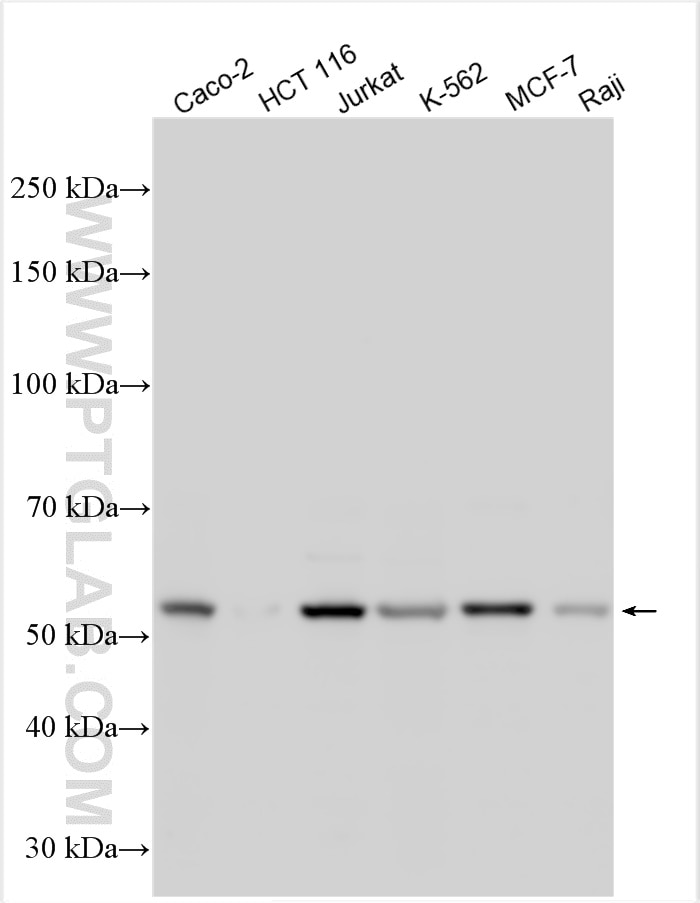
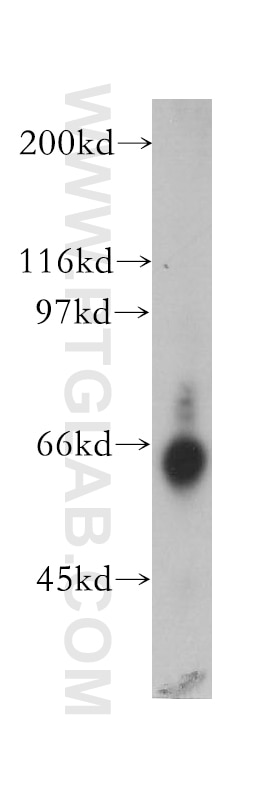
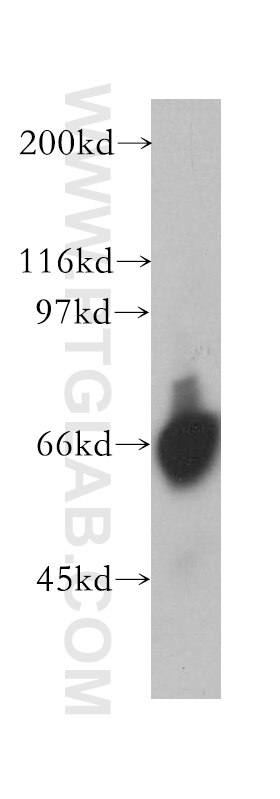
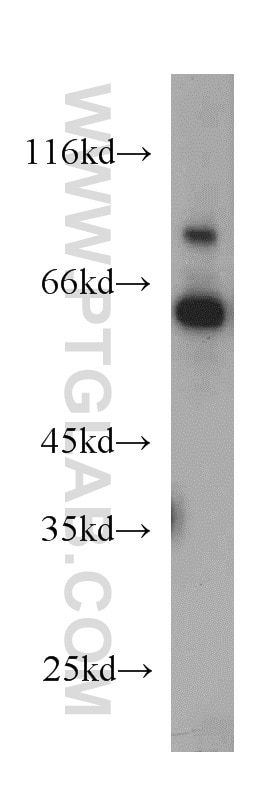
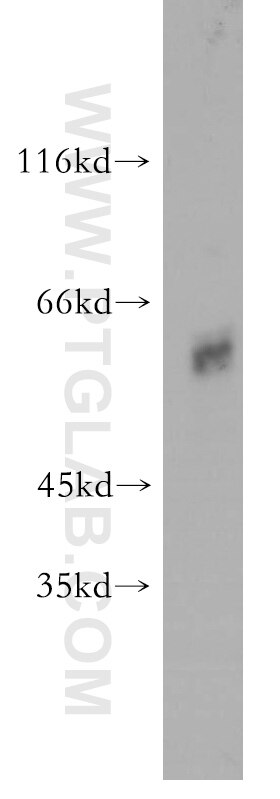
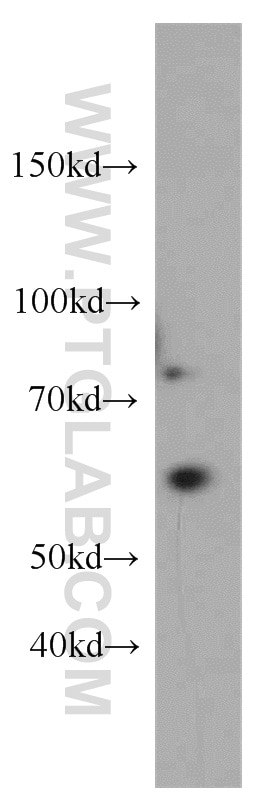
| Positive WB detected in | Caco-2 cells, HEK-293 cells, HeLa cells, human brain tissue, mouse colon tissue, mouse thymus tissue, Raji cells, HCT-116 cells, Jurkat cells, K-562 cells, MCF-7 cells |
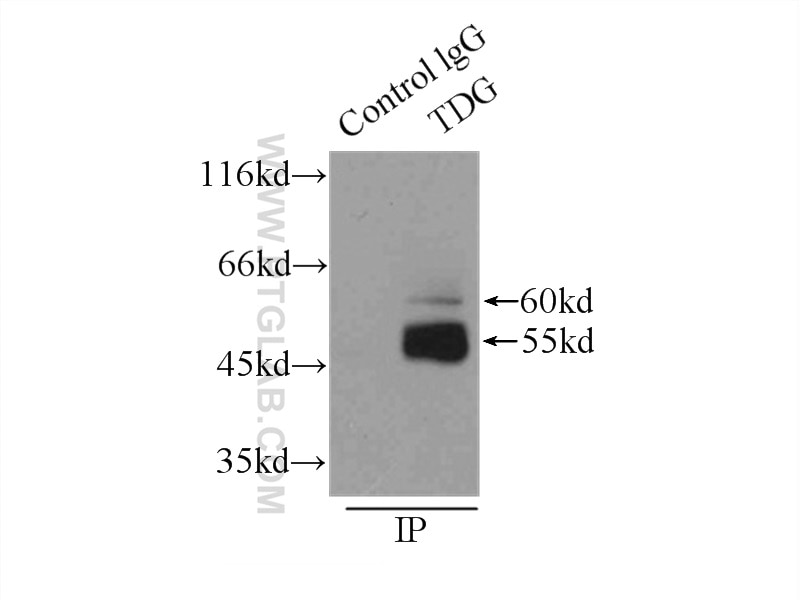
| Positive IP detected in | U-937 cells |
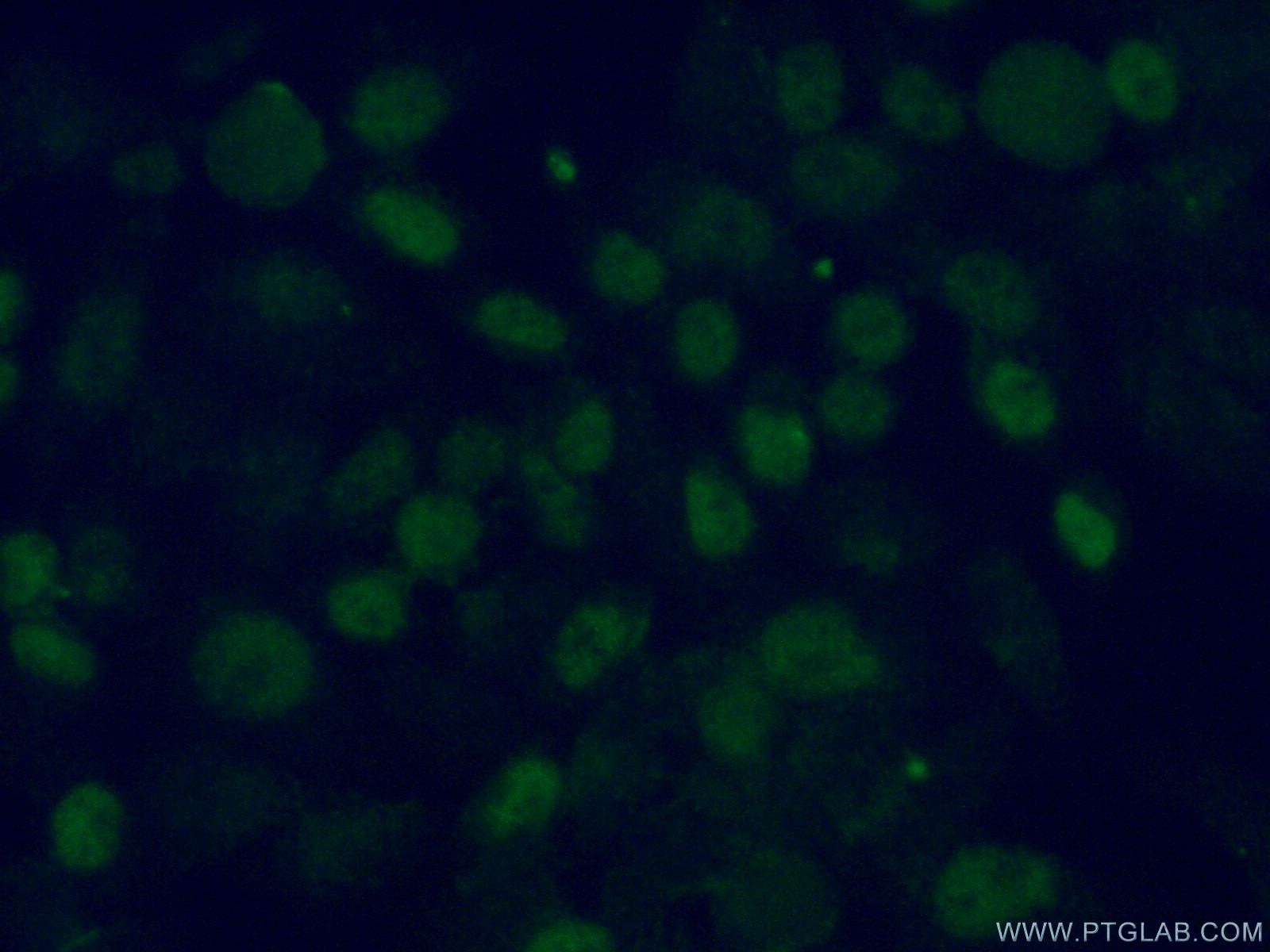
| Positive IF/ICC detected in | HeLa cells |
Recommended dilution
| Application | Dilution |
|---|---|
| Western Blot (WB) | WB : 1:2000-1:10000 |
| Immunoprecipitation (IP) | IP : 0.5-4.0 ug for 1.0-3.0 mg of total protein lysate |
| Immunofluorescence (IF)/ICC | IF/ICC : 1:50-1:500 |
| It is recommended that this reagent should be titrated in each testing system to obtain optimal results. | |
| Sample-dependent, Check data in validation data gallery. | |
Product Information
13370-1-AP targets TDG in WB, IHC, IF/ICC, IP, ChIP, ELISA applications and shows reactivity with human, mouse, rat samples.
| Tested Reactivity | human, mouse, rat |
| Cited Reactivity | human, mouse |
| Host / Isotype | Rabbit / IgG |
| Class | Polyclonal |
| Type | Antibody |
| Immunogen |
CatNo: Ag4190 Product name: Recombinant human TDG protein Source: e coli.-derived, PGEX-4T Tag: GST Domain: 1-410 aa of BC037557 Sequence: MEAENAGSYSLQQAQAFYTFPFQQLMAEAPNMAVVNEQQMPEEVPAPAPAQEPVQEAPKGRKRKPRTTEPKQPVEPKKPVESKKSGKSAKSKEKQEKITDTFKVKRKVDRFNGVSEAELLTKTLPDILTFNLDIVIIGINPGLMAAYKGHHYPGPGNHFWKCLFMSGLSEVQLNHMDDHTLPGKYGIGFTNMVERTTPGSKDLSSKEFREGGRILVQKLQKYQPRIAVFNGKCIYEIFSKEVFGVKVKNLEFGLQPHKIPDTETLCYGMPSSSARCAQFPRAQDKVHYYIKLKDLRDQLKGIERNMDVQEVQYTFDLQLAQEDAKKMAVKEEKYDPGYEAAYGGAYGENPCSSEPCGFSSNGLIESVELRGESAFSGIPNGQWMTQSFTDQIPSFSNHCGTQEQEEESHA Predict reactive species |
| Full Name | thymine-DNA glycosylase |
| Calculated Molecular Weight | 410 aa, 46 kDa |
| Observed Molecular Weight | 55-60 kDa |
| GenBank Accession Number | BC037557 |
| Gene Symbol | TDG |
| Gene ID (NCBI) | 6996 |
| RRID | AB_2271704 |
| Conjugate | Unconjugated |
| Form | Liquid |
| Purification Method | Antigen affinity purification |
| UNIPROT ID | Q13569 |
| Storage Buffer | PBS with 0.02% sodium azide and 50% glycerol, pH 7.3. |
| Storage Conditions | Store at -20°C. Stable for one year after shipment. Aliquoting is unnecessary for -20oC storage. 20ul sizes contain 0.1% BSA. |
Background Information
TDG belongs to the TDG/mug DNA glycosylase family. TDG corrects G/T mispairs to G/C pairs. It is capable of hydrolyzing the carbon-nitrogen bond between the sugar-phosphate backbone of the DNA and a mispaired thymine. In addition to the G/T, it can remove thymine also from C/T and T/T mispairs in the order G/T >> C/T > T/T. It has no detectable activity on apyrimidinic sites and does not catalyze the removal of thymine from A/T pairs or from single-stranded DNA. It can also remove uracil and 5-bromouracil from mispairs with guanine. RNF4 interacts with and requires the base excision repair enzymes TDG and APE1 for active demethylation (PMID:20696907). TDG is modified by SUMO-1 and SUMO-2/3.The molecular weight of non-modified TDG is 46 kDa and modified TDG is 55-60 kDa.
Protocols
| Product Specific Protocols | |
|---|---|
| IF protocol for TDG antibody 13370-1-AP | Download protocol |
| IP protocol for TDG antibody 13370-1-AP | Download protocol |
| WB protocol for TDG antibody 13370-1-AP | Download protocol |
| Standard Protocols | |
|---|---|
| Click here to view our Standard Protocols |
Publications
What published studies show
The TDG Polyclonal antibody (Cat# 13370-1-AP) has 13 citations spanning journals including Nature, Nature Chemical Biology, PNAS, Cell Death & Disease, Cell Death Discovery, International Journal of Biological Sciences, Journal of Cell Biology, Journal of Biological Chemistry, Cancer Science, Cell Molecular Biology Letters, and bioRxiv. Research fields encompass DNA damage repair, active DNA demethylation, R-loop biology, Wnt signaling, oxidative stress, and cancer biology (thyroid, colon, glioma, hepatocellular, and colorectal cancers). Applications include WB, IHC, ChIP, and IP.
| Species | Application | Title |
|---|---|---|
Nat Chem Biol Targeting thymine DNA glycosylase induces synthetic lethality in p53-deficient cancers. | ||
Cell Death Dis The HOTAIRM1/miR-107/TDG axis regulates papillary thyroid cancer cell proliferation and invasion. | ||
Cell Mol Biol Lett Hypoxia-induced genome-wide DNA demethylation by DNMT3A and EMT of cancer cells | ||
Int J Biol Sci TDG suppresses the migration and invasion of human colon cancer cells via the DNMT3A/TIMP2 axis. | ||
Cell Death Discov TNC upregulation promotes glioma tumourigenesis through TDG-mediated active DNA demethylation
|










