

Tested Applications
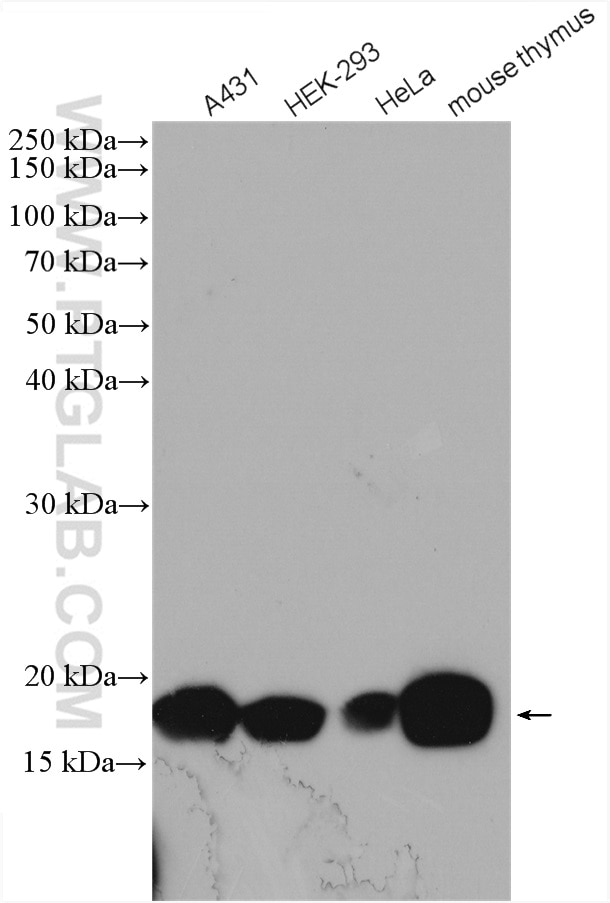
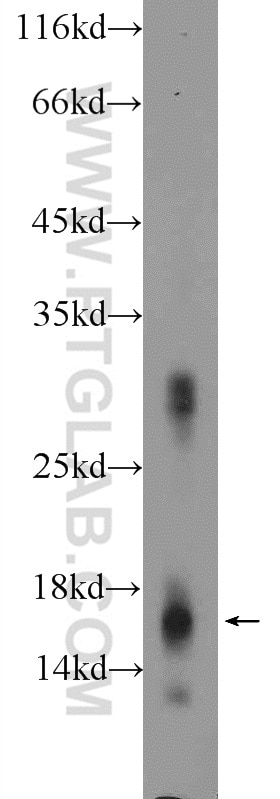
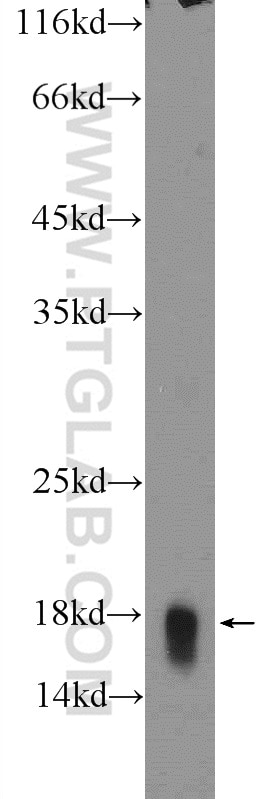
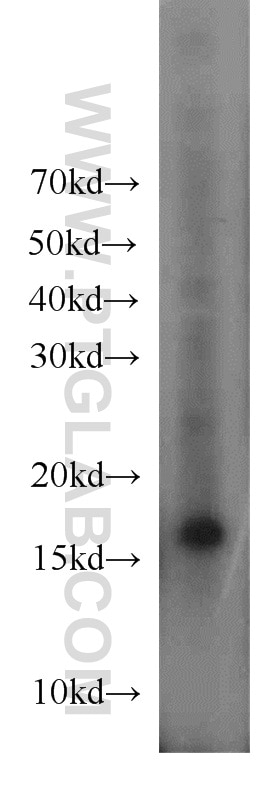
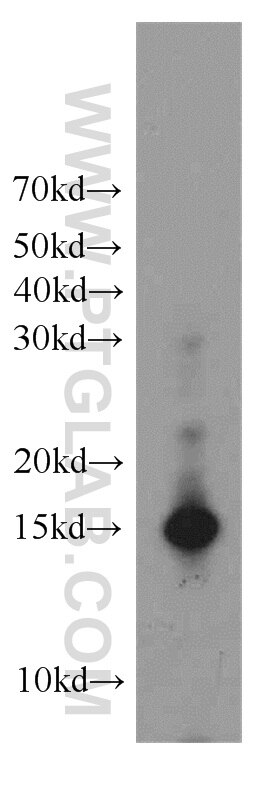
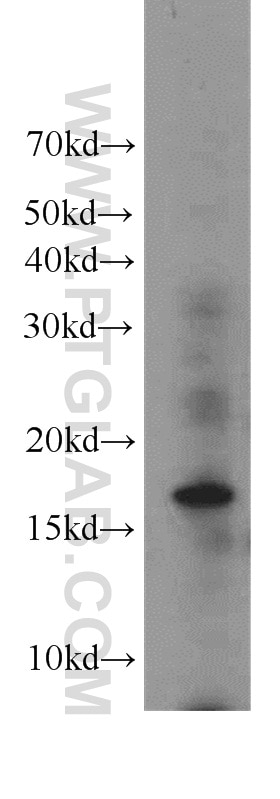
| Positive WB detected in | A431 cells, HeLa cells, HEK-293 cells, mouse thymus tissue, mouse kidney tissue, mouse lung tissue |
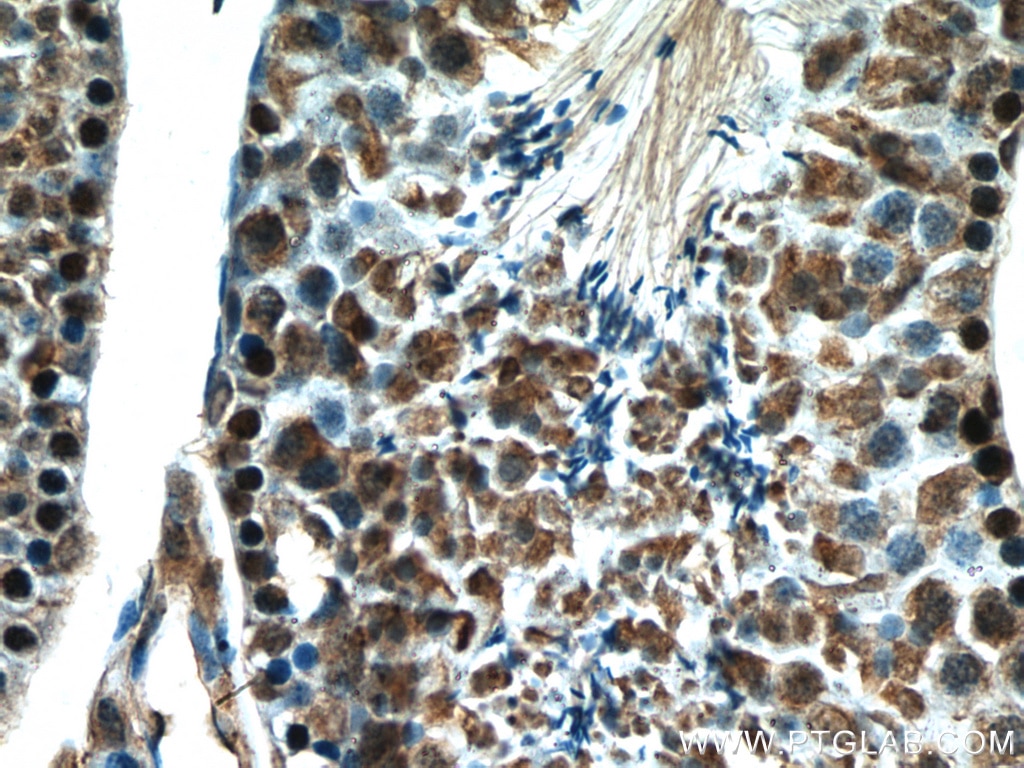
| Positive IHC detected in | mouse testis tissue Note: suggested antigen retrieval with TE buffer pH 9.0; (*) Alternatively, antigen retrieval may be performed with citrate buffer pH 6.0 |
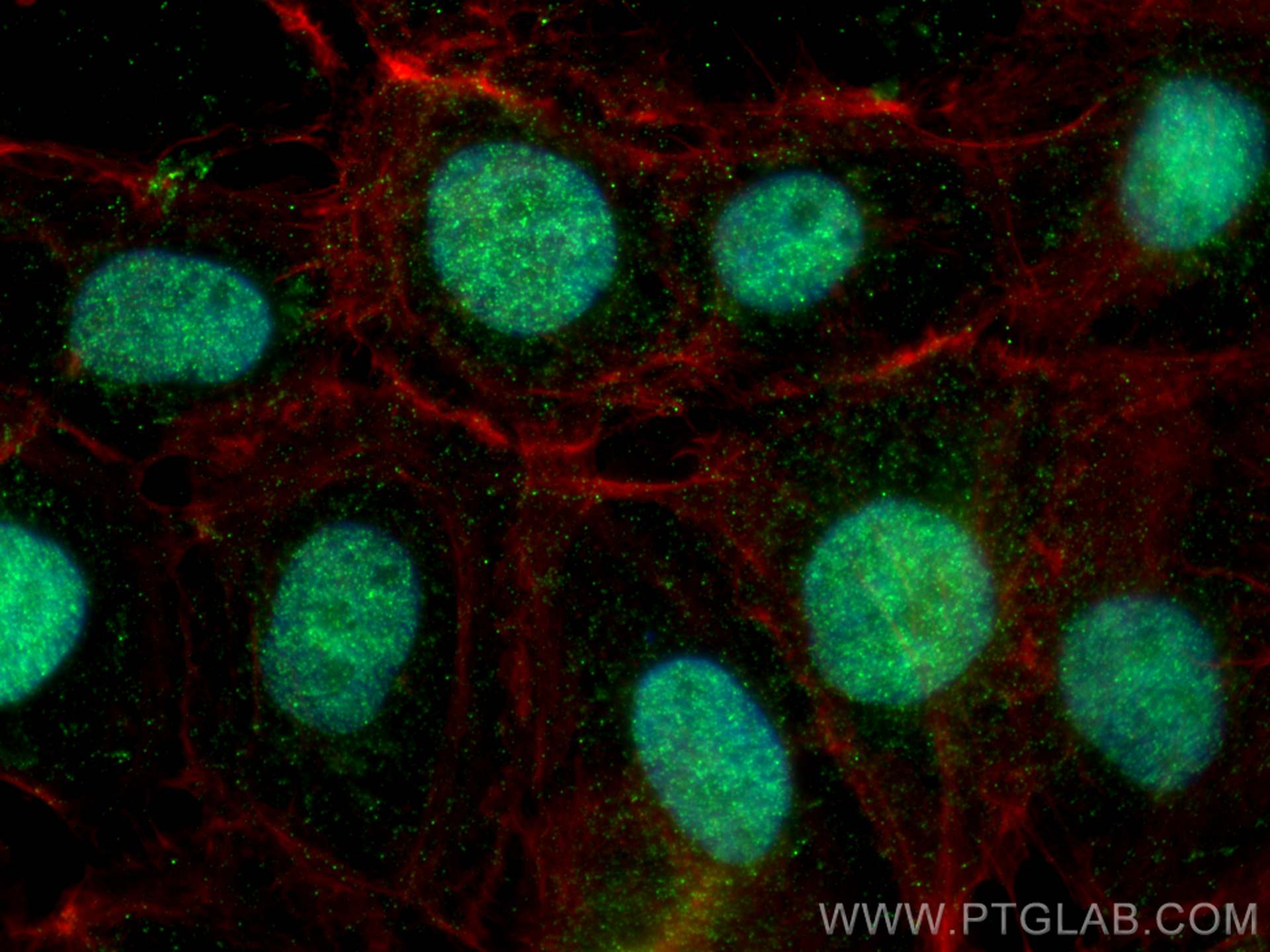
| Positive IF/ICC detected in | A431 cells |
Recommended dilution
| Application | Dilution |
|---|---|
| Western Blot (WB) | WB : 1:500-1:2000 |
| Immunohistochemistry (IHC) | IHC : 1:200-1:800 |
| Immunofluorescence (IF)/ICC | IF/ICC : 1:400-1:1600 |
| It is recommended that this reagent should be titrated in each testing system to obtain optimal results. | |
| Sample-dependent, Check data in validation data gallery. | |
Product Information
13754-1-AP targets Histone H3.3 in WB, IHC, IF/ICC, ELISA applications and shows reactivity with human, mouse, rat samples.
| Tested Reactivity | human, mouse, rat |
| Cited Reactivity | human, mouse, rat |
| Host / Isotype | Rabbit / IgG |
| Class | Polyclonal |
| Type | Antibody |
| Immunogen |
CatNo: Ag4696 Product name: Recombinant human Histone H3.3 protein Source: e coli.-derived, PGEX-4T Tag: GST Domain: 1-136 aa of BC038989 Sequence: MARTKQTARKSTGGKAPRKQLATKAARKSAPSTGGVKKPHRYRPGTVALREIRRYQKSTELLIRKLPFQRLVREIAQDFKTDLRFQSAAIGALQEASEAYLVGLFEDTNLCAIHAKRVTIMPKDIQLARRIRGERA Predict reactive species |
| Full Name | H3 histone, family 3A |
| Calculated Molecular Weight | 136 aa, 15 kDa |
| Observed Molecular Weight | 15-17 kDa |
| GenBank Accession Number | BC038989 |
| Gene Symbol | Histone H3 |
| Gene ID (NCBI) | 3020 |
| RRID | AB_2115140 |
| Conjugate | Unconjugated |
| Form | Liquid |
| Purification Method | Antigen affinity purification |
| UNIPROT ID | P84243 |
| Storage Buffer | PBS with 0.02% sodium azide and 50% glycerol, pH 7.3. |
| Storage Conditions | Store at -20°C. Stable for one year after shipment. Aliquoting is unnecessary for -20oC storage. 20ul sizes contain 0.1% BSA. |
Background Information
Histones are the basic nuclear proteins responsible for the nucleosome structure of the chromosomal fiber. Five classes of histone genes have been reported, some of which are expressed only during S phase, while others are replication independent. The latter are referred to as replacement histones and are expressed in quiescent or terminally differentiated cells. [PMID: 8586426] Nucleosomes wrap and compact DNA into chromatin, limiting DNA accessibility to the cellular machineries which require DNA as a template. Histones thereby play a central role in transcription regulation, DNA repair, DNA replication and chromosomal stability. H3F3A is one replacement histone [PMID:16258499].
Protocols
| Product Specific Protocols | |
|---|---|
| IF protocol for Histone H3.3 antibody 13754-1-AP | Download protocol |
| IHC protocol for Histone H3.3 antibody 13754-1-AP | Download protocol |
| WB protocol for Histone H3.3 antibody 13754-1-AP | Download protocol |
| Standard Protocols | |
|---|---|
| Click here to view our Standard Protocols |
Publications
What published studies show
Histone H3.3 Polyclonal antibody (13754-1-AP) has 13 citations across journals including Nature Genetics, Nature Communications, Journal of Hepatology, Clinical and Translational Medicine, Life Sciences, International Journal of Molecular Sciences, Annals of Medicine, European Journal of Cardio-Thoracic Surgery, Molecular Biomedicine, RSC Advances, Pharmaceuticals, Biochemical and Biophysical Research Communications, and Microbiology and Immunology. Research fields span epigenetics, liver disease, oncology, neurodegeneration, inflammation, cardiovascular disease, and infectious disease.
| Species | Application | Title |
|---|---|---|
J Hepatol IL-6/STAT3 axis dictates the PNPLA3-mediated susceptibility to non-alcoholic fatty liver disease | ||
Nat Genet Symmetric inheritance of parental histones contributes to safeguarding the fate of mouse embryonic stem cells during differentiation | ||
Mol Biomed Amelioration of acute liver failure by a cinnamic acid derivative through inhibition of the ROS-NETosis axis. | ||
Clin Transl Med LncRNA NEAT1 suppresses cellular senescence in hepatocellular carcinoma via KIF11-dependent repression of CDKN2A
| ||
Life Sci CP41, a novel curcumin analogue, induces apoptosis in endometrial cancer cells by activating the H3F3A/ proteasome-MAPK signaling pathway and enhancing oxidative stress |









