


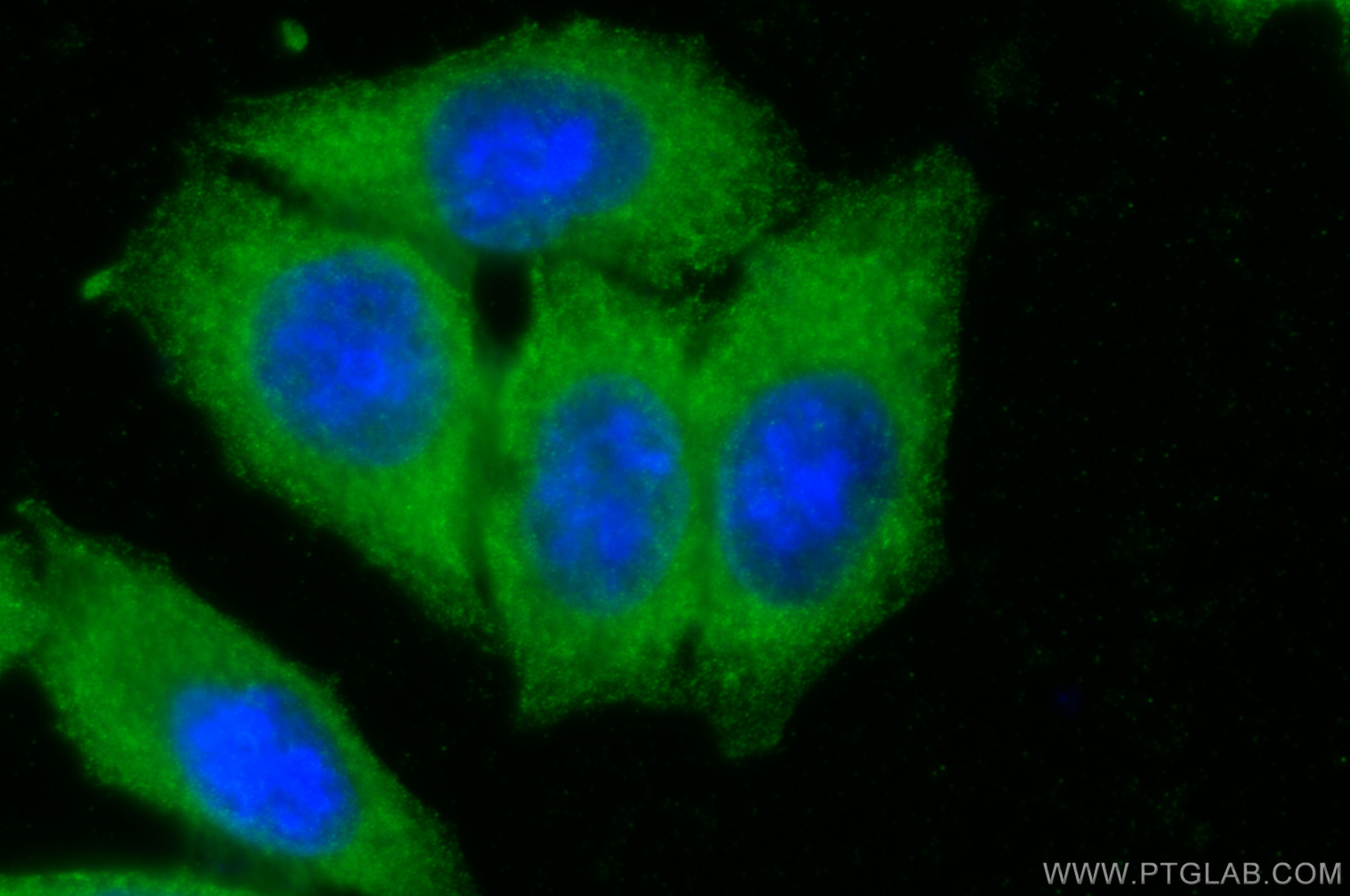

Tested Applications
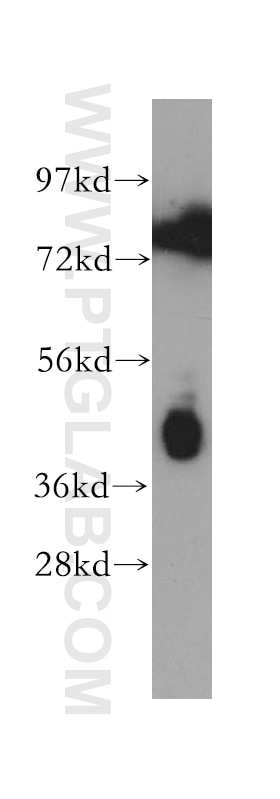
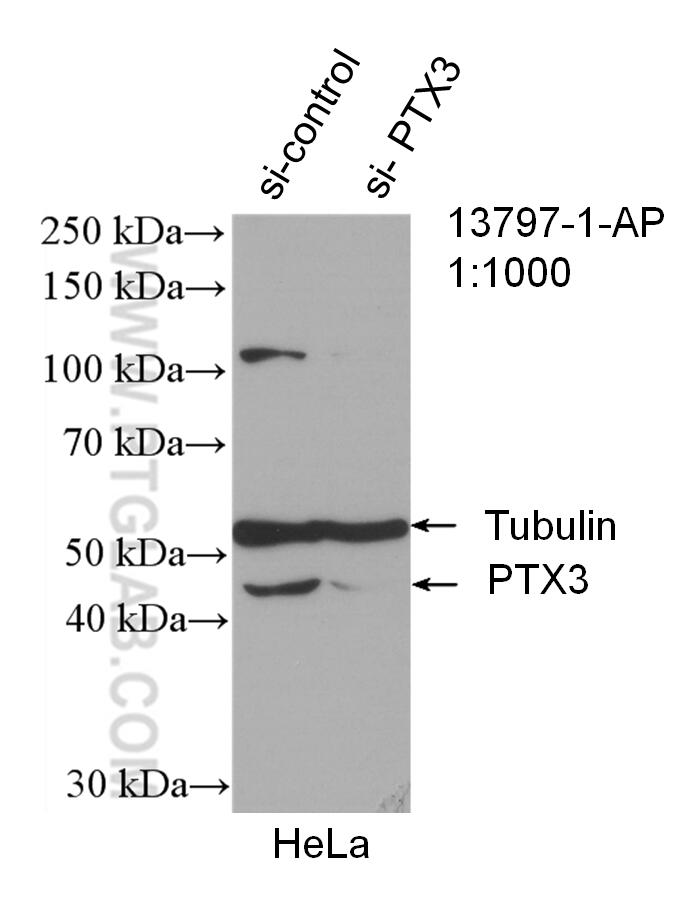
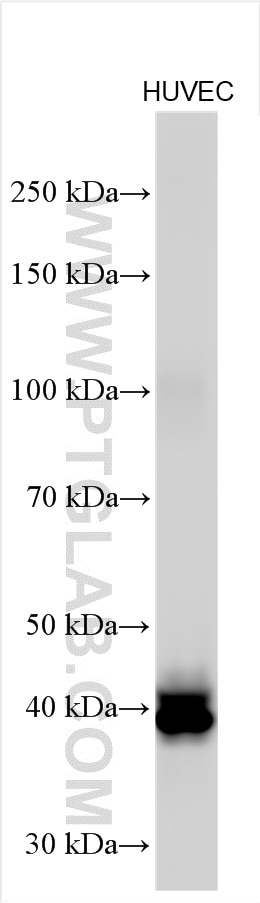
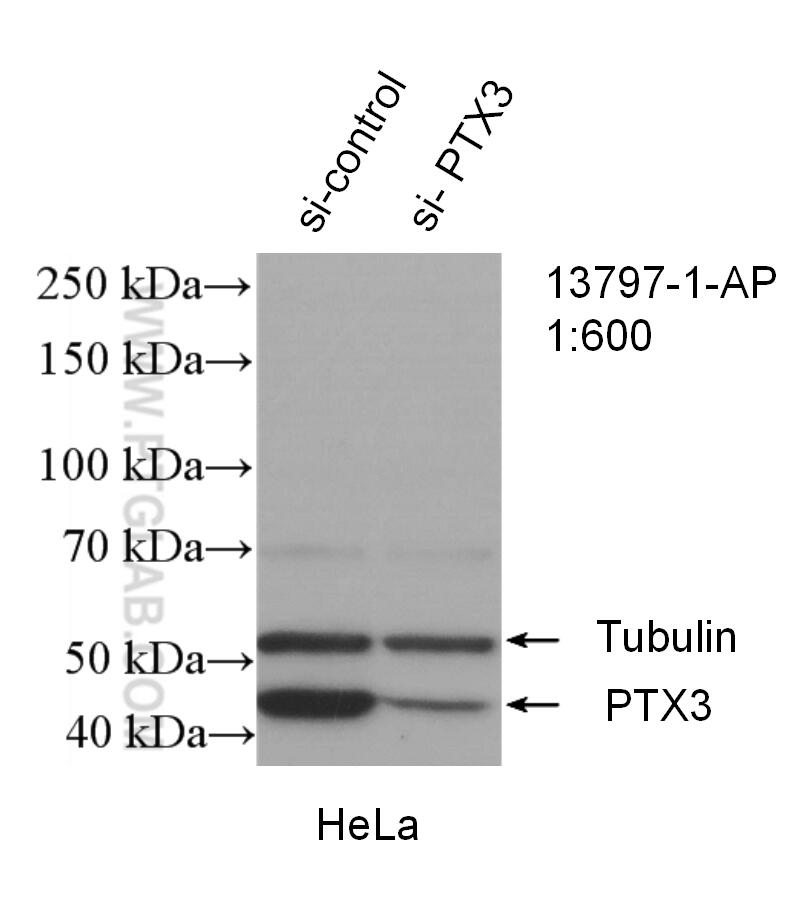
| Positive WB detected in | HUVEC cells, HeLa cells, HepG2 cells |
| Positive IHC detected in | human cervical cancer tissue Note: suggested antigen retrieval with TE buffer pH 9.0; (*) Alternatively, antigen retrieval may be performed with citrate buffer pH 6.0 |
| Positive IF-P detected in | human placenta tissue |
| Positive IF/ICC detected in | HepG2 cells |
Recommended dilution
| Application | Dilution |
|---|---|
| Western Blot (WB) | WB : 1:500-1:2000 |
| Immunohistochemistry (IHC) | IHC : 1:50-1:500 |
| Immunofluorescence (IF)-P | IF-P : 1:200-1:800 |
| Immunofluorescence (IF)/ICC | IF/ICC : 1:200-1:800 |
| It is recommended that this reagent should be titrated in each testing system to obtain optimal results. | |
| Sample-dependent, Check data in validation data gallery. | |
Product Information
13797-1-AP targets Pentraxin 3 in WB, IHC, IF/ICC, IF-P, ELISA applications and shows reactivity with human, mouse samples.
| Tested Reactivity | human, mouse |
| Cited Reactivity | human, mouse, rat, bovine |
| Host / Isotype | Rabbit / IgG |
| Class | Polyclonal |
| Type | Antibody |
| Immunogen |
CatNo: Ag4624 Product name: Recombinant human PTX3 protein Source: e coli.-derived, PGEX-4T Tag: GST Domain: 22-381 aa of BC039733 Sequence: DYDLMYVNLDNEIDNGLHPTEDPTPCDCGQEHSEWDKLFIMLENSQMRERMLLQATDDVLRGELQRLREELGRLAESLARPCAPGAPAEARLTSALDELLQATRDAGRRLARMEGAEAQRPEEAGRALAAVLEELRQTRADLHAVQGWAARSWLPAGCETAILFPMRSKKIFGSVHPVRPMRLESFSACIWVKATDVLNKTILFSYGTKRNPYEIQLYLSYQSIVFVVGGEENKLVAEAMVSLGRWTHLCGTWNSEEGLTSLWVNGELAATTVEMATGHIVPEGGILQIGQEKNGCCVGGGFDETLAFSGRLTGFNIWDSVLSNEEIRETGGAESCHIRGNIVGWGVTEIQPHGGAQYVS Predict reactive species |
| Full Name | pentraxin-related gene, rapidly induced by IL-1 beta |
| Calculated Molecular Weight | 381 aa, 42 kDa |
| Observed Molecular Weight | 40-45 kDa |
| GenBank Accession Number | BC039733 |
| Gene Symbol | Pentraxin 3/PTX3 |
| Gene ID (NCBI) | 5806 |
| RRID | AB_2165302 |
| Conjugate | Unconjugated |
| Form | Liquid |
| Purification Method | Antigen affinity purification |
| UNIPROT ID | P26022 |
| Storage Buffer | PBS with 0.02% sodium azide and 50% glycerol, pH 7.3. |
| Storage Conditions | Store at -20°C. Stable for one year after shipment. Aliquoting is unnecessary for -20oC storage. 20ul sizes contain 0.1% BSA. |
Background Information
Pentraxin 3 (PTX3), also known as TNF-inducible gene 14 protein (TSG-14), is a member of the pentraxin superfamily which consists of evolutionarily conserved proteins characterized by a structural motif99, the pentraxin domain (PMID: 15771574). Pentraxin 3 can be produced by a variety of cell types including endothelial cells, smooth muscle cells, adipocytes, fibroblasts, mononuclear phagocytes, and dendritic cells, and its expression is induced by primary inflammatory signals, such as IL-1, TNF, and microbial moieties (PMID: 15771574). Pentraxin 3 is an acute-phase glycoprotein that plays a role in regulating innate resistance to pathogens, inflammation, tissue remodeling and repair, female fertility, and cancer (PMID: 29412047). Pentraxin 3 is a biomarker for cardiovascular disease (PMID: 22347626). Increased plasma Pentraxin 3 levels have been found in patients with cardiovascular disorders (PMID: 22347626; 31057548). In WB, there're two major bands, an upper signal at 80-86 kDa and a lower signal at 42 kDa, representing Pentraxin 3 dimers and monomers, respectively (PMID: 18223257).
Protocols
| Product Specific Protocols | |
|---|---|
| IF protocol for Pentraxin 3 antibody 13797-1-AP | Download protocol |
| IHC protocol for Pentraxin 3 antibody 13797-1-AP | Download protocol |
| WB protocol for Pentraxin 3 antibody 13797-1-AP | Download protocol |
| Standard Protocols | |
|---|---|
| Click here to view our Standard Protocols |
Publications
What published studies show
Anti-PTX3 (Pentraxin 3) antibody, catalog number 13797-1-AP, has 49 citations across journals including Nature Communications, Neuron, Theranostics, Journal of Clinical Investigation, Science Advances, Cell Death & Disease, and Acta Pharmaceutica Sinica B. Research fields span oncology (breast, gastric, glioblastoma, lung, colon cancers), neuroinflammation, osteoarthritis, sepsis-induced cardiomyopathy, asthma, renal fibrosis, wound healing, and spinal cord injury, with applications primarily in WB, IHC, and IF.
| Species | Application | Title |
|---|---|---|
Nat Commun SH3RF3 promotes breast cancer stem-like properties via JNK activation and PTX3 upregulation. | ||
Nat Commun RNA m6A methylation modulates airway inflammation in allergic asthma via PTX3-dependent macrophage homeostasis
| ||
Neuron Spatiotemporal transcriptomic maps of mouse intracerebral hemorrhage at single-cell resolution | ||
Theranostics The m6A modification of SOX18 leads to increased PTX3 and cardiomyocyte pyroptosis in sepsis-induced cardiomyopathy
| ||
Acta Pharm Sin B Sphingosine kinase 1 promotes growth of glioblastoma by increasing inflammation mediated by the NF-κB /IL-6/STAT3 and JNK/PTX3 pathways
| ||
J Clin Invest Chromosomal 3q amplicon encodes essential regulators of secretory vesicles that drive secretory addiction in cancer |
Reviews
What customers say
The single review for this antibody reports a successful Western Blot result on endothelial cells at a 1:1000 dilution. The user rated it 3 out of 5, noting the antibody worked adequately but suggesting a more dilute concentration may be used in future experiments. Overall, the feedback is moderately positive, confirming functional performance while indicating room for optimization in dilution.
The reviews below have been submitted by verified Proteintech customers who received an incentive for providing their feedback.
Karla (Verified Customer) (02-18-2026) | Yes, antibody worked ok in endothelial cells at this dilution. Probably will use more dilute next time.
|








