

Tested Applications
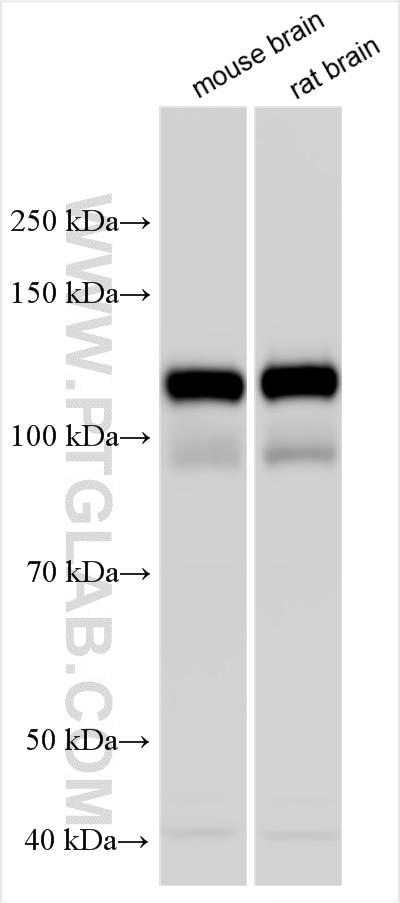
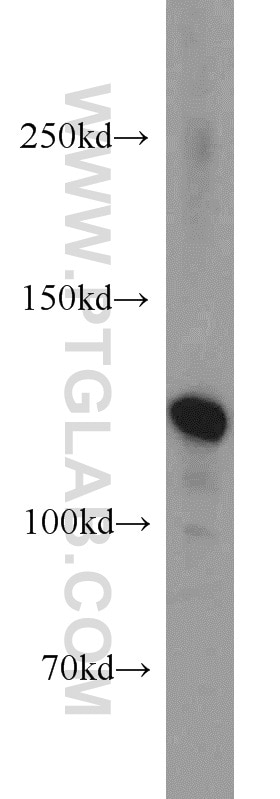
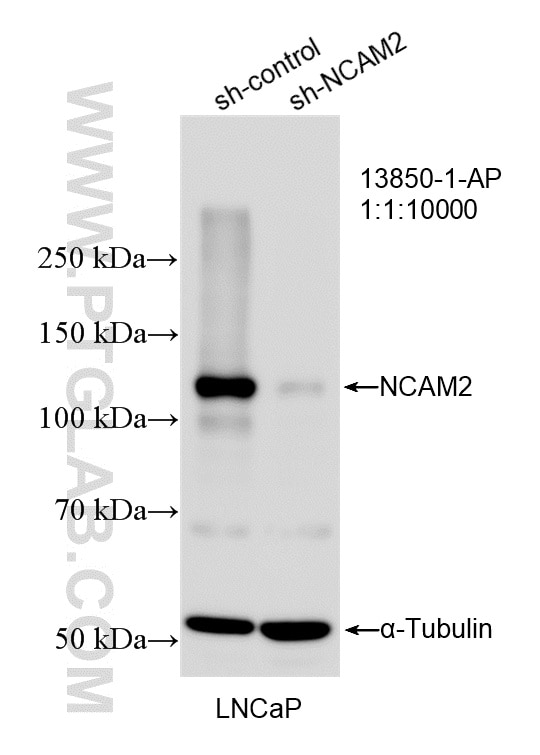
| Positive WB detected in | mouse brain tissue, human brain tissue, LNCaP cells, rat brain tissue |
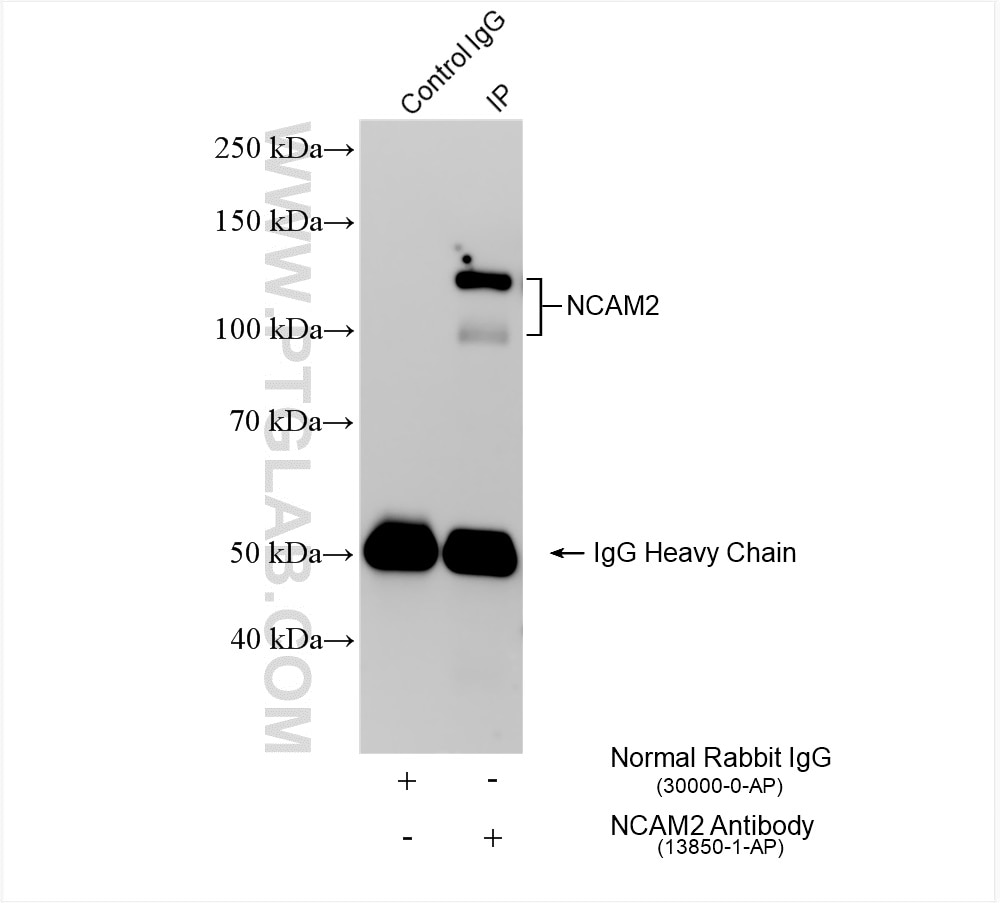
| Positive IP detected in | mouse brain tissue |
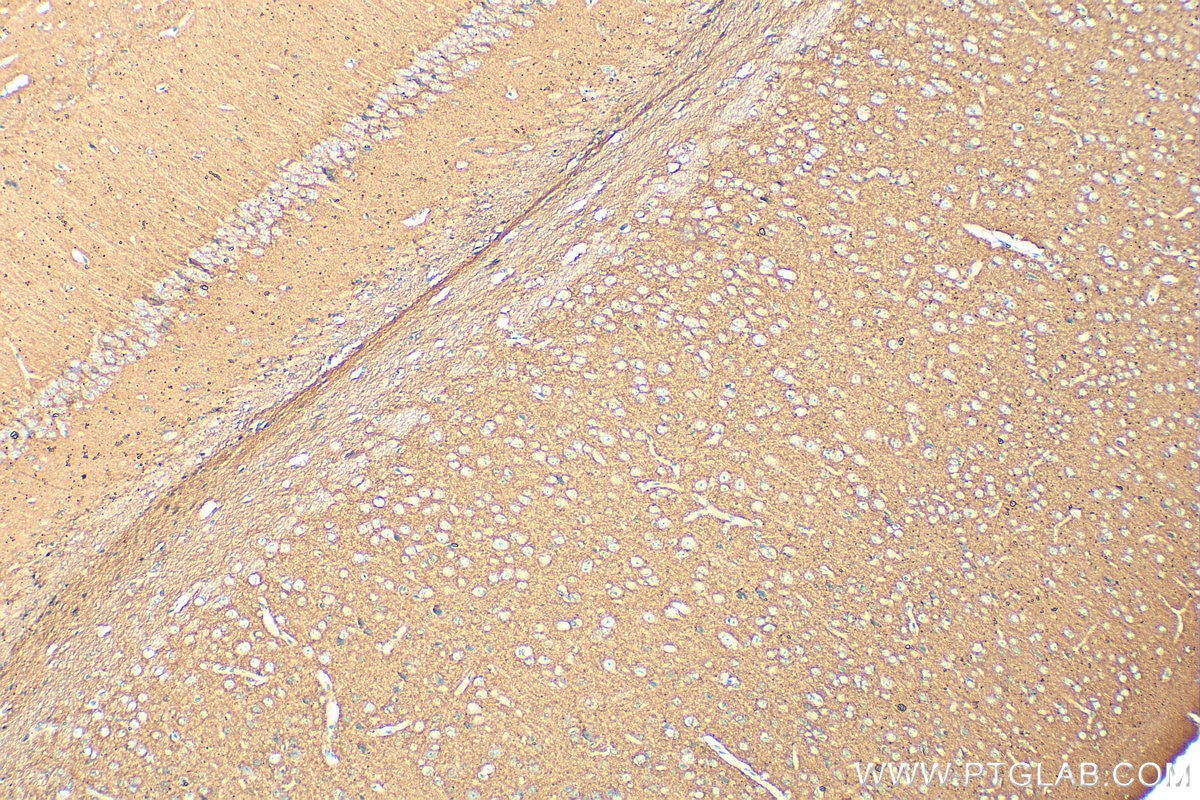
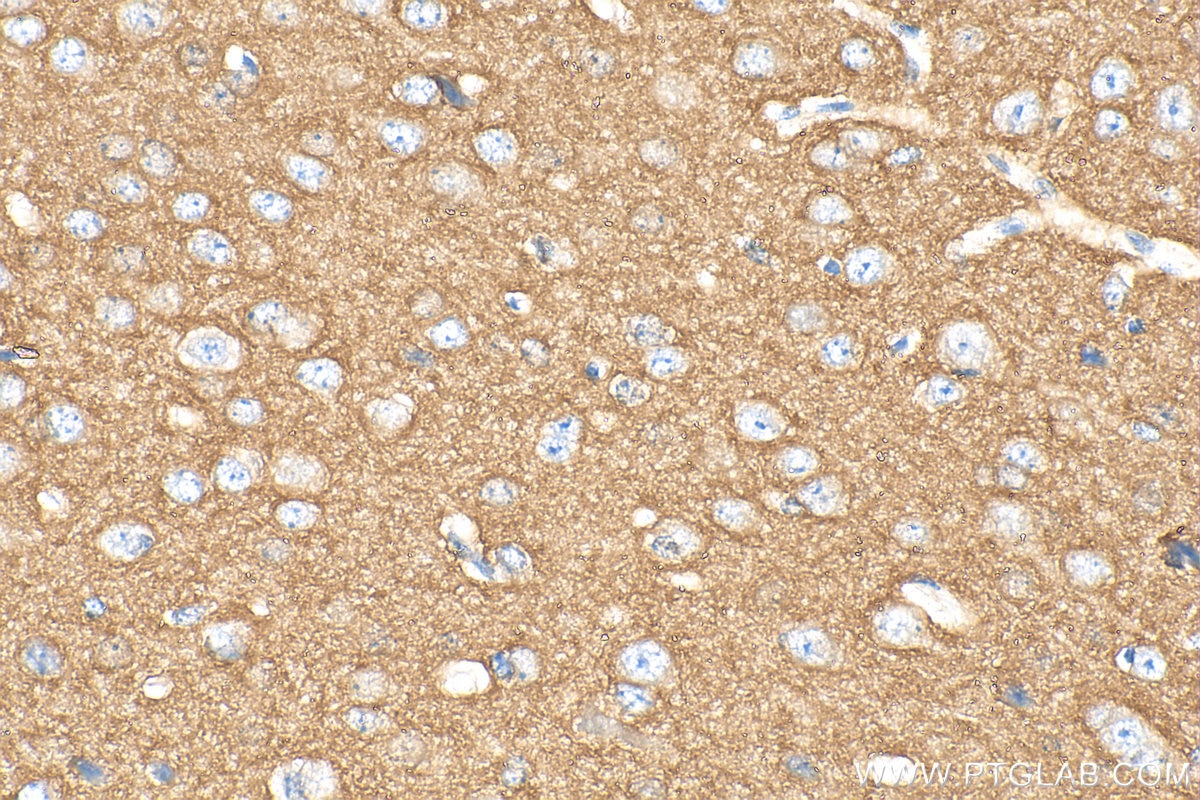
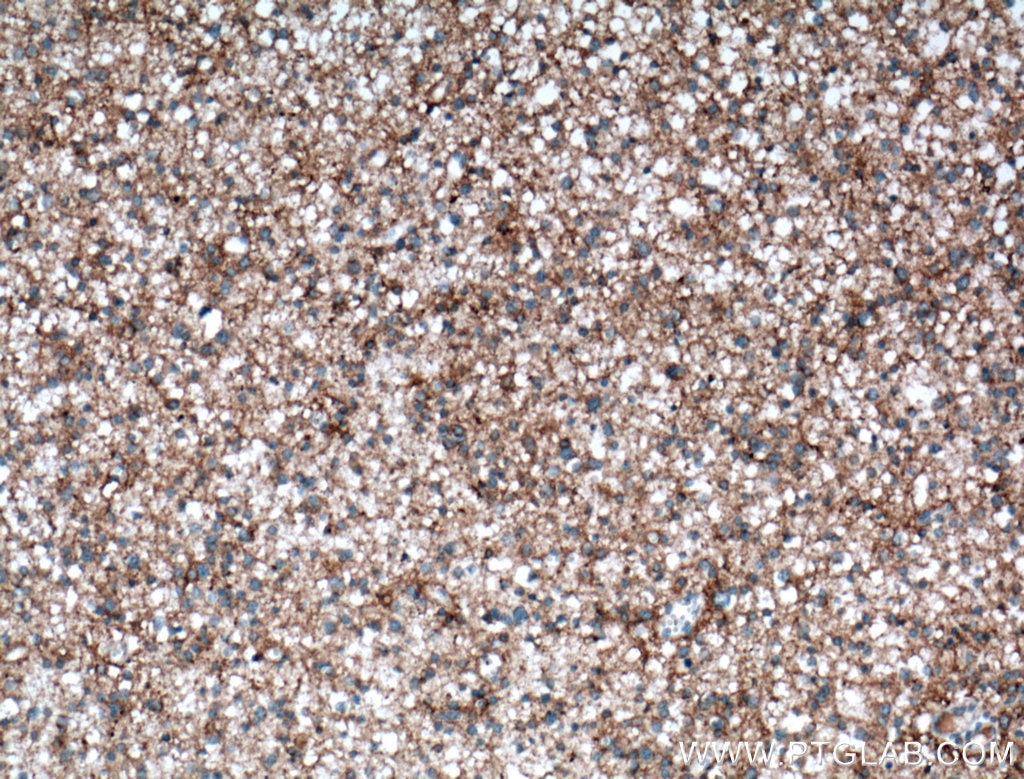
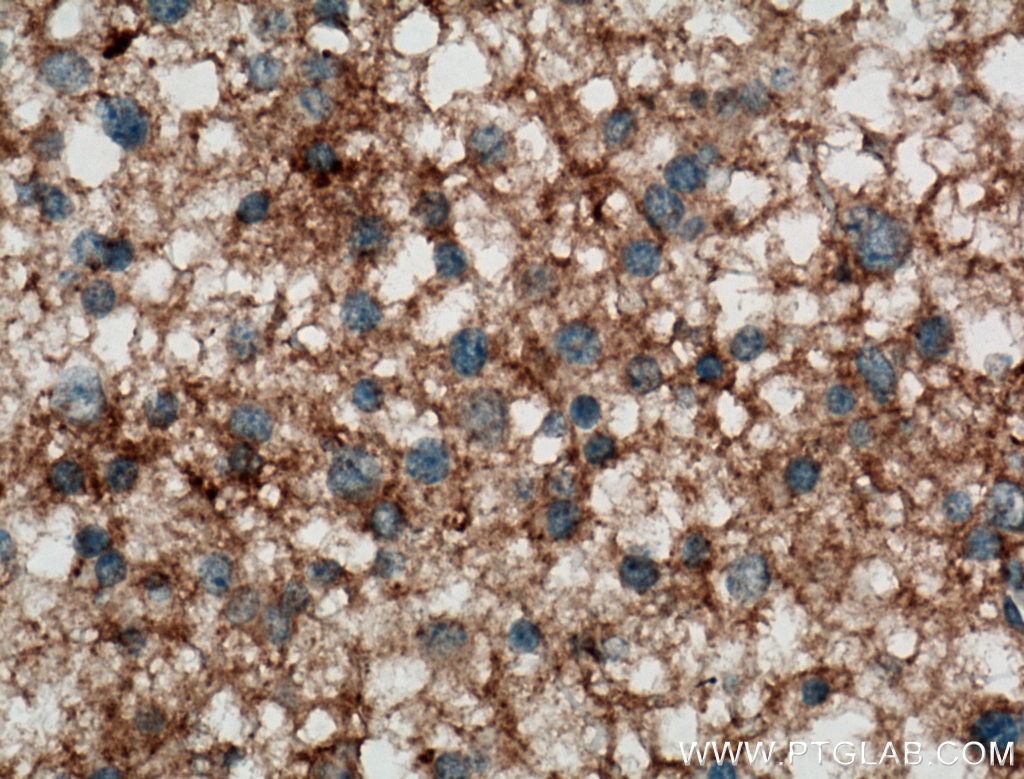
| Positive IHC detected in | mouse brain tissue, human gliomas tissue Note: suggested antigen retrieval with TE buffer pH 9.0; (*) Alternatively, antigen retrieval may be performed with citrate buffer pH 6.0 |
Recommended dilution
| Application | Dilution |
|---|---|
| Western Blot (WB) | WB : 1:5000-1:50000 |
| Immunoprecipitation (IP) | IP : 0.5-4.0 ug for 1.0-3.0 mg of total protein lysate |
| Immunohistochemistry (IHC) | IHC : 1:50-1:500 |
| It is recommended that this reagent should be titrated in each testing system to obtain optimal results. | |
| Sample-dependent, Check data in validation data gallery. | |
Product Information
13850-1-AP targets NCAM2 in WB, IHC, IF, IP, ELISA applications and shows reactivity with human, mouse, rat samples.
| Tested Reactivity | human, mouse, rat |
| Cited Reactivity | mouse |
| Host / Isotype | Rabbit / IgG |
| Class | Polyclonal |
| Type | Antibody |
| Immunogen |
CatNo: Ag4821 Product name: Recombinant human NCAM2 protein Source: e coli.-derived, PGEX-4T Tag: GST Domain: 30-351 aa of BC052946 Sequence: VELSVGESKFFTCTAIGEPESIDWYNPQGEKIISTQRVVVQKEGVRSRLTIYNANIEDAGIYRCQATDAKGQTQEATVVLEIYQKLTFREVVSPQEFKQGEDAEVVCRVSSSPAPAVSWLYHNEEVTTISDNRFAMLANNNLQILNINKSDEGIYRCEGRVEARGEIDFRDIIVIVNVPPAISMPQKSFNATAERGEEMTFSCRASGSPEPAISWFRNGKLIEENEKYILKGSNTELTVRNIINSDGGPYVCRATNKAGEDEKQAFLQVFVQPHIIQLKNETTYENGQVTLVCDAEGEPIPEITWKRAVDGFTFTEGDKSLD Predict reactive species |
| Full Name | neural cell adhesion molecule 2 |
| Calculated Molecular Weight | 93 kDa |
| Observed Molecular Weight | 100-125 kDa |
| GenBank Accession Number | BC052946 |
| Gene Symbol | NCAM2 |
| Gene ID (NCBI) | 4685 |
| RRID | AB_2237029 |
| Conjugate | Unconjugated |
| Form | Liquid |
| Purification Method | Antigen affinity purification |
| UNIPROT ID | O15394 |
| Storage Buffer | PBS with 0.02% sodium azide and 50% glycerol, pH 7.3. |
| Storage Conditions | Store at -20°C. Stable for one year after shipment. Aliquoting is unnecessary for -20oC storage. 20ul sizes contain 0.1% BSA. |
Background Information
The mammalian NCAM family has two members, NCAM1 and NCAM2 (PMID: 9729879; 20439718). Neural cell adhesion molecule 2 (NCAM2, also known as NCAM21) is a single-pass type I membrane protein that is highly expressed in the brain, which may play important roles in selective fasciculation and zone-to-zone projection of the primary olfactory axons or in neurodegenerative diseases such as Alzheimer's disease (PMID: 26611261). NCAM2 has two isoforms: NCAM2.1 bearing transmembrane and cytoplasmic domains and the shorter NCAM2.2 isoform, which is GPI-anchored (PMID: 9334170; 9221781). The molecular weight of NCAM2 is around 125 kDa and 93 kDa (PMID: 9334170; 3171685).
Protocols
| Product Specific Protocols | |
|---|---|
| IHC protocol for NCAM2 antibody 13850-1-AP | Download protocol |
| IP protocol for NCAM2 antibody 13850-1-AP | Download protocol |
| WB protocol for NCAM2 antibody 13850-1-AP | Download protocol |
| Standard Protocols | |
|---|---|
| Click here to view our Standard Protocols |
Publications
What published studies show
The NCAM2 Polyclonal antibody (Cat# 13850-1-AP) has 5 total citations. These appear in Science, iScience, Journal of Comparative Neurology, bioRxiv, and Clinical and Translational Medicine. The associated research fields include neuroscience, covering topics such as neural signaling pathways in cancer metastasis, olfactory development and GnRH-1 neuron biology, hippocampal neuron mapping in epilepsy, and piriform cortex neuron heterogeneity in Alzheimer's disease.
| Species | Application | Title |
|---|---|---|
iScience Single-nucleus RNA sequencing-based construction of a hippocampal neuron atlas in mice with epileptic cognitive impairment | ||
J Comp Neurol Illuminating the terminal nerve: Uncovering the link between GnRH-1 neuron and olfactory development | ||
bioRxiv Illuminating the Terminal Nerve: Uncovering the Link between GnRH-1 and Olfactory Development | ||
Clin Transl Med Integrative analysis of single-cell multi-omics reveals heterogeneity in piriform cortex principal neurons and their selective vulnerability in Alzheimer's disease. |









