

Tested Applications
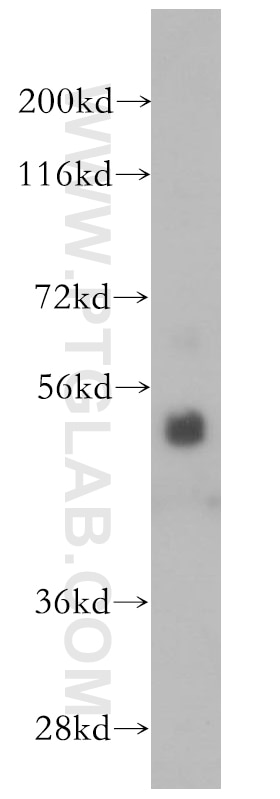
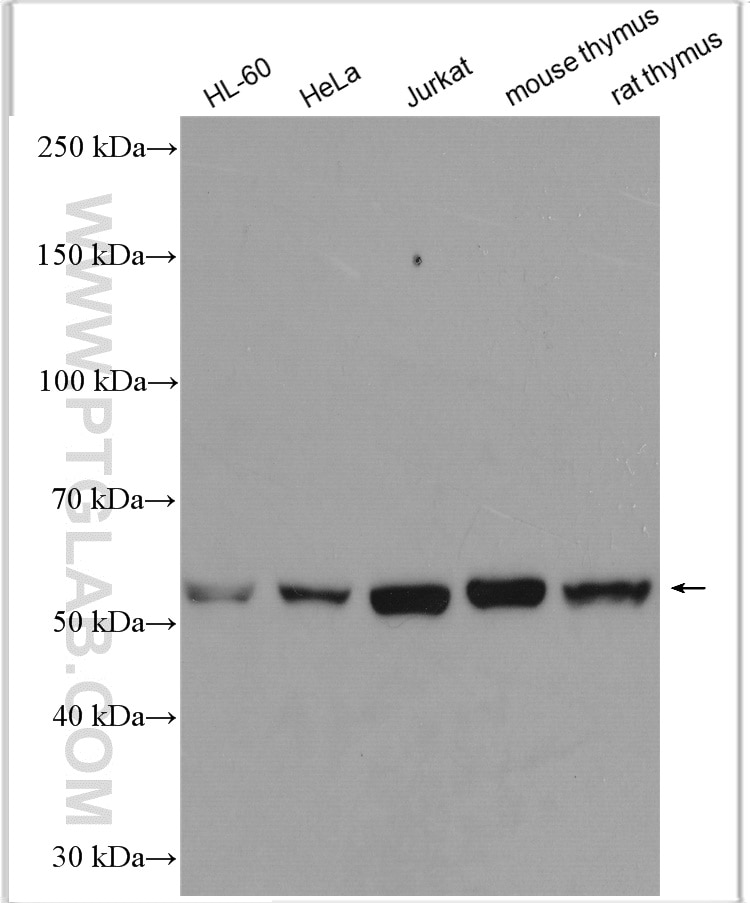
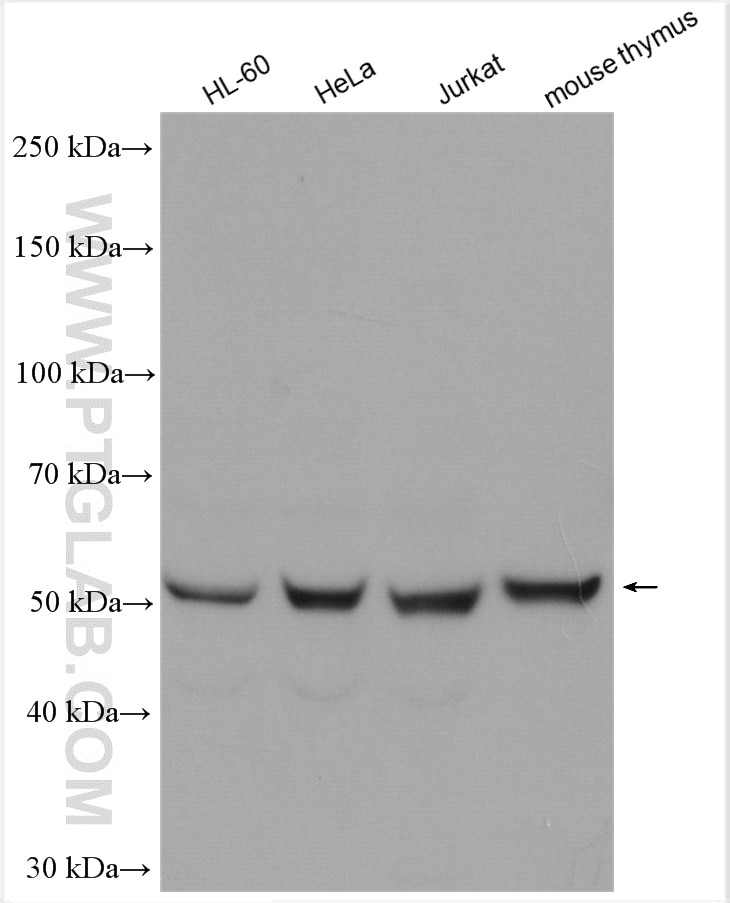
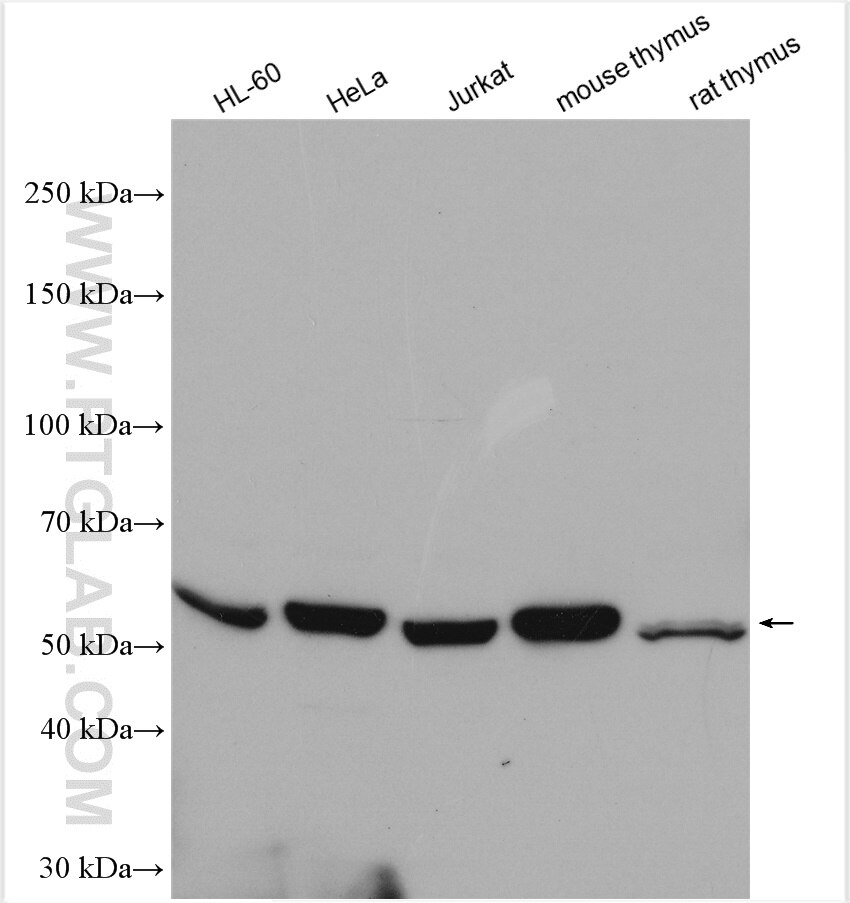
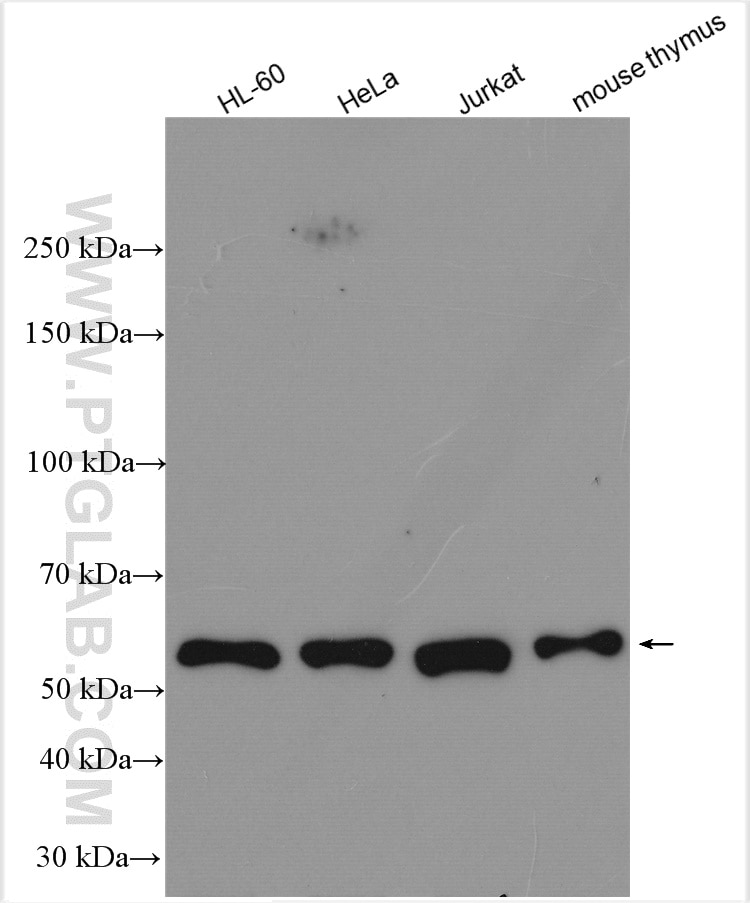
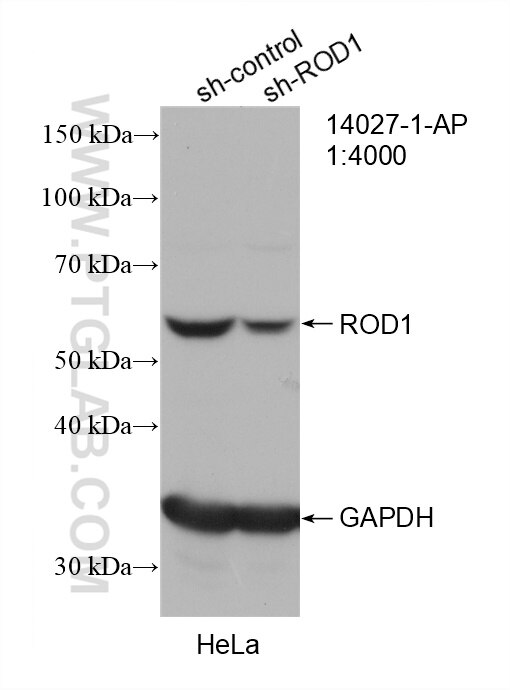
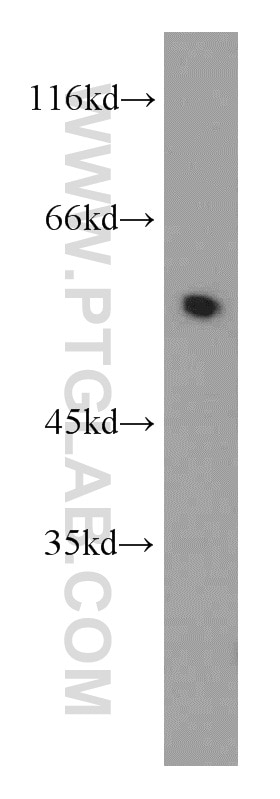
| Positive WB detected in | HL-60 cells, mouse thymus tissue, HeLa cells, Jurkat cells, rat thymus tissue |
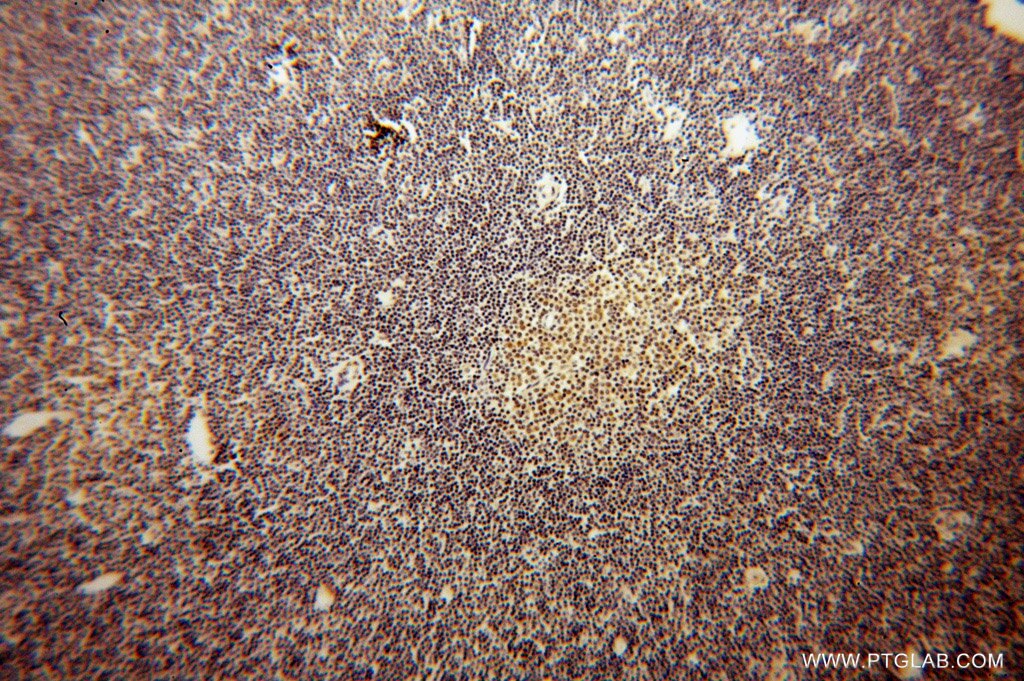
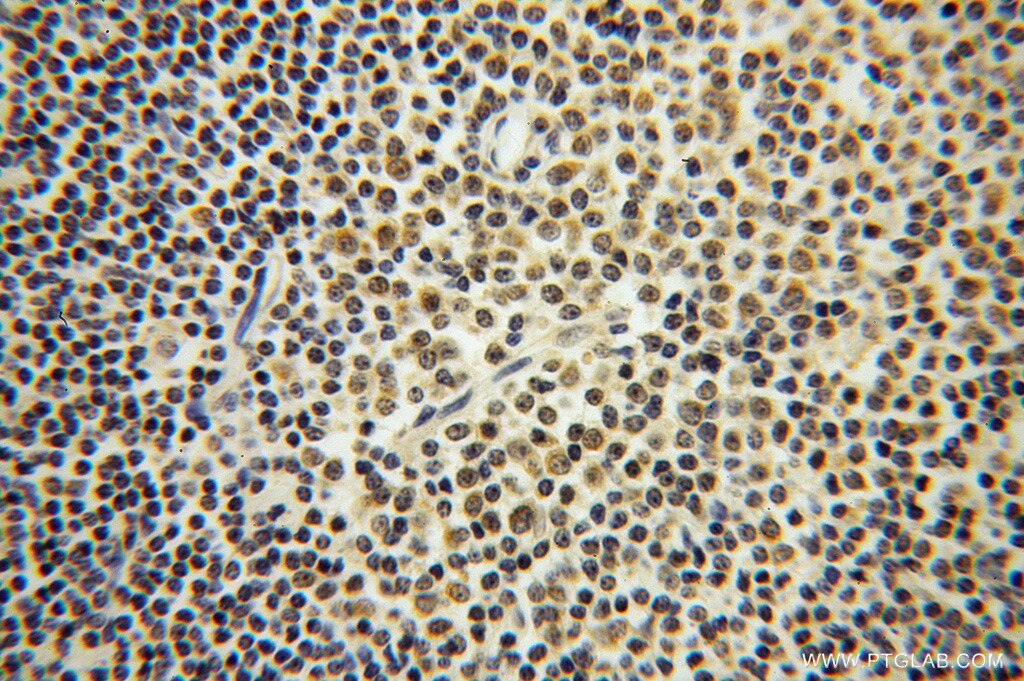
| Positive IHC detected in | human lymphoma tissue Note: suggested antigen retrieval with TE buffer pH 9.0; (*) Alternatively, antigen retrieval may be performed with citrate buffer pH 6.0 |
Recommended dilution
| Application | Dilution |
|---|---|
| Western Blot (WB) | WB : 1:2000-1:12000 |
| Immunohistochemistry (IHC) | IHC : 1:20-1:200 |
| It is recommended that this reagent should be titrated in each testing system to obtain optimal results. | |
| Sample-dependent, Check data in validation data gallery. | |
Product Information
14027-1-AP targets ROD1 in WB, IHC, IF, CoIP, RIP, ELISA applications and shows reactivity with human, mouse, rat samples.
| Tested Reactivity | human, mouse, rat |
| Cited Reactivity | human, mouse |
| Host / Isotype | Rabbit / IgG |
| Class | Polyclonal |
| Type | Antibody |
| Immunogen |
CatNo: Ag5172 Product name: Recombinant human ROD1 protein Source: e coli.-derived, PGEX-4T Tag: GST Domain: 1-350 aa of BC044585 Sequence: MDASPSPFSLPKKLNELSARRGSDELLSSGIINGPFTMNSSTPSTANGNDSKKFKRDRPPCSPSRVLHLRKIPCDVTEAEIISLGLPFGKVTNLLMLKGKSQAFLEMASEEAAVTMVNYYTPITPHLRSQPVYIQYSNHRELKTDNLPNQARAQAALQAVSAVQSGSLALSGGPSNEGTVLPGQSPVLRIIIENLFYPVTLEVLHQIFSKFGTVLKIITFTKNNQFQALLQYADPVNAHYAKMALDGQNIYNACCTLRIDFSKLTSLNVKYNNDKSRDFTRLDLPTGDGQPSLEPPMAAAFGAPGIISSPYAGAAGFAPAIGFPQATGLSVPAVPGALGPLTITSSAVTG Predict reactive species |
| Full Name | ROD1 regulator of differentiation 1 (S. pombe) |
| Calculated Molecular Weight | 60 kDa |
| Observed Molecular Weight | 55-59 kDa |
| GenBank Accession Number | BC044585 |
| Gene Symbol | ROD1 |
| Gene ID (NCBI) | 9991 |
| RRID | AB_2182321 |
| Conjugate | Unconjugated |
| Form | Liquid |
| Purification Method | Antigen affinity purification |
| UNIPROT ID | O95758 |
| Storage Buffer | PBS with 0.02% sodium azide and 50% glycerol, pH 7.3. |
| Storage Conditions | Store at -20°C. Stable for one year after shipment. Aliquoting is unnecessary for -20oC storage. 20ul sizes contain 0.1% BSA. |
Background Information
ROD1 is a RNA-binding protein that mediates pre-mRNA alternative splicing regulation, it plays a role in the regulation of cell proliferation, differentiation and migration. ROD1 exist some isoforms and also can be modified with the molecular weight range from 55-59 kDa.
Protocols
| Product Specific Protocols | |
|---|---|
| IHC protocol for ROD1 antibody 14027-1-AP | Download protocol |
| WB protocol for ROD1 antibody 14027-1-AP | Download protocol |
| Standard Protocols | |
|---|---|
| Click here to view our Standard Protocols |
Publications
What published studies show
Anti-ROD1 (14027-1-AP) has 11 citations in journals including Cell Research, Molecular Cell, Advanced Science, Cancer Cell International, Biochemical Pharmacology, iScience, Oncology Letters, International Journal of Biological Macromolecules, and Stem Cell Reports. Research fields cover alternative splicing, RNA biology, epigenetics, and multiple cancer types (lung, gastric, bladder, breast, oral, glioblastoma, renal), as well as stem cell pluripotency and cuproptosis.
| Species | Application | Title |
|---|---|---|
Cell Res The RNA-binding protein ROD1/PTBP3 cotranscriptionally defines AID-loading sites to mediate antibody class switch in mammalian genomes.
| ||
Mol Cell PTBP1-activated co-transcriptional splicing controls epigenetic status of pluripotent stem cells | ||
Adv Sci (Weinh) Targeting PTBP3-Mediated Alternative Splicing of COX11 Induces Cuproptosis for Inhibiting Gastric Cancer Peritoneal Metastasis
| ||
Adv Sci (Weinh) m(5)C-Modified tRF3b-Cys(GCA)-23 Suppresses Bladder Cancer Malignancy by Repressing H3K18 Lactylation via Stabilizing RBM4. | ||
Int J Biol Macromol CircPRUNE inhibits the proliferation and metastasis of oral squamous cell carcinoma through PTBP3/NOTCH3 signaling axis.
| ||
Cancer Cell Int PTBP3 regulates proliferation of lung squamous cell carcinoma cells via CDC25A-mediated cell cycle progression. |
Reviews
What customers say
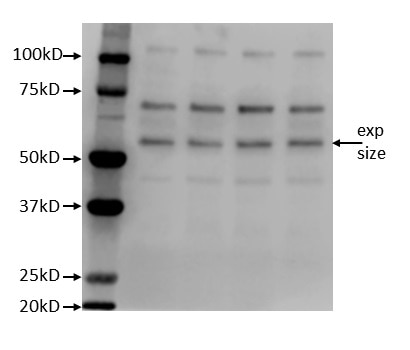
The two reviews for this antibody focus on Western Blot performance. One user reported excellent results in B cells at 1:1000 dilution, noting a single clear band with strong signal. Another user working with mouse embryonic stem cells at 1:5000 dilution observed multiple bands across all tested dilutions (1:3000–1:10000), which slightly lowered their rating. Overall, the antibody shows strong specificity in certain cell types but may produce non-specific bands in others depending on the sample.
The reviews below have been submitted by verified Proteintech customers who received an incentive for providing their feedback.
Annabel (Verified Customer) (12-23-2025) | Produces a single clear band with a strong signal by western blot. Imaged using blotting accelerator
 |
Yaroslav (Verified Customer) (08-03-2022) | multiple bands detected at all tested dulitions (1:3000-1:10000)
 |










