

Tested Applications
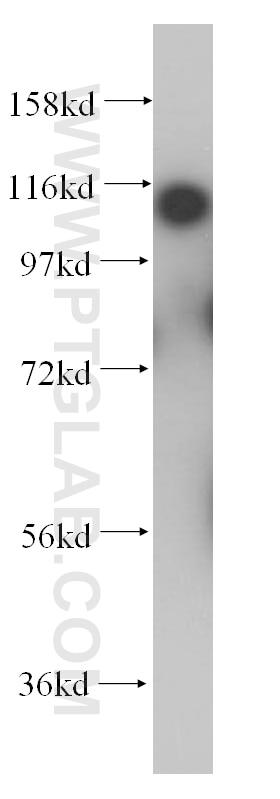
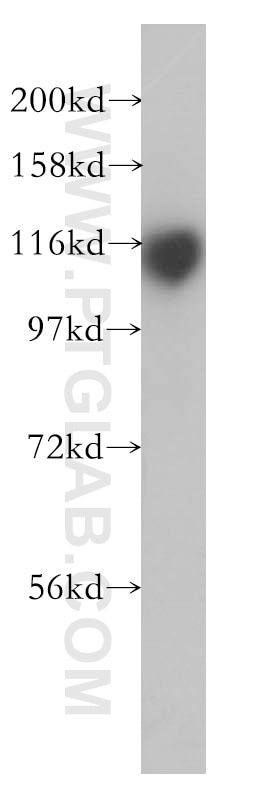
| Positive WB detected in | HeLa cells, K-562 cells |
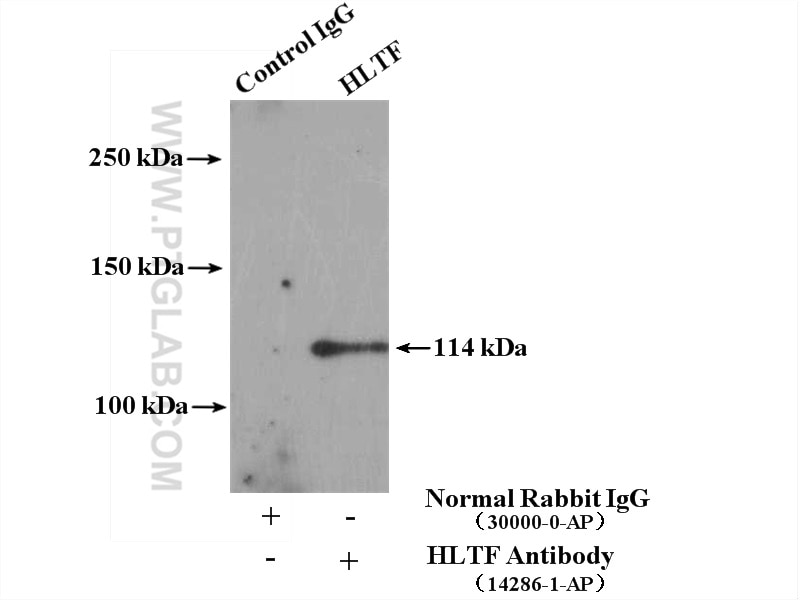
| Positive IP detected in | HeLa cells |
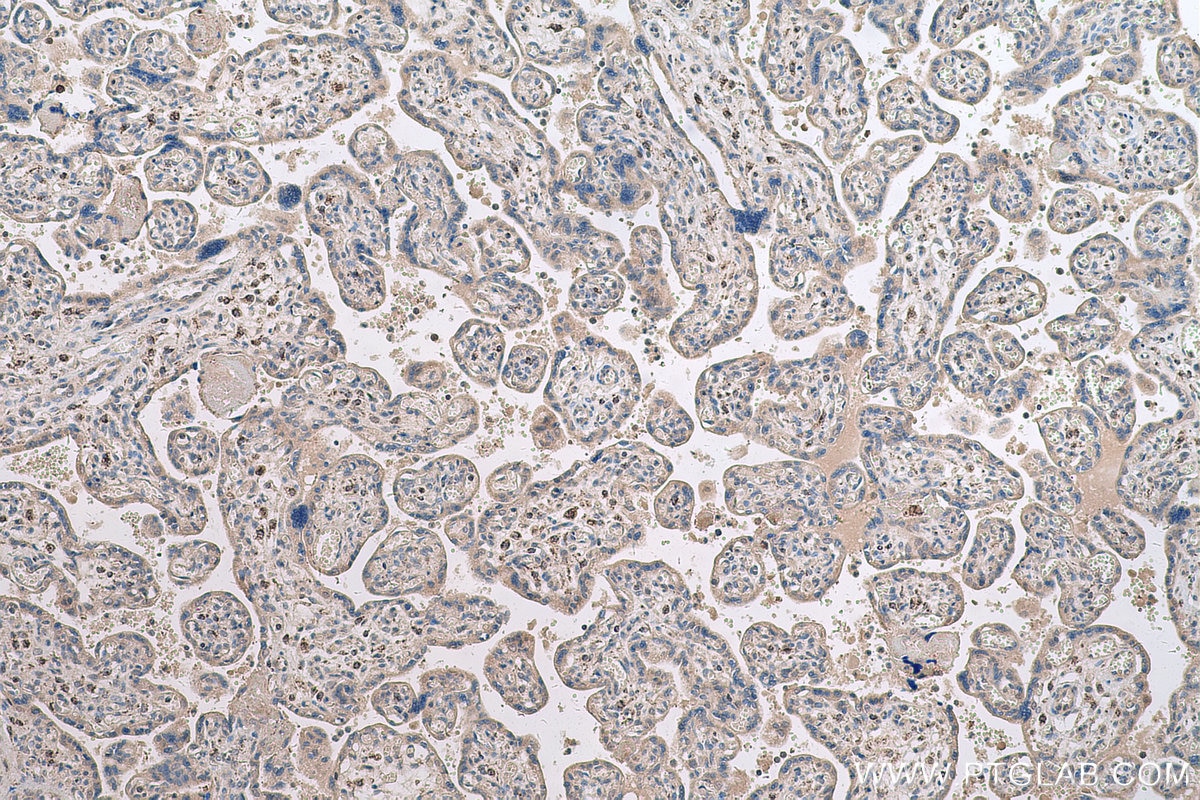
| Positive IHC detected in | human placenta tissue Note: suggested antigen retrieval with TE buffer pH 9.0; (*) Alternatively, antigen retrieval may be performed with citrate buffer pH 6.0 |
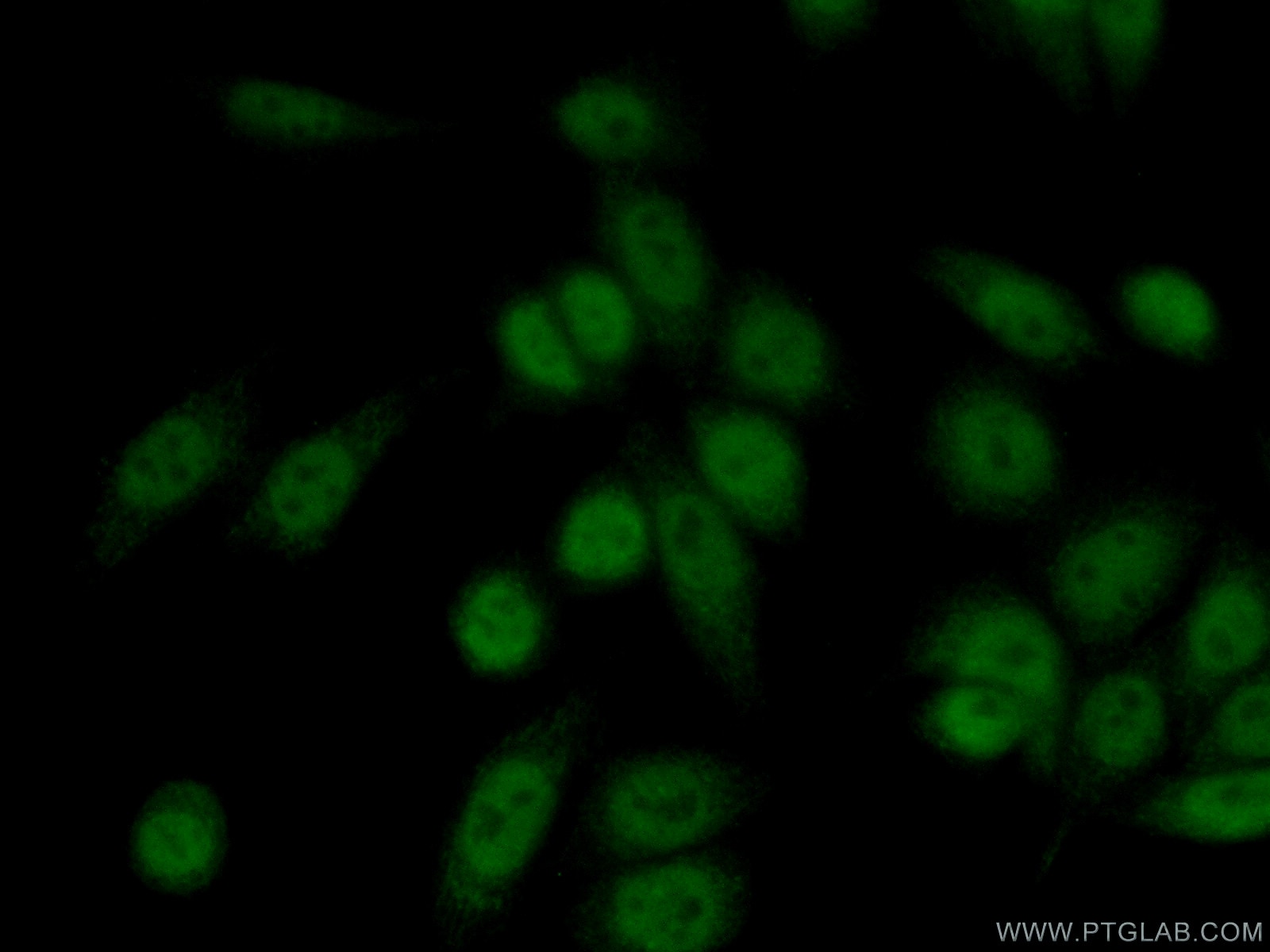
| Positive IF/ICC detected in | HeLa cells |
Recommended dilution
| Application | Dilution |
|---|---|
| Western Blot (WB) | WB : 1:500-1:1000 |
| Immunoprecipitation (IP) | IP : 0.5-4.0 ug for 1.0-3.0 mg of total protein lysate |
| Immunohistochemistry (IHC) | IHC : 1:250-1:1000 |
| Immunofluorescence (IF)/ICC | IF/ICC : 1:50-1:500 |
| It is recommended that this reagent should be titrated in each testing system to obtain optimal results. | |
| Sample-dependent, Check data in validation data gallery. | |
Product Information
14286-1-AP targets HLTF in WB, IHC, IF/ICC, IP, CoIP, ChIP, RIP, ELISA applications and shows reactivity with human, mouse, rat samples.
| Tested Reactivity | human, mouse, rat |
| Cited Reactivity | human, mouse |
| Host / Isotype | Rabbit / IgG |
| Class | Polyclonal |
| Type | Antibody |
| Immunogen |
CatNo: Ag5596 Product name: Recombinant human HLTF protein Source: e coli.-derived, PGEX-4T Tag: GST Domain: 1-354 aa of BC044659 Sequence: MSWMFKRDPVWKYLQTVQYGVHGNFPRLSYPTFFPRFEFQDVIPPDDFLTSDEEVDSVLFGSLRGHVVGLRYYTGVVNNNEMVALQRDPNNPYDKNAIKVNNVNGNQVGHLKKELAGALAYIMDNKLAQIEGVVPFGANNAFTMPLHMTFWGKEENRKAVSDQLKKHGFKLGPAPKTLGFNLESGWGSGRAGPSYSMPVHAAVQMTTEQLKTEFDKLFEDLKEDDKTHEMEPAEAIETPLLPHQKQALAWMVSRENSKELPPFWEQRNDLYYNTITNFSEKDRPENVHGGILADDMGLGKTLTAIAVILTNFHDGRPLPIERVKKNLLKKEYNVNDDSMKLGGNNTSEKADGLS Predict reactive species |
| Full Name | helicase-like transcription factor |
| Calculated Molecular Weight | 114 kDa |
| Observed Molecular Weight | 114 kDa |
| GenBank Accession Number | BC044659 |
| Gene Symbol | HLTF |
| Gene ID (NCBI) | 6596 |
| RRID | AB_2279646 |
| Conjugate | Unconjugated |
| Form | Liquid |
| Purification Method | Antigen affinity purification |
| UNIPROT ID | Q14527 |
| Storage Buffer | PBS with 0.02% sodium azide and 50% glycerol, pH 7.3. |
| Storage Conditions | Store at -20°C. Stable for one year after shipment. Aliquoting is unnecessary for -20oC storage. 20ul sizes contain 0.1% BSA. |
Background Information
Helicase-like Transcription Factor (HLTF) is a crucial nuclear protein and member of the SWI/SNF family of chromatin-remodeling complexes, playing a dual role in transcription regulation and DNA damage repair. It functions dually as a regulator of gene expression, utilizing its ATP-dependent helicase activity to modify chromatin structure and facilitate transcription, and as a central effector in the DNA damage response pathway. HLTF is particularly crucial for promoting error-free DNA repair at stalled replication forks via a mechanism called template switching, which prevents the accumulation of mutagenic lesions. HLTF can be detected as 114 kDa.
Protocols
| Product Specific Protocols | |
|---|---|
| IF protocol for HLTF antibody 14286-1-AP | Download protocol |
| IHC protocol for HLTF antibody 14286-1-AP | Download protocol |
| IP protocol for HLTF antibody 14286-1-AP | Download protocol |
| WB protocol for HLTF antibody 14286-1-AP | Download protocol |
| Standard Protocols | |
|---|---|
| Click here to view our Standard Protocols |
Publications
What published studies show
The anti-HLTF antibody (Cat# 14286-1-AP) has 12 citations published in journals including Nature, Nature Communications, Nucleic Acids Research, Cell Reports, Genes & Development, Clinical & Translational Medicine, Oncogenesis, Frontiers in Immunology, International Journal of Oncology, eLife, and Advanced Biology. Research fields span DNA replication, telomere biology, cancer (melanoma, glioblastoma, colorectal, hepatocellular, and cholangiocarcinoma), ferroptosis, immune surveillance, and HIV/SIV restriction.
| Species | Application | Title |
|---|---|---|
Nucleic Acids Res Distinct mechanisms underlying extrachromosomal telomere DNA generation in ALT cancers | ||
Clin Transl Med LINC01088 prevents ferroptosis in glioblastoma by enhancing SLC7A11 via HLTF/USP7 axis | ||
Cell Rep A rewiring of DNA replication mediated by MRE11 exonuclease underlies primed-to-naive cell de-differentiation
| ||
Reviews
What customers say
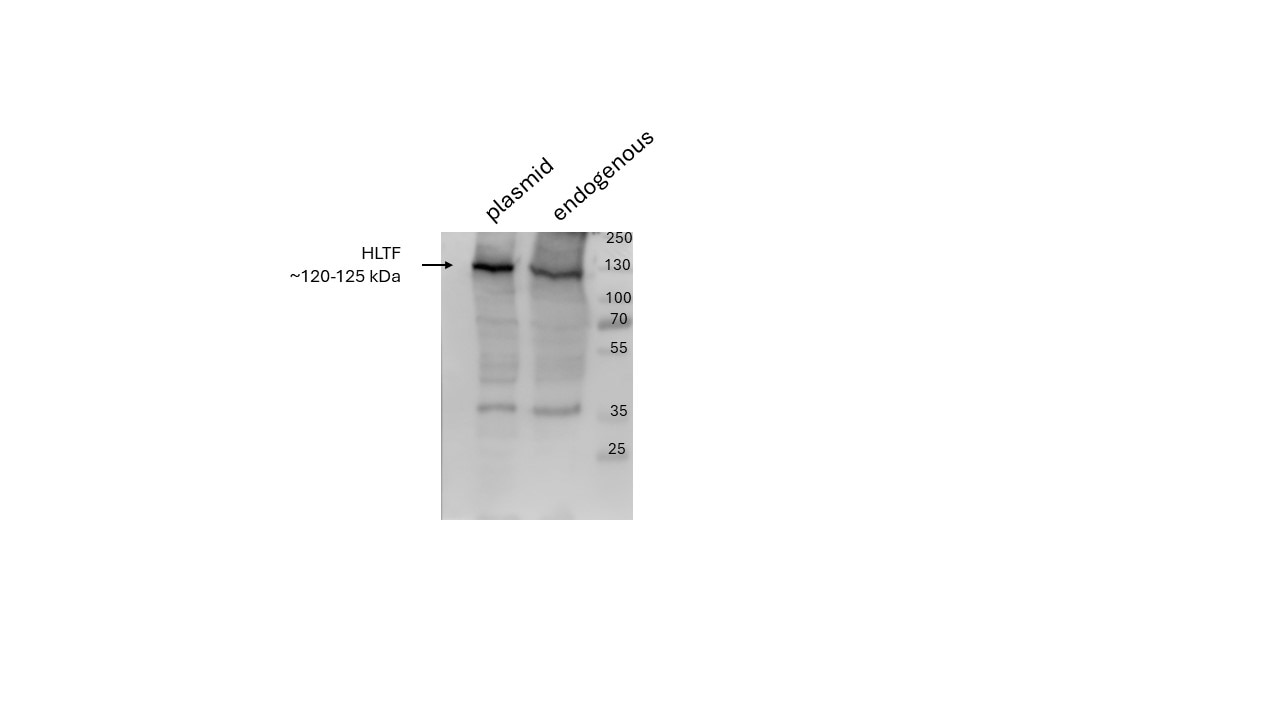
The single review rates the product 5 stars. The user reports it works perfectly for detecting both overexpressed and endogenous protein. It was successfully used in Western Blot, Immunofluorescence, and Cell culture applications on U2OS human osteosarcoma cells at a 1:1000 dilution. Overall, the feedback is highly positive, highlighting reliable performance across multiple applications.
The reviews below have been submitted by verified Proteintech customers who received an incentive for providing their feedback.
Alexandra (Verified Customer) (07-12-2024) | Work perfectly not only with overexpressed protein, but with endogenous ones as well.
 |






