

Tested Applications
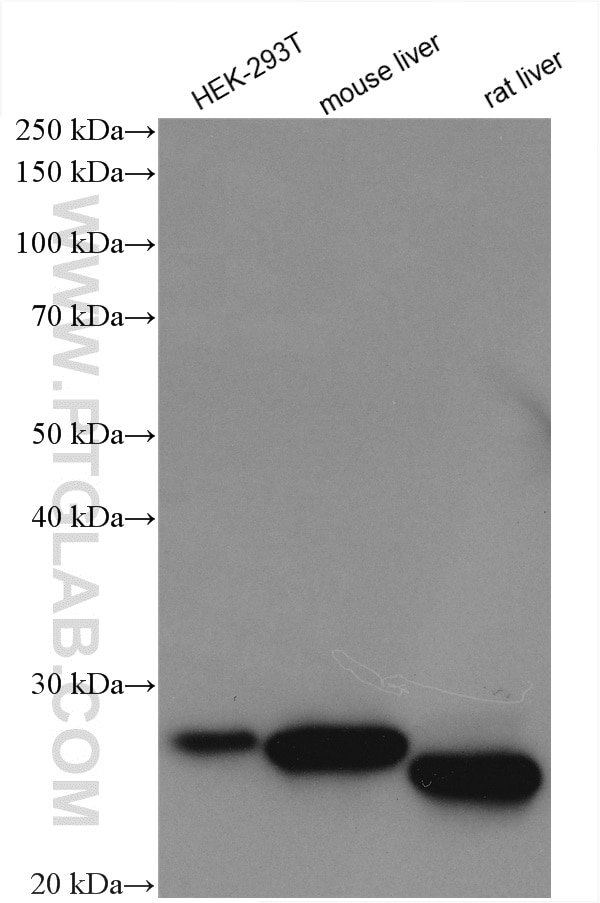
| Positive WB detected in | HEK-293T cells, mouse liver tissue, rat liver tissue |
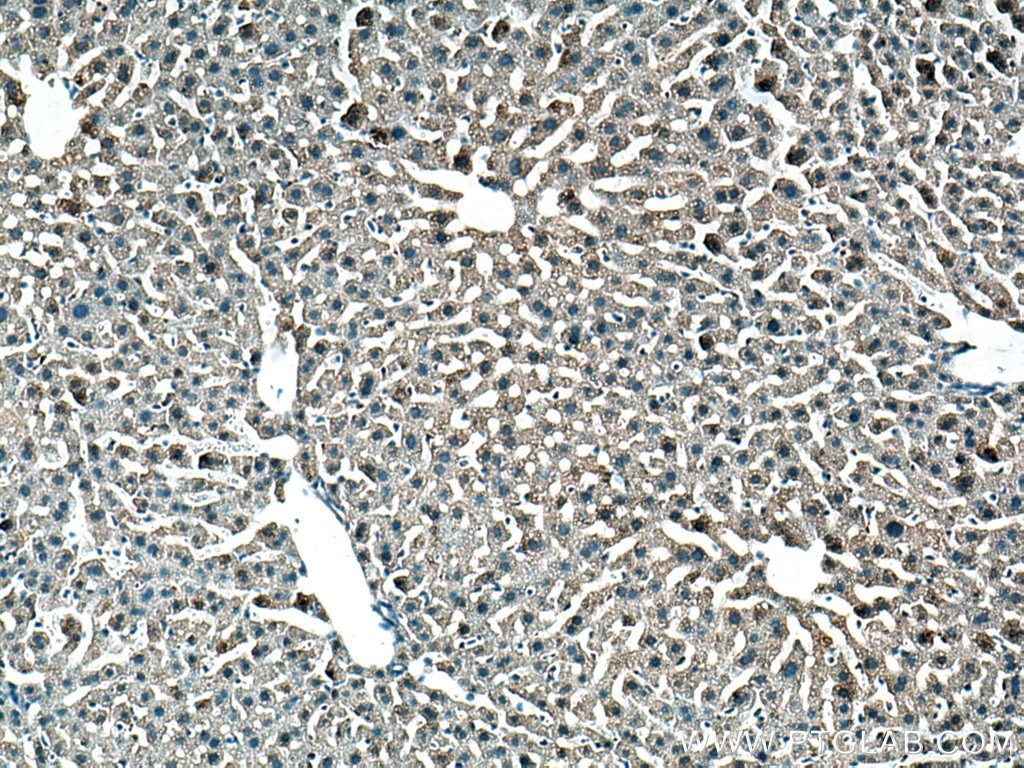
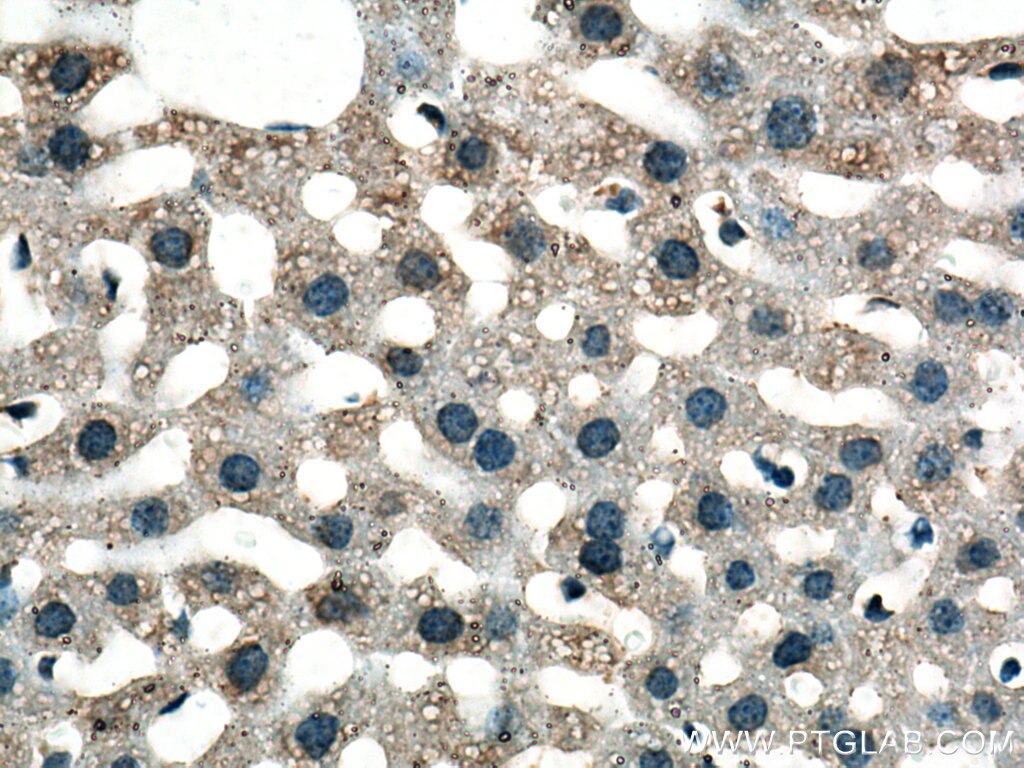
| Positive IHC detected in | mouse liver tissue Note: suggested antigen retrieval with TE buffer pH 9.0; (*) Alternatively, antigen retrieval may be performed with citrate buffer pH 6.0 |
Recommended dilution
| Application | Dilution |
|---|---|
| Western Blot (WB) | WB : 1:500-1:2000 |
| Immunohistochemistry (IHC) | IHC : 1:50-1:500 |
| It is recommended that this reagent should be titrated in each testing system to obtain optimal results. | |
| Sample-dependent, Check data in validation data gallery. | |
Product Information
14889-1-AP targets GSTZ1 in WB, IHC, ELISA applications and shows reactivity with human, mouse, rat samples.
| Tested Reactivity | human, mouse, rat |
| Cited Reactivity | human, mouse, rat |
| Host / Isotype | Rabbit / IgG |
| Class | Polyclonal |
| Type | Antibody |
| Immunogen |
CatNo: Ag6676 Product name: Recombinant human GSTZ1 protein Source: e coli.-derived, PGEX-4T Tag: GST Domain: 1-216 aa of BC001453 Sequence: MQAGKPILYSYFRSSCSWRVRIALALKGIDYETVPINLIKDGGQQFSKDFQALNPMKQVPTLKIDGITIHQSLAIIEYLEEMRPTPRLLPQDPKKRASVRMISDLIAGGIQPLQNLSVLKQVGEEMQLTWAQNAITCGFNALEQILQSTAGIYCVGDEVTMADLCLVPQVANAERFKVDLTPYPTISSINKRLLVLEAFQVSHPCRQPDTPTELRA Predict reactive species |
| Full Name | glutathione transferase zeta 1 |
| Calculated Molecular Weight | 24 kDa |
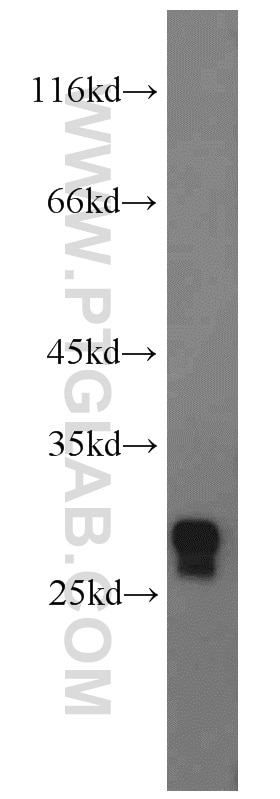
| Observed Molecular Weight | 25-30 kDa |
| GenBank Accession Number | BC001453 |
| Gene Symbol | GSTZ1 |
| Gene ID (NCBI) | 2954 |
| RRID | AB_2116363 |
| Conjugate | Unconjugated |
| Form | Liquid |
| Purification Method | Antigen affinity purification |
| UNIPROT ID | O43708 |
| Storage Buffer | PBS with 0.02% sodium azide and 50% glycerol, pH 7.3. |
| Storage Conditions | Store at -20°C. Stable for one year after shipment. Aliquoting is unnecessary for -20oC storage. 20ul sizes contain 0.1% BSA. |
Background Information
Glutathione transferase zeta 1(GSTZ1) catalyzes the biotransformation of a range of α-haloacids, including dichloroacetic acid (DCA), and the penultimate step in the tyrosine degradation pathway. GSTZ1 is preferentially expressed in hepatocytes and renal proximal tubule cells where phenylalanine and tyrosine are catabolized(PMID: 16550164). This protein has 3 isoforms produced by alternative splicing.
Protocols
| Product Specific Protocols | |
|---|---|
| IHC protocol for GSTZ1 antibody 14889-1-AP | Download protocol |
| WB protocol for GSTZ1 antibody 14889-1-AP | Download protocol |
| Standard Protocols | |
|---|---|
| Click here to view our Standard Protocols |
Publications
What published studies show
The Anti-GSTZ1 antibody (Cat# 14889-1-AP) has 9 citations published in journals including Nature Communications, Molecular Therapy, Analytical Chemistry, Frontiers in Immunology, Journal of Gerontology A, BMC Complementary Medicine and Therapies, Age, Cancer Research Communications, and ACS Chemical Biology. Associated research fields span hepatocellular carcinoma, tyrosine metabolism, lung cancer, osteoporosis, growth hormone signaling, glutathione/thioredoxin pathways, thermal proteome profiling, and tyrosinemia type 1 therapy.
| Species | Application | Title |
|---|---|---|
Nat Commun Targeting tRNA-dependent tyrosine usage unveils a metabolic vulnerability in hepatocellular carcinoma. | ||
Mol Ther A optimized engineered bacterium for tyrosinemia type 1 therapy: A multi-species preclinical study. | ||
Anal Chem Spike-In Proteome Enhances Data-Independent Acquisition for Thermal Proteome Profiling | ||
Front Immunol Identification and validation of a tyrosine metabolism-related prognostic prediction model and characterization of the tumor microenvironment infiltration in hepatocellular carcinoma | ||
BMC Complement Med Ther Integrated proteomics and metabolomics analysis of lumbar in a rat model of osteoporosis treated with Gushukang capsules |





