



Tested Applications
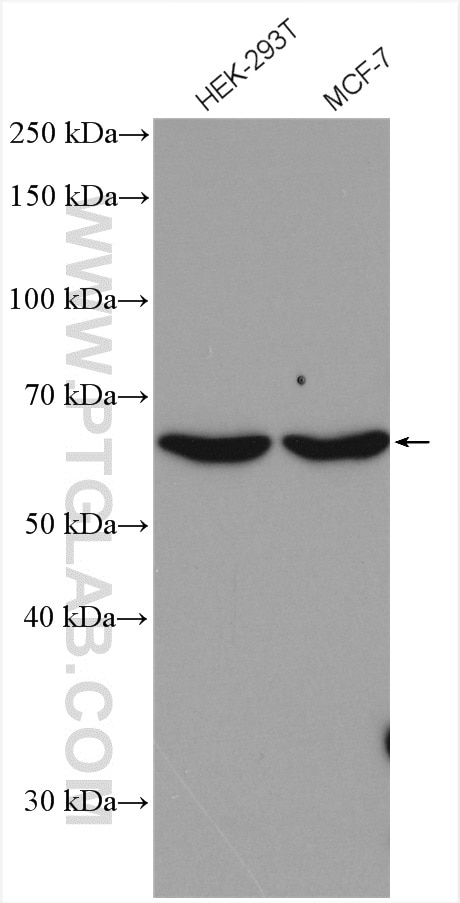
| Positive WB detected in | HEK-293T cells, MCF-7 cells |
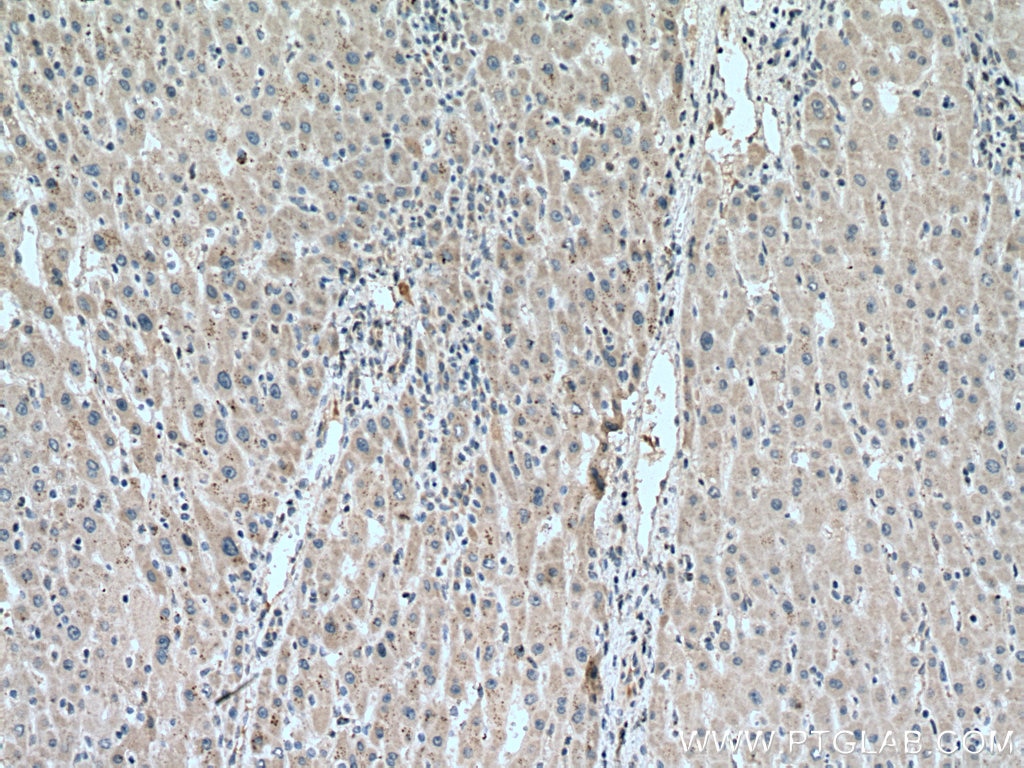
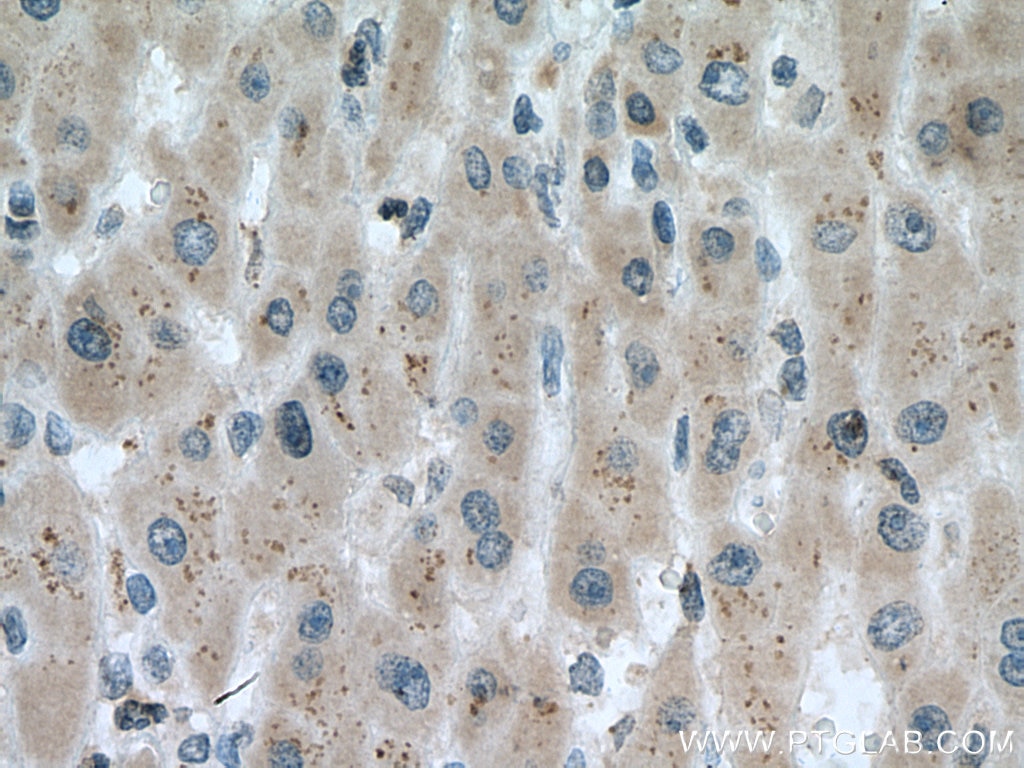
| Positive IHC detected in | human liver cancer tissue Note: suggested antigen retrieval with TE buffer pH 9.0; (*) Alternatively, antigen retrieval may be performed with citrate buffer pH 6.0 |
| Positive IF-P detected in | mouse brain tissue |
Recommended dilution
| Application | Dilution |
|---|---|
| Western Blot (WB) | WB : 1:500-1:1000 |
| Immunohistochemistry (IHC) | IHC : 1:50-1:500 |
| Immunofluorescence (IF)-P | IF-P : 1:200-1:800 |
| It is recommended that this reagent should be titrated in each testing system to obtain optimal results. | |
| Sample-dependent, Check data in validation data gallery. | |
Product Information
15770-1-AP targets ACAD9 in WB, IHC, IF-P, ELISA applications and shows reactivity with human samples.
| Tested Reactivity | human |
| Cited Reactivity | human |
| Host / Isotype | Rabbit / IgG |
| Class | Polyclonal |
| Type | Antibody |
| Immunogen |
CatNo: Ag8414 Product name: Recombinant human ACAD9 protein Source: e coli.-derived, PET28a Tag: 6*His Domain: 285-621 aa of BC007970 Sequence: ILGEVGDGFKVAMNILNSGRFSMGSVVAGLLKRLIEMTAEYACTRKQFNKRLSEFGLIQEKFALMAQKAYVMESMTYLTAGMLDQPGFPDCSIEAAMVKVFSSEAAWQCVSEALQILGGLGYTRDYPYERILRDTRILLIFEGTNEILRMYIALTGLQHAGRILTTRIHELKQAKVSTVMDTVGRRLRDSLGRTVDLGLTGNHGVVHPSLADSANKFEENTYCFGRTVETLLLRFGKTIMEEQLVLKRVANILINLYGMTAVLSRASRSIRIGLRNHDHEVLLANTFCVEAYLQNLFSLSQLDKYAPENLDEQIKKVSQQILEKRAYICAHPLDRTC Predict reactive species |
| Full Name | acyl-Coenzyme A dehydrogenase family, member 9 |
| Calculated Molecular Weight | 69 kDa |
| Observed Molecular Weight | 60-65 kDa |
| GenBank Accession Number | BC007970 |
| Gene Symbol | ACAD9 |
| Gene ID (NCBI) | 28976 |
| RRID | AB_2241997 |
| Conjugate | Unconjugated |
| Form | Liquid |
| Purification Method | Antigen affinity purification |
| UNIPROT ID | Q9H845 |
| Storage Buffer | PBS with 0.02% sodium azide and 50% glycerol, pH 7.3. |
| Storage Conditions | Store at -20°C. Stable for one year after shipment. Aliquoting is unnecessary for -20oC storage. 20ul sizes contain 0.1% BSA. |
Background Information
Acyl-CoA dehydrogenases (ACADs) are a family of mitochondrial enzymes catalyzing the initial rate-limiting step in the β-oxidation of fatty acyl-CoA. ACAD9 belongs to the group of ACADs. The deduced 621-amino acid protein has a calculated molecular mass of 68.8 kD. It has an N-terminal leader sequence, 2 conserved motifs shared by all ACAD family members, and a potential N-glycosylation site(PMID:12359260). Defects in ACAD9 are a cause of acyl-CoA dehydrogenase family member type 9 deficiency (ACAD9 deficiency).
Protocols
| Product Specific Protocols | |
|---|---|
| IF protocol for ACAD9 antibody 15770-1-AP | Download protocol |
| IHC protocol for ACAD9 antibody 15770-1-AP | Download protocol |
| WB protocol for ACAD9 antibody 15770-1-AP | Download protocol |
| Standard Protocols | |
|---|---|
| Click here to view our Standard Protocols |
Publications
What published studies show
The ACAD9 Polyclonal antibody (Cat# 15770-1-AP) has 8 citations published in Cancer Letters, Developmental Cell, Cell Reports, EMBO Reports (×2), Scientific Reports, Cancer Research Communications, and Frontiers in Neuroscience. Research fields span ovarian cancer progression, ferroptosis via fatty acid β-oxidation, mitochondrial complex I/respirasome formation, mitochondrial translation, oxidative metabolism regulation, adipose tissue translational control, tumor hypoxia and rectal cancer radiotherapy, and septic encephalopathy.
| Species | Application | Title |
|---|---|---|
Cancer Lett Metabolic Gatekeeper ACAD9 Coordinates Linoleic Acid Metabolism and Redox Homeostasis via Mitochondrial Complex I to Drive Ovarian Cancer Progression | ||
Cell Rep A membrane arm of mitochondrial complex I sufficient to promote respirasome formation.
| ||
EMBO Rep MITRAC15/COA1 promotes mitochondrial translation in a ND2 ribosome-nascent chain complex. | ||
EMBO Rep Time-resolved mitochondrial screen identifies regulatory components of oxidative metabolism | ||
Sci Rep Integrative analyses of translatome and transcriptome reveal important translational controls in brown and white adipose regulated by microRNAs. |






