

Tested Applications
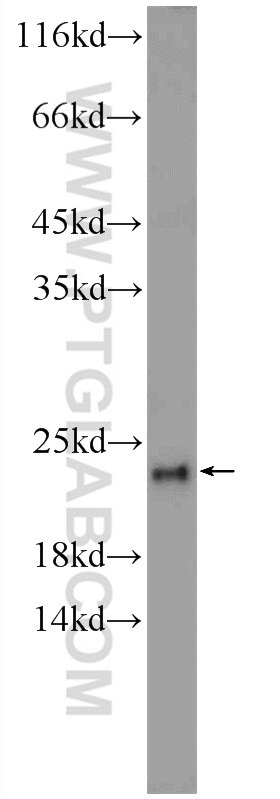
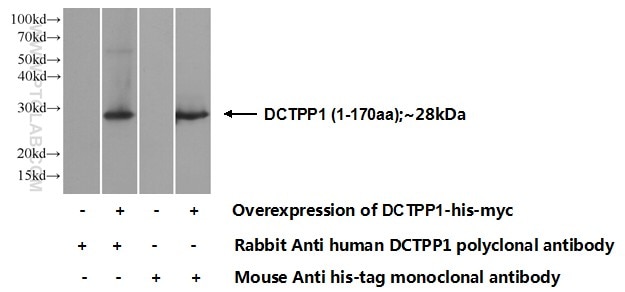
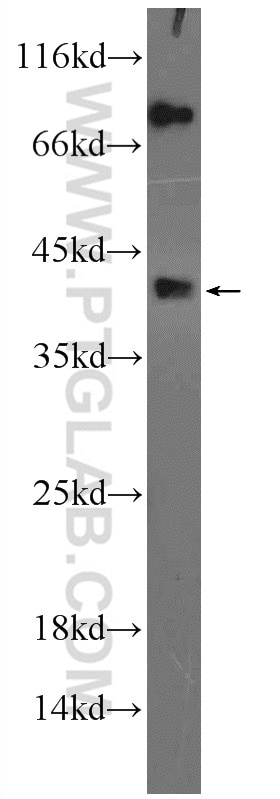
| Positive WB detected in | HeLa cells, mouse heart tissue, Transfected HEK-293 cells |
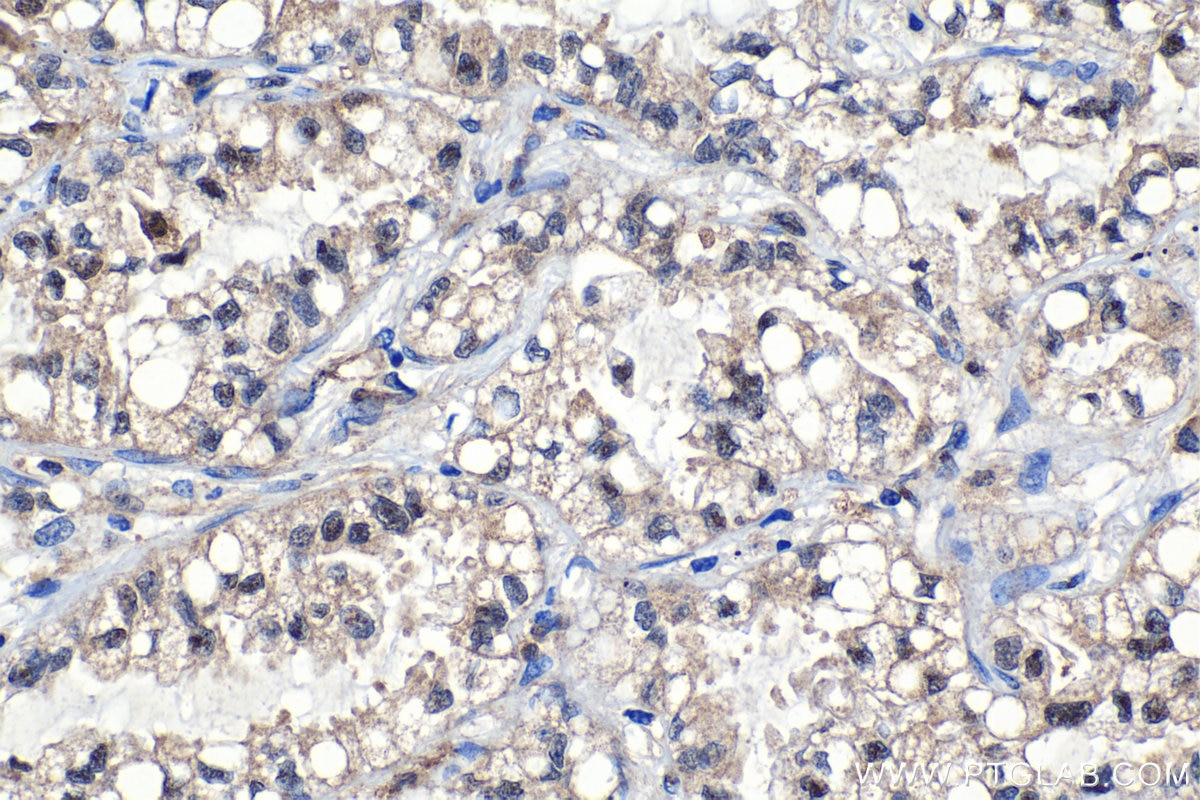
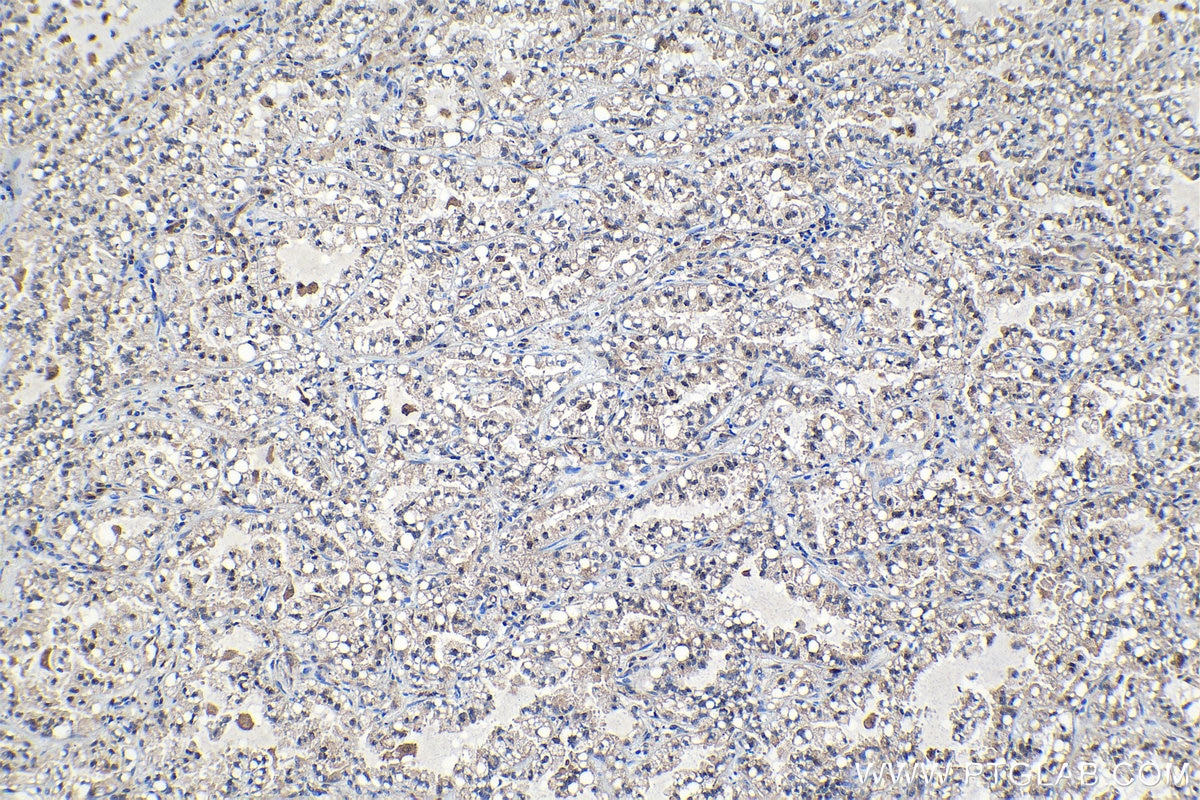
| Positive IHC detected in | human lung cancer tissue Note: suggested antigen retrieval with TE buffer pH 9.0; (*) Alternatively, antigen retrieval may be performed with citrate buffer pH 6.0 |
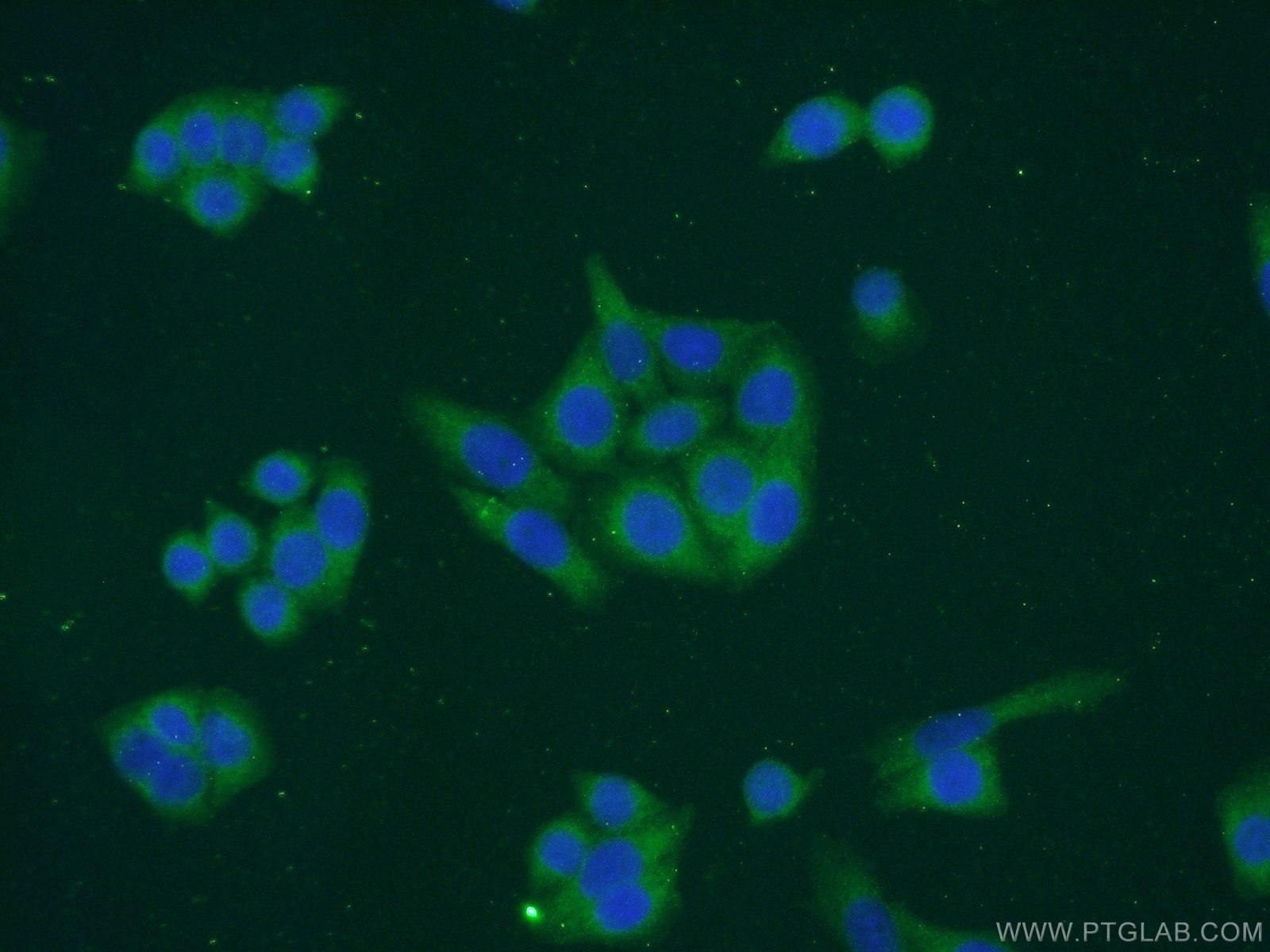
| Positive IF/ICC detected in | HeLa cells |
Recommended dilution
| Application | Dilution |
|---|---|
| Western Blot (WB) | WB : 1:200-1:1000 |
| Immunohistochemistry (IHC) | IHC : 1:250-1:1000 |
| Immunofluorescence (IF)/ICC | IF/ICC : 1:20-1:200 |
| It is recommended that this reagent should be titrated in each testing system to obtain optimal results. | |
| Sample-dependent, Check data in validation data gallery. | |
Product Information
16684-1-AP targets DCTPP1 in WB, IHC, IF/ICC, ELISA applications and shows reactivity with human, mouse, rat samples.
| Tested Reactivity | human, mouse, rat |
| Cited Reactivity | human, rat |
| Host / Isotype | Rabbit / IgG |
| Class | Polyclonal |
| Type | Antibody |
| Immunogen |
CatNo: Ag10015 Product name: Recombinant human DCTPP1 protein Source: e coli.-derived, PGEX-4T Tag: GST Domain: 1-170 aa of BC001344 Sequence: MSVAGGEIRGDTGGEDTAAPGRFSFSPEPTLEDIRRLHAEFAAERDWEQFHQPRNLLLALVGEVGELAELFQWKTDGEPGPQGWSPRERAALQEELSDVLIYLVALAARCRVDLPLAVLSKMDINRRRYPAHLARSSSRKYTELPHGAISEDQAVGPADIPCDSTGQTST Predict reactive species |
| Full Name | dCTP pyrophosphatase 1 |
| Calculated Molecular Weight | 19 kDa |
| Observed Molecular Weight | 19 kDa, 40 kDa, 80 kDa |
| GenBank Accession Number | BC001344 |
| Gene Symbol | DCTPP1 |
| Gene ID (NCBI) | 79077 |
| RRID | AB_2878299 |
| Conjugate | Unconjugated |
| Form | Liquid |
| Purification Method | Antigen affinity purification |
| UNIPROT ID | Q9H773 |
| Storage Buffer | PBS with 0.02% sodium azide and 50% glycerol, pH 7.3. |
| Storage Conditions | Store at -20°C. Stable for one year after shipment. Aliquoting is unnecessary for -20oC storage. 20ul sizes contain 0.1% BSA. |
Background Information
DCTPP1, also named as XTP3TPA, CDAO3 and RS21C6, is a hydrolyzes deoxynucleoside triphosphates (dNTPs) to the corresponding nucleoside monophosphates. It has a central role in the balance of dCTP and the metabolism of deoxycytidine analogues, thus contributing to the preservation of genome integrity. DCTPP1 has some forms such as monomer (~20 kDa), Dimer (~40 kDa) and Homotetramer (~80 kDa).
Protocols
| Product Specific Protocols | |
|---|---|
| IF protocol for DCTPP1 antibody 16684-1-AP | Download protocol |
| IHC protocol for DCTPP1 antibody 16684-1-AP | Download protocol |
| WB protocol for DCTPP1 antibody 16684-1-AP | Download protocol |
| Standard Protocols | |
|---|---|
| Click here to view our Standard Protocols |
Publications
What published studies show
The DCTPP1 Polyclonal antibody (Cat# 16684-1-AP) has a total of 3 citations. These publications appear in Journal of Ethnopharmacology, Journal of Cellular and Molecular Medicine, and Frontiers in Oncology. The associated research fields include ethnopharmacology and obesity mechanisms, ovarian cancer and cisplatin resistance, and breast cancer progression involving nucleotide metabolism and the tumor microenvironment.
| Species | Application | Title |
|---|---|---|
J Ethnopharmacol Gengnianshou formula inhibits estrogen deficiency induced obesity via an HSPA5-associated phosphatidylcholine (PC) regulatory pathway: Ethnopharmacological relevance and mechanistic insights from network pharmacology and multi-omics. | ||
J Cell Mol Med Expression of human dCTP pyrophosphatase 1 (DCTPP1) and its association with cisplatin resistance characteristics in ovarian cancer | ||
Front Oncol Spatial transcriptome and single-cell sequencing reveal the role of nucleotide metabolism in breast cancer progression and tumor microenvironment.
|







