
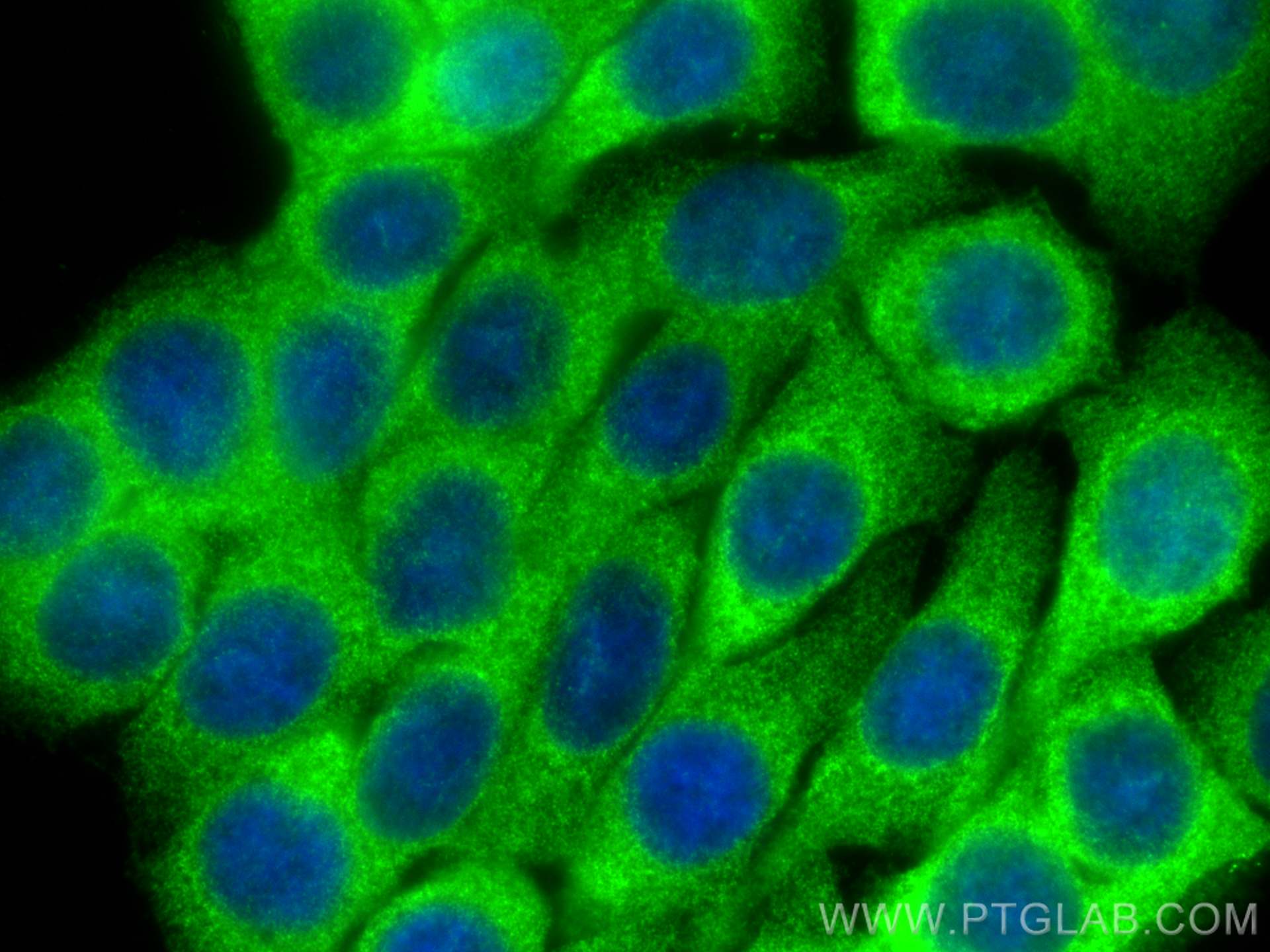

Tested Applications
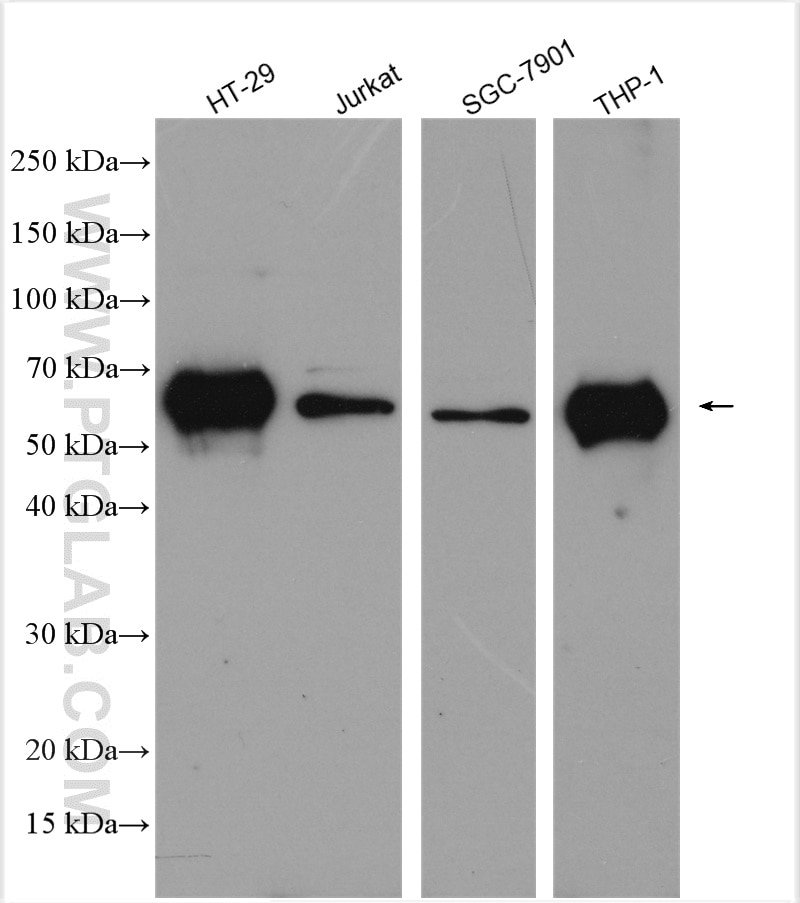
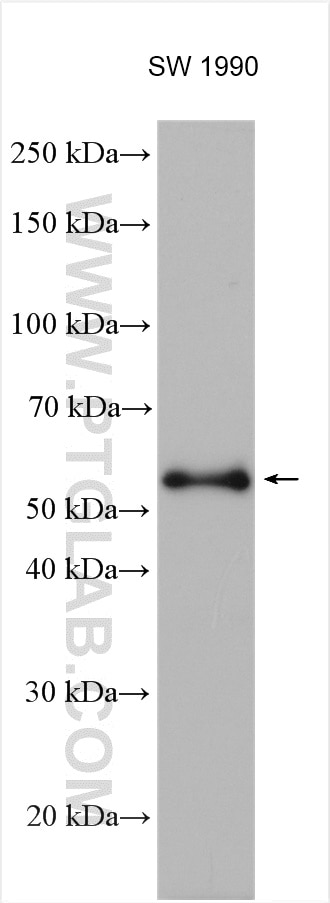
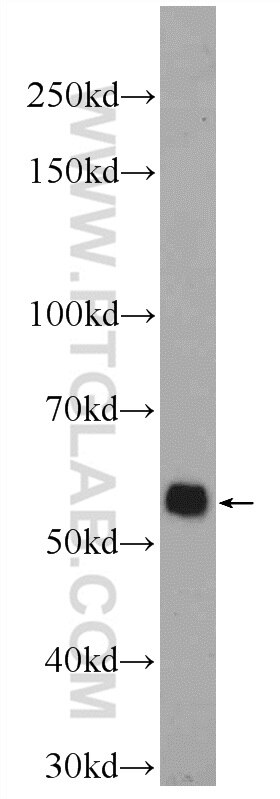
| Positive WB detected in | HT-29 cells, Jurkat cells, SW 1990 cells, THP-1 cells, SGC-7901 cells |
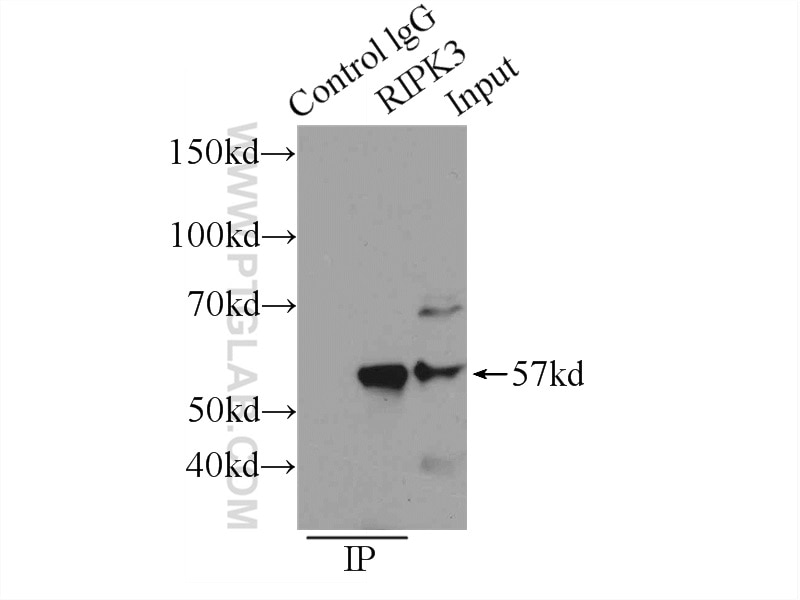
| Positive IP detected in | SW 1990 cells |
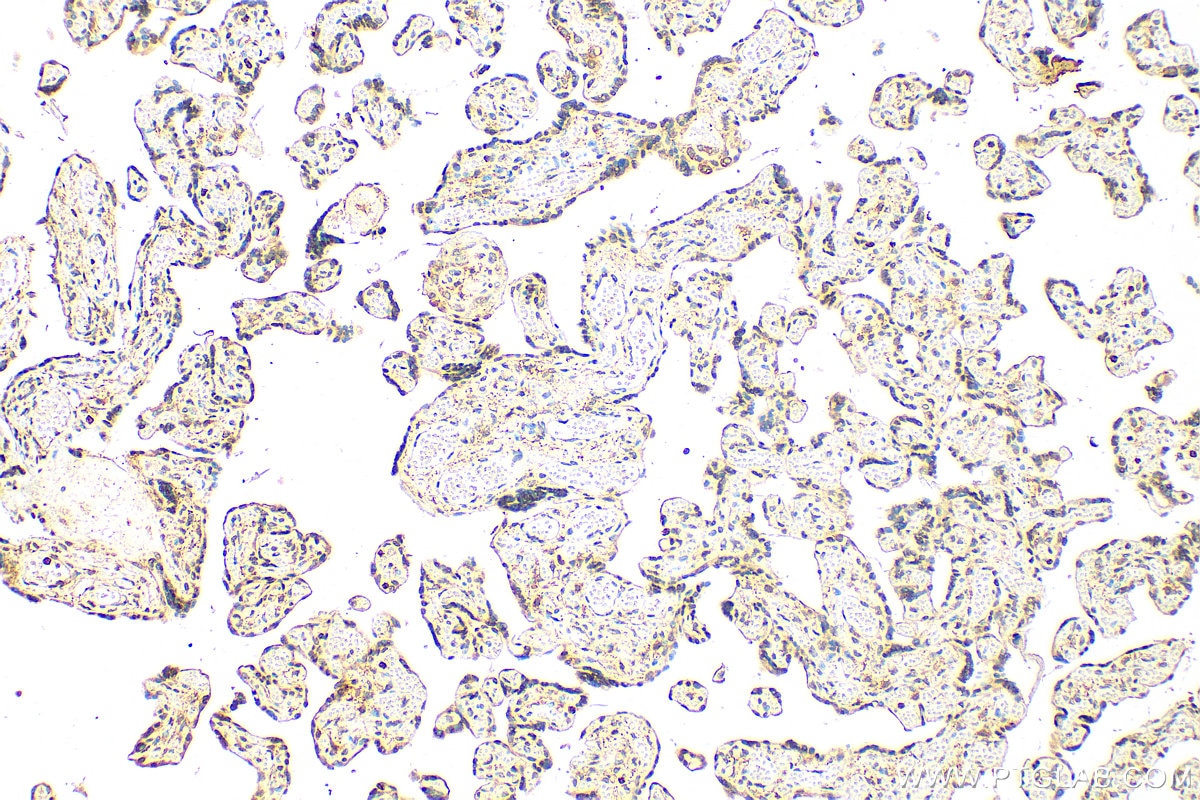
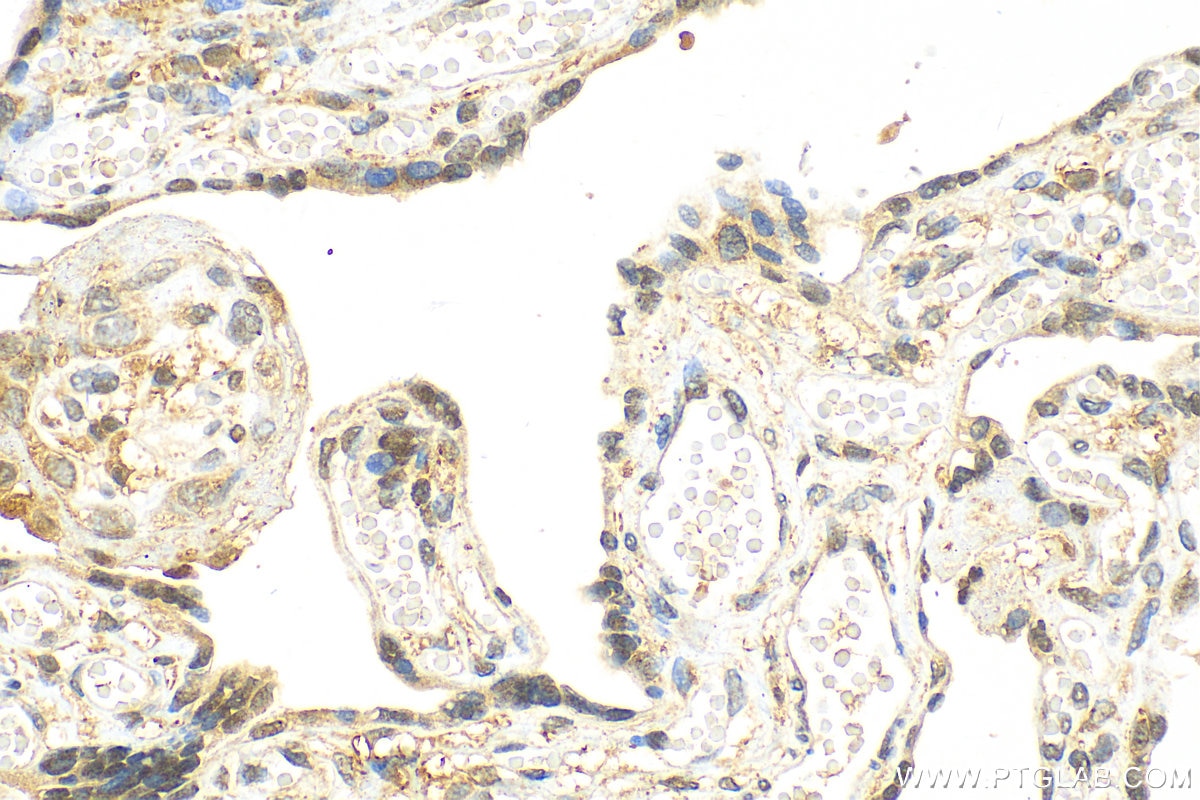
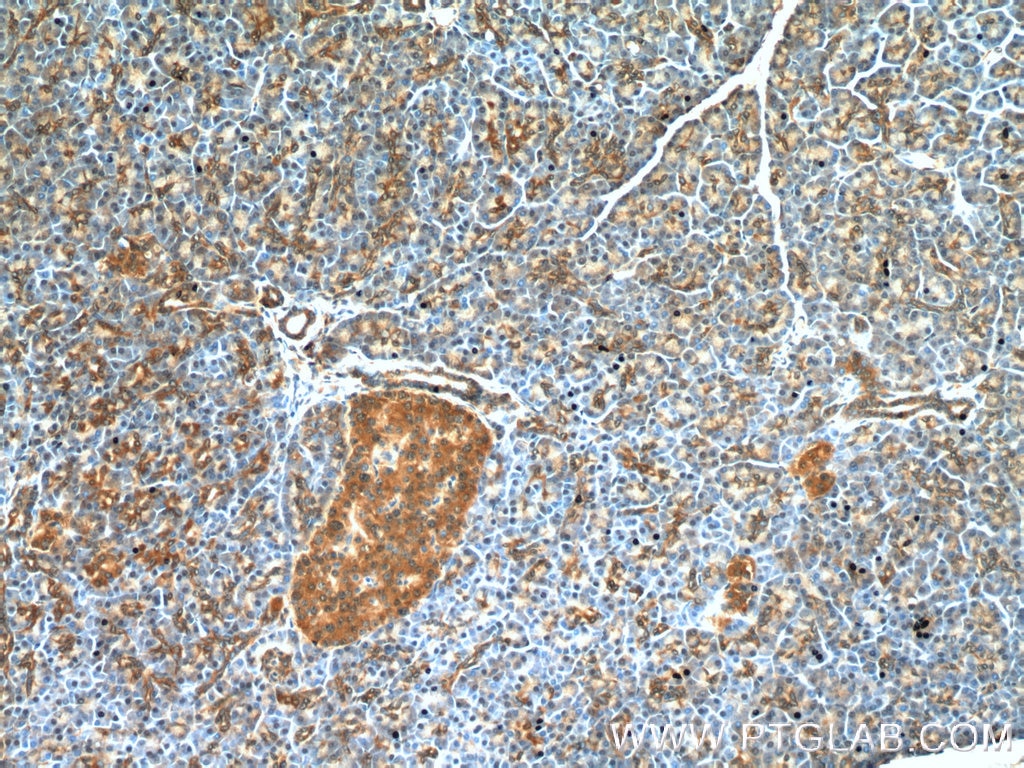
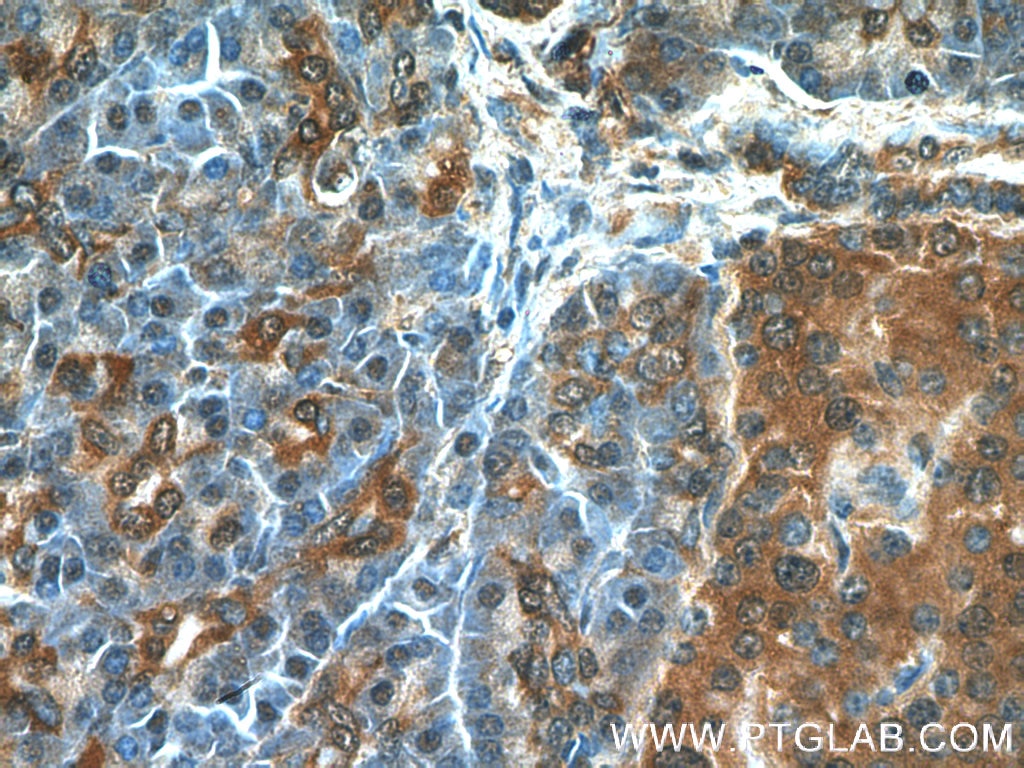
| Positive IHC detected in | human pancreas tissue, human placenta tissue Note: suggested antigen retrieval with TE buffer pH 9.0; (*) Alternatively, antigen retrieval may be performed with citrate buffer pH 6.0 |
| Positive IF/ICC detected in | HT-29 cells |
Recommended dilution
| Application | Dilution |
|---|---|
| Western Blot (WB) | WB : 1:1000-1:4000 |
| Immunoprecipitation (IP) | IP : 0.5-4.0 ug for 1.0-3.0 mg of total protein lysate |
| Immunohistochemistry (IHC) | IHC : 1:100-1:400 |
| Immunofluorescence (IF)/ICC | IF/ICC : 1:50-1:500 |
| It is recommended that this reagent should be titrated in each testing system to obtain optimal results. | |
| Sample-dependent, Check data in validation data gallery. | |
Product Information
17563-1-AP targets RIPK3 in WB, IHC, IF/ICC, IP, CoIP, ELISA applications and shows reactivity with human samples.
| Tested Reactivity | human |
| Cited Reactivity | human, chicken, bovine, yeast |
| Host / Isotype | Rabbit / IgG |
| Class | Polyclonal |
| Type | Antibody |
| Immunogen |
CatNo: Ag11759 Product name: Recombinant human RIPK3 protein Source: e coli.-derived, PGEX-4T Tag: GST Domain: 1-289 aa of BC062584 Sequence: MSCVKLWPSGAPAPLVSIEELENQELVGKGGFGTVFRAQHRKWGYDVAVKIVNSKAISREVKAMASLDNEFVLRLEGVIEKVNWDQDPKPALVTKFMENGSLSGLLQSQCPRPWPLLCRLLKEVVLGMFYLHDQNPVLLHRDLKPSNVLLDPELHVKLADFGLSTFQGGSQSGTGSGEPGGTLGYLAPELFVNVNRKASTASDVYSFGILMWAVLAGREVELPTEPSLVYEAVCNRQNRPSLAELPQAGPETPGLEGLKELMQLCWSSEPKDRPSFQECLPKTDEVFQM Predict reactive species |
| Full Name | receptor-interacting serine-threonine kinase 3 |
| Calculated Molecular Weight | 518 aa, 57 kDa |
| Observed Molecular Weight | 57-70 kDa |
| GenBank Accession Number | BC062584 |
| Gene Symbol | RIPK3 |
| Gene ID (NCBI) | 11035 |
| RRID | AB_2178659 |
| Conjugate | Unconjugated |
| Form | Liquid |
| Purification Method | Antigen affinity purification |
| UNIPROT ID | Q9Y572 |
| Storage Buffer | PBS with 0.02% sodium azide and 50% glycerol, pH 7.3. |
| Storage Conditions | Store at -20°C. Stable for one year after shipment. Aliquoting is unnecessary for -20oC storage. 20ul sizes contain 0.1% BSA. |
Background Information
Receptor-interacting protein 3 (RIP3, also known as RIPK3) is a serine-threonine protein involved in the regulation of inflammatory signaling and cell death. RIPK3, also named as RIP3, a Ser/Thr kinase of RIP (Receptor Interacting Protein) family, is a nucleocytoplasmic shuttling protein and its unconventional nuclear localization signal (NLS, 442-472 aa) is sufficient to trigger apoptosis in the nucleus (PMID: 18533105). It has 3 isoforms produced by alternative splicing.
What is the molecular weight of RIP3? Is RIP3 post-translationally modified?
The molecular weight of RIP3 is 57 kDa. During the induction of necroptosis, RIP3 migrates slower in SDS-PAGE due to its phosphorylation (PMID: 19524512). Additionally, RIP3 can be a subject of poly-ubiquitination, when targeted for degradation.
Are there any splice isoforms of RIP3?
Apart from full-length RIP3, there are two reported splice isoforms of RIP3: RIP3β and RIP3γ, and 28 and 25 kDa, respectively (PMID: 15896315).
What is the subcellular localization of RIP3?
RIP3 can shuttle between the cytoplasm and the nucleus. Although RIP3 forms necrosomes in the cytoplasm, a recent study suggests that the phosphorylation of RIP3, required for necroptosis, may also occur in the nucleus (PMID: 30271893). Additionally, the induction of necrosis by reactive oxygen species can cause transient translocation of RIP3 to mitochondria (PMID: 25206339).
What is the role of RIP3 in cell death (necroptosis)?
Activation of RIP3 kinase is required for the induction of necroptosis (PMID: 19524512, 19524513 and 19498109). Activation of RIP3 can be induced by interferons, death ligands, or by Toll-like receptors in response to pathogens. That leads to the phosphorylation of RIP3 and the formation of a β-amyloid-like protein complex. Phosphorylated RIP3 acts downstream by phosphorylation of MLKL (PMID: 30131615).
How to study necroptosis in a cell-based system?
The choice of the cell line is important. Many commonly used immortalized cell types are derived from cancers and may have very low RIL3 expression level (PMID: 25952668). Those cell lines are not going to be responsive to necrotic stimuli. A few of the examined cell types have high RIP3 levels: Jurkat, CCRF-CEM, U937, L929 cells, and mouse embryonic fibroblasts (PMID: 19524512). Good necroptosis readouts reflect an increased level of RIP3 protein and its phosphorylation.
Protocols
| Product Specific Protocols | |
|---|---|
| IF protocol for RIPK3 antibody 17563-1-AP | Download protocol |
| IHC protocol for RIPK3 antibody 17563-1-AP | Download protocol |
| IP protocol for RIPK3 antibody 17563-1-AP | Download protocol |
| WB protocol for RIPK3 antibody 17563-1-AP | Download protocol |
| Standard Protocols | |
|---|---|
| Click here to view our Standard Protocols |
Publications
What published studies show
The RIPK3 polyclonal antibody (Cat# 17563-1-AP) has accumulated 156 citations published in over 100 journals, including Nature Communications, Cell Stem Cell, Neuron, Advanced Science, Cell Death & Disease, Acta Pharmacologica Sinica, and the Journal of Biological Chemistry. The associated research fields encompass necroptosis, PANoptosis, apoptosis, cancer biology, neurodegeneration, liver and kidney disease, cardiovascular injury, infectious diseases, inflammation, and environmental toxicology.
| Species | Application | Title |
|---|---|---|
Signal Transduct Target Ther Nucleosome assembly protein-like 1 degradation-dependent novel cardioprotection mechanism of Wnt2 against ischemia‒reperfusion injury | ||
Cell Stem Cell Nynrin preserves hematopoietic stem cell function by inhibiting the mitochondrial permeability transition pore opening | ||
Drug Resist Updat DEAF1 confers resistance to adriamycin-induced apoptosis and pyroptosis in multiple myeloma. | ||
Drug Resist Updat Targeting LIG1 to overcome oxaliplatin resistance by inducing PANoptosis in colorectal cancer. | ||
Nat Commun RIPK1 kinase drove brain microvascular endothelial cells death and blood-brain barrier disruption in neonatal Escherichia coli meningitis.
| ||
Nat Commun Targeting P2Y14R protects against necroptosis of intestinal epithelial cells through PKA/CREB/RIPK1 axis in ulcerative colitis |










