
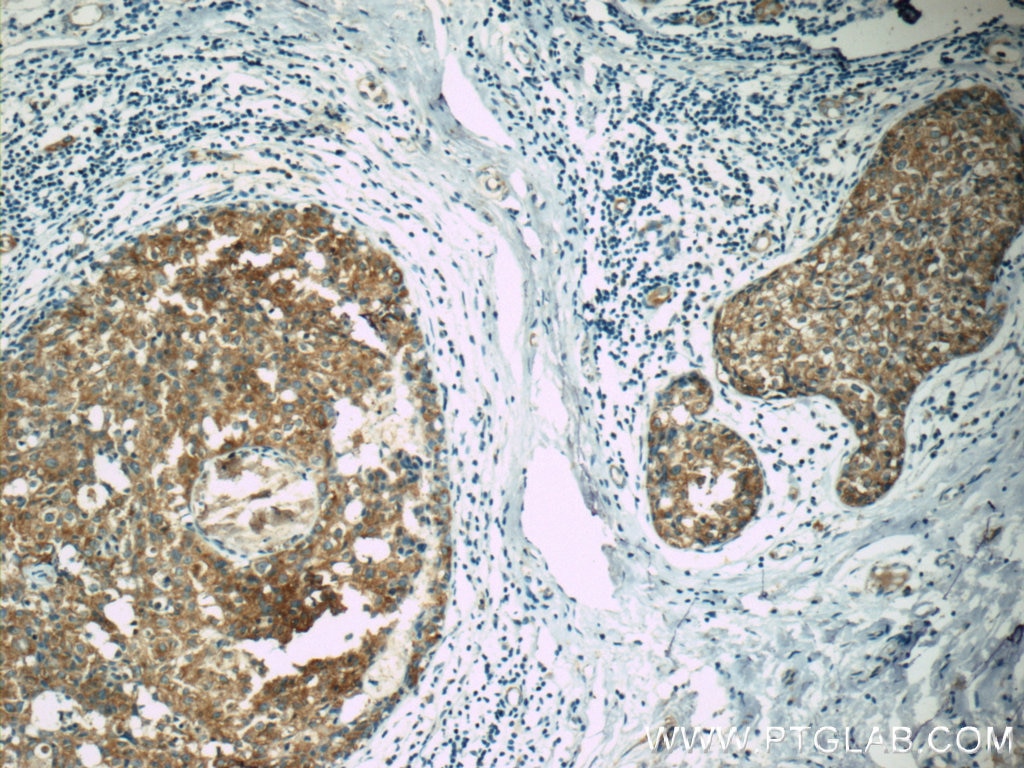
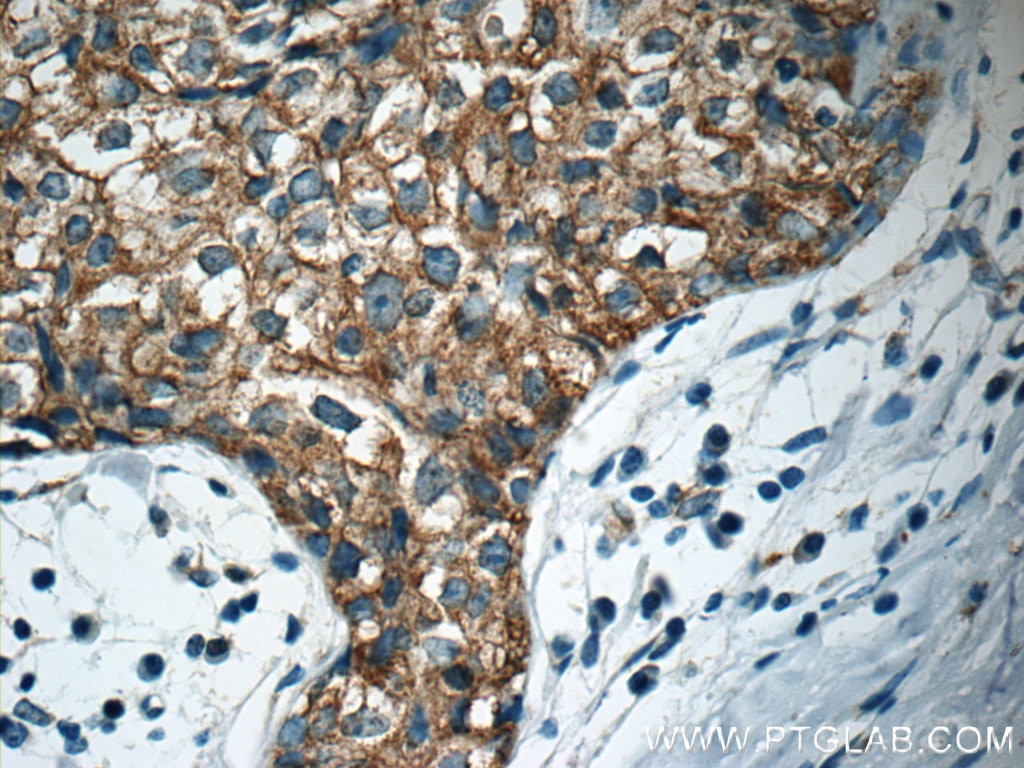
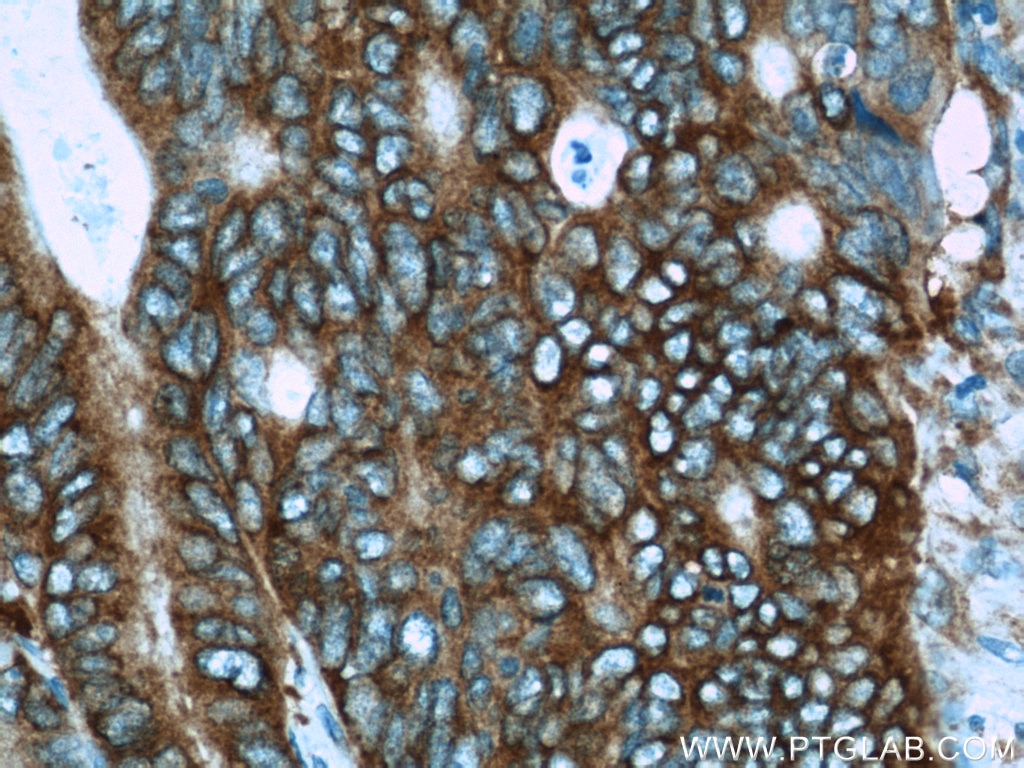
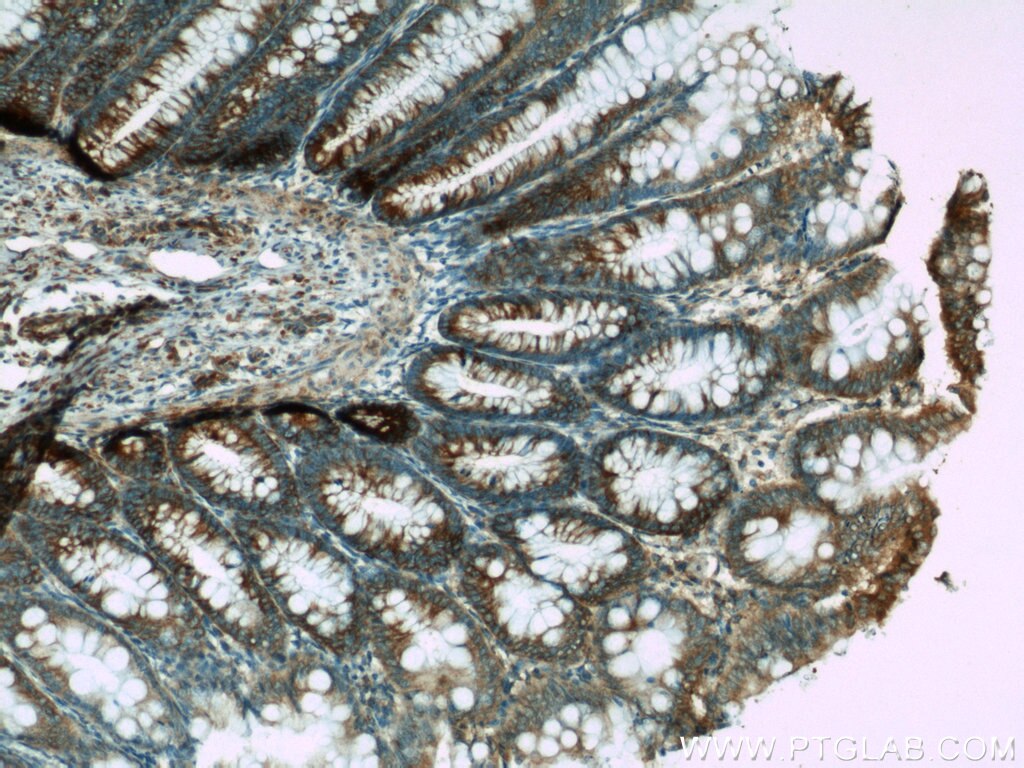
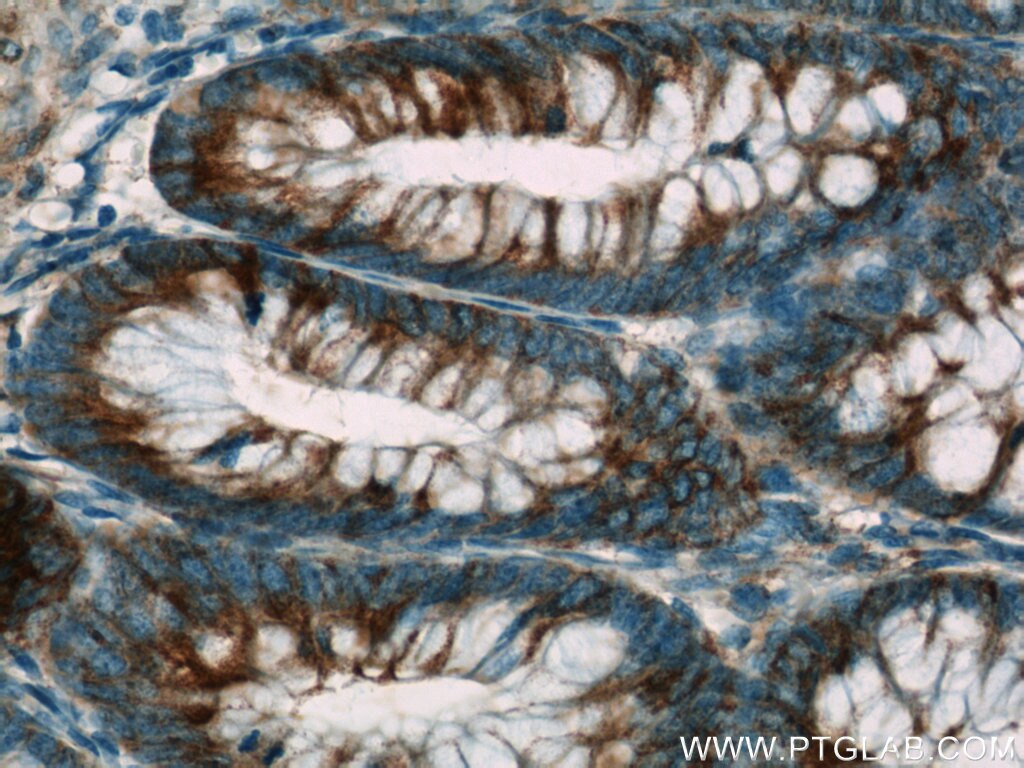
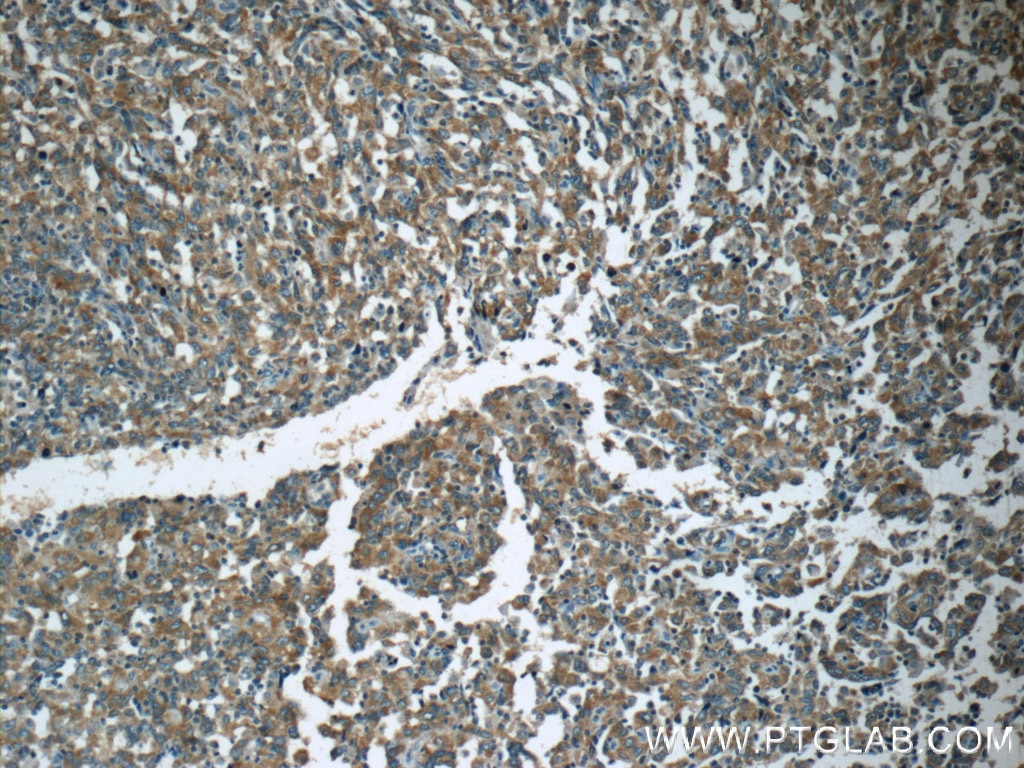
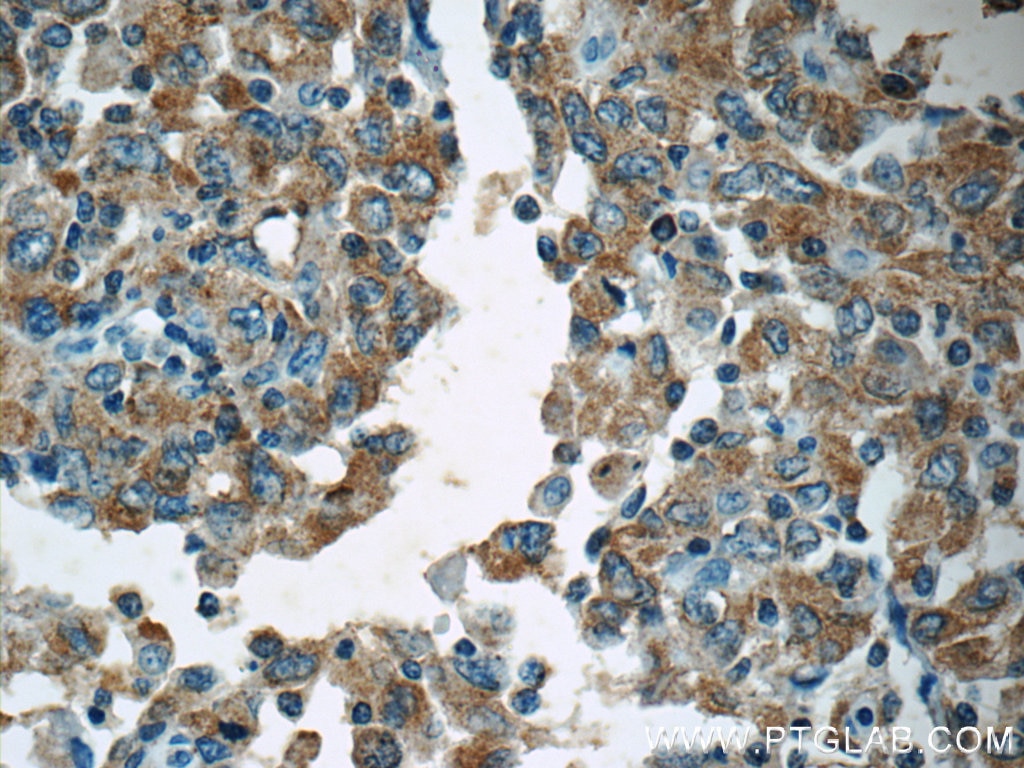
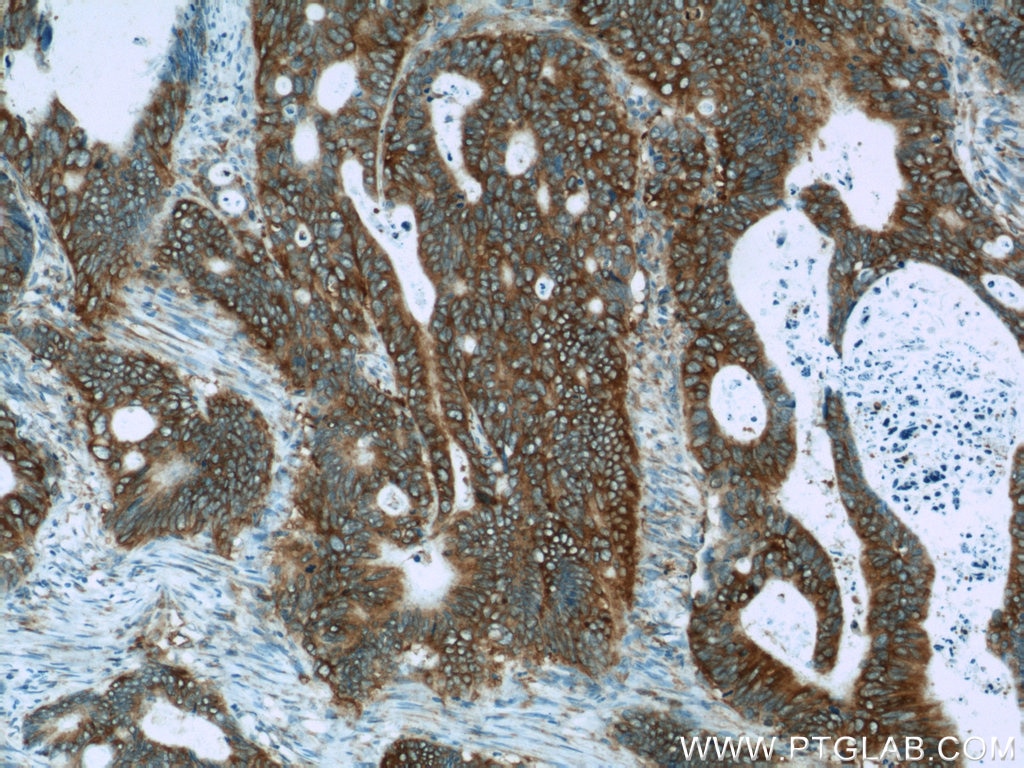

Tested Applications
| Positive IHC detected in | human breast cancer tissue, human colon tissue, human colon cancer tissue, human endometrial cancer tissue Note: suggested antigen retrieval with TE buffer pH 9.0; (*) Alternatively, antigen retrieval may be performed with citrate buffer pH 6.0 |
Recommended dilution
| Application | Dilution |
|---|---|
| Immunohistochemistry (IHC) | IHC : 1:20-1:200 |
| It is recommended that this reagent should be titrated in each testing system to obtain optimal results. | |
| Sample-dependent, Check data in validation data gallery. | |
Product Information
19782-1-AP targets APC in WB, IHC, ELISA applications and shows reactivity with human samples.
| Tested Reactivity | human |
| Cited Reactivity | human, mouse |
| Host / Isotype | Rabbit / IgG |
| Class | Polyclonal |
| Type | Antibody |
| Immunogen |
Peptide Predict reactive species |
| Full Name | adenomatous polyposis coli |
| Calculated Molecular Weight | 312 kDa |
| GenBank Accession Number | NM_000038 |
| Gene Symbol | APC |
| Gene ID (NCBI) | 324 |
| RRID | AB_2878605 |
| Conjugate | Unconjugated |
| Form | Liquid |
| Purification Method | Antigen affinity purification |
| UNIPROT ID | P25054 |
| Storage Buffer | PBS with 0.02% sodium azide and 50% glycerol, pH 7.3. |
| Storage Conditions | Store at -20°C. Stable for one year after shipment. Aliquoting is unnecessary for -20oC storage. 20ul sizes contain 0.1% BSA. |
Background Information
APC, also named as DP2.5, belongs to the adenomatous polyposis coli (APC) family. APC is a tumor suppressor that regulates cell division, helps ensure that the number of chromosomes in a cell is correct following cell division, and associates with other proteins involved in cell attachment and signaling. APC promotes rapid degradation of CTNNB1 and participates in Wnt signaling as a negative regulator. It plays a critical role in several cellular processes. APC regulates beta-catenin levels through Wnt-signaling and is involved in actin cytoskeletal integrity, cell-cell adhesion and cell migration. APC activity is correlated with its phosphorylation state. Defects in APC are a cause of familial adenomatous polyposis (FAP) which includes also Gardner syndrome (GS). Defects in APC are a cause of hereditary desmoid disease (HDD) which also known as familial infiltrative fibromatosis (FIF). Defects in APC are a cause of medulloblastoma (MDB) which is a malignant, invasive embryonal tumor of the cerebellum with a preferential manifestation in children. Defects in APC are a cause of mismatch repair cancer syndrome (MMRCS) which also known as Turcot syndrome or brain tumor-polyposis syndrome 1 (BTPS1).
Protocols
| Product Specific Protocols | |
|---|---|
| IHC protocol for APC antibody 19782-1-AP | Download protocol |
| Standard Protocols | |
|---|---|
| Click here to view our Standard Protocols |
Publications
What published studies show
APC Polyclonal antibody (Cat# 19782-1-AP) has 15 citations across journals including Cancer Research, Drug Resistance Updates, Phytomedicine, World Journal of Gastroenterology, Biochemical Pharmacology, International Immunopharmacology, International Journal of Molecular Sciences, Molecular Oncology, iScience, BMC Complementary Medicine and Therapies, Biomedical Pharmacotherapy, Journal of Bone Oncology, Cancer Medicine, Tissue and Cell, and Evidence-Based Complementary and Alternative Medicine. Research fields span oncology (lung, pancreatic, prostate, colon, ovarian, osteosarcoma, hepatocellular carcinoma), Wnt/β-catenin signaling, rheumatoid arthritis, neuroprotection, obesity, and psoriasis.
| Species | Application | Title |
|---|---|---|
Cancer Res Adaptive Regulation of dNTP Homeostasis Confers Osimertinib Resistance in EGFR-Mutant Non-small Cell Lung Carcinoma. | ||
Drug Resist Updat ATP-binding cassette subfamily A member 5 suppresses pancreatic ductal adenocarcinoma progression and chemoresistance by promoting β-catenin ubiquitin-dependent degradation. | ||
Phytomedicine Targeting UBE2T by β-elemene inhibits prostate cancer stem cells and bone metastasis by blocking the TRIM28/pGSK3β/β-catenin signaling. | ||
World J Gastroenterol MiR-205 mediated APC regulation contributes to pancreatic cancer cell proliferation. | ||
Biochem Pharmacol Corylifol A alleviates rheumatoid arthritis by targeting HSP90α and suppressing Wnt/β-catenin signaling. | ||
Int Immunopharmacol Curcumin activates the Wnt/β-catenin signaling pathway to alleviate hippocampal neurogenesis abnormalities caused by intermittent hypoxia: A study based on network pharmacology and experimental verification |
Reviews
What customers say
The product received one review with a 4-star rating. The reviewer used it for immunofluorescence on mouse tissue at a 1:50 dilution. No written comments were provided, but the high rating suggests satisfactory performance for the application.
The reviews below have been submitted by verified Proteintech customers who received an incentive for providing their feedback.
Brianna (Verified Customer) (12-13-2018) |
|









