
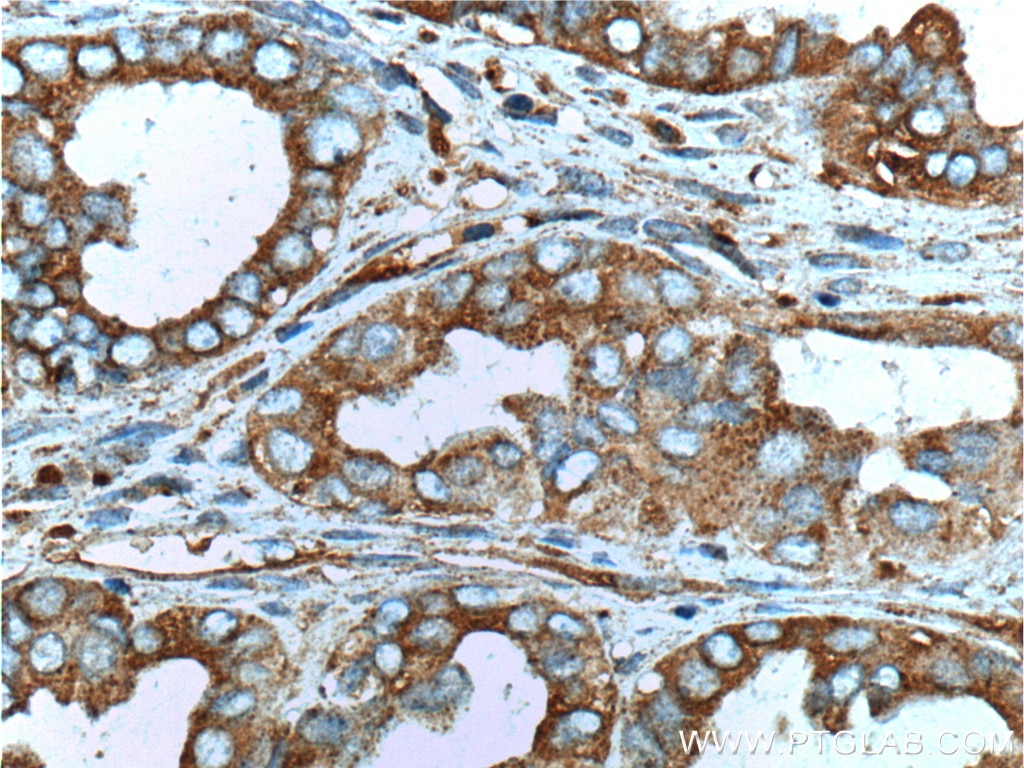

Tested Applications
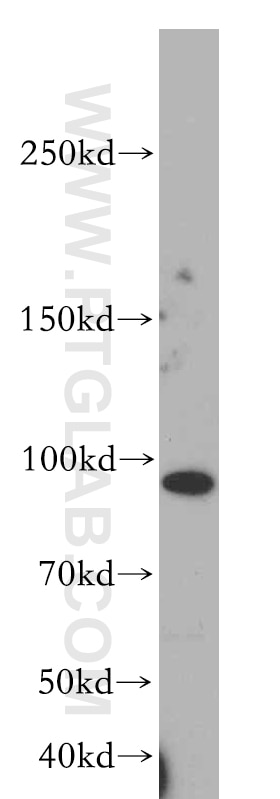
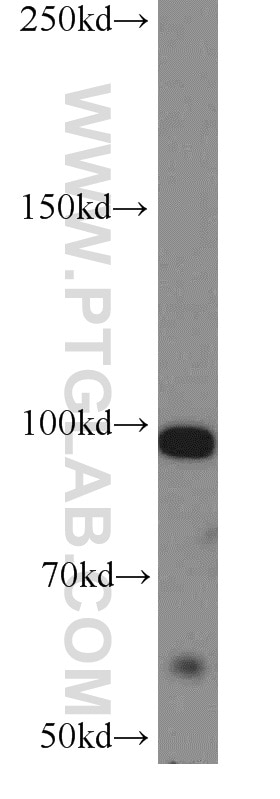
| Positive WB detected in | HeLa cells |
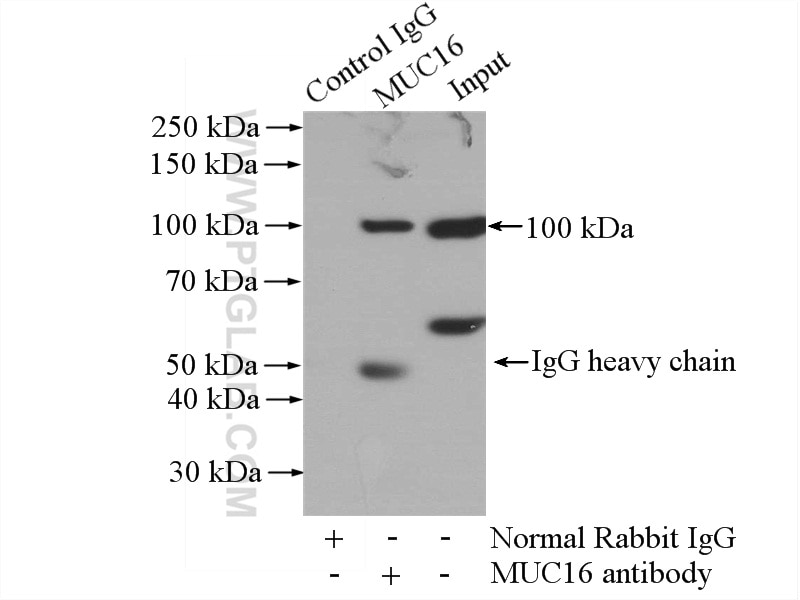
| Positive IP detected in | HeLa cells |
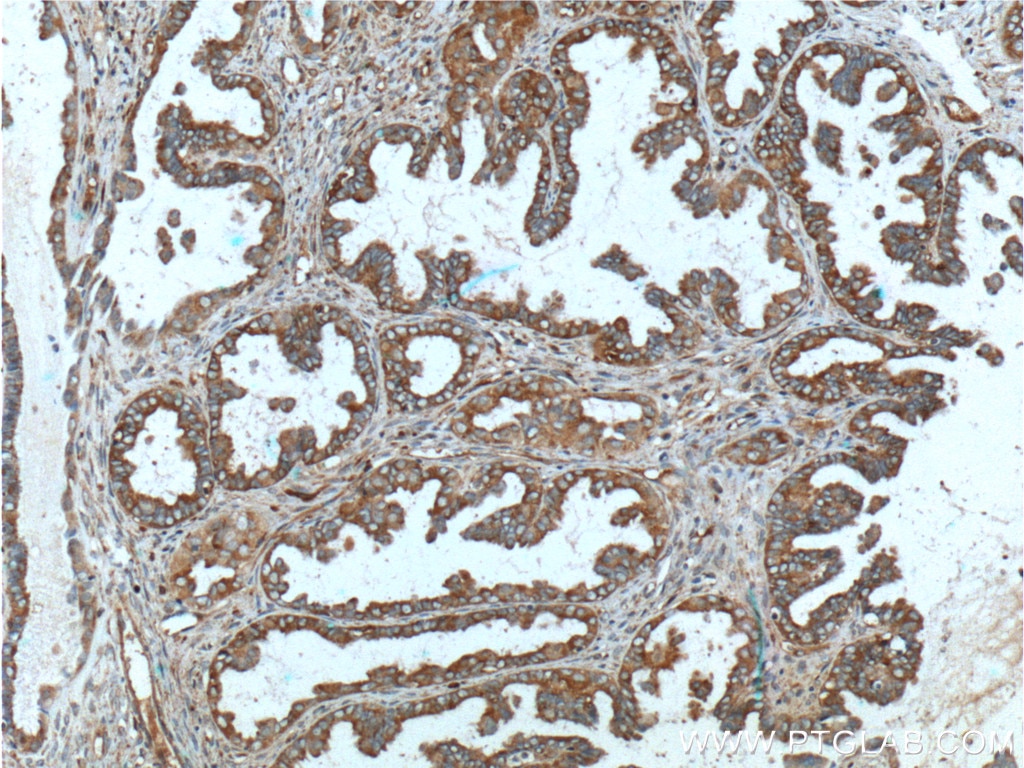
| Positive IHC detected in | human ovary tumor tissue Note: suggested antigen retrieval with TE buffer pH 9.0; (*) Alternatively, antigen retrieval may be performed with citrate buffer pH 6.0 |
Recommended dilution
| Application | Dilution |
|---|---|
| Western Blot (WB) | WB : 1:500-1:1000 |
| Immunoprecipitation (IP) | IP : 0.5-4.0 ug for 1.0-3.0 mg of total protein lysate |
| Immunohistochemistry (IHC) | IHC : 1:50-1:500 |
| It is recommended that this reagent should be titrated in each testing system to obtain optimal results. | |
| Sample-dependent, Check data in validation data gallery. | |
Product Information
20077-1-AP targets MUC16/CA125 in WB, IHC, IP, ELISA applications and shows reactivity with human samples.
| Tested Reactivity | human |
| Cited Reactivity | human |
| Host / Isotype | Rabbit / IgG |
| Class | Polyclonal |
| Type | Antibody |
| Immunogen |
Peptide Predict reactive species |
| Full Name | mucin 16, cell surface associated |
| Calculated Molecular Weight | 1519 kDa |
| Observed Molecular Weight | 90-100 kDa |
| GenBank Accession Number | NM_024690 |
| Gene Symbol | MUC16 |
| Gene ID (NCBI) | 94025 |
| RRID | AB_10695048 |
| Conjugate | Unconjugated |
| Form | Liquid |
| Purification Method | Antigen affinity purification |
| UNIPROT ID | Q8WXI7 |
| Storage Buffer | PBS with 0.02% sodium azide and 50% glycerol, pH 7.3. |
| Storage Conditions | Store at -20°C. Stable for one year after shipment. Aliquoting is unnecessary for -20oC storage. 20ul sizes contain 0.1% BSA. |
Background Information
MUC16, also named as CA125, is thought to provide a protective, lubricating barrier against particles and infectious agents at mucosal surfaces. It is a serum marker that is used routinely in gynecologic practice to monitor patients with ovarian cancer. Most biochemical studies have concluded that MUC16 is a high molecular mass glycoprotein, although estimates of its size range from 200 to 2000 kDa with smaller "subunits" being described by some investigators. The antibody recognizes the C-term of MUC16.
Protocols
| Product Specific Protocols | |
|---|---|
| IHC protocol for MUC16/CA125 antibody 20077-1-AP | Download protocol |
| IP protocol for MUC16/CA125 antibody 20077-1-AP | Download protocol |
| WB protocol for MUC16/CA125 antibody 20077-1-AP | Download protocol |
| Standard Protocols | |
|---|---|
| Click here to view our Standard Protocols |
Publications
What published studies show
The anti-MUC16 antibody (Cat# 20077-1-AP) has 10 total citations published in journals including Molecular Cell, Journal of Experimental & Clinical Cancer Research, International Journal of Biological Macromolecules, International Journal of Oncology, Toxicology, Cancer Science, Cancers, Cell Biology International, Biochemical and Biophysical Research Communications, and Frontiers in Immunology. Research fields span cancer biology (bladder, ovarian, pancreatic, gastric, and lung cancers), post-transcriptional gene regulation, glycoprotein biology, and toxicology.
| Species | Application | Title |
|---|---|---|
Mol Cell Ribo-Tweezer: Rapid removal of ribosomal proteins reveals additional layers of post-transcriptional gene regulation. | ||
J Exp Clin Cancer Res Dysregulation and prometastatic function of glycosyltransferase C1GALT1 modulated by cHP1BP3/ miR-1-3p axis in bladder cancer.
| ||
Int J Biol Macromol Development of novel prognostic protein signatures in ovarian cancer: Molecular structure and immune function of AQP5 protein and CTDP1 protein | ||
Toxicology Necroptosis contributes to airborne particulate matter-induced ocular surface injury. | ||
Cancer Sci Carcinoembryonic antigen as a specific glycoprotein ligand of rBC2LCN lectin on pancreatic ductal adenocarcinoma cells. |






