

Tested Applications
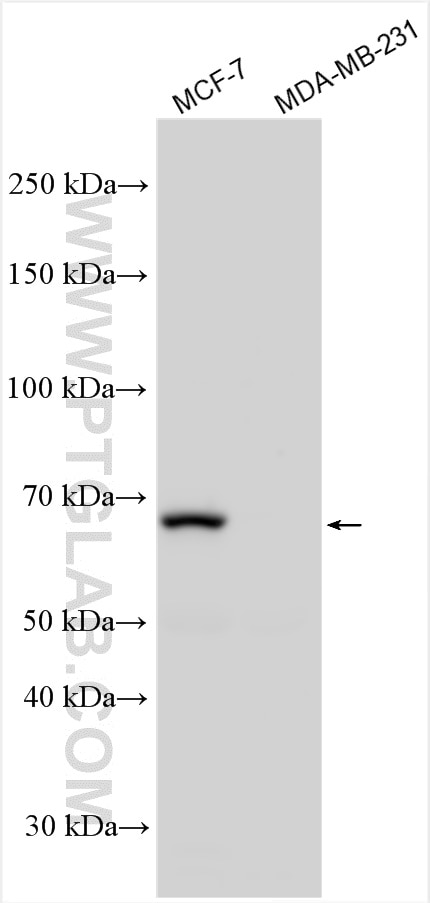
| Positive WB detected in | MCF-7 cells |
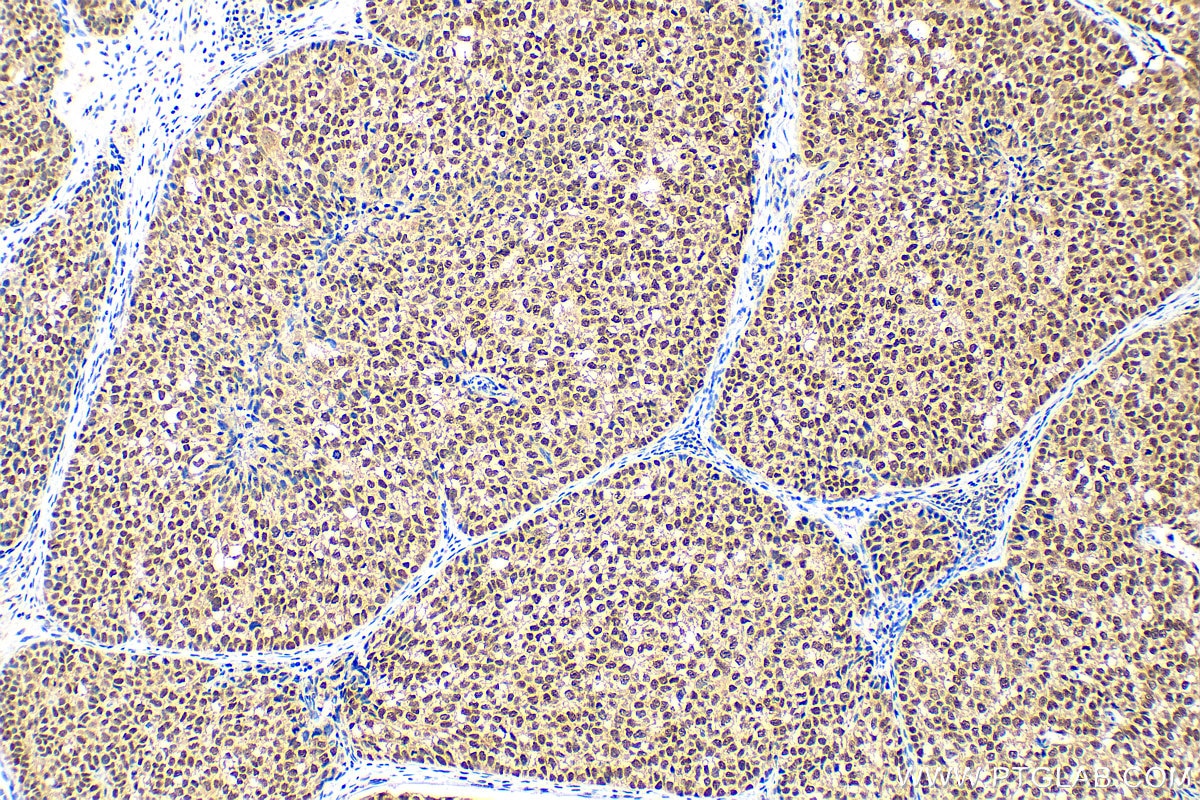
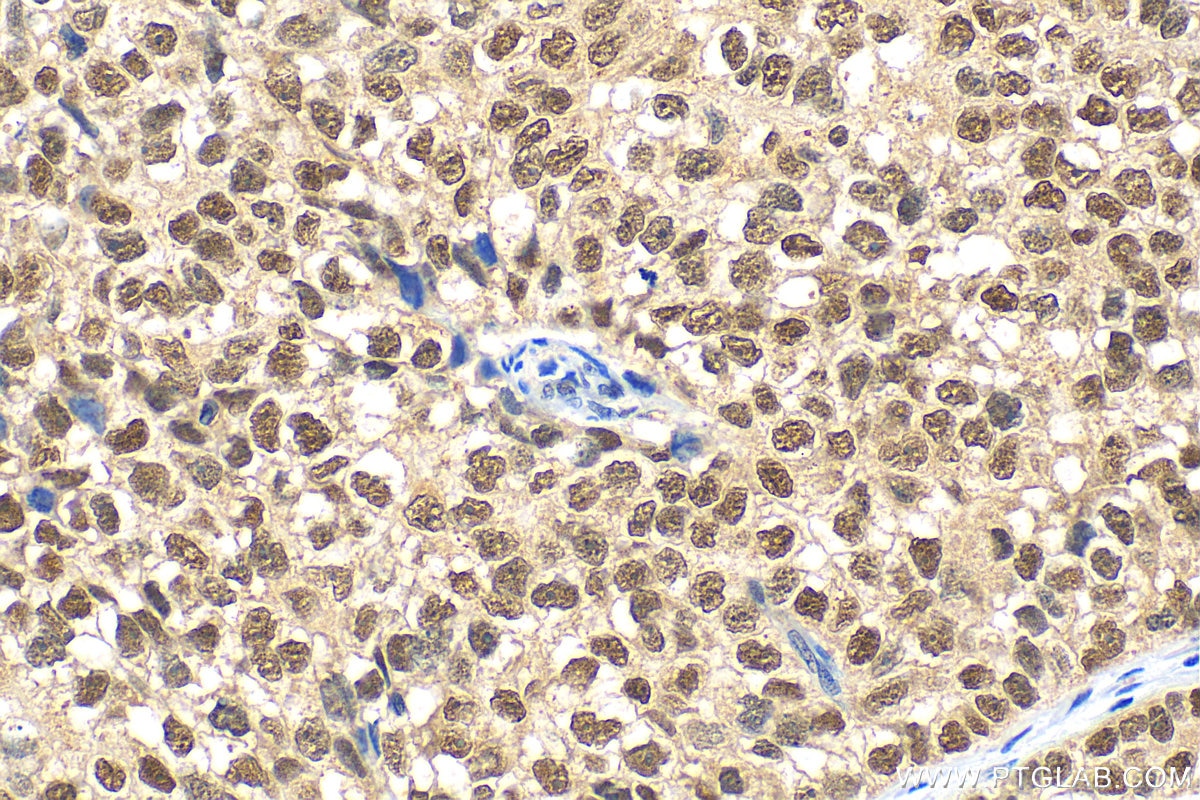
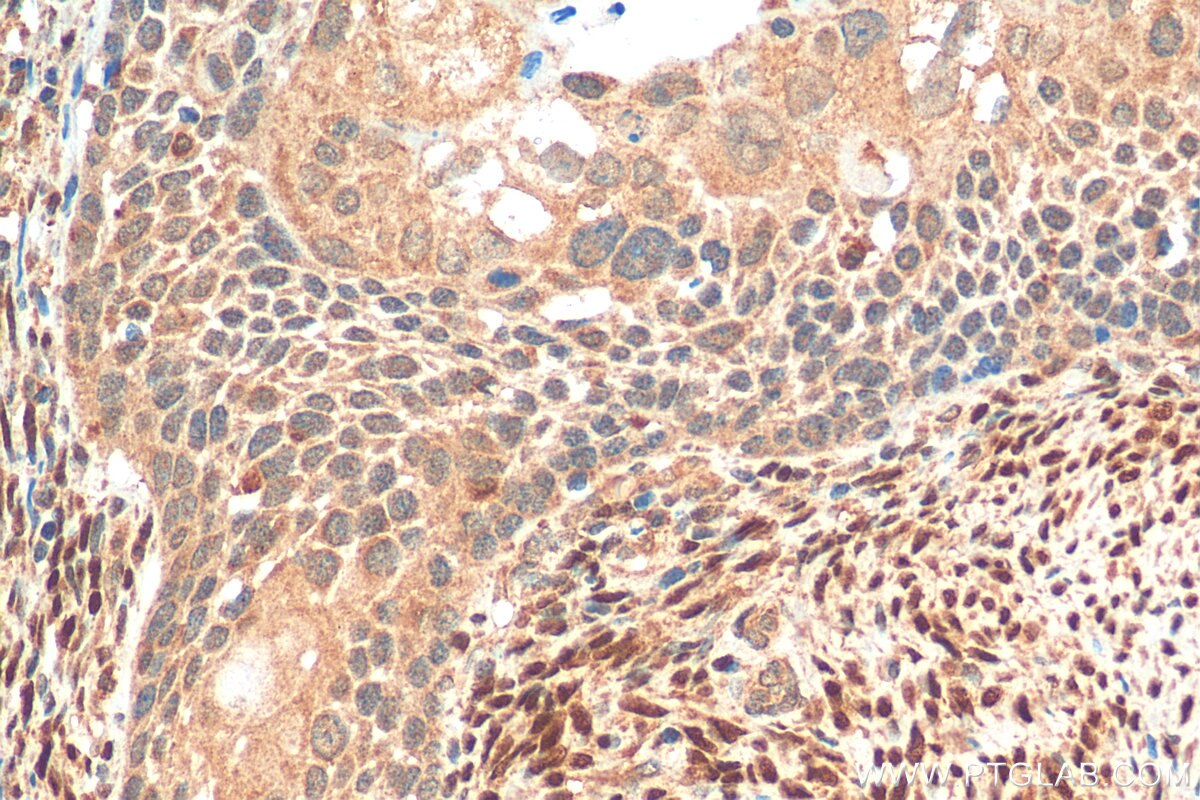
| Positive IHC detected in | human breast cancer tissue, human cervical cancer tissue Note: suggested antigen retrieval with TE buffer pH 9.0; (*) Alternatively, antigen retrieval may be performed with citrate buffer pH 6.0 |
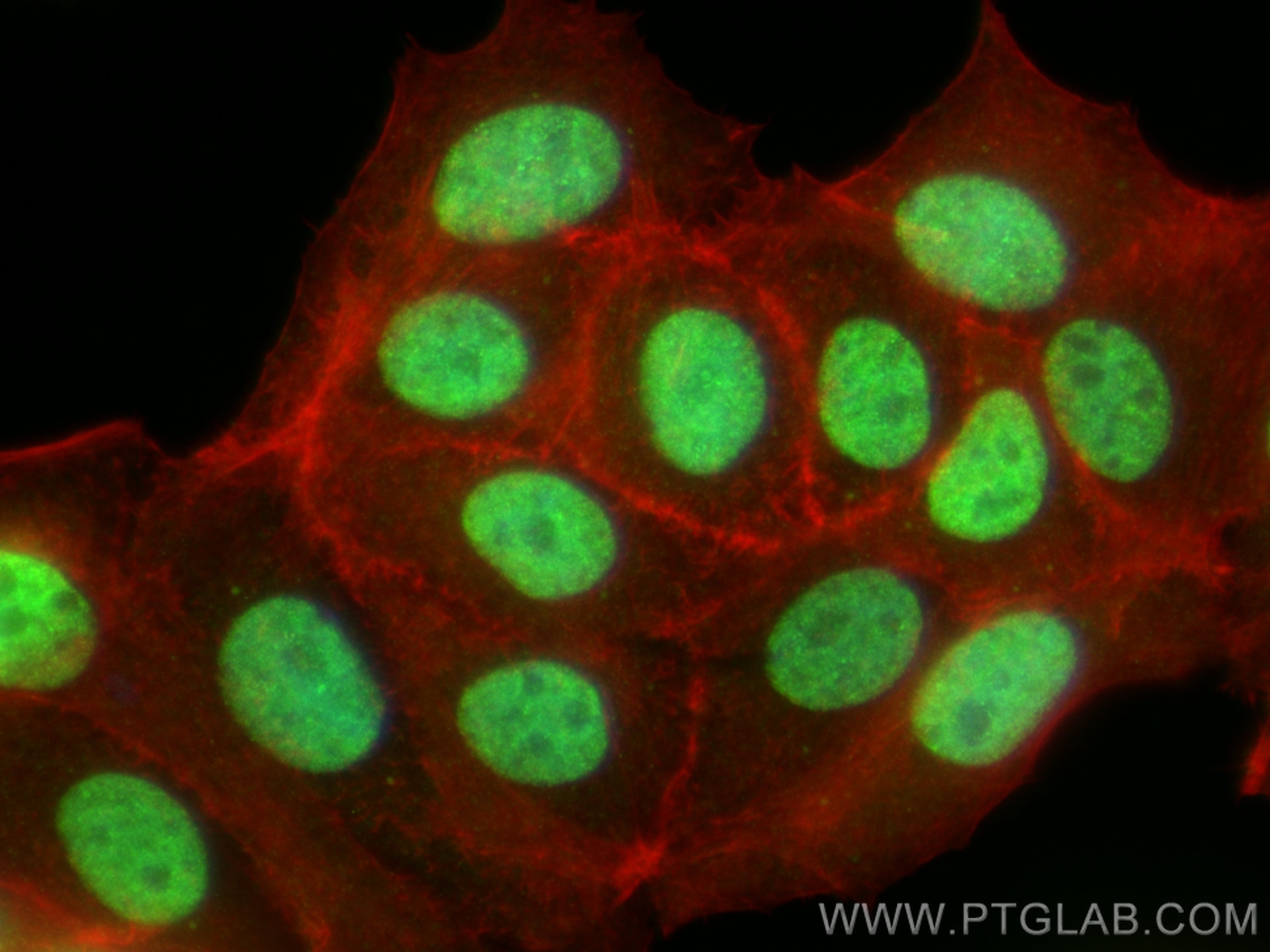
| Positive IF/ICC detected in | MCF-7 cells |
Recommended dilution
| Application | Dilution |
|---|---|
| Western Blot (WB) | WB : 1:1000-1:4000 |
| Immunohistochemistry (IHC) | IHC : 1:50-1:500 |
| Immunofluorescence (IF)/ICC | IF/ICC : 1:200-1:800 |
| It is recommended that this reagent should be titrated in each testing system to obtain optimal results. | |
| Sample-dependent, Check data in validation data gallery. | |
Product Information
20698-1-AP targets ER in WB, IHC, IF/ICC, ELISA applications and shows reactivity with human samples.
| Tested Reactivity | human |
| Cited Reactivity | human, mouse, chicken |
| Host / Isotype | Rabbit / IgG |
| Class | Polyclonal |
| Type | Antibody |
| Immunogen |
Peptide Predict reactive species |
| Full Name | estrogen receptor 1 |
| Calculated Molecular Weight | 66 kDa |
| Observed Molecular Weight | 66 kDa |
| GenBank Accession Number | NM_000125 |
| Gene Symbol | ER |
| Gene ID (NCBI) | 2099 |
| RRID | AB_3085615 |
| Conjugate | Unconjugated |
| Form | Liquid |
| Purification Method | Antigen affinity purification |
| UNIPROT ID | P03372 |
| Storage Buffer | PBS with 0.02% sodium azide and 50% glycerol, pH 7.3. |
| Storage Conditions | Store at -20°C. Stable for one year after shipment. Aliquoting is unnecessary for -20oC storage. 20ul sizes contain 0.1% BSA. |
Background Information
The estrogen receptor (ESR, ER) is a ligand-activated transcription factor composed of several domains important for hormone binding, DNA binding, and activation of transcription. ESR1, also known as ESR or NR3A1, belongs to the nuclear hormone receptor family and NR3 subfamily. It is a nuclear hormone receptor. The steroid hormones and their receptors are involved in the regulation of eukaryotic gene expression and affect cellular proliferation and differentiation in target tissues. ESR1 can activate the transcriptional activity of TFF1.[PMID: 11731608,10970861]
Protocols
| Product Specific Protocols | |
|---|---|
| IF protocol for ER antibody 20698-1-AP | Download protocol |
| IHC protocol for ER antibody 20698-1-AP | Download protocol |
| WB protocol for ER antibody 20698-1-AP | Download protocol |
| Standard Protocols | |
|---|---|
| Click here to view our Standard Protocols |
Publications
What published studies show
The ERα (ESR1) antibody (Cat# 20698-1-AP) has 11 citations published in journals including Cell Death & Disease, Biochemical Pharmacology, European Journal of Medicinal Chemistry, Frontiers in Pharmacology, Journal of Ethnopharmacology, Chinese Medicine, Poultry Science, Naunyn-Schmiedeberg's Archives of Pharmacology, Experimental Cell Research, American Journal of Cancer Research, and Cytotechnology. Associated research fields span breast cancer, thrombopoiesis, myelin repair, diabetic wound healing, ferroptosis, estrogen signaling, and ovarian insufficiency.
| Species | Application | Title |
|---|---|---|
Cell Death Dis Metabolic shifts in lipid utilization and reciprocal interactions within the lung metastatic niche of triple-negative breast cancer revealed by spatial multi-omics | ||
Chin Med A systems herbal-to-molecule and transcriptomic strategy identifies emodin as an ESR1-targeting phytochemical driving thrombopoiesis. | ||
J Ethnopharmacol Epigallocatechin promotes megakaryocyte differentiation via ERα-dependent SRC/PI3K/AKT signaling for thrombocytopenia treatment. | ||
Eur J Med Chem Discovery of non-antiproliferative selective estrogen receptor degraders (SERDs) based on scaffold optimization of elacestrant | ||
Biochem Pharmacol Formononetin alleviates corticosterone-induced myelin damage through activating ERα and promoting the differentiation of oligodendrocyte precursor cells in the prefrontal cortex. | ||
Front Pharmacol Piroxicam accelerates diabetic foot ulcer healing via ERα-dependent mitochondrial protection and oxidative stress relief. |
Reviews
What customers say
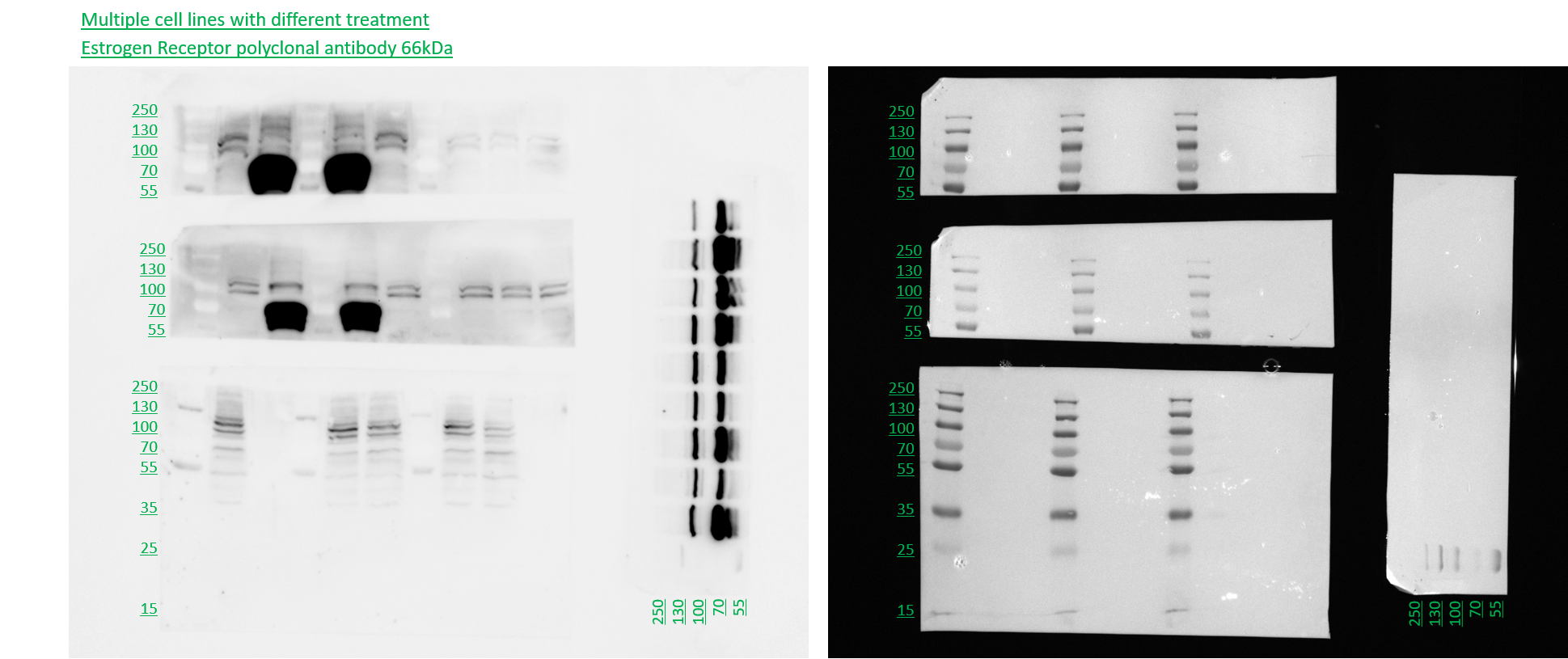
One reviewer used this antibody for Western Blot at a 1:1000 dilution on cancer cell lines and rated it 2 out of 5. They reported observing significant bands across numerous cell lines, including in cells where such robust expression was not expected. The reviewer suggested that a monoclonal antibody might provide more precise results compared to this polyclonal antibody, indicating concerns about specificity.
The reviews below have been submitted by verified Proteintech customers who received an incentive for providing their feedback.
Shinford. Z (Verified Customer) (01-31-2024) | Significant bands were observed across numerous cell lines, including instances where cells were not expected to exhibit such robust expression intensity. It raises the possibility that a monoclonal antibody might yield more precise results compared to the polyclonal antibody currently employed.
 |






