

Tested Applications
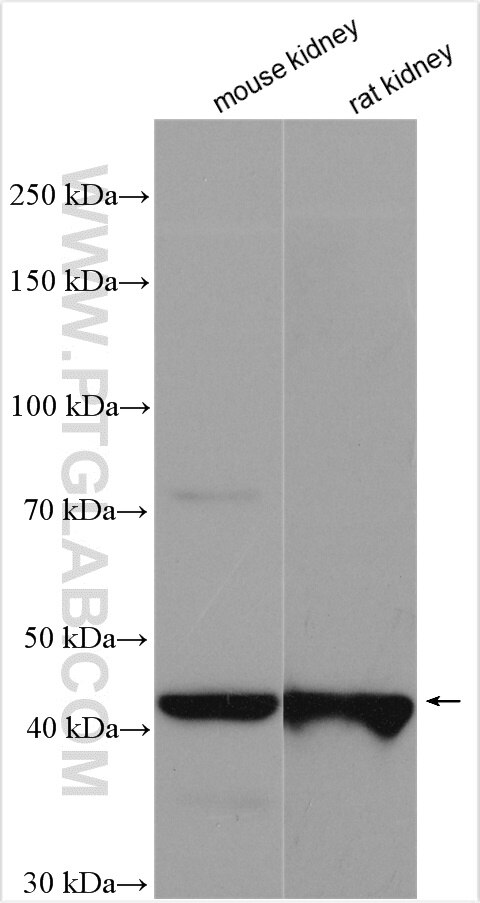
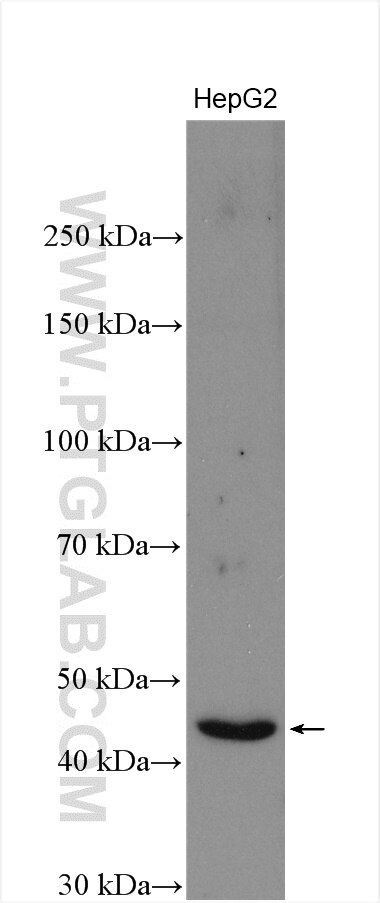
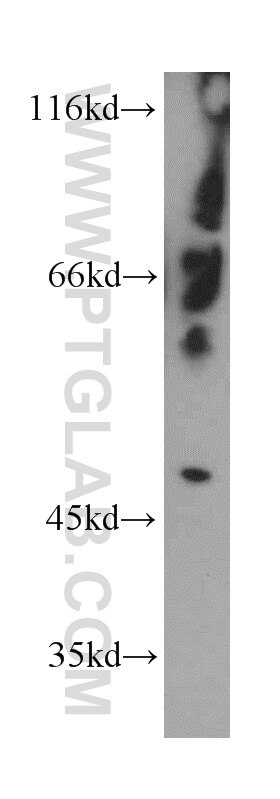
| Positive WB detected in | mouse kidney tissue, mouse pancreas tissue, mouse skeletal muscle tissue, HepG2 cells, HEK-293 cells, rat kidney tissue |
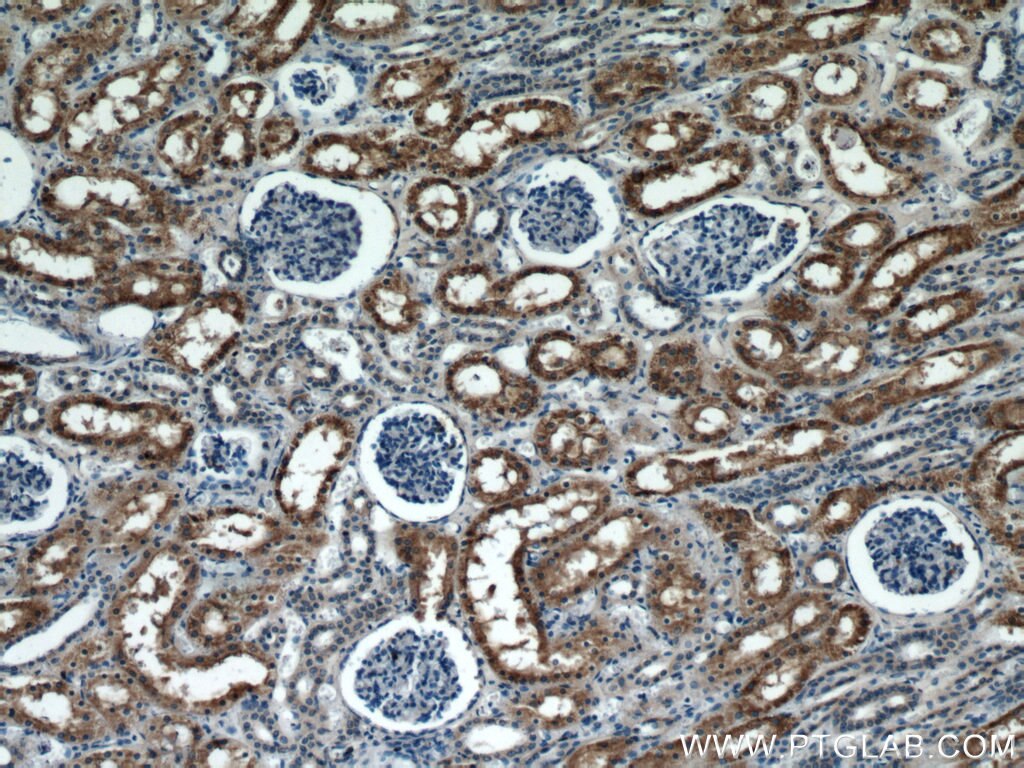
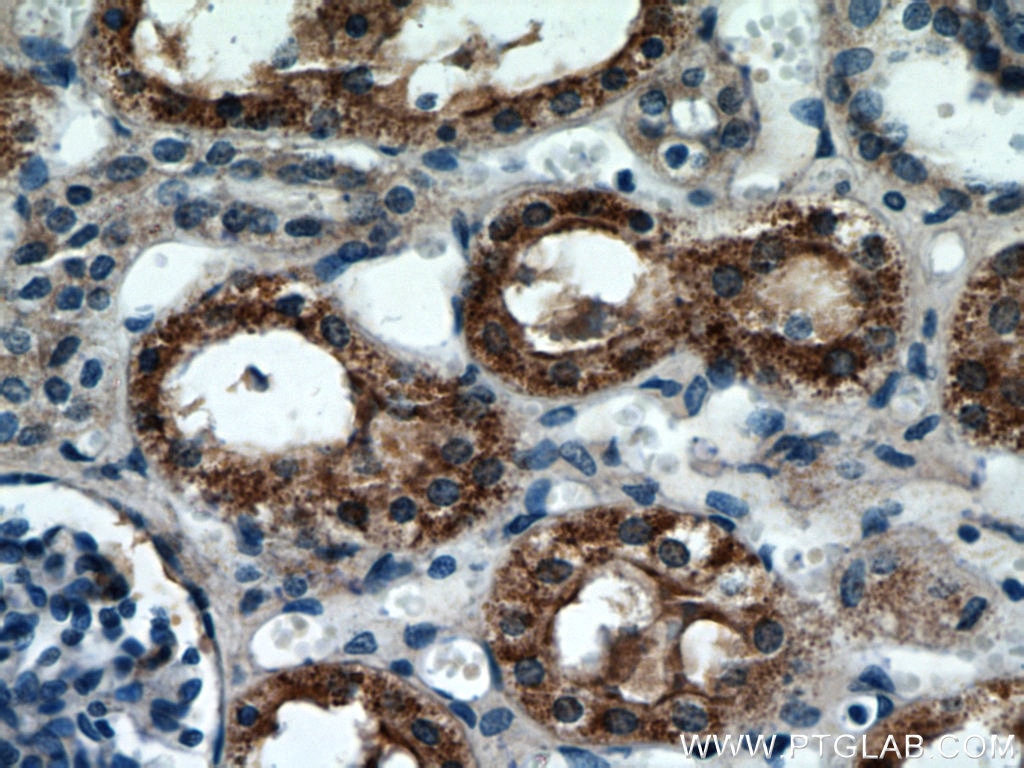
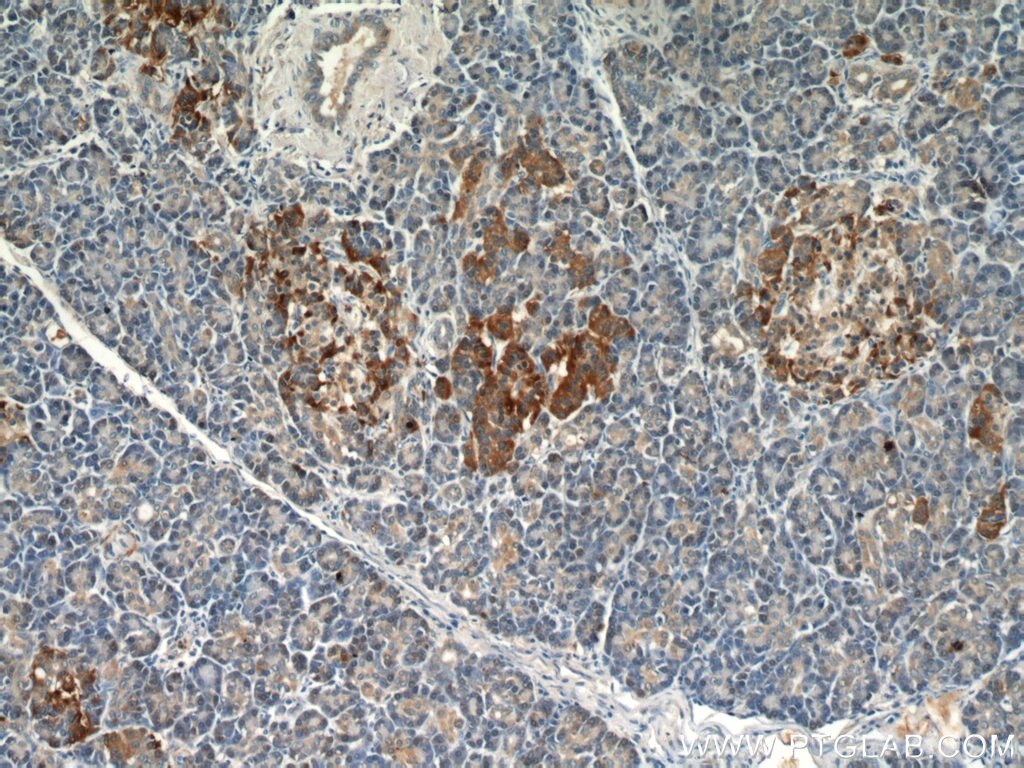
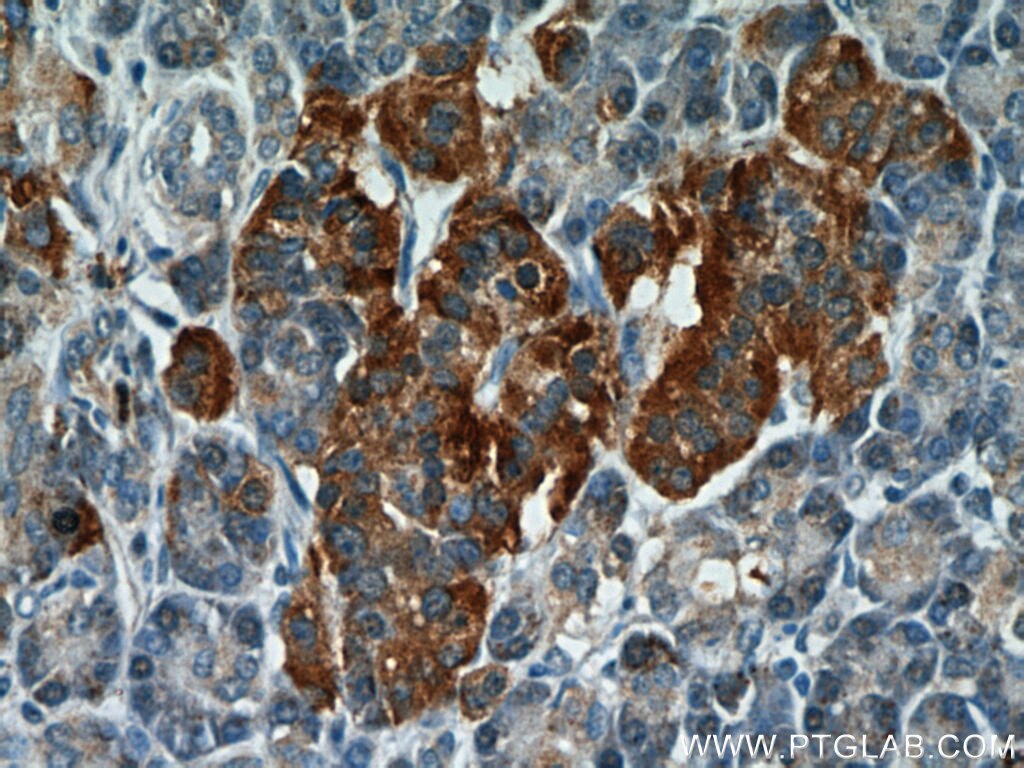
| Positive IHC detected in | human kidney tissue, human pancreas tissue Note: suggested antigen retrieval with TE buffer pH 9.0; (*) Alternatively, antigen retrieval may be performed with citrate buffer pH 6.0 |
Recommended dilution
| Application | Dilution |
|---|---|
| Western Blot (WB) | WB : 1:1000-1:4000 |
| Immunohistochemistry (IHC) | IHC : 1:20-1:200 |
| It is recommended that this reagent should be titrated in each testing system to obtain optimal results. | |
| Sample-dependent, Check data in validation data gallery. | |
Product Information
21589-1-AP targets SUGCT in WB, IHC, ELISA applications and shows reactivity with human, mouse, rat samples.
| Tested Reactivity | human, mouse, rat |
| Cited Reactivity | human, mouse |
| Host / Isotype | Rabbit / IgG |
| Class | Polyclonal |
| Type | Antibody |
| Immunogen |
CatNo: Ag16159 Product name: Recombinant human C7orf10 protein Source: e coli.-derived, PGEX-4T Tag: GST Domain: 123-471 aa of BC098318 Sequence: VKIIKELAAVCDVFVENYVPGKLSAMGLGYEDIDEIAPHIIYCSITGYGQTGPISQRAGYDAVASAVSGLMHITGPENGDPVRPGVAMTDLATGLYAYGAIMAGLIQKYKTGKGLFIDCNLLSSQVACLSHIAANYLIGQKEAKRWGTAHGSIVPYQAFKTKDGYIVVGAGNNQQFATVCKILDLPELIDNSKYKTNHLRVHNRKELIKILSERFEEELTSKWLYLFEGSGVPYGPINNMKNVFAEPQNAVSGFQSLLHSLAHGPFLHLQGSARVLHNGLVMEMEHPTVGKISVPGPAVRYSKFKMSEARPPPLLGQHTTHILKEVLRYDDRAIGELLSAGVVDQHETH Predict reactive species |
| Full Name | chromosome 7 open reading frame 10 |
| Calculated Molecular Weight | 471 aa, 51 kDa |
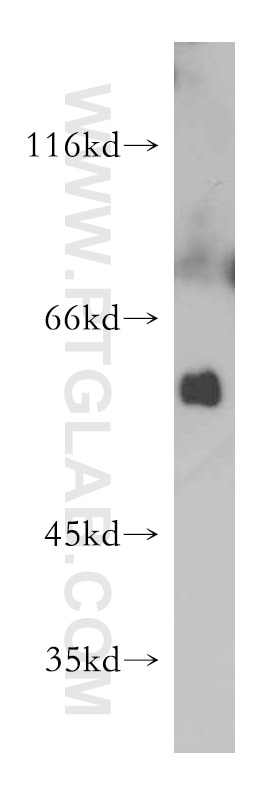
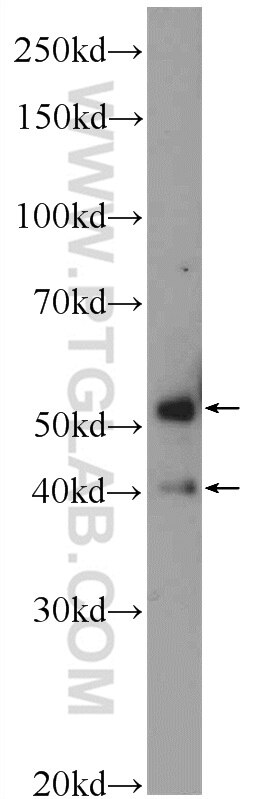
| Observed Molecular Weight | 48-55 kDa |
| GenBank Accession Number | BC098318 |
| Gene Symbol | C7orf10 |
| Gene ID (NCBI) | 79783 |
| RRID | AB_10734435 |
| Conjugate | Unconjugated |
| Form | Liquid |
| Purification Method | Antigen affinity purification |
| UNIPROT ID | Q9HAC7 |
| Storage Buffer | PBS with 0.02% sodium azide and 50% glycerol, pH 7.3. |
| Storage Conditions | Store at -20°C. Stable for one year after shipment. Aliquoting is unnecessary for -20oC storage. 20ul sizes contain 0.1% BSA. |
Background Information
C7orf10 is also named as SUGCT, DERP13 and belongs to the CaiB/BaiF CoA-transferase family. It may function as part of a multiunit enzyme complex (A), similar to the alpha-ketoglutarate dehydrogenase system, or as the second of two independent enzymes, the first of which decarboxylates alpha-ketoadipate to glutarate (B). This protein has 4 isoforms produced by alternative splicing with the molecular weight from 43 kDa to 51 kDa.
Protocols
| Product Specific Protocols | |
|---|---|
| IHC protocol for SUGCT antibody 21589-1-AP | Download protocol |
| WB protocol for SUGCT antibody 21589-1-AP | Download protocol |
| Standard Protocols | |
|---|---|
| Click here to view our Standard Protocols |
Publications
What published studies show
SUGCT Polyclonal antibody (Cat# 21589-1-AP) has 5 total citations. These appear in Cell Mol Life Sci, Front Aging Neurosci, FASEB J, Transl Androl Urol, and bioRxiv. The associated research fields include metabolic syndrome and diabetes, neurodegenerative disease (ALS), organic acid metabolism (glutaric aciduria type 1), and acute kidney injury. All citations used the antibody for Western blot, with one also employing IHC.
| Species | Application | Title |
|---|---|---|
Cell Mol Life Sci Knockout of the non-essential gene SUGCT creates diet-linked, age-related microbiome disbalance with a diabetes-like metabolic syndrome phenotype. | ||
Front Aging Neurosci A Y374X TDP43 truncation leads to an altered metabolic profile in amyotrophic lateral sclerosis fibroblasts driven by pyruvate and TCA cycle intermediate alterations | ||
FASEB J Odd-Chain Dicarboxylic Acid Feeding Produces a Glutaric Aciduria Type 1-Like Metabolic Signature in Mice. | ||
Transl Androl Urol Identification of core genes in acute kidney injury: evidence from multi-omics human transcriptomic data and in vivo models | ||
bioRxiv Odd-chain dicarboxylic acid feeding recapitulates the biochemical phenotype of glutaric aciduria type 1 in mice |










