

Tested Applications
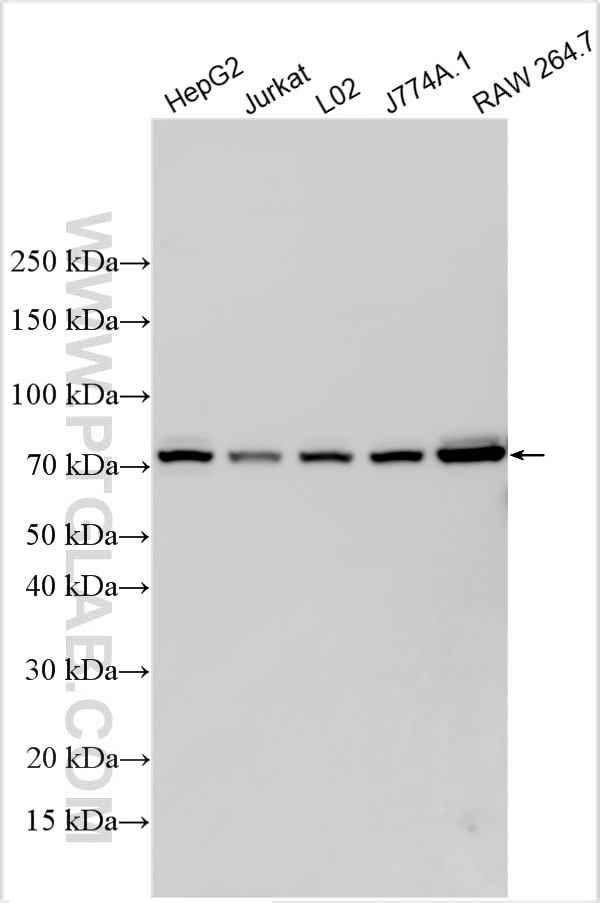
| Positive WB detected in | HepG2 cells, Jurkat cells, L02 cells, J774A.1 cells, RAW 264.7 cells |
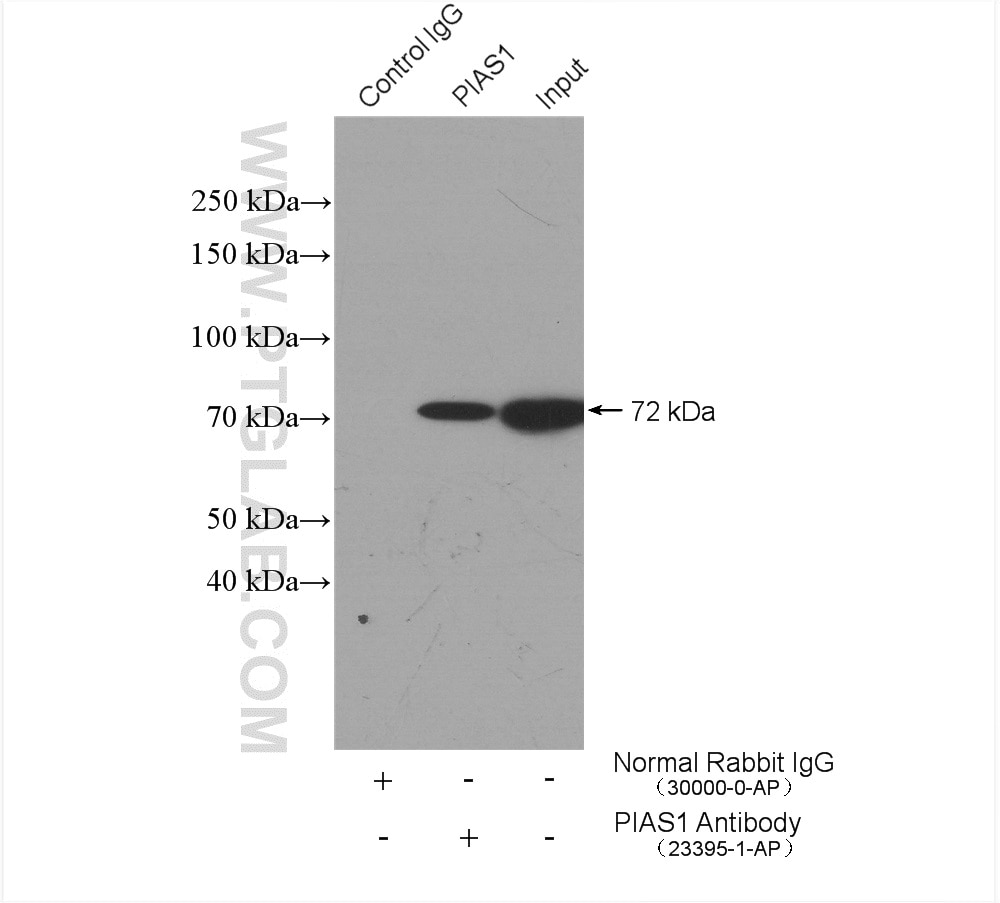
| Positive IP detected in | HepG2 cells |
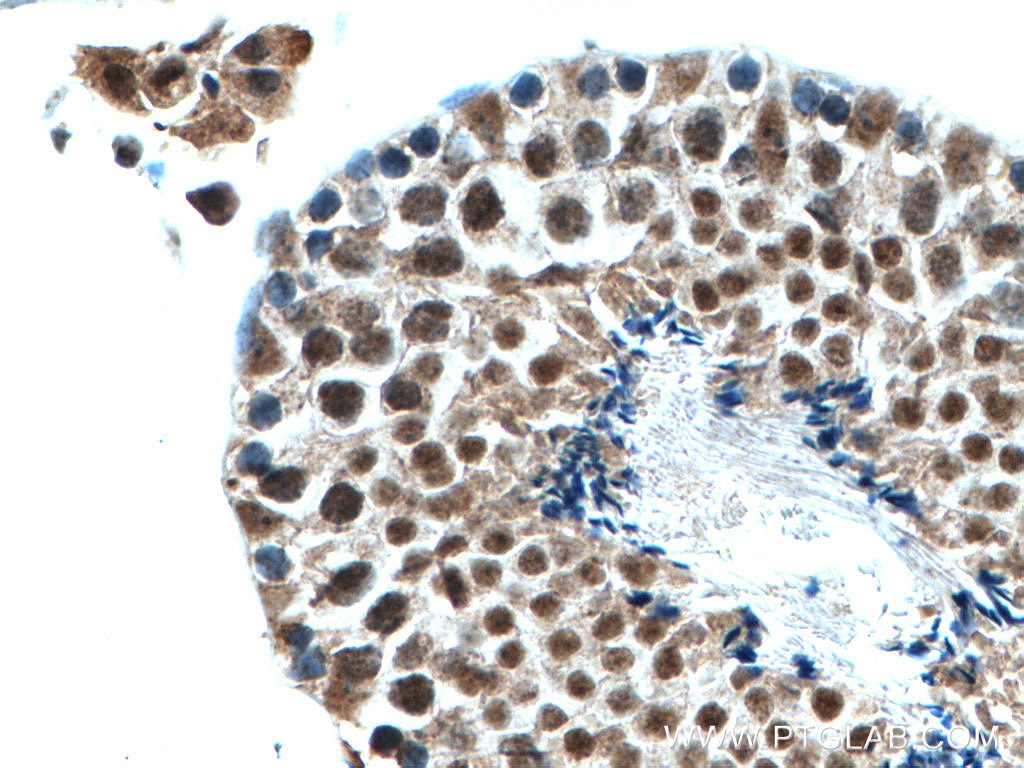
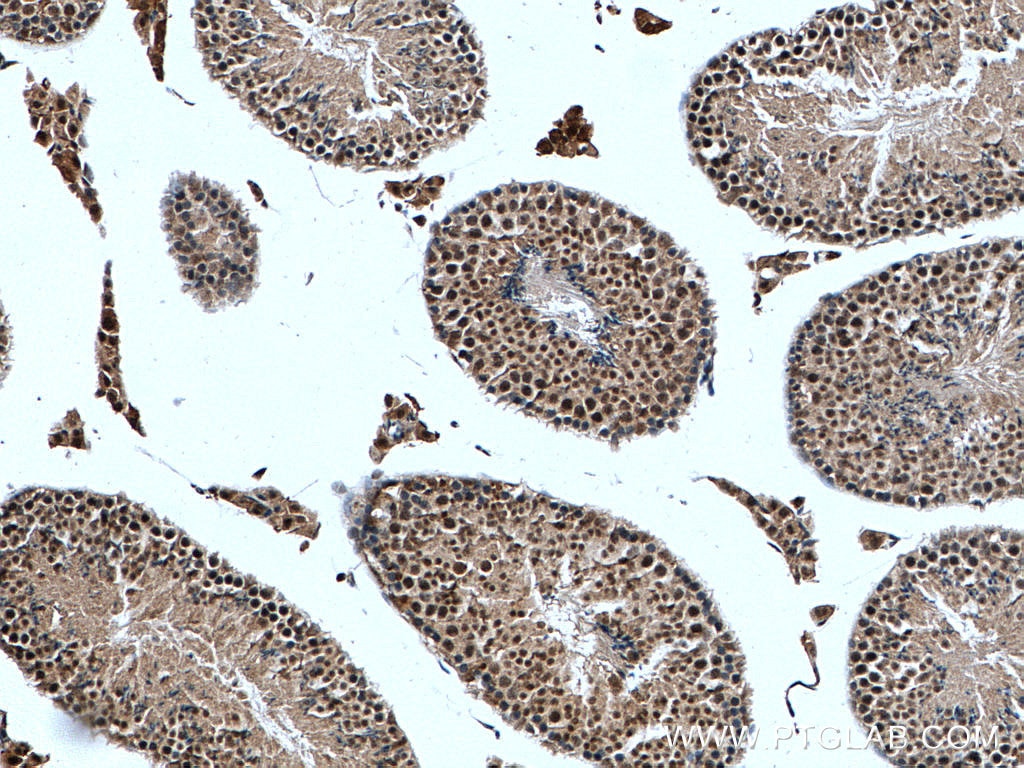
| Positive IHC detected in | mouse testis tissue Note: suggested antigen retrieval with TE buffer pH 9.0; (*) Alternatively, antigen retrieval may be performed with citrate buffer pH 6.0 |
Recommended dilution
| Application | Dilution |
|---|---|
| Western Blot (WB) | WB : 1:1000-1:6000 |
| Immunoprecipitation (IP) | IP : 0.5-4.0 ug for 1.0-3.0 mg of total protein lysate |
| Immunohistochemistry (IHC) | IHC : 1:200-1:800 |
| It is recommended that this reagent should be titrated in each testing system to obtain optimal results. | |
| Sample-dependent, Check data in validation data gallery. | |
Product Information
23395-1-AP targets PIAS1 in WB, IHC, IF, IP, CoIP, ChIP, ELISA applications and shows reactivity with human, mouse samples.
| Tested Reactivity | human, mouse |
| Cited Reactivity | human, mouse, rat |
| Host / Isotype | Rabbit / IgG |
| Class | Polyclonal |
| Type | Antibody |
| Immunogen |
CatNo: Ag18132 Product name: Recombinant human PIAS1 protein Source: e coli.-derived, PGEX-4T Tag: GST Domain: 475-651 aa of BC121797 Sequence: PSAKRTCPSLSPTSPLNNKGILSLPHQASPVSRTPSLPAVDTSYINTSLIQDYRHPFHMTPMPYDLQGLDFFPFLSGDNQHYNTSLLAAAAAAVSDDQDLLHSSRFFPYTSSQMFLDQLSAGGSTSLPTTNGSSSGSNSSLVSSNSLRESHSHTVTNRSSTDTASIFGIIPDIISLD Predict reactive species |
| Full Name | protein inhibitor of activated STAT, 1 |
| Calculated Molecular Weight | 651 aa, 72 kDa |
| Observed Molecular Weight | 72 kDa |
| GenBank Accession Number | BC121797 |
| Gene Symbol | PIAS1 |
| Gene ID (NCBI) | 8554 |
| RRID | AB_2879272 |
| Conjugate | Unconjugated |
| Form | Liquid |
| Purification Method | Antigen affinity purification |
| UNIPROT ID | O75925 |
| Storage Buffer | PBS with 0.02% sodium azide and 50% glycerol, pH 7.3. |
| Storage Conditions | Store at -20°C. Stable for one year after shipment. Aliquoting is unnecessary for -20oC storage. 20ul sizes contain 0.1% BSA. |
Protocols
| Product Specific Protocols | |
|---|---|
| IHC protocol for PIAS1 antibody 23395-1-AP | Download protocol |
| IP protocol for PIAS1 antibody 23395-1-AP | Download protocol |
| WB protocol for PIAS1 antibody 23395-1-AP | Download protocol |
| Standard Protocols | |
|---|---|
| Click here to view our Standard Protocols |
Publications
What published studies show
The PIAS1 Polyclonal antibody (Cat# 23395-1-AP) has 19 citations spanning journals including Nature Communications, Signal Transduction and Targeted Therapy, Brain, Molecular Psychiatry, PLoS Pathogens, and International Journal of Biological Sciences. Research fields cover SUMOylation biology, cancer (AML, bladder, lung, endometrial), neurodegeneration (Huntington's, Alzheimer's), liver injury, atherosclerosis, viral infection, diabetes, pancreatitis, and inflammatory bowel disease.
| Species | Application | Title |
|---|---|---|
Signal Transduct Target Ther Targeting ZMIZ1 induces differentiation in acute myeloid leukemia via chromatin remodeling. | ||
Nat Commun Crosstalk between SUMOylation and ubiquitylation controls DNA end resection by maintaining MRE11 homeostasis on chromatin | ||
Nat Commun CryoET reveals organelle phenotypes in huntington disease patient iPSC-derived and mouse primary neurons | ||
Nat Commun Reprogramming gut microenvironment for the treatment of acute severe ulcerative colitis via a synergistic therapy of necroptosis blockade and organoid transplantation. | ||
Brain Dysregulation of protein SUMOylation networks in Huntington's disease R6/2 mouse striatum | ||
Int J Biol Sci SUMO E3 ligase MUL1 inhibits lymph node metastasis of bladder cancer by mediating mitochondrial HSPA9 translocation |
Reviews
What customers say
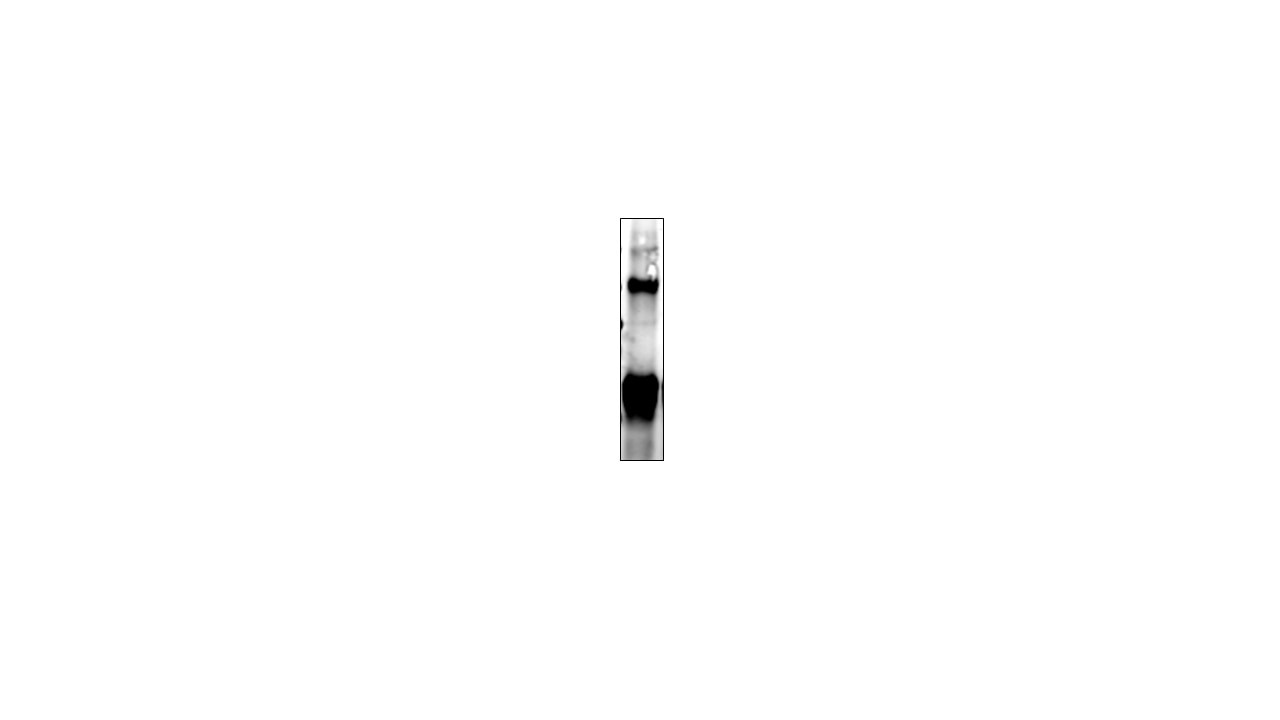
The single review for this product is highly positive, with a 5-star rating. The customer used the antibody for immunoprecipitation on Ac16 cells and reported that it worked well. Overall, the feedback indicates reliable performance for its intended application.
The reviews below have been submitted by verified Proteintech customers who received an incentive for providing their feedback.
Praveen (Verified Customer) (02-25-2019) | WORK WELL
 |





