

Tested Applications
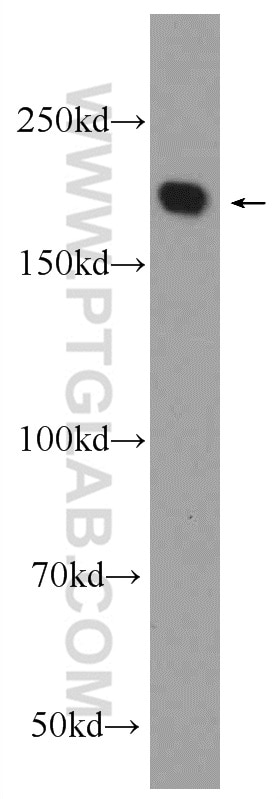
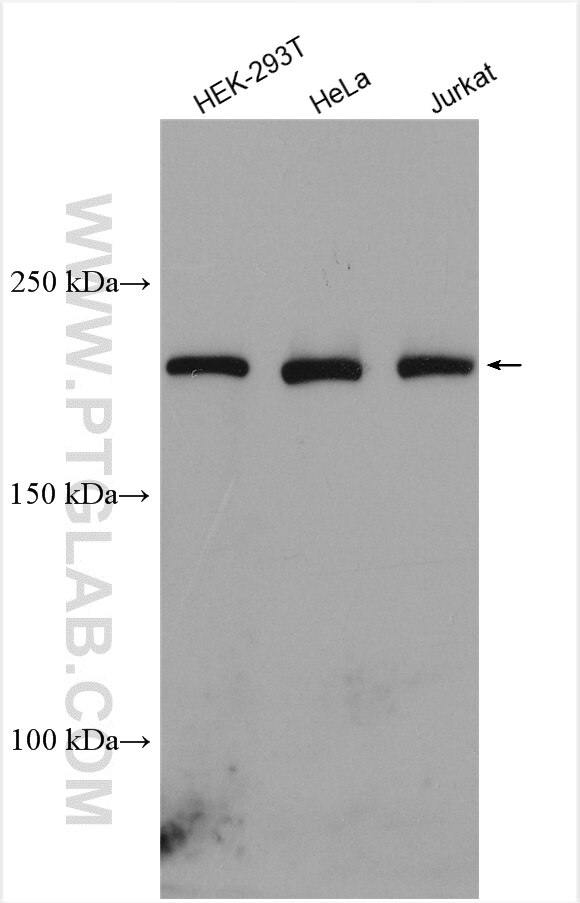
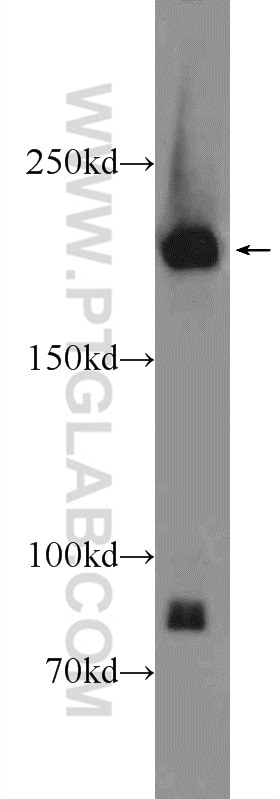
| Positive WB detected in | HEK-293T cells, Jurkat cells, HeLa cells |
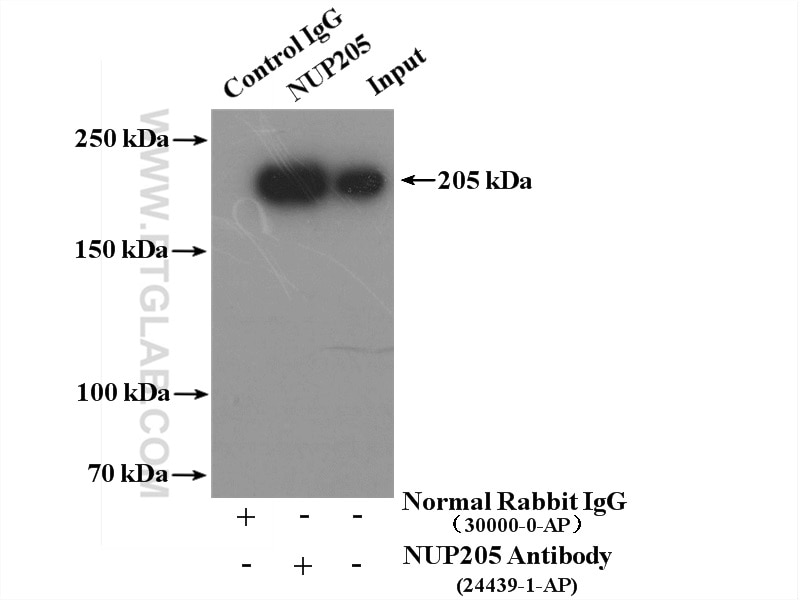
| Positive IP detected in | HeLa cells |
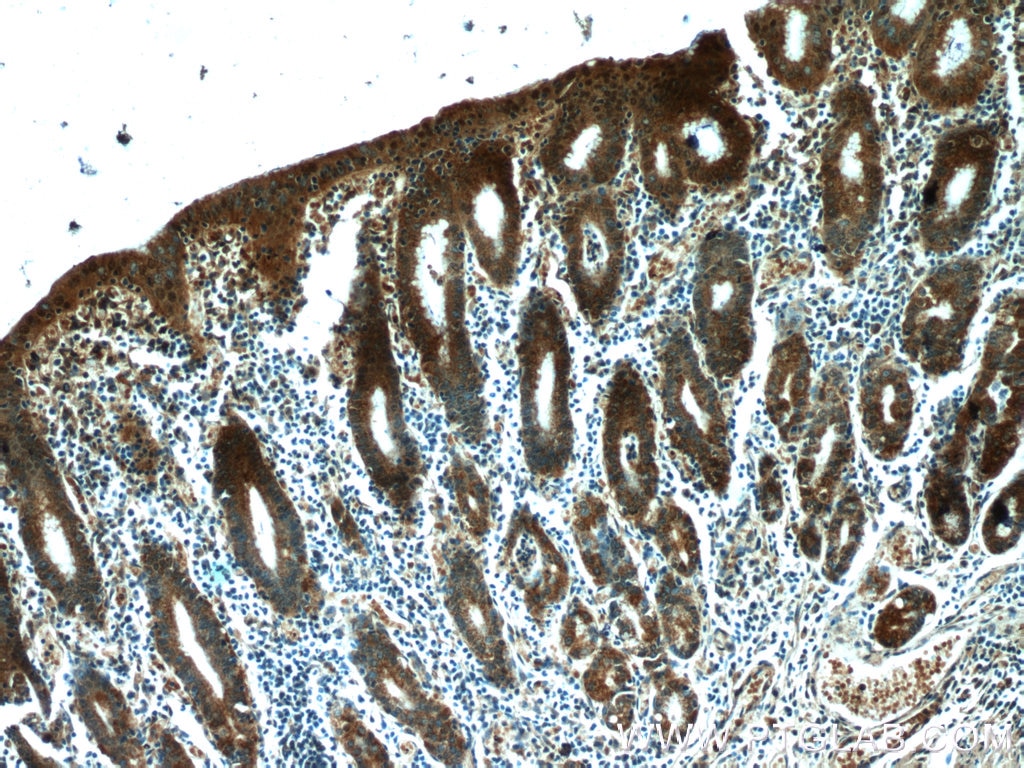
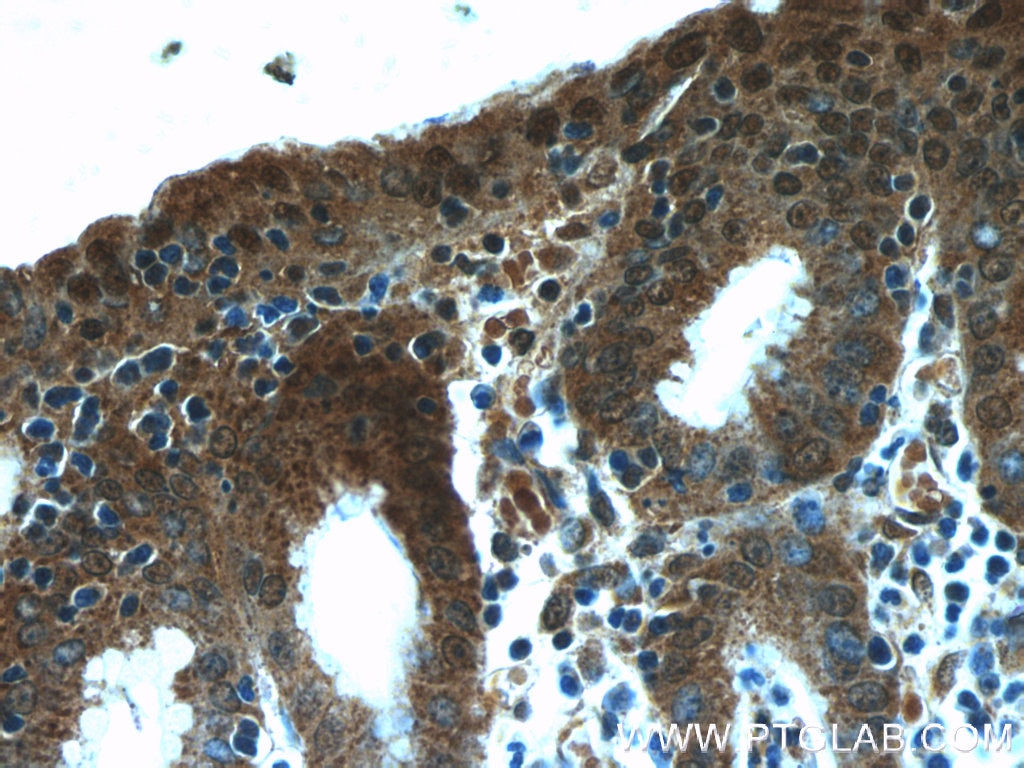
| Positive IHC detected in | human stomach tissue Note: suggested antigen retrieval with TE buffer pH 9.0; (*) Alternatively, antigen retrieval may be performed with citrate buffer pH 6.0 |
Recommended dilution
| Application | Dilution |
|---|---|
| Western Blot (WB) | WB : 1:2000-1:10000 |
| Immunoprecipitation (IP) | IP : 0.5-4.0 ug for 1.0-3.0 mg of total protein lysate |
| Immunohistochemistry (IHC) | IHC : 1:20-1:200 |
| It is recommended that this reagent should be titrated in each testing system to obtain optimal results. | |
| Sample-dependent, Check data in validation data gallery. | |
Product Information
24439-1-AP targets NUP205 in WB, IHC, IF, IP, CoIP, ELISA applications and shows reactivity with human samples.
| Tested Reactivity | human |
| Cited Reactivity | human, mouse |
| Host / Isotype | Rabbit / IgG |
| Class | Polyclonal |
| Type | Antibody |
| Immunogen |
CatNo: Ag19832 Product name: Recombinant human NUP205 protein Source: e coli.-derived, PET28a Tag: 6*His Domain: 1662-2012 aa of BC136624 Sequence: CQDVSAGSLQELALLTGIISKAALPGILSELDVDVNEGSLMELQGHIGRFQRQCLGLLSRFGGSDRLRQFKFQDDNVEGDKVSKKDEIELAMQQICANVMEYCQSLMLQSSPTFQHAVCLFTPSLSETVNRDGPRQDTQAPVVPYWRLPGLGIIIYLLKQSANDFFSYYDSHRQSVSKLQNVEQLPPDEIKELCQSVMPAGVDKISTAQKYVLARRRLVKVINNRAKLLSLCSFIIETCLFILWRHLEYYLLHCMPTDSQDSLFASRTLFKSRRLQDSFASETNLDFRSGLAIVSQHDLDQLQADAINAFGESLQKKLLDIEGLYSKVRSRYSFIQALVRRIRGLLRISRN Predict reactive species |
| Full Name | nucleoporin 205kDa |
| Calculated Molecular Weight | 2012 aa, 228 kDa |
| Observed Molecular Weight | 205 kDa |
| GenBank Accession Number | BC136624 |
| Gene Symbol | NUP205 |
| Gene ID (NCBI) | 23165 |
| RRID | AB_2879550 |
| Conjugate | Unconjugated |
| Form | Liquid |
| Purification Method | Antigen affinity purification |
| UNIPROT ID | Q92621 |
| Storage Buffer | PBS with 0.02% sodium azide and 50% glycerol, pH 7.3. |
| Storage Conditions | Store at -20°C. Stable for one year after shipment. Aliquoting is unnecessary for -20oC storage. 20ul sizes contain 0.1% BSA. |
Background Information
NUP205, also named as C7orf14 and KIAA0225, is a 205 kDa nucleoporin. It plays a role in the nuclear pore complex (NPC) assembly and/or maintenance.
Protocols
| Product Specific Protocols | |
|---|---|
| IHC protocol for NUP205 antibody 24439-1-AP | Download protocol |
| IP protocol for NUP205 antibody 24439-1-AP | Download protocol |
| WB protocol for NUP205 antibody 24439-1-AP | Download protocol |
| Standard Protocols | |
|---|---|
| Click here to view our Standard Protocols |
Publications
What published studies show
The NUP205 Polyclonal antibody (Cat# 24439-1-AP) has 13 total citations. These appear in journals including Nature Methods, Nature Communications, Journal of Clinical Investigation, Cell Death Discovery, Developmental Cell, Oncogene, Cell Biosciences, Life Sciences, Cell Reports Methods, Communications Biology, International Immunopharmacology, Frontiers in Oncology, and Human Mutation. Research fields span expansion microscopy/nanoscopy, nuclear transport, oligodendrocyte differentiation and myelination, cancer (glioma, glioblastoma, hepatocellular carcinoma), DNA damage response, and cardiac electrophysiology.
| Species | Application | Title |
|---|---|---|
Nat Methods Visualizing the native cellular organization by coupling cryofixation with expansion microscopy (Cryo-ExM). | ||
Nat Commun iU-ExM: nanoscopy of organelles and tissues with iterative ultrastructure expansion microscopy | ||
J Clin Invest Sec13 promotes oligodendrocyte differentiation and myelin repair through autocrine pleiotrophin signaling. | ||
Cell Death Discov Exon junction complex and nuclear pore complex components preferentially govern the nuclear export of spliced lncRNAs. | ||
Dev Cell Nuclear import carrier Hikeshi cooperates with HSP70 to promote murine oligodendrocyte differentiation and CNS myelination | ||
Oncogene DNA damage-induced translocation of mitochondrial factor HIGD1A into the nucleus regulates homologous recombination and radio/chemo-sensitivity. |







