

Tested Applications
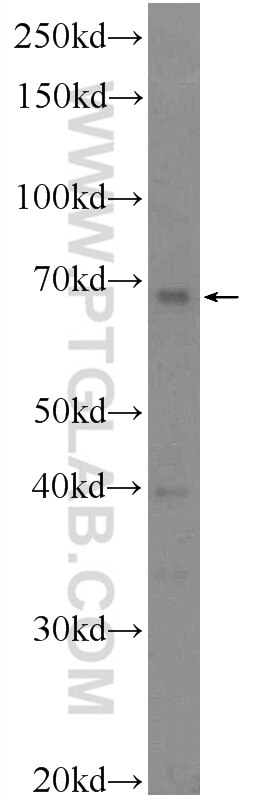
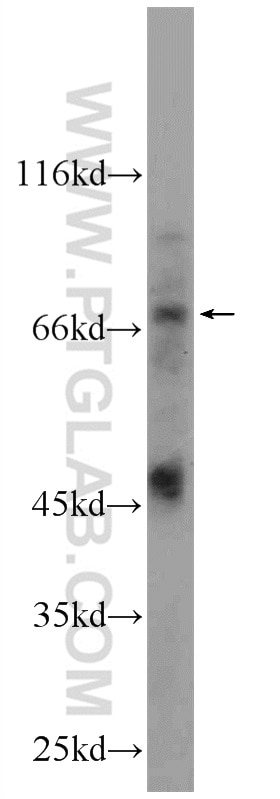
| Positive WB detected in | mouse kidney tissue |
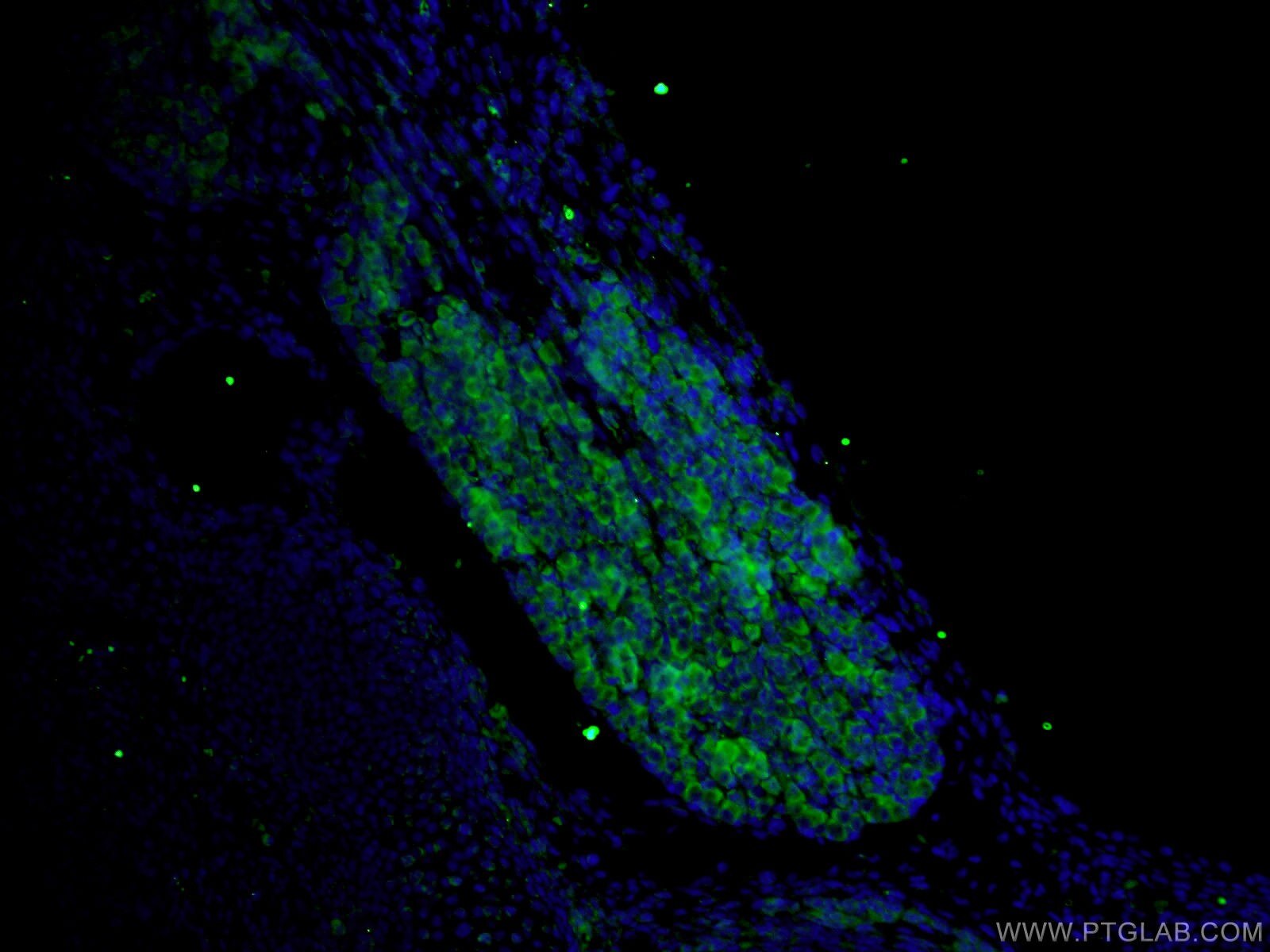
| Positive IF-P detected in | mouse embryo tissue |
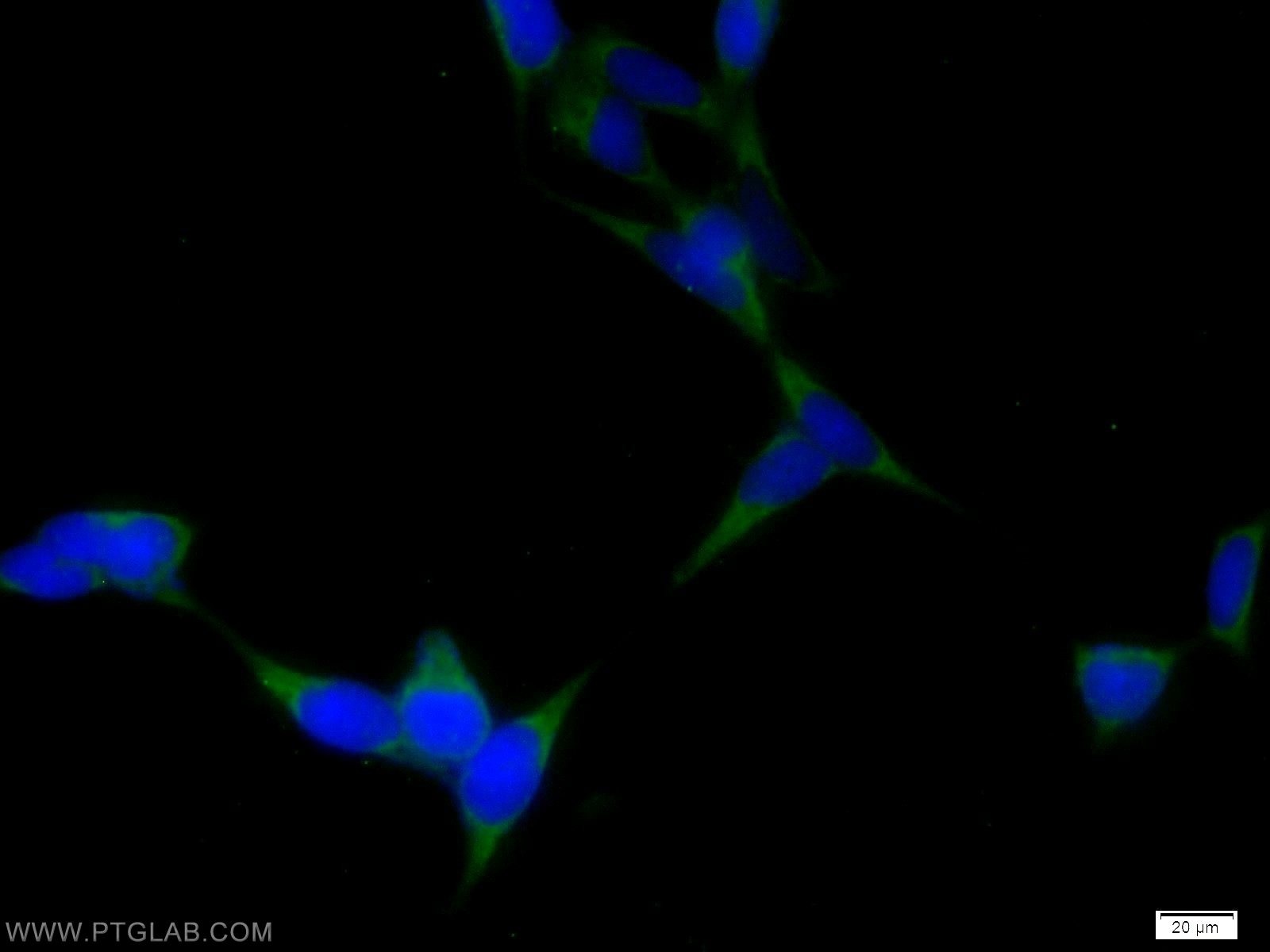
| Positive IF/ICC detected in | HEK-293 cells |
Recommended dilution
| Application | Dilution |
|---|---|
| Western Blot (WB) | WB : 1:200-1:1000 |
| Immunofluorescence (IF)-P | IF-P : 1:50-1:500 |
| Immunofluorescence (IF)/ICC | IF/ICC : 1:10-1:100 |
| It is recommended that this reagent should be titrated in each testing system to obtain optimal results. | |
| Sample-dependent, Check data in validation data gallery. | |
Product Information
25222-1-AP targets DTX4 in WB, IF/ICC, IF-P, ELISA applications and shows reactivity with human, mouse samples.
| Tested Reactivity | human, mouse |
| Cited Reactivity | human, mouse, rat |
| Host / Isotype | Rabbit / IgG |
| Class | Polyclonal |
| Type | Antibody |
| Immunogen |
CatNo: Ag18415 Product name: Recombinant human DTX4 protein Source: e coli.-derived, PET28a Tag: 6*His Domain: 51-213 aa of BC119011 Sequence: LDLIYPMVTGTLPKAQSWPVSPGPATSPPMSPCSCPQCVLVMSVKAAVVNGSTGPLQLPVTRKNMPPPGVVKLPPLPGSGAKPLDSTGTIRGPLKTAPSQVIRRQASSMPTGTTMGSPASPPGPNSKTGRVALATLNRTNLQRLAIAQSRVLIASGVPTVPVK Predict reactive species |
| Full Name | deltex homolog 4 (Drosophila) |
| Calculated Molecular Weight | 619 aa, 67 kDa |
| Observed Molecular Weight | 67-70 kDa |
| GenBank Accession Number | BC119011 |
| Gene Symbol | DTX4 |
| Gene ID (NCBI) | 23220 |
| RRID | AB_2879970 |
| Conjugate | Unconjugated |
| Form | Liquid |
| Purification Method | Antigen affinity purification |
| UNIPROT ID | Q9Y2E6 |
| Storage Buffer | PBS with 0.02% sodium azide and 50% glycerol, pH 7.3. |
| Storage Conditions | Store at -20°C. Stable for one year after shipment. Aliquoting is unnecessary for -20oC storage. 20ul sizes contain 0.1% BSA. |
Background Information
DTX4, also named as KIAA0937, RNF155, is a 619 amino acid protein, which belongs to the Deltex family. DTX4 as a regulator of Notch signaling, a signaling pathway involved in cell-cell communications that regulates a broad spectrum of cell-fate determinations. DTX4 functions as a ubiquitin ligase protein in vivo, mediating 'Lys48'-linked polyubiquitination and promoting degradation of TBK1, targeting to TBK1 requires interaction with NLRP4.
Protocols
| Product Specific Protocols | |
|---|---|
| IF protocol for DTX4 antibody 25222-1-AP | Download protocol |
| WB protocol for DTX4 antibody 25222-1-AP | Download protocol |
| Standard Protocols | |
|---|---|
| Click here to view our Standard Protocols |
Publications
What published studies show
DTX4 antibody (Cat# 25222-1-AP) has 5 total citations published in Cell Death & Disease, Cancer Science, World Journal of Surgical Oncology, Biochemical and Biophysical Research Communications, and Stem Cells and Development. Research fields span airway inflammation/asthma, esophageal carcinoma, pancreatic ductal adenocarcinoma, adipogenic differentiation, and hepatic stellate cell activation. All citations utilized Western blot; one additionally employed immunofluorescence.
| Species | Application | Title |
|---|---|---|
Cell Death Dis Gasdermin D silencing alleviates airway inflammation and remodeling in an ovalbumin-induced asthmatic mouse model | ||
Cancer Sci Ubiquitination of NOTCH2 by DTX3 suppresses the proliferation and migration of human esophageal carcinoma. | ||
World J Surg Oncol Circular RNA hsa_circ_0001829 promotes pancreatic ductal adenocarcinoma through miR-7113-3p/DTX4 axis. | ||
Biochem Biophys Res Commun E3 ubiquitin ligase DTX4 is required for adipogenic differentiation in 3T3-L1 preadipocytes cell line.
| ||
Stem Cells Dev Combined Methylome and Transcriptome Analysis During Rat Hepatic Stellate Cell Activation. |





