

Tested Applications
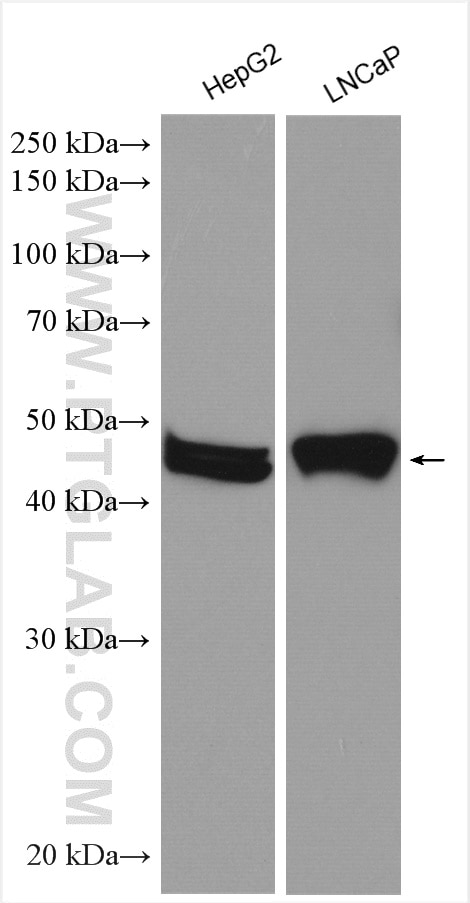
| Positive WB detected in | HepG2 cells, LNCaP cells |
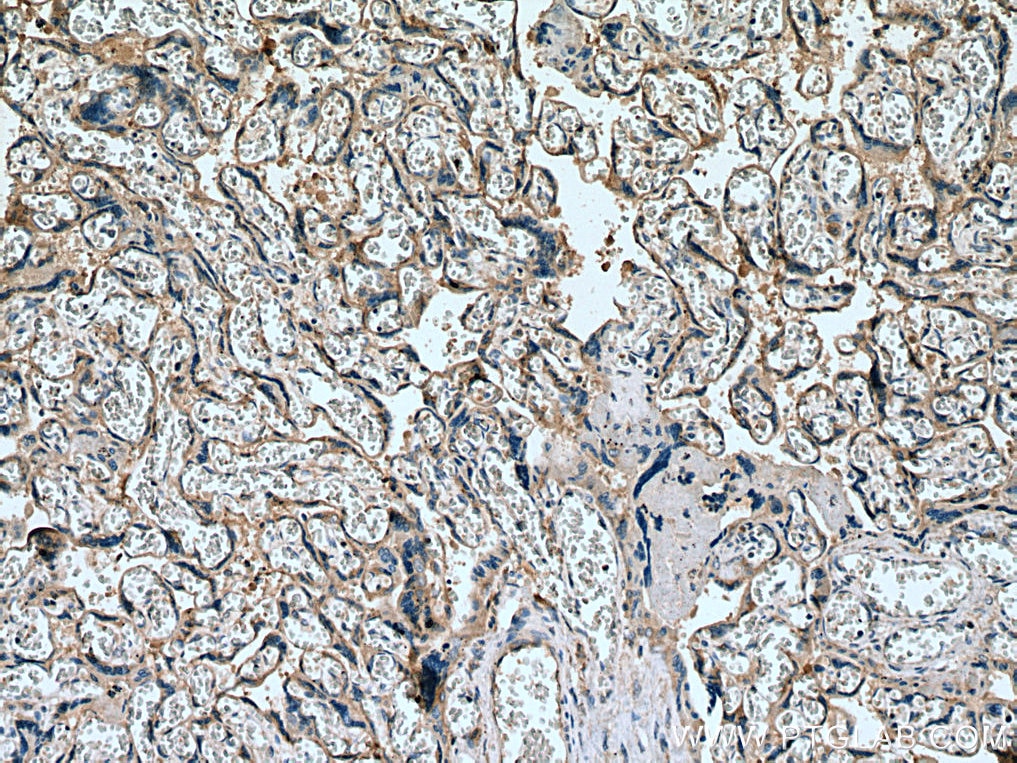
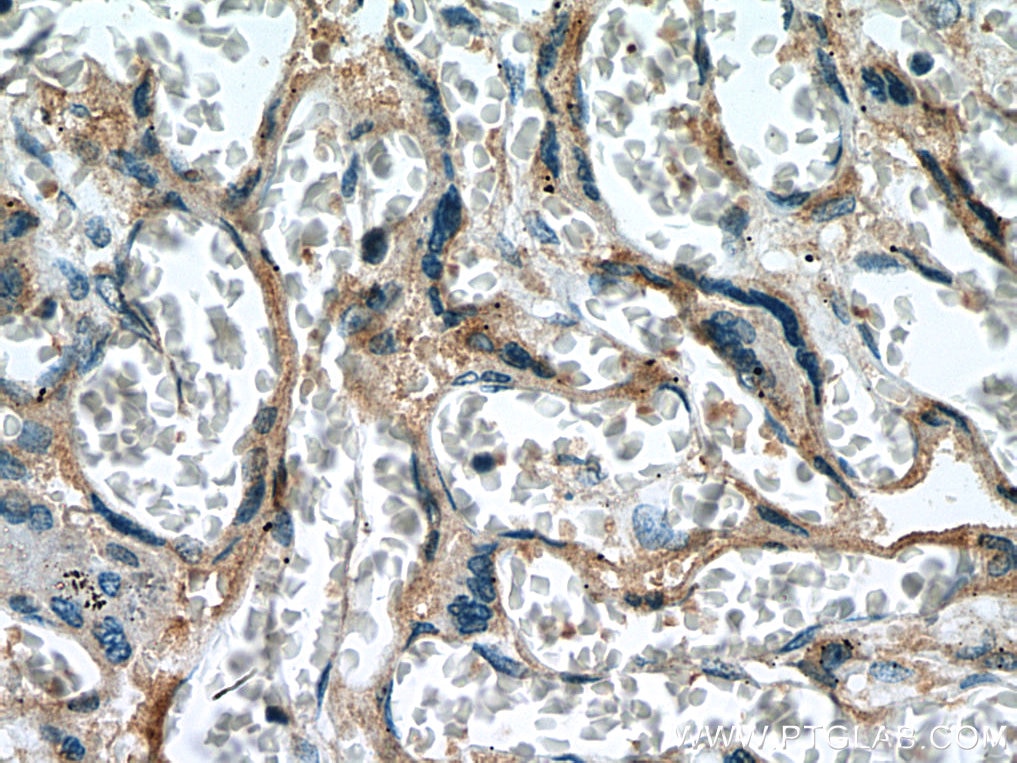
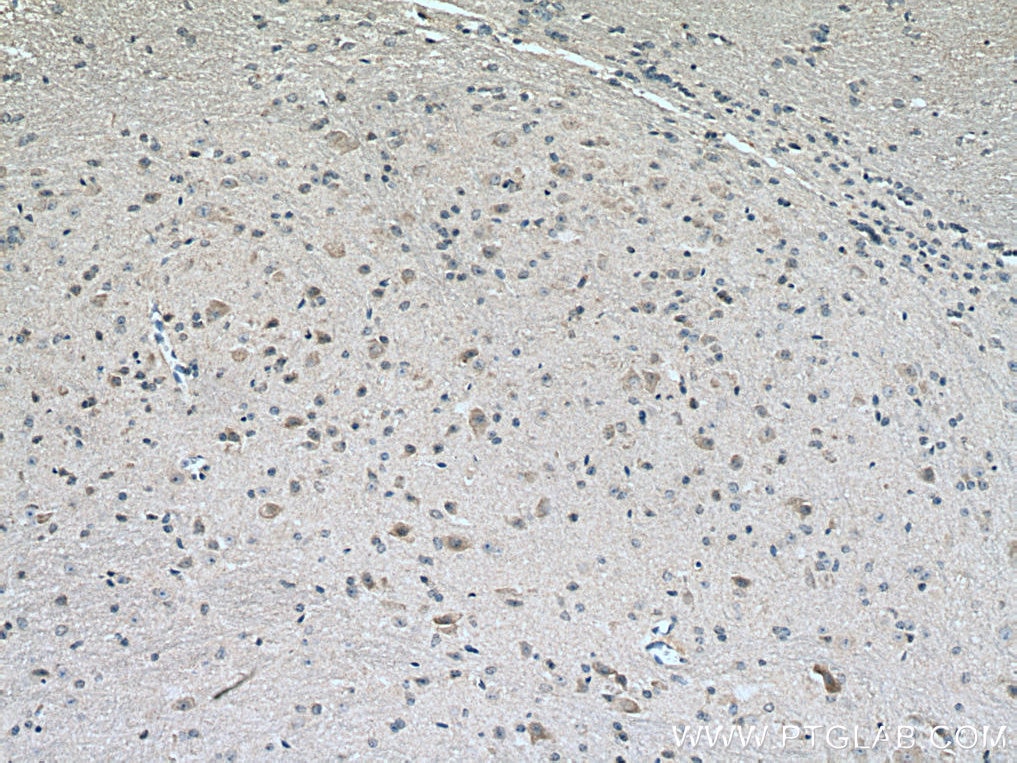
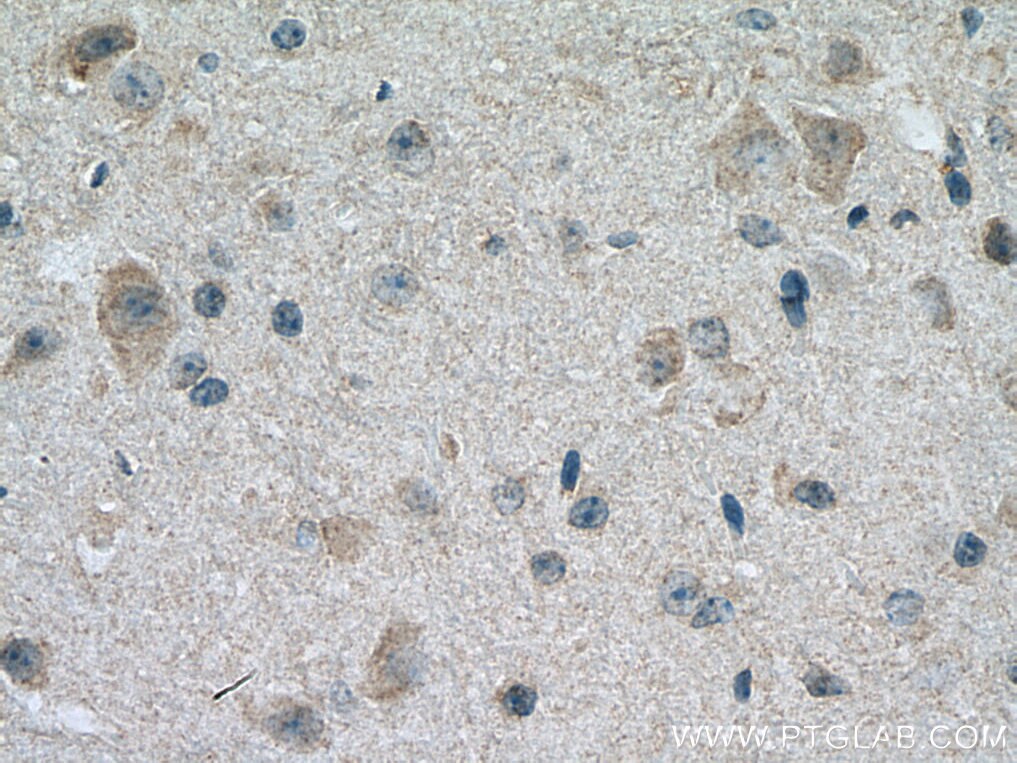
| Positive IHC detected in | human placenta tissue, mouse cerebellum tissue Note: suggested antigen retrieval with TE buffer pH 9.0; (*) Alternatively, antigen retrieval may be performed with citrate buffer pH 6.0 |
Recommended dilution
| Application | Dilution |
|---|---|
| Western Blot (WB) | WB : 1:500-1:2000 |
| Immunohistochemistry (IHC) | IHC : 1:50-1:500 |
| It is recommended that this reagent should be titrated in each testing system to obtain optimal results. | |
| Sample-dependent, Check data in validation data gallery. | |
Product Information
25958-1-AP targets SLC19A1 in WB, IHC, IF, ELISA applications and shows reactivity with human, mouse samples.
| Tested Reactivity | human, mouse |
| Cited Reactivity | human, mouse |
| Host / Isotype | Rabbit / IgG |
| Class | Polyclonal |
| Type | Antibody |
| Immunogen |
CatNo: Ag22921 Product name: Recombinant human SLC19A1 protein Source: e coli.-derived, PGEX-4T Tag: GST Domain: 197-266 aa of BC003068 Sequence: VVLALFLKRPKRSLFFNRDDRGRCETSASELERMNPGPGGKLGHALRVACGDSVLARMLRELGDSLRRPQ Predict reactive species |
| Full Name | solute carrier family 19 (folate transporter), member 1 |
| Calculated Molecular Weight | 591 aa, 65 kDa |
| Observed Molecular Weight | 46 kDa |
| GenBank Accession Number | BC003068 |
| Gene Symbol | SLC19A1 |
| Gene ID (NCBI) | 6573 |
| RRID | AB_2880310 |
| Conjugate | Unconjugated |
| Form | Liquid |
| Purification Method | Antigen affinity purification |
| UNIPROT ID | P41440 |
| Storage Buffer | PBS with 0.02% sodium azide and 50% glycerol, pH 7.3. |
| Storage Conditions | Store at -20°C. Stable for one year after shipment. Aliquoting is unnecessary for -20oC storage. 20ul sizes contain 0.1% BSA. |
Background Information
SLC19A1, also named as RFC (reduced folate carrier), is an anionic exchanger that involved in the regulation of intracellular concentrations of folate in exchange for anions. The predicted MW of SLC19A1 is 65 kDa and 25958-1-AP antibody recognizes the 46 kDa protein which is similar to papers. The 38-40 kDa minor forms and 58 kDa form have also been reported that could be alternate splicing, post-transcriptional modification or the role of accessory proteins. (PMID: 17404734, 9111015)
Protocols
| Product Specific Protocols | |
|---|---|
| IHC protocol for SLC19A1 antibody 25958-1-AP | Download protocol |
| WB protocol for SLC19A1 antibody 25958-1-AP | Download protocol |
| Standard Protocols | |
|---|---|
| Click here to view our Standard Protocols |
Publications
What published studies show
The SLC19A1 Polyclonal antibody (Cat# 25958-1-AP) has 5 citations across five journals: J Clin Invest, Sci Adv, Cell Chem Biol, Biol Direct, and Biomedicines. Research fields span innate immunity (cGAMP/STING signaling), cell migration, protein–ligand interaction identification, de novo lipogenesis in kidney cancer prognosis, and pan-cancer characterization of SLC19A1 as a prognostic and tumor-infiltration marker.
| Species | Application | Title |
|---|---|---|
J Clin Invest An alternatively spliced STING isoform localizes in the cytoplasmic membrane and directly senses extracellular cGAMP
| ||
Sci Adv 2'3'-cGAMP interactome identifies 2'3'-cGAMP/Rab18/FosB signaling in cell migration control independent of innate immunity | ||
Cell Chem Biol A photoaffinity labeling strategy identified EF1A1 as a binding protein of cyclic dinucleotide 2'3'-cGAMP. | ||
Biol Direct In-silico study of machine learning discovers de novo lipogenesis for predicting prognosis and immunotherapy responses in kidney renal clear cell carcinoma.
| ||
Biomedicines Pan-Cancer Characterization Identifies SLC19A1 as an Unfavorable Prognostic Marker and Associates It with Tumor Infiltration Features |
Reviews
What customers say
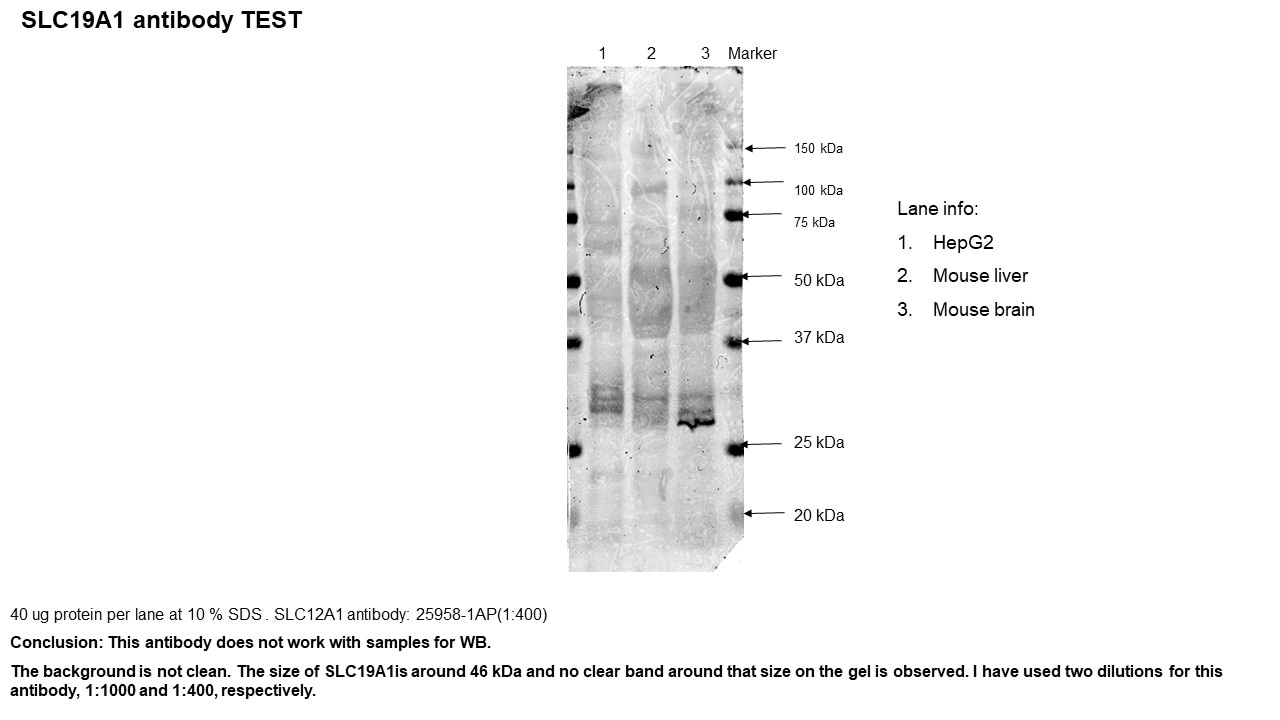
Based on two reviews, both users tested this antibody for Western Blot with mixed-to-negative results. One reviewer (4/5) reported detecting too many bands when using it on NT2/D1 cells, suggesting potential specificity issues. The other reviewer (1/5) tested at a 1:400 dilution on HepG2 cells, mouse liver, and brain tissue, and found no clear band at the expected ~46 kDa for SLC19A1, concluding it did not work for WB. Overall, the feedback indicates the antibody may have limited specificity or performance in Western Blot applications.
The reviews below have been submitted by verified Proteintech customers who received an incentive for providing their feedback.
Ying (Verified Customer) (08-19-2026) | too many band detected
|
Hua (Verified Customer) (06-17-2021) | It does not show a clear band around 46kDa for SLC19A1. It does not work in WB.
 |






